


GENESIS • CHAPTER 34 • ENGLISH & MALAYALAM BIBLE STUDY
Dinah, Deception and the Cost of Revenge
ഉത്പത്തി 34 • ദീനയും വഞ്ചനയും പ്രതികാരത്തിന്റെ വിലയും
Dinah’s dignity, the brothers’ deception, Jacob’s response and the consequences of escalating violence.
ദീനയുടെ മാന്യത, സഹോദരന്മാരുടെ വഞ്ചന, യാക്കോബിന്റെ പ്രതികരണം, വർധിക്കുന്ന അക്രമത്തിന്റെ പ്രത്യാഘാതങ്ങൾ.

The chapter at a glance • അധ്യായത്തിന്റെ രൂപരേഖ
| Verses | Focus |
|---|---|
| 1–7 | Violation and the family’s response • അതിക്രമവും കുടുംബത്തിന്റെ പ്രതികരണവും |
| 8–12 | Marriage and settlement proposals • വിവാഹ–താമസ നിർദേശങ്ങൾ |
| 13–24 | Deception and the city’s agreement • വഞ്ചനയും പട്ടണത്തിന്റെ സമ്മതവും |
| 25–29 | Attack, Dinah’s removal and plunder • ആക്രമണവും ദീനയെ കൊണ്ടുവരലും കൊള്ളയും |
| 30–31 | Jacob’s protest and the brothers’ reply • യാക്കോബിന്റെ പ്രതിഷേധവും മറുപടിയും |
Genesis 34 — Scripture • ഉത്പത്തി 34 — തിരുവചനം
English: Revised Standard Version Catholic Edition. Scripture wording follows the supplied English and Malayalam texts. Illustrations contain no depiction of the assault or graphic violence. • നൽകിയ ഇംഗ്ലീഷ്–മലയാളം പാഠങ്ങളാണ് ഇവിടെ.
Dinah and Shechem • ദീനയും ഷെക്കെമും
34:1
Now Dinah the daughter of Leah, whom she had borne to Jacob, went out to visit the women of the land;
യാക്കോബിനു ലെയായിലുണ്ടായ മകള് ദീന ആ നാട്ടിലുള്ള സ്ത്രീകളെ സന്ദര്ശിക്കാന് പോയി.
34:2
and when Shechem the son of Hamor the Hivite, the prince of the land, saw her, he seized her and lay with her and humbled her.
അവിടത്തെ പ്രഭുവായിരുന്ന ഹാമോര് എന്ന ഹിവ്യന്റെ മകന് ഷെക്കെം അവളെ കണ്ടപ്പോള് പിടിച്ചുകൊണ്ടു പോയി ബലാല്സംഗം ചെയ്ത് അപമാനിച്ചു.
34:3
And his soul was drawn to Dinah the daughter of Jacob; he loved the maiden and spoke tenderly to her.
അവന്റെ ഹൃദയം യാക്കോബിന്റെ മകളായ ദീനയില് ലയിച്ചു ചേര്ന്നു. അവന് അവളെ അതിരറ്റു സ്നേഹിച്ചു. സ്നേഹവായ്പോടെ അവന് അവളോടു സംസാരിച്ചു.
34:4
So Shechem spoke to his father Hamor, saying, “Get me this maiden for my wife.”
ഷെക്കെം തന്റെ പിതാവായ ഹാമോറിനോടു പറഞ്ഞു: ആ പെണ്കുട്ടിയെ എനിക്കു ഭാര്യയായിത്തരണം.
34:5
Now Jacob heard that he had defiled his daughter Dinah; but his sons were with his cattle in the field, so Jacob held his peace until they came.
തന്റെ മകളായ ദീനയെ ഷെക്കെം മാനഭംഗപ്പെടുത്തിയെന്ന വിവരം യാക്കോബ് അറിഞ്ഞു. പുത്രന്മാരെല്ലാവരും വയലില് കാലികളുടെകൂടെ ആയിരുന്നതുകൊണ്ട് അവര് തിരിച്ചെത്തുംവരെ അവന് ക്ഷമിച്ചിരുന്നു.
34:6
And Hamor the father of Shechem went out to Jacob to speak with him.
ഷെക്കെമിന്റെ പിതാവായ ഹാമോര് യാക്കോബിനോടു സംസാരിക്കാനായി വന്നു.
34:7
The sons of Jacob came in from the field when they heard of it; and the men were indignant and very angry, because he had wrought folly in Israel by lying with Jacob’s daughter, for such a thing ought not to be done.
വിവരമറിഞ്ഞ് യാക്കോബിന്റെ പുത്രന്മാര് വയലില്നിന്നു തിരിച്ചെത്തി. അവര്ക്കു രോഷവും അമര്ഷവുമുണ്ടായി. കാരണം, യാക്കോബിന്റെ മകളെ ബലാത്സംഗം ചെയ്തതു വഴി, ഷെക്കെം ഇസ്രായേലിനു നിഷിദ്ധമായ മ്ലേച്ഛതയാണു പ്രവര്ത്തിച്ചത്.
The proposals • നിർദേശങ്ങൾ
34:8
But Hamor spoke with them, saying, “The soul of my son Shechem longs for your daughter; I pray you, give her to him in marriage.
എന്നാല്, ഹാമോര് അവരോടു പറഞ്ഞു: എന്റെ മകനായ ഷെക്കെമിന്റെ ഹൃദയം നിങ്ങളുടെ മകള്ക്കുവേണ്ടി ദാഹിക്കുന്നു. ദയചെയ്ത് അവളെ അവനു ഭാര്യയായി നല്കണം.
34:9
Make marriages with us; give your daughters to us, and take our daughters for yourselves.
ഞങ്ങളുമായി വിവാഹബന്ധത്തിലേര്പ്പെടുക. നിങ്ങളുടെപെണ്കുട്ടികളെ ഞങ്ങള്ക്കു തരുക. ഞങ്ങളുടെ പെണ്കുട്ടികളെ നിങ്ങളും സ്വീകരിക്കുക.
34:10
You shall dwell with us; and the land shall be open to you; dwell and trade in it, and get property in it.”
ഞങ്ങളുടെകൂടെ പാര്ക്കുക. ഈ നാട്ടില് നിങ്ങള്ക്കു സ്വാതന്ത്ര്യമുണ്ടായിരിക്കും. നിങ്ങള്ക്ക് ഇവിടെ പാര്ത്ത് തൊഴില് ചെയ്യുകയും സമ്പാദ്യമുണ്ടാക്കുകയും ചെയ്യാം.
34:11
Shechem also said to her father and to her brothers, “Let me find favor in your eyes, and whatever you say to me I will give.
ഷെക്കെം ദീനയുടെ പിതാവിനോടും സഹോദരന്മാരോടുമായി പറഞ്ഞു: ദയയോടെ നിങ്ങള് എന്നോടു പെരുമാറണം. നിങ്ങള് ചോദിക്കുന്നതു ഞാന് നിങ്ങള്ക്കു തരാം.
34:12
Ask of me ever so much as marriage present and gift, and I will give according as you say to me; only give me the maiden to be my wife.”
സ്ത്രീധനമായോ വിവാഹസമ്മാനമായോ നിങ്ങള് ചോദിക്കുന്നതെന്തും തരാന് ഞാന് ഒരുക്കമാണ്. പെണ്കുട്ടിയെ എനിക്കു ഭാര്യയായി തരണം.
The deceptive condition • വഞ്ചനാപരമായ വ്യവസ്ഥ
34:13
The sons of Jacob answered Shechem and his father Hamor deceitfully, because he had defiled their sister Dinah.
തങ്ങളുടെ സഹോദരി ദീനയെ ഷെക്കെം മാനഭംഗപ്പെടുത്തിയതുകൊണ്ട് യാക്കോബിന്റെ മക്കള് അവനോടും അവന്റെ പിതാവായ ഹാമോറിനോടും ചതിവായി സംസാരിച്ചു.
34:14
They said to them, “We cannot do this thing, to give our sister to one who is uncircumcised, for that would be a disgrace to us.
അവര് പറഞ്ഞു: പരിച്ഛേദനം ചെയ്യാത്ത ഒരുവന് ഞങ്ങളുടെ സഹോദരിയെ ഭാര്യയായി നല്കുക സാധ്യമല്ല. ഞങ്ങള്ക്ക് അത് അപമാനകരമാണ്.
34:15
Only on this condition will we consent to you: that you will become as we are and every male of you be circumcised.
എന്നാല് ഒരു വ്യവസ്ഥയില് ഞങ്ങളിതിനു സമ്മതിക്കാം. നിങ്ങളുടെ പുരുഷന്മാരെല്ലാം പരിച്ഛേദനം ചെയ്ത് ഞങ്ങളെപ്പോലെയാകണം.
34:16
Then we will give our daughters to you, and we will take your daughters to ourselves, and we will dwell with you and become one people.
അങ്ങനെയെങ്കില് ഞങ്ങളുടെ പുത്രിമാരെ നിങ്ങള്ക്കു തരാം. നിങ്ങളുടെ പുത്രിമാരെ ഞങ്ങളും സ്വീകരിക്കാം. ഞങ്ങള് നിങ്ങളോടൊത്തു വസിക്കുകയും നമ്മള് ഒരു ജനതയായിത്തീരുകയും ചെയ്യും.
34:17
But if you will not listen to us and be circumcised, then we will take our daughter, and we will be gone.”
ഞങ്ങള് പറയുന്നതനുസരിച്ചു പരിച്ഛേദനം ചെയ്യാന് നിങ്ങള് ഒരുക്കമല്ലെങ്കില് ഞങ്ങളുടെ മകളെയും കൊണ്ടു ഞങ്ങള് സ്ഥലം വിടും.
The city agrees • പട്ടണം സമ്മതിക്കുന്നു
34:18
Their words pleased Hamor and Hamor’s son Shechem.
അവരുടെ വ്യവസ്ഥ ഹാമോറിനും മകന് ഷെക്കെമിനും ഇഷ്ടപ്പെട്ടു.
34:19
And the young man did not delay to do the thing, because he had delight in Jacob’s daughter. Now he was the most honored of all his family.
അങ്ങനെ ചെയ്യാന് ആ ചെറുപ്പക്കാരന് ഒട്ടും മടികാണിച്ചില്ല. കാരണം, യാക്കോബിന്റെ മകളില് അവന് അത്രമേല് അനുരക്തനായിരുന്നു. അവന്റെ കുടുംബത്തില് ഏറ്റവും മതിക്കപ്പെട്ടവനായിരുന്നു ഷെക്കെം.
34:20
So Hamor and his son Shechem came to the gate of their city and spoke to the men of their city, saying,
അതിനാല്, ഹാമോറും മകന് ഷെക്കെമും നഗര കവാടത്തിങ്കല്ച്ചെന്ന് അവരുടെ പട്ടണത്തിലെ പുരുഷന്മാരോട് ഇപ്രകാരം പറഞ്ഞു:
34:21
“These men are friendly with us; let them dwell in the land and trade in it, for behold, the land is large enough for them; let us take their daughters in marriage, and let us give them our daughters.
ഈ മനുഷ്യര് നമ്മോടു സൗഹാര്ദത്തിലാണ്. അവര് ഈ നാട്ടില് പാര്ത്ത് ഇവിടെ തൊഴില് ചെയ്യട്ടെ. ഈ നാട് അവരെക്കൂടി ഉള്ക്കൊള്ളാന്മാത്രം വിശാലമാണല്ലോ. അവരുടെ പുത്രിമാരെ നമുക്കു ഭാര്യമാരായി സ്വീകരിക്കാം. നമ്മുടെ പുത്രിമാരെ അവര്ക്കു നല്കുകയും ചെയ്യാം.
34:22
Only on this condition will the men agree to dwell with us, to become one people: that every male among us be circumcised as they are circumcised.
എന്നാല്, ഒരു വ്യവസ്ഥയില് മാത്രമേ ഇവര് നമ്മോടൊത്തു പാര്ത്ത് ഒരു ജനതയാകാന് സമ്മതിക്കുകയുള്ളു. നമ്മുടെ പുരുഷന്മാരെല്ലാം അവരെപ്പോലെ പരിച്ഛേദനം ചെയ്യണം.
34:23
Will not their cattle, their property and all their beasts be ours? Only let us agree with them, and they will dwell with us.”
അവരുടെ സമ്പത്തും കന്നുകാലികളും മറ്റു മൃഗങ്ങളുമൊക്കെ നമ്മുടേതാവില്ലേ? നമുക്കിതു സമ്മതിക്കാം. എങ്കില്, അവര് നമ്മുടെകൂടെ താമസിക്കും.
34:24
And all who went out of the gate of his city hearkened to Hamor and his son Shechem; and every male was circumcised, all who went out of the gate of his city.
പട്ടണത്തിലെ പുരുഷന്മാരെല്ലാം ഹാമോറിന്റെയും മകന് ഷെക്കെമിന്റെയും വാക്കുകള് കേട്ടു പരിച്ഛേദനം ചെയ്തു.
Retaliation and protest • പ്രതികാരവും പ്രതിഷേധവും
34:25
On the third day, when they were sore, two of the sons of Jacob, Simeon and Levi, Dinah’s brothers, took their swords and came upon the city unawares, and killed all the males.
മൂന്നാംദിവസം, അവര് വേദനിച്ചിരുന്നപ്പോള് ദീനയുടെ സഹോദരന്മാരും യാക്കോബിന്റെ പുത്രന്മാരുമായ ശിമയോനും ലേവിയും വാളെടുത്ത് അപ്രതീക്ഷിതമായി നഗരത്തില്കടന്നു പുരുഷന്മാരെയെല്ലാം വധിച്ചു.
34:26
They slew Hamor and his son Shechem with the sword, and took Dinah out of Shechem’s house, and went away.
ഹാമോറിനെയും മകന് ഷെക്കെമിനെയും അവര് വാളിനിരയാക്കി; ഷെക്കെമിന്റെ വീട്ടില് നിന്നു ദീനയെ വീണ്ടെടുത്ത് അവര് തിരിച്ചുപോയി.
34:27
And the sons of Jacob came upon the slain, and plundered the city, because their sister had been defiled;
തങ്ങളുടെ സഹോദരിയെ മാനഭംഗപ്പെടുത്തിയതിന്റെ പേരില് യാക്കോബിന്റെ മക്കള്, മരിച്ചുകിടന്നവരുടെ ഇടയിലൂടെചെന്നു നഗരം കൊള്ളയടിച്ചു.
34:28
they took their flocks and their herds, their asses, and whatever was in the city and in the field;
അവരുടെ ആടുമാടുകളെയും കഴുതകളെയും നഗരത്തിലും വയലിലുമുണ്ടായിരുന്ന സകലത്തെയും അവര് അപഹരിച്ചു.
34:29
all their wealth, all their little ones and their wives, all that was in the houses, they captured and made their prey.
അവരുടെ സ്വത്തും വീട്ടുവകകളൊക്കെയും യാക്കോബിന്റെ മക്കള് കൈവശപ്പെടുത്തി. കുഞ്ഞുങ്ങളെയും സ്ത്രീകളെയും പിടിച്ചുകൊണ്ടു പോവുകയും ചെയ്തു.
34:30
Then Jacob said to Simeon and Levi, “You have brought trouble on me by making me odious to the inhabitants of the land, the Canaanites and the Per′izzites; my numbers are few, and if they gather themselves against me and attack me, I shall be destroyed, both I and my household.”
അപ്പോള് യാക്കോബ് ശിമയോനെയും ലേവിയെയും വിളിച്ച് ഇങ്ങനെ പറഞ്ഞു: ഇന്നാട്ടുകാരായ കാനാന്കാരുടെയും പെരീസ്യരുടെയും മുന്പില് നിങ്ങള് എനിക്കു ദുഷ്കീര്ത്തി വരുത്തിയിരിക്കുന്നു. എനിക്ക് ആള്ബലം കുറവാണ്. അവരൊന്നിച്ചു കൂടി എന്നെ ആക്രമിച്ചാല് ഞാന് തകര്ന്നുപോകും. ഞാനും കുടുംബവും നശിക്കും.
34:31
But they said, “Should he treat our sister as a harlot?”
അവര് ചോദിച്ചു: ഒരുവേശ്യയോടെന്നപോലെ അവന് ഞങ്ങളുടെ സഹോദരിയോടു പെരുമാറിയതെന്തിന്?
Who is who? • ആരൊക്കെയാണ്?

| Person | Role | Earlier reference |
|---|---|---|
| Dinah • ദീന | Daughter of Jacob and Leah • യാക്കോബിന്റെയും ലെയായുടെയും മകൾ | 30:21 |
| Simeon and Levi • ശിമയോനും ലേവിയും | Leah’s sons; Dinah’s brothers • ലെയായുടെ പുത്രന്മാർ; ദീനയുടെ സഹോദരന്മാർ | 29:33–34 |
| Hamor • ഹാമോർ | Shechem’s father; local ruling household • ഷെക്കെമിന്റെ പിതാവ്; പ്രാദേശിക ഭരണകുടുംബം | 33:19 |
| Shechem • ഷെക്കെം | Hamor’s son; perpetrator in 34:2 • ഹാമോറിന്റെ പുത്രൻ; 34:2-ലെ കുറ്റവാളി | 33:19 |
| Jacob • യാക്കോബ് | Hears, waits and later rebukes • വിവരം കേൾക്കുന്നു, കാത്തിരിക്കുന്നു, പിന്നീട് ശാസിക്കുന്നു | 34:5,30 |
Shechem is both a city name and the name of Hamor’s son. Hamor is identified as a Hivite here. Do not confuse this household with Ephron the Hittite, who appears in Abraham’s purchase in chapter 23.
ഷെക്കെം പട്ടണത്തിന്റെ പേരും ഹാമോറിന്റെ പുത്രന്റെ പേരുമാണ്. ഹാമോറിനെ ഇവിടെ ഹിവ്യൻ എന്നു പറയുന്നു. 23-ൽ അബ്രാഹത്തിന്റെ ഭൂമിവാങ്ങലിൽ വരുന്ന ഹിത്യനായ എഫ്രോണുമായി ഈ കുടുംബത്തെ കലർത്തരുത്.
Where does it happen? • എവിടെയാണ് സംഭവം?

Chapter 33 places Jacob’s camp near Shechem in Canaan, where he purchases land and builds an altar. Chapter 34 continues in this setting. The city is west of the Jordan, in the central hill country; the exact location of the assault is not stated. The illustrated town is a reconstruction.
33-ൽ കാനാനിലെ ഷെക്കെമിനടുത്താണ് യാക്കോബിന്റെ കൂടാരം; അവിടെ ഭൂമി വാങ്ങി ബലിപീഠം പണിയുന്നു. 34 അതേ പശ്ചാത്തലത്തിൽ തുടരുന്നു. ജോർദാനു പടിഞ്ഞാറുള്ള മധ്യമലനാട്ടിലാണ് പട്ടണം; അതിക്രമത്തിന്റെ കൃത്യസ്ഥലം വ്യക്തമല്ല. ചിത്രത്തിലെ പട്ടണം കലാപുനർനിർമാണമാണ്.
Dinah goes to visit the women of the land. Shechem seizes and violates her (1–2). Her decision to visit does not excuse his act. The later description of his affection and marriage request must not turn the assault into a consensual romance.
ദീന ആ നാട്ടിലെ സ്ത്രീകളെ സന്ദർശിക്കാൻ പോകുന്നു. ഷെക്കെം അവളെ പിടിച്ചുകൊണ്ടുപോയി ബലാൽസംഗം ചെയ്യുന്നു (1–2). സന്ദർശിക്കാൻ പോയത് അവന്റെ പ്രവൃത്തിക്ക് ന്യായീകരണമല്ല. പിന്നീടുള്ള സ്നേഹവിവരണവും വിവാഹാഭ്യർഥനയും അതിക്രമത്തെ സമ്മതപൂർവമായ പ്രണയമാക്കരുത്.
In verse 26 Dinah is taken from Shechem’s house. This tells us where the brothers find her then; it does not identify the exact place of the initial assault. Her age, private thoughts and wishes are not supplied.
26-ൽ ദീനയെ ഷെക്കെമിന്റെ വീട്ടിൽനിന്ന് കൊണ്ടുവരുന്നു. അപ്പോൾ അവളെ കണ്ടെത്തിയ സ്ഥലം അതാണ്; ആദ്യത്തെ അതിക്രമത്തിന്റെ കൃത്യസ്ഥലം അതുകൊണ്ട് നിർണയിക്കുന്നില്ല. അവളുടെ പ്രായവും സ്വകാര്യചിന്തകളും ആഗ്രഹങ്ങളും പാഠം നൽകുന്നില്ല.
What happens next? • പിന്നെ സംഭവിക്കുന്നത്
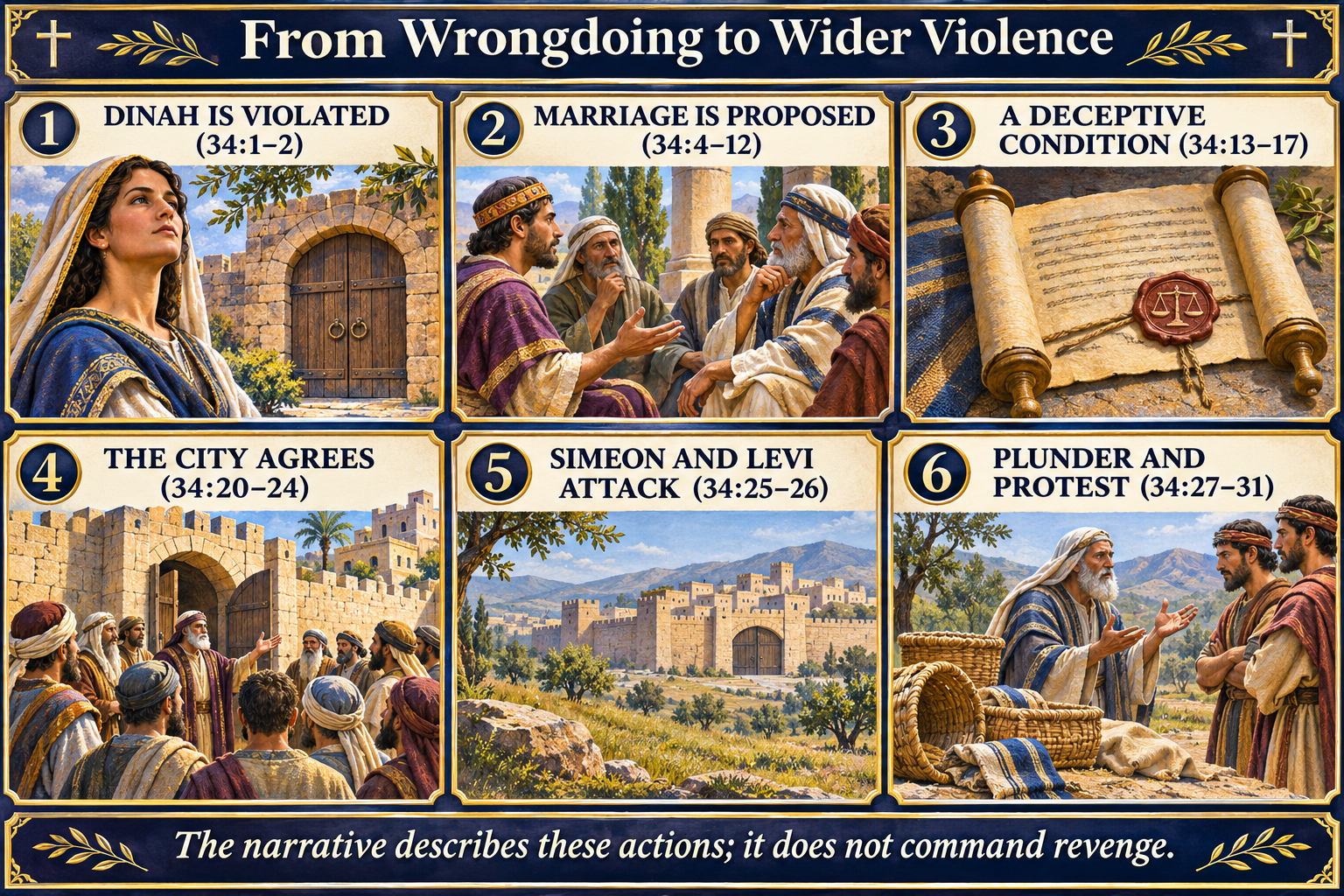
| Stage | What the text records |
|---|---|
| 1–7 | Dinah is violated; the family hears • ദീന അതിക്രമത്തിനിരയാകുന്നു; കുടുംബം അറിയുന്നു |
| 8–12 | Hamor proposes marriage and shared settlement; Shechem offers gifts • വിവാഹവും ഒരുമിച്ചുള്ള താമസവും സമ്മാനങ്ങളും നിർദേശിക്കുന്നു |
| 13–17 | The sons answer deceitfully and require circumcision • പുത്രന്മാർ ചതിവായി പരിച്ഛേദനം ആവശ്യപ്പെടുന്നു |
| 20–24 | Hamor and Shechem persuade the men at the city gate • നഗരകവാടത്തിൽ പുരുഷന്മാരെ സമ്മതിപ്പിക്കുന്നു |
| 25–26 | Simeon and Levi kill the males, including Hamor and Shechem, and remove Dinah • ശിമയോനും ലേവിയും പുരുഷന്മാരെ വധിച്ച് ദീനയെ കൊണ്ടുവരുന്നു |
| 27–29 | Jacob’s sons plunder and take women and children captive • യാക്കോബിന്റെ മക്കൾ കൊള്ളയടിച്ച് സ്ത്രീകളെയും കുഞ്ഞുങ്ങളെയും പിടിച്ചുകൊണ്ടുപോകുന്നു |
| 30–31 | Jacob protests; the brothers defend their response • യാക്കോബ് പ്രതിഷേധിക്കുന്നു; സഹോദരന്മാർ മറുപടി പറയുന്നു |
Hamor’s public proposal is broader than a marriage: it includes intermarriage, residence and trade. At the gate he also appeals to the prospect of acquiring the newcomers’ property (23). The city gate functions as the public setting for deliberation; we need not invent a modern legal procedure.
ഹാമോറിന്റെ പൊതുനിർദേശം വിവാഹത്തിൽ ഒതുങ്ങുന്നില്ല: പരസ്പരവിവാഹം, താമസം, വ്യാപാരം എന്നിവയുണ്ട്. പുതുതായി വന്നവരുടെ സമ്പത്ത് ലഭിക്കുമെന്ന സാധ്യതയും കവാടത്തിൽ പറയുന്നു (23). പൊതുചർച്ചയുടെ വേദിയാണ് നഗരകവാടം; ആധുനിക നിയമനടപടി സങ്കൽപ്പിക്കേണ്ടതില്ല.
A covenant sign misused • ഉടമ്പടിയുടെ അടയാളം ദുരുപയോഗം ചെയ്യുന്നു

Verse 13 explicitly calls the sons’ answer deceitful. They present circumcision as a condition for marriage and becoming one people, while their later actions reveal a trap. Simeon and Levi attack on the third day when the men are suffering (25).
പുത്രന്മാരുടെ മറുപടി ചതിവാണെന്ന് 13-ാം വാക്യം നേരിട്ട് പറയുന്നു. വിവാഹത്തിനും ഒരു ജനതയാകുന്നതിനും പരിച്ഛേദനം വ്യവസ്ഥയാക്കുന്നു; തുടർപ്രവൃത്തിയിൽ കെണി വെളിവാകുന്നു. പുരുഷന്മാർ വേദനിച്ചിരിക്കുന്ന മൂന്നാം ദിവസം ശിമയോനും ലേവിയും ആക്രമിക്കുന്നു (25).
Circumcision was introduced as a covenant sign in Genesis 17. Here a religious sign is exploited to make others vulnerable. No divine command authorises this deception or attack. The narrative does not make this a model for religious conduct.
ഉത്പത്തി 17-ൽ പരിച്ഛേദനം ഉടമ്പടിയുടെ അടയാളമായാണ് നൽകിയിരിക്കുന്നത്. ഇവിടെ മതപരമായ അടയാളം മറ്റുള്ളവരെ ദുർബലരാക്കാൻ ഉപയോഗിക്കുന്നു. ഈ വഞ്ചനയോ ആക്രമണമോ അനുവദിക്കുന്ന ദൈവകൽപന രേഖപ്പെടുത്തിയിട്ടില്ല. മതപരമായ പെരുമാറ്റത്തിന് കഥ ഇതിനെ മാതൃകയാക്കുന്നില്ല.
Distinguish the named attackers in 25–26 from the wider plundering described in 27–29. Removing Dinah from the house does not justify the killing, seizure of property or captivity of other women and children.
25–26-ലെ പേരുപറഞ്ഞ ആക്രമികളെയും 27–29-ലെ വ്യാപകകൊള്ളയെയും വേർതിരിക്കുക. ദീനയെ വീട്ടിൽനിന്ന് കൊണ്ടുവന്നത് വധത്തെയോ സ്വത്തപഹരണത്തെയോ മറ്റ് സ്ത്രീകളെയും കുഞ്ഞുങ്ങളെയും പിടിച്ചുകൊണ്ടുപോകുന്നതിനെയോ ന്യായീകരിക്കുന്നില്ല.
Was Jacob part of the plan? • യാക്കോബ് പദ്ധതിയിൽ പങ്കാളിയായിരുന്നോ?

| Passage | What is stated |
|---|---|
| 5 | He hears and waits for his sons • കേട്ട് പുത്രന്മാർക്കായി കാത്തിരിക്കുന്നു |
| 6–12 | Hamor comes to speak; Shechem addresses father and brothers • ഹാമോർ സംസാരിക്കാൻ വരുന്നു; ഷെക്കെം പിതാവിനെയും സഹോദരന്മാരെയും അഭിസംബോധന ചെയ്യുന്നു |
| 13 | The sons’ answer is called deceitful • പുത്രന്മാരുടെ മറുപടി ചതിവെന്നു പറയുന്നു |
| 30 | Jacob rebukes Simeon and Levi and fears retaliation • ശിമയോനെയും ലേവിയെയും ശാസിച്ച് തിരിച്ചടിയെ ഭയക്കുന്നു |
The text does not say Jacob planned or authorised the massacre. His silence is not proof of consent, but the chapter also does not record a strong earlier intervention by him. We can discuss the difficulty of his response without pretending to know all his motives.
കൂട്ടക്കൊല യാക്കോബ് ആസൂത്രണം ചെയ്തെന്നോ അനുവദിച്ചെന്നോ പാഠം പറയുന്നില്ല. നിശ്ശബ്ദത സമ്മതത്തിന്റെ തെളിവല്ല; അതേസമയം മുൻപുള്ള ശക്തമായ ഇടപെടലും അധ്യായം രേഖപ്പെടുത്തുന്നില്ല. എല്ലാ ഉദ്ദേശ്യങ്ങളും അറിയാമെന്നു ഭാവിക്കാതെ പ്രതികരണത്തിലെ പ്രശ്നം ചർച്ച ചെയ്യാം.
His objection in verse 30 centres on the danger and damaged standing of his household. The later words in Genesis 49:5–7 add an explicit condemnation of the brothers’ cruel anger. Both passages are needed for a fuller reading.
30-ലെ പ്രതിഷേധം കുടുംബത്തിനുള്ള അപകടത്തിലും ദുഷ്കീർത്തിയിലും കേന്ദ്രീകരിക്കുന്നു. ഉത്പത്തി 49:5–7-ലെ പിന്നീടുള്ള വാക്കുകൾ സഹോദരന്മാരുടെ ക്രൂരകോപത്തെ വ്യക്തമായി അപലപിക്കുന്നു. കൂടുതൽ പൂർണമായ വായനയ്ക്ക് രണ്ടു ഭാഗങ്ങളും ആവശ്യമാണ്.
Dinah’s dignity and the question of justice • ദീനയുടെ മാന്യതയും നീതിയും

Dinah’s speech and wishes are not recorded. We must not invent her consent to marriage, claim she welcomed the assault, or blame her for visiting the women. The narrative’s descriptions of violation concern what was done to her; they do not mean she loses her God-given worth.
ദീനയുടെ വാക്കുകളും ആഗ്രഹങ്ങളും രേഖപ്പെടുത്തിയിട്ടില്ല. വിവാഹസമ്മതം സങ്കൽപ്പിക്കുകയോ അതിക്രമത്തെ അവൾ സ്വാഗതം ചെയ്തെന്നു പറയുകയോ സ്ത്രീകളെ സന്ദർശിച്ചതിനു കുറ്റപ്പെടുത്തുകയോ അരുത്. അവൾക്കു നേരെ ചെയ്തതിനെക്കുറിച്ചാണ് അതിക്രമത്തിന്റെ വിവരണം; ദൈവദത്തമായ വില നഷ്ടപ്പെട്ടെന്നല്ല.
Catholic teaching identifies rape as a grave violation of a person’s freedom, dignity and integrity (CCC 2356). Later affection or a proposed marriage cannot retrospectively supply consent. Ancient marriage payments in the passage must not become a modern recommendation that money or marriage resolves sexual violence.
വ്യക്തിയുടെ സ്വാതന്ത്ര്യത്തിനും മാന്യതയ്ക്കും സമഗ്രതയ്ക്കുമെതിരായ ഗുരുതരമായ അതിക്രമമാണ് ബലാൽസംഗമെന്ന് കത്തോലിക്കാ പഠനം വ്യക്തമാക്കുന്നു (2356). പിന്നീടുള്ള സ്നേഹമോ വിവാഹനിർദേശമോ പഴയ പ്രവൃത്തിക്ക് സമ്മതം നൽകുന്നില്ല. പാഠത്തിലെ പുരാതന വിവാഹസമ്മാനങ്ങളെ പണമോ വിവാഹമോ ലൈംഗികാതിക്രമത്തിന് പരിഹാരമാണെന്ന ആധുനിക ശുപാർശയാക്കരുത്.
Anger at the wrong is understandable. It does not make every chosen response just. The deaths, plunder and captivity broaden the harm to others. Care for Dinah and rejection of collective retaliation belong together.
അനീതിക്കെതിരായ കോപം മനസ്സിലാക്കാം. അതുകൊണ്ട് തിരഞ്ഞെടുക്കുന്ന ഓരോ പ്രതികരണവും നീതിയാകുന്നില്ല. മരണവും കൊള്ളയും തടവും ദോഷം മറ്റുള്ളവരിലേക്കും വ്യാപിപ്പിക്കുന്നു. ദീനയോടുള്ള കരുതലും കൂട്ടപ്രതികാരത്തെ നിരാകരിക്കലും ഒന്നിച്ചുപോകണം.
The later judgment • പിന്നീടുള്ള വിധി

Genesis 34 ends with the brothers’ protest, not an explicit divine endorsement. In 49:5–7 Jacob condemns Simeon and Levi’s fierce anger and violence and speaks of their scattering. Read this alongside the unresolved ending here rather than celebrating the attack as righteous revenge.
സഹോദരന്മാരുടെ പ്രതിഷേധത്തോടെയാണ് 34 അവസാനിക്കുന്നത്; വ്യക്തമായ ദൈവാംഗീകാരത്തോടല്ല. 49:5–7-ൽ ശിമയോന്റെയും ലേവിയുടെയും ഉഗ്രകോപവും അക്രമവും യാക്കോബ് അപലപിച്ച് ചിതറിക്കപ്പെടൽ പറയുന്നു. ആക്രമണത്തെ നീതിയുള്ള പ്രതികാരമായി ആഘോഷിക്കാതെ ഇവിടെ തീരാതെ നിൽക്കുന്ന അവസാനത്തോടൊപ്പം അത് വായിക്കുക.
Levi’s later priestly role does not retroactively approve this violence. The family’s story includes wrongdoing and later developments; being part of the covenant family does not make every action right. Chapter 35 continues with God’s call to go to Bethel.
ലേവിയുടെ പിന്നീടുള്ള പുരോഹിതപങ്ക് ഈ അക്രമത്തെ മുൻകാലത്തേക്ക് അംഗീകരിക്കുന്നില്ല. കുടുംബകഥയിൽ തെറ്റുകളും പിന്നീടുള്ള വളർച്ചയും ഉൾപ്പെടുന്നു; ഉടമ്പടികുടുംബത്തിലെ അംഗത്വം ഓരോ പ്രവൃത്തിയെയും ശരിയാക്കുന്നില്ല. ബഥേലിലേക്കു പോകാനുള്ള ദൈവവിളിയോടെ 35 തുടരുന്നു.
Questions and answers • ചോദ്യോത്തരങ്ങൾ
Was the perpetrator Jacob’s son? • കുറ്റവാളി യാക്കോബിന്റെ മകനാണോ?
No. Shechem is Hamor’s son; the shared name with the city can cause confusion. • അല്ല. ഹാമോറിന്റെ പുത്രനായ ഷെക്കെമാണ്; പട്ടണത്തിനും അതേ പേരായതിനാൽ ആശയക്കുഴപ്പമുണ്ടാകാം.
Was Dinah responsible because she went out? • പുറത്തുപോയതിനാൽ ദീന ഉത്തരവാദിയാണോ?
No. Visiting the women does not justify Shechem’s assault. • അല്ല. സ്ത്രീകളെ സന്ദർശിച്ചത് ഷെക്കെമിന്റെ അതിക്രമത്തിന് ന്യായീകരണമല്ല.
Did she agree to the proposed marriage? • വിവാഹനിർദേശത്തിന് അവൾ സമ്മതിച്ചോ?
Her consent or refusal is not recorded. Do not supply an answer the text does not give. • സമ്മതമോ നിരസനമോ രേഖപ്പെടുത്തിയിട്ടില്ല; പാഠം നൽകാത്ത മറുപടി കൂട്ടിച്ചേർക്കരുത്.
Did God order the retaliation? • പ്രതികാരം ദൈവം കൽപിച്ചോ?
No divine command is recorded; the reply is explicitly called deceitful. • ദൈവകൽപന രേഖപ്പെടുത്തിയിട്ടില്ല; മറുപടി ചതിവെന്ന് വ്യക്തമായി പറയുന്നു.
Did Jacob plan it? • യാക്കോബ് ആസൂത്രണം ചെയ്തോ?
The text does not say so. Distinguish his waiting, the sons’ deceit and his later rebuke. • അങ്ങനെ പറയുന്നില്ല. കാത്തിരിപ്പും പുത്രന്മാരുടെ ചതിയും പിന്നീടുള്ള ശാസനയും വേർതിരിക്കുക.
Are Hamor’s people the same as Ephron’s household? • എഫ്രോണിന്റെ കുടുംബം തന്നെയാണോ?
No such identification is given. Hamor is called Hivite; Ephron in chapter 23 is Hittite. • അത്തരമൊരു തിരിച്ചറിവില്ല. ഹാമോർ ഹിവ്യൻ; 23-ലെ എഫ്രോൺ ഹിത്യൻ.
Does the Bible tell Dinah’s later life here? • ദീനയുടെ പിന്നീടുള്ള ജീവിതം ഇവിടെ പറയുന്നുണ്ടോ?
No. Do not present later legends as the account of this chapter. • ഇല്ല. പിന്നീടുള്ള ഐതിഹ്യങ്ങളെ ഈ അധ്യായത്തിന്റെ വിവരണമായി അവതരിപ്പിക്കരുത്.
For today’s reading • ഇന്നത്തെ വായനയ്ക്കായി
Do I keep the person harmed at the centre of my concern? Do I confuse defending someone with defending my own reputation? Can I seek truth and justice without using anger to excuse further harm?
അതിക്രമത്തിനിരയായ വ്യക്തിയെയാണോ എന്റെ കരുതലിന്റെ കേന്ദ്രത്തിൽ വയ്ക്കുന്നത്? ഒരാളെ സംരക്ഷിക്കുന്നതും എന്റെ പേരുകാക്കുന്നതും കലർത്തുന്നുണ്ടോ? കൂടുതൽ ദോഷം ചെയ്യാൻ കോപത്തെ ഒഴികഴിവാക്കാതെ സത്യവും നീതിയും തേടാമോ?
Prayer: Lord, care for those who have been violated. Teach us to listen, protect the vulnerable, reject deceit and seek justice without cruelty. Amen.
പ്രാർഥന: കർത്താവേ, അതിക്രമത്തിനിരയായവരെ കരുതണമേ. കേൾക്കാനും ദുർബലരെ സംരക്ഷിക്കാനും വഞ്ചന ഉപേക്ഷിക്കാനും ക്രൂരതയില്ലാതെ നീതി തേടാനും പഠിപ്പിക്കണമേ. ആമേൻ.
Sources and further reading • കൂടുതൽ പഠനത്തിനായി
- Genesis 34 — RSVCE
- Genesis 34 — USCCB study notes
- Genesis 49:5–7 — later judgment
- Genesis 33 — the Shechem setting
- Catechism 2356 — personal dignity and rape
Pictures are symbolic teaching reconstructions; they do not establish anyone’s exact age, appearance or unrecorded experiences. The map is schematic. • ചിത്രങ്ങൾ പഠനസഹായിയായ പ്രതീകാത്മക കലാവിഷ്കാരങ്ങളാണ്.


