


GENESIS • CHAPTER 49 • ENGLISH & MALAYALAM BIBLE STUDY
Jacob’s Final Blessings and Farewell
ഉത്പത്തി 49 • യാക്കോബിന്റെ അവസാന അനുഗ്രഹങ്ങളും വിടവാങ്ങലും
Jacob gathers his twelve sons. His farewell joins blessing, accountability and hope for the tribes of Israel, before his final request for burial in Canaan.
യാക്കോബ് പന്ത്രണ്ടു പുത്രന്മാരെയും വിളിച്ചുകൂട്ടുന്നു. ഇസ്രായേലിന്റെ ഗോത്രങ്ങളെക്കുറിച്ചുള്ള അനുഗ്രഹവും ഉത്തരവാദിത്വവും പ്രത്യാശയും വിടവാങ്ങലിൽ ഒന്നിക്കുന്നു; അവസാനം കാനാനിൽ സംസ്കരിക്കണമെന്ന് ആവശ്യപ്പെടുന്നു.

Genesis 49 — Scripture • ഉത്പത്തി 49 — തിരുവചനം
English: supplied RSVCE. Malayalam: supplied reading. Verse boundaries are retained in each language; their wording sometimes divides a sentence differently. Poetry is line-broken in English. Commentary appears separately. • നൽകിയ വാക്യവിഭജനം ഓരോ ഭാഷയിലും സൂക്ഷിച്ചിരിക്കുന്നു; ചില വാക്യങ്ങളിൽ വാക്കുകളുടെ വിഭജനം വ്യത്യസ്തമാണ്. വിശദീകരണം തിരുവചനത്തിൽനിന്നു വേർതിരിച്ചിരിക്കുന്നു.
Jacob’s last words • യാക്കോബിന്റെ അനുഗ്രഹം
49:1
[a]Then Jacob called his sons, and said, “Gather yourselves together, that I may tell you what shall befall you in days to come.
യാക്കോബ് തന്റെ മക്കളെ വിളിച്ചു പറഞ്ഞു: എല്ലാവരും ഒന്നിച്ചു കൂടുവിന്. ഭാവിയില് നിങ്ങള്ക്ക് എന്തു സംഭവിക്കുമെന്നു ഞാന് പറയാം:
49:2
Assemble and hear, O sons of Jacob,
and hearken to Israel your father.
യാക്കോബിന്റെ പുത്രന്മാരേ, ഒന്നിച്ചുകൂടി കേള്ക്കുവിന്. നിങ്ങളുടെ പിതാവായ ഇസ്രായേലിന്റെ വാക്കുകള് ശ്രദ്ധിക്കുവിന്.
49:3
Reuben, you are my first-born,
my might, and the first fruits of my strength,
pre-eminent in pride and pre-eminent in power.
റൂബന്, നീ എന്റെ കടിഞ്ഞൂല്പുത്രനാണ്; എന്റെ ശക്തിയും എന്റെ പൗരുഷത്തിന്റെ ആദ്യഫലവും.
49:4
Unstable as water, you shall not have pre-eminence
because you went up to your father’s bed;
then you defiled it—you[b] went up to my couch!
അഹങ്കാരത്തിലും ശക്തിയിലും നീ മുന്പന്തന്നെ. വെള്ളംപോലെ അസ്ഥിരനായ നീ മുന്പനായി വാഴില്ല. എന്തെന്നാല്, നീ പിതാവിന്റെ കിടക്കയില് കയറി അത് അശുദ്ധമാക്കി. എന്റെ ശയ്യയില് കയറി, നീ എന്നെ ദ്രോഹിച്ചുവല്ലോ!
49:5
Simeon and Levi are brothers;
weapons of violence are their swords.
ശിമയോനും ലേവിയും കൂടെപ്പിറപ്പുകളാണ്. അവരുടെ വാളുകള് അക്രമത്തിന്റെ ആയുധങ്ങളാണ്.
49:6
O my soul, come not into their council;
O my spirit,[c] be not joined to their company;
for in their anger they slay men,
and in their wantonness they hamstring oxen.
അവരുടെ ഗൂഢാലോചനകളില് എന്റെ മനസ്സു പങ്കുകൊള്ളാതിരിക്കട്ടെ! അവരുടെ സമ്മേളനത്തില് എന്റെ ആത്മാവു പങ്കുചേരാതിരിക്കട്ടെ! എന്തെന്നാല്, തങ്ങളുടെ കോപത്തില് അവര് മനുഷ്യരെ കൊന്നു. ക്രൂരതയില് അവര് കാളകളുടെ കുതിഞരമ്പു വെട്ടി.
49:7
Cursed be their anger, for it is fierce;
and their wrath, for it is cruel!
I will divide them in Jacob
and scatter them in Israel.
അവരുടെ ഉഗ്രമായ കോപവും ക്രൂരമായ ക്രോധവും ശപിക്കപ്പെടട്ടെ! ഞാന് അവരെ യാക്കോബില് വിഭജിക്കും; ഇസ്രായേലില് ചിതറിക്കുകയും ചെയ്യും.
49:8
Judah, your brothers shall praise you;
your hand shall be on the neck of your enemies;
your father’s sons shall bow down before you.
യൂദാ, നിന്റെ സഹോദരന്മാര് നിന്നെ പുകഴ്ത്തും, നിന്റെ കൈ ശത്രുക്കളുടെ കഴുത്തില് പതിക്കും. നിന്റെ പിതാവിന്റെ പുത്രന്മാര് നിന്റെ മുന്പില് കുമ്പിടും.
49:9
Judah is a lion’s whelp;
from the prey, my son, you have gone up.
He stooped down, he couched as a lion,
and as a lioness; who dares rouse him up?
യൂദാ ഒരു സിംഹക്കുട്ടിയാണ്. എന്റെ മകനേ, നീ ഇരയില്നിന്നു മടങ്ങിയിരിക്കുന്നു. അവന് ഒരു സിംഹത്തെപ്പോലെയും സിംഹിയെപ്പോലെയും പതുങ്ങിക്കിടന്നു വിശ്രമിക്കുന്നു. അവനെ ഉണര്ത്താന് ആര്ക്കു ധൈര്യമുണ്ടാകും?
49:10
The scepter shall not depart from Judah,
nor the ruler’s staff from between his feet,
until he comes to whom it belongs;[d]
and to him shall be the obedience of the peoples.
ചെങ്കോല് യൂദായെ വിട്ടു പോകയില്ല; അതിന്റെ അവകാശി വന്നുചേരുംവരെ അധികാരദണ്ഡ് അവന്റെ സന്തതികളില്നിന്നു നീങ്ങിപ്പോകയില്ല. ജനതകള് അവനെ അനുസരിക്കും.
49:11
Binding his foal to the vine
and his ass’s colt to the choice vine,
he washes his garments in wine
and his vesture in the blood of grapes;
അവന് തന്റെ കഴുതയെ മുന്തിരിവള്ളിയിലും കഴുതക്കുട്ടിയെ വിശിഷ്ടമായ മുന്തിരിച്ചെടിയിലും കെട്ടിയിടും; തന്റെ ഉടുപ്പു വീഞ്ഞിലും മേലങ്കി മുന്തിരിച്ചാറിലും കഴുകും.
49:12
his eyes shall be red with wine,
and his teeth white with milk.
അവന്റെ കണ്ണുകള് വീഞ്ഞിനെക്കാള്ചെമന്നും പല്ലുകള് പാലിനെക്കാള് വെളുത്തുമിരിക്കും.
49:13
Zeb′ulun shall dwell at the shore of the sea;
he shall become a haven for ships,
and his border shall be at Sidon.
സെബുലൂണാകട്ടെ കടല്തീരത്തു വസിക്കും. അവന് കപ്പലുകള്ക്ക് അഭയകേന്ദ്രമായിരിക്കും. സീദോനായിരിക്കും അവന്റെ അതിര്ത്തി.
49:14
Is′sachar is a strong ass,
crouching between the sheepfolds;
ഇസ്സാക്കര് ഒരു കരുത്തുറ്റ കഴുതയാണ്. അവന് ചുമടുകള്ക്കിടയില് കിടക്കുന്നു.
49:15
he saw that a resting place was good,
and that the land was pleasant;
so he bowed his shoulder to bear,
and became a slave at forced labor.
വിശ്രമസ്ഥലം നല്ലതെന്നും ദേശം മനോഹരമെന്നും അവന് കണ്ടു. അതുകൊണ്ട് അവന് ചുമടു കയറ്റാന് ചുമല് കുനിച്ചുകൊടുത്തു; കൂലിവേലചെയ്യുന്ന ഒരു ദാസനായിത്തീര്ന്നു.
49:16
Dan shall judge his people
as one of the tribes of Israel.
ഇസ്രായേലിലെ മറ്റു ഗോത്രങ്ങളെപ്പോലെ ദാന് സ്വന്തം ജനങ്ങള്ക്കുന്യായം നടത്തിക്കൊടുക്കും.
49:17
Dan shall be a serpent in the way,
a viper by the path,
that bites the horse’s heels
so that his rider falls backward.
ദാന് വഴിവക്കിലെ സര്പ്പവും പാതയിലെ അണലിയുമായിരിക്കും. അവന് കുതിരയുടെ കുതികാലില് കടിക്കും. കുതിരക്കാരന് മലര്ന്നുവീഴുകയും ചെയ്യും.
49:18
I wait for thy salvation, O Lord.
കര്ത്താവേ, ഞാന് അങ്ങയുടെ രക്ഷ കാത്തിരിക്കുന്നു.
49:19
Raiders[e] shall raid Gad,
but he shall raid at their heels.
ഗാദിനെ കവര്ച്ചക്കാര് ആക്രമിക്കും. എന്നാല്, അവന് അവരെ തോല്പിച്ചോടിക്കും.
49:20
Asher’s food shall be rich,
and he shall yield royal dainties.
ആഷേറിന്റെ ആഹാരം സമ്പന്നമായിരിക്കും. അവന് രാജകീയ വിഭവങ്ങള് പ്രദാനം ചെയ്യും.
49:21
Naph′tali is a hind let loose,
that bears comely fawns.[f]
സ്വച്ഛന്ദം ചരിക്കുന്ന ഒരു പേടമാനാണു നഫ്താലി. അവന് മൃദുലവാക്കുകള് പൊഴിക്കുന്നു.
49:22
Joseph is a fruitful bough,
a fruitful bough by a spring;
his branches run over the wall.
നീരുറവയ്ക്കരികേ നില്ക്കുന്ന ഫലസമൃദ്ധമായ വൃക്ഷമാണു ജോസഫ്. അതിന്റെ ശാഖകള് മതിലിനു മീതേ പടര്ന്നു നില്ക്കുന്നു.
49:23
The archers fiercely attacked him,
shot at him, and harassed him sorely;
വില്ലാളികള് അവനെ കഠിനമായി വേദനിപ്പിച്ചു. അവര് അവനു നേരേ അമ്പെയ്യുകയും അവനെ ഞെരുക്കുകയും ചെയ്തു.
49:24
yet his bow remained unmoved,
his arms[g] were made agile
by the hands of the Mighty One of Jacob
(by the name of the Shepherd, the Rock of Israel),
എന്നാല്, അവന്റെ വില്ല് ഉറച്ചുനിന്നു. യാക്കോബിന്റെ ശക്തനായ ദൈവം - ഇസ്രായേലിന്റെ പാറയായ ഇടയന് - തന്റെ കൈകള്കൊണ്ട് അവന്റെ കൈകളെ ശക്തിപ്പെടുത്തി.
49:25
by the God of your father who will help you,
by God Almighty[h] who will bless you
with blessings of heaven above,
blessings of the deep that couches beneath,
blessings of the breasts and of the womb.
നിന്റെ പിതാവിന്റെ ദൈവം നിനക്കു തുണയായിരിക്കും. സര്വശക്തനായ ദൈവം നിന്നെ അനുഗ്രഹിക്കും. മുകളിലുള്ള ആകാശത്തിന്റെയും കീഴിലുള്ള ആഴത്തിന്റെയും ഉദരത്തിന്റെയും മാറിടത്തിന്റെയും അനുഗ്രഹങ്ങള് നിനക്കുണ്ടാവട്ടെ!
49:26
The blessings of your father
are mighty beyond the blessings of the eternal mountains,[i]
the bounties of the everlasting hills;
may they be on the head of Joseph,
and on the brow of him who was separate from his brothers.
നിന്റെ പിതാവിന്റെ അനുഗ്രഹങ്ങള് നിത്യപര്വതങ്ങളുടെ ഔദാര്യത്തെക്കാളും ശാശ്വത ഗിരികളുടെ അനുഗ്രഹങ്ങളെക്കാളും ശക്തങ്ങളാണ്. അവ ജോസഫിന്റെ ശിരസ്സില്, തന്റെ സഹോദരരില്നിന്നു വേര്പെട്ടിരുന്നവന്റെ മൂര്ധാവില് വര്ഷിക്കപ്പെടട്ടെ.
49:27
Benjamin is a ravenous wolf,
in the morning devouring the prey,
and at even dividing the spoil.”
ആര്ത്തിയുള്ള ഒരു ചെന്നായാണു ബഞ്ചമിന്. അവന് രാവിലെ ഇരവിഴുങ്ങുകയും വൈകുന്നേരം കവര്ച്ചമുതല് പങ്കിടുകയും ചെയ്യും.
49:28
All these are the twelve tribes of Israel; and this is what their father said to them as he blessed them, blessing each with the blessing suitable to him.
ഇവരാണ് ഇസ്രായേലിലെ പന്ത്രണ്ടുഗോത്രങ്ങള്. അവരുടെ പിതാവ് അവരോടു പറഞ്ഞതാണിത്. അവന് എല്ലാവരെയും അനുഗ്രഹിച്ചു. ഓരോരുത്തര്ക്കും ചേര്ന്നവിധത്തിലാണ് അവരെ അനുഗ്രഹിച്ചത്.
Jacob’s final request and death • യാക്കോബിന്റെ അന്ത്യാഭിലാഷവും മരണവും
49:29
Then he charged them, and said to them, “I am to be gathered to my people; bury me with my fathers in the cave that is in the field of Ephron the Hittite,
യാക്കോബ് അവരോടാവശ്യപ്പെട്ടു: ഞാന് എന്റെ ആളുകളോടു ചേരുകയായി. ഹിത്യനായ എഫ്രോണിന്റെ വയലിലുള്ള ഗുഹയില് എന്റെ പിതാക്കന്മാരുടെയടുത്ത് എന്നെയും അടക്കുക.
49:30
in the cave that is in the field at Mach-pe′lah, to the east of Mamre, in the land of Canaan, which Abraham bought with the field from Ephron the Hittite to possess as a burying place.
മാമ്രേക്കു കിഴക്ക് കാനാന്ദേശത്തുള്ള മക്പെലായിലെ വയലിലാണ് ആ ഗുഹ. ശ്മശാനഭൂമിക്കുവേണ്ടി ഹിത്യനായ എഫ്രോണില്നിന്ന് അബ്രാഹം അവകാശമായി വാങ്ങിയതാണ് ആ വയലും ഗുഹയും.
49:31
There they buried Abraham and Sarah his wife; there they buried Isaac and Rebekah his wife; and there I buried Leah—
അബ്രാഹത്തെയും ഭാര്യ സാറായെയും അവിടെയാണ് അവര് അടക്കം ചെയ്തത്. അവിടെത്തന്നെയാണ് ഇസഹാക്കിനെയും ഭാര്യ റബേക്കയെയും സംസ്കരിച്ചത്. ഞാന് ലെയായെ സംസ്കരിച്ചതും അവിടെത്തന്നെ.
49:32
the field and the cave that is in it were purchased from the Hittites.”
വയലും അതിലുള്ള ഗുഹയും ഹിത്യരുടെ കൈയില് നിന്നാണു വാങ്ങിയത്.
49:33
When Jacob finished charging his sons, he drew up his feet into the bed, and breathed his last, and was gathered to his people.
തനിക്കു പറയാനുണ്ടായിരുന്നതു പറഞ്ഞു തീര്ന്നപ്പോള് യാക്കോബ് കിടക്കയിലേക്കു ചാഞ്ഞു. അവന് അന്ത്യശ്വാസം വലിച്ച് തന്റെ ജനത്തോടുചേര്ന്നു.
RSVCE footnotes and reading differences • അടിക്കുറിപ്പുകളും വായനാവ്യത്യാസങ്ങളും
| Marker | Explanation |
|---|---|
| [a] 49:1–27 | RSVCE’s editorial note dates the oracles in their present form to the early monarchy, reading the sons as representing the tribes. This is a literary study note, not a verse of Scripture. |
| [b] 49:4 | Greek, Syriac and Targum: “you”; Hebrew: “he”. |
| [c] 49:6 | Or “glory”. |
| [d] 49:10 | Syriac, compared with Targum; Hebrew alternatives: “until Shiloh comes” or “until he comes to Shiloh”. |
| [e] 49:19 | Hebrew gedud: a raiding troop. |
| [f] 49:21 | Or “who gives beautiful words”. Compare the supplied Malayalam wording. |
| [g] 49:24 | Hebrew: “the arms of his hands”. |
| [h] 49:25 | Hebrew: El Shaddai. |
| [i] 49:26 | Reading compared with Greek; the Hebrew wording differs. See the RSVCE source note. |
21-ാം വാക്യത്തിൽ മലയാളം മൃദുലവാക്കുകളെക്കുറിച്ച് പറയുന്നു; നൽകിയ ഇംഗ്ലീഷ് പാഠത്തിൽ മനോഹരമായ മാൻകുട്ടികളുണ്ട്. ഇംഗ്ലീഷ് അടിക്കുറിപ്പിൽ വാക്കുകളെക്കുറിച്ചുള്ള മറ്റുവായനയും നൽകുന്നു. 10-ാം വാക്യത്തിലെ രാജപ്രയോഗത്തിനും വിവർത്തനവ്യത്യാസങ്ങളുണ്ട്.
Revised Standard Version Catholic Edition © 1965, 1966 National Council of the Churches of Christ in the USA. Scripture text supplied for this study.
A farewell for the family and the tribes • കുടുംബത്തിനും ഗോത്രങ്ങൾക്കും വിടവാങ്ങൽ
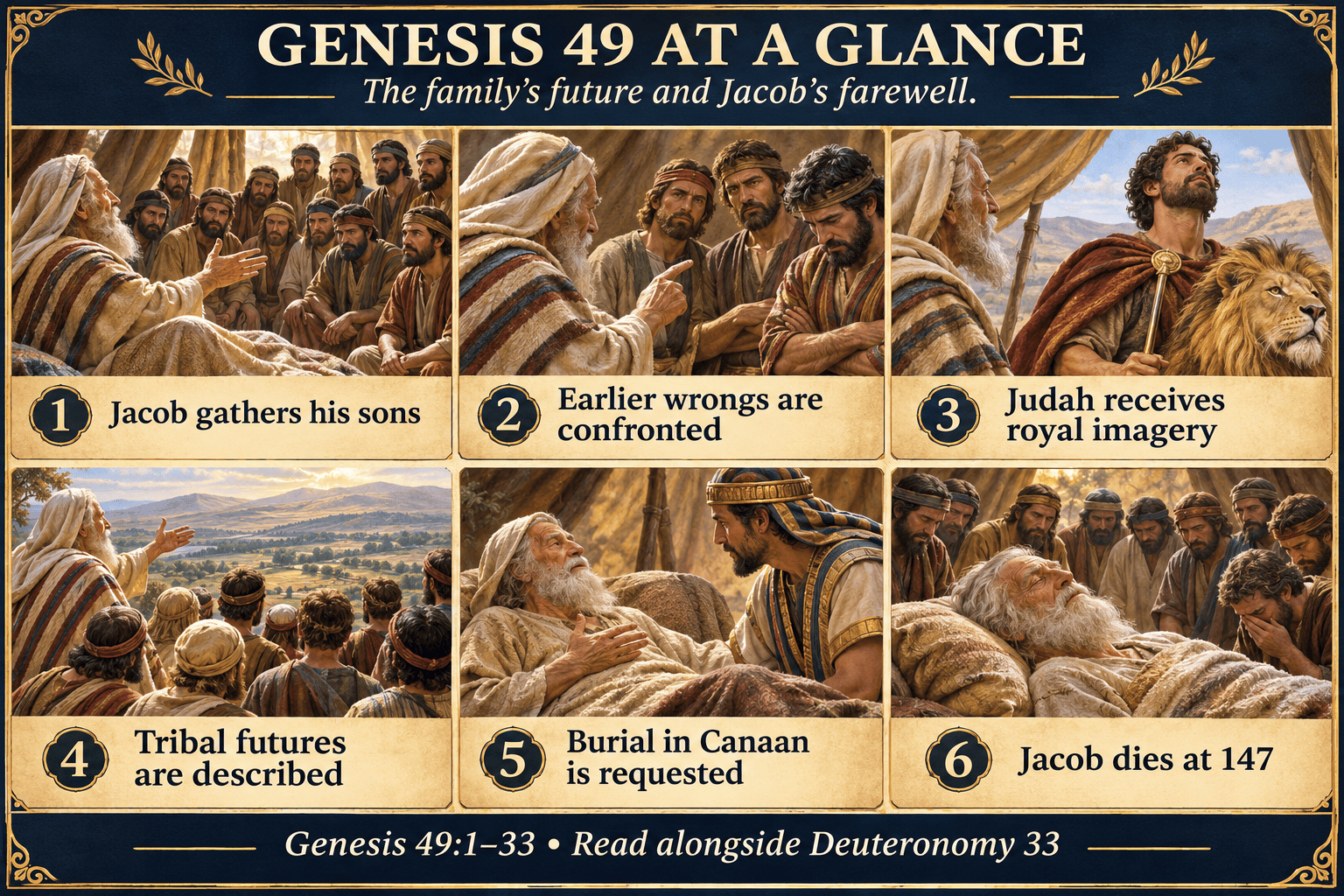
| Verses | Movement • ഉള്ളടക്കം |
|---|---|
| 1–2 | Gather and listen • ഒന്നിച്ചുകൂടി കേൾക്കുക |
| 3–7 | Firstborn privilege and violence confronted • കടിഞ്ഞൂലവകാശവും അക്രമവും |
| 8–12 | Judah’s royal imagery • യൂദായുടെ രാജപ്രതീകങ്ങൾ |
| 13–27 | Other tribal sayings and Joseph’s blessing • മറ്റു ഗോത്രവചനങ്ങളും ജോസഫിന്റെ അനുഗ്രഹവും |
| 28 | A suitable blessing for each • ഓരോരുത്തർക്കും ചേർന്ന അനുഗ്രഹം |
| 29–33 | Burial instructions and death • സംസ്കാരനിർദേശവും മരണവും |
The sons are also ancestors representing the tribes that bear their names. This is dense poetry, full of images and wordplay. “Days to come” opens the family’s future; the passage does not supply a calendar of dates.
പുത്രന്മാർ അവരുടെ പേരിലുള്ള ഗോത്രങ്ങളുടെ പൂർവികരായും പ്രതിനിധീകരിക്കുന്നു. ദൃശ്യങ്ങളും പദപ്രയോഗങ്ങളും നിറഞ്ഞ കവിതയാണിത്. വരുംകാലം കുടുംബത്തിന്റെ ഭാവിയെ തുറക്കുന്നു; തീയതികളുടെ കലണ്ടറല്ല നൽകുന്നത്.
Why spoken blessings matter • വാചികാനുഗ്രഹങ്ങളുടെ പ്രാധാന്യം

Biblical blessings invoke God’s care, express covenant belonging and entrust the future to him. Numbers 6 gives a spoken priestly blessing but identifies God as the one who blesses. Hebrews 11:20–21 presents the patriarchs’ blessings as acts of faith.
ദൈവപരിപാലനം അപേക്ഷിക്കുകയും ഉടമ്പടിബന്ധം പ്രകടിപ്പിക്കുകയും ഭാവി അവിടുത്തെ ഏൽപ്പിക്കുകയും ചെയ്യുന്നതാണ് തിരുവചനത്തിലെ അനുഗ്രഹങ്ങൾ. സംഖ്യ 6-ൽ പുരോഹിതർ വാക്കുകൾ ഉച്ചരിച്ചാലും അനുഗ്രഹിക്കുന്നത് ദൈവമാണ്. എബ്രായർ 11:20–21 പിതാക്കന്മാരുടെ അനുഗ്രഹങ്ങളെ വിശ്വാസപ്രവൃത്തികളായി കാണുന്നു.
Sirach 3:8–9 stresses parental blessing, and Jesus blesses children in Mark 10:13–16. Catechism 1669–1671 calls the baptized to bless and explains blessings as praise of God and prayer for his gifts. Some ecclesial blessings are reserved to ordained ministers. A parent may pray a simple blessing over a child without claiming Jacob’s prophetic authority.
പ്രഭാഷകൻ 3:8–9 മാതാപിതാക്കളുടെ അനുഗ്രഹത്തെ എടുത്തുകാട്ടുന്നു; മർക്കോസ് 10:13–16-ൽ യേശു കുട്ടികളെ അനുഗ്രഹിക്കുന്നു. മതബോധനഗ്രന്ഥം 1669–1671 മാമ്മോദീസ സ്വീകരിച്ചവരെ അനുഗ്രഹിക്കാൻ വിളിക്കുകയും ദൈവസ്തുതിയും അവിടുത്തെ ദാനങ്ങൾക്കായുള്ള പ്രാർഥനയുമായി അനുഗ്രഹത്തെ വിശദീകരിക്കുകയും ചെയ്യുന്നു. ചില സഭാനുഗ്രഹങ്ങൾ പട്ടം സ്വീകരിച്ച ശുശ്രൂഷകർക്കുള്ളതാണ്. യാക്കോബിന്റെ പ്രവചനാധികാരം അവകാശപ്പെടാതെ മാതാപിതാക്കൾക്ക് കുട്ടിക്കുവേണ്ടി പ്രാർഥിക്കാം.
Words can heal or wound, but they do not mechanically control God or fix a child’s destiny. Sirach’s strong wisdom language should not be turned into an automatic curse mechanism. Christian conduct is guided by Romans 12:14: bless rather than curse.
വാക്കുകൾ ആശ്വസിപ്പിക്കുകയോ മുറിവേൽപ്പിക്കുകയോ ചെയ്യാം; എന്നാൽ യാന്ത്രികമായി ദൈവത്തെ നിയന്ത്രിക്കുകയോ കുട്ടിയുടെ വിധി നിശ്ചയിക്കുകയോ ചെയ്യുന്നില്ല. പ്രഭാഷകന്റെ ശക്തമായ ജ്ഞാനഭാഷയെ സ്വയംപ്രവർത്തിക്കുന്ന ശാപരീതിയാക്കരുത്. ശപിക്കാതെ അനുഗ്രഹിക്കുക എന്ന റോമാ 12:14-ന്റെ നിർദേശമാണ് ക്രൈസ്തവജീവിതത്തെ നയിക്കുന്നത്.
Twelve sons and their mothers • പന്ത്രണ്ടു പുത്രന്മാരും അമ്മമാരും

| Mother • അമ്മ | Sons • പുത്രന്മാർ | Count |
|---|---|---|
| Leah • ലെയാ | Reuben, Simeon, Levi, Judah, Issachar, Zebulun • റൂബൻ, ശിമയോൻ, ലേവി, യൂദാ, ഇസ്സാക്കർ, സെബുലൂൺ | 6 |
| Rachel • റാഹേൽ | Joseph, Benjamin • ജോസഫ്, ബഞ്ചമിൻ | 2 |
| Bilhah • ബിൽഹാ | Dan, Naphtali • ദാൻ, നഫ്താലി | 2 |
| Zilpah • സിൽഫാ | Gad, Asher • ഗാദ്, ആഷേർ | 2 |
Dinah is Leah’s daughter; the chapter addresses the twelve sons. Joseph’s descendants receive inheritance through Ephraim and Manasseh, while Levi has a distinct distribution of towns among other tribes. A list of twelve sons and a list of territorial tribes therefore need not use identical names.
ദീന ലെയായുടെ പുത്രിയാണ്; ഇവിടെ പന്ത്രണ്ടു പുത്രന്മാരെയാണ് അഭിസംബോധന ചെയ്യുന്നത്. ജോസഫിന്റെ സന്തതികൾക്ക് എഫ്രായിമും മനാസ്സെയും വഴി അവകാശം ലഭിക്കുന്നു; ലേവിക്ക് മറ്റു ഗോത്രങ്ങൾക്കിടയിൽ പട്ടണങ്ങളാണ് ലഭിക്കുന്നത്. അതിനാൽ പന്ത്രണ്ടു പുത്രന്മാരുടെയും ദേശാവകാശഗോത്രങ്ങളുടെയും പട്ടികകളിലെ പേരുകൾ ഒരുപോലെയാകണമെന്നില്ല.
The speech is not strict birth order: Zebulun precedes Issachar. It moves broadly through Leah’s sons, the servants’ sons and Rachel’s sons.
കർശനമായ ജനനക്രമമല്ല പ്രസംഗത്തിൽ: ഇസ്സാക്കറിനു മുമ്പാണ് സെബുലൂൺ. ലെയായുടെ പുത്രന്മാരിൽനിന്ന് പരിചാരികമാരുടെ പുത്രന്മാരിലൂടെയും തുടർന്ന് റാഹേലിന്റെ പുത്രന്മാരിലേക്കും നീങ്ങുന്നു.
Reuben, Simeon and Levi • റൂബനും ശിമയോനും ലേവിയും

Reuben, Leah’s firstborn: his privileged position is acknowledged, then pre-eminence is denied because he lay with Bilhah, his father’s concubine (35:22). First Chronicles 5:1–2 explicitly explains the transfer of his birthright to Joseph’s sons and distinguishes that privilege from Judah’s leadership.
ലെയായുടെ കടിഞ്ഞൂൽപുത്രൻ റൂബൻ: ആദ്യസ്ഥാനം അംഗീകരിച്ചശേഷം പിതാവിന്റെ ഉപനാരി ബിൽഹായോടു ചേർന്നതിനാൽ മുൻസ്ഥാനം നഷ്ടപ്പെടുന്നു (35:22). 1 ദിനവൃത്താന്തം 5:1–2 കടിഞ്ഞൂലവകാശം ജോസഫിന്റെ പുത്രന്മാർക്കു കൈമാറിയതും യൂദായുടെ നേതൃത്വത്തിൽനിന്ന് അതു വ്യത്യസ്തമാണെന്നും വ്യക്തമാക്കുന്നു.
Simeon and Levi, Leah’s sons: the violence at Shechem in chapter 34 explains the rebuke. Jacob explicitly curses their fierce anger and cruel wrath. He predicts scattering; Simeon later receives towns within Judah (Joshua 19:1–9), while Levites live among the tribes (Joshua 21).
ലെയായുടെ പുത്രന്മാരായ ശിമയോനും ലേവിയും: 34-ലെ ഷെക്കെമിലെ അക്രമമാണ് ശാസനയുടെ പശ്ചാത്തലം. അവരുടെ ഉഗ്രകോപത്തെയും ക്രൂരക്രോധത്തെയുമാണ് യാക്കോബ് നേരിട്ട് ശപിക്കുന്നത്. ചിതറിക്കൽ പ്രവചിക്കുന്നു; ശിമയോന് പിന്നീടു യൂദായ്ക്കുള്ളിൽ പട്ടണങ്ങൾ ലഭിക്കുന്നു (ജോഷ്വ 19:1–9); ലേവ്യർ ഗോത്രങ്ങൾക്കിടയിൽ പാർക്കുന്നു (ജോഷ്വ 21).
Levi’s later teaching and priestly vocation appears in Deuteronomy 33:8–11. Genesis 49 does not yet explain that development. These warnings are not a declaration that every descendant is personally guilty or unable to serve God. Nor does every difficult image in the chapter have an invented personal sin behind it.
ലേവിയുടെ പിന്നീടുള്ള പ്രബോധനവും പുരോഹിതവിളിയും നിയമാവർത്തനം 33:8–11-ൽ കാണുന്നു. ആ തുടർച്ച ഇവിടെ ഇതുവരെ വിശദീകരിക്കുന്നില്ല. എല്ലാ സന്തതികളും വ്യക്തിപരമായി കുറ്റക്കാരാണെന്നോ ദൈവത്തെ സേവിക്കാനാവില്ലെന്നോ ഈ മുന്നറിയിപ്പുകൾ പറയുന്നില്ല. അധ്യായത്തിലെ ഓരോ കഠിനപ്രതീകത്തിനും പിന്നിൽ വ്യക്തിപാപം സങ്കൽപ്പിക്കേണ്ടതുമില്ല.
Judah, kingship and Christ • യൂദായും രാജത്വവും ക്രിസ്തുവും

Judah, Leah’s son: praise, victory, lion and sceptre imagery place leadership at the centre of his saying. David’s royal line develops that theme. Hebrews 7:14 identifies Jesus with Judah, and Revelation 5:5–6 presents the Lion of Judah as the victorious Lamb.
ലെയായുടെ മകൻ യൂദാ: സ്തുതിയും വിജയവും സിംഹവും ചെങ്കോലും നേതൃത്വത്തെ പ്രധാനമാക്കുന്നു. ദാവീദിന്റെ രാജവംശത്തിൽ ഈ വിഷയം വികസിക്കുന്നു. എബ്രായർ 7:14 യേശുവിനെ യൂദായുമായി ബന്ധപ്പെടുത്തുന്നു; വെളിപാട് 5:5–6 യൂദായുടെ സിംഹത്തെ വിജയിച്ച കുഞ്ഞാടായി അവതരിപ്പിക്കുന്നു.
Verse 10 has difficult Hebrew wording. The supplied RSVCE reads of the one to whom it belongs; alternatives involve Shiloh, and other translations mention tribute. The USCCB note recognises its royal and traditional messianic meaning while explaining the translation problem. This does not require an uninterrupted political monarchy in Judah until Jesus.
10-ലെ ഹീബ്രുപ്രയോഗം ദുഷ്കരമാണ്. നൽകിയ RSVCE അവകാശിയായവനെക്കുറിച്ച് പറയുന്നു; മറ്റുവായനകളിൽ ഷീലോയും മറ്റു വിവർത്തനങ്ങളിൽ കപ്പവും വരുന്നു. വിവർത്തനപ്രശ്നം വിശദീകരിക്കുമ്പോഴും രാജപരവും പരമ്പരാഗത മെസിയാനികവുമായ അർഥം USCCB കുറിപ്പ് അംഗീകരിക്കുന്നു. യേശുവരെയും യൂദായിൽ ഇടവിടാത്ത രാഷ്ട്രീയരാജത്വം ഉണ്ടായിരുന്നെന്നു പറയേണ്ടതില്ല.
The vine, wine and milk imagery portrays abundance. Christian readers may perceive further resonances, but the immediate poetic picture of a fruitful land should remain clear.
മുന്തിരിവള്ളിയും വീഞ്ഞും പാലും സമൃദ്ധിയുടെ ദൃശ്യങ്ങളാണ്. ക്രൈസ്തവവായനയിൽ കൂടുതൽ ബന്ധങ്ങൾ കാണാമെങ്കിലും ഫലസമൃദ്ധമായ ദേശത്തിന്റെ തൽസമയകവിതാചിത്രം വ്യക്തമാകണം.
Zebulun, Issachar and Dan • സെബുലൂണും ഇസ്സാക്കറും ദാനും

Zebulun — Leah: sea, ships and Sidon give a maritime picture. Joshua 19:10–16 does not offer a simple geographical match to a border at Sidon. Deuteronomy 33:18–19 also associates Zebulun and Issachar with maritime abundance. Keep the poetic image and later boundaries distinct.
സെബുലൂൺ — ലെയാ: കടലും കപ്പലുകളും സീദോനും കടൽബന്ധത്തിന്റെ ചിത്രമാണ്. സീദോനിലെ അതിർത്തിയുമായി ജോഷ്വ 19:10–16 ലളിതമായി പൊരുത്തപ്പെടുന്നില്ല. നിയമാവർത്തനം 33:18–19-ലും സെബുലൂണും ഇസ്സാക്കറും കടൽസമൃദ്ധിയുമായി ബന്ധപ്പെടുന്നു. കവിതാപ്രതീകവും പിന്നീടുള്ള അതിർത്തികളും വേർതിരിച്ചുവായിക്കാം.
Issachar — Leah: a strong donkey, pleasant land and burdensome service combine productivity and labour. Joshua 19:17–23 locates his tribe around fertile Jezreel. No specific offence by Issachar is given, and an exact event fulfilling the forced-labour line is not identified here.
ഇസ്സാക്കർ — ലെയാ: ശക്തമായ കഴുതയും മനോഹരദേശവും ഭാരമുള്ള വേലയും ഉത്പാദനവും അധ്വാനവും കൂട്ടിച്ചേർക്കുന്നു. ജോഷ്വ 19:17–23 ഫലഭൂയിഷ്ഠമായ ജെസ്രേൽ പ്രദേശത്താണ് ഗോത്രത്തെ സ്ഥാപിക്കുന്നത്. ഇസ്സാക്കറിന്റെ പ്രത്യേക തെറ്റൊന്നും പറയുന്നില്ല; നിർബന്ധവേലയുടെ കൃത്യനിറവേറലായി ഒരു സംഭവം ഇവിടെ തിരിച്ചറിയിക്കുന്നില്ല.
Dan — Bilhah: judging involves a wordplay with his name. The serpent suggests an unexpected way of overcoming a stronger opponent. Samson’s Danite ancestry and judgeship (Judges 13:2; 15:20) make a later parallel, although the saying does not name him. It does not declare every Danite evil.
ദാൻ — ബിൽഹാ: ന്യായം നടത്തുക എന്നതിനു പേരുമായി പദബന്ധമുണ്ട്. ശക്തനായ എതിരാളിയെ അപ്രതീക്ഷിതമായി നേരിടുന്നതിന്റെ ദൃശ്യമാണ് സർപ്പം. ദാൻഗോത്രക്കാരനായ സാംസന്റെ ന്യായാധിപസ്ഥാനവുമായി പിന്നീടുള്ള ബന്ധം കാണാം (ന്യായാധിപന്മാർ 13:2; 15:20); ഇവിടെ അവന്റെ പേര് പറയുന്നില്ല. എല്ലാ ദാൻഗോത്രക്കാരും ദുഷ്ടരാണെന്നുമല്ല.
Gad, Asher and Naphtali • ഗാദും ആഷേറും നഫ്താലിയും

Gad — Zilpah: raided, yet striking back. Similar-sounding Hebrew words link Gad with raiding. The tribe’s later military action in 1 Chronicles 5:18–22 is a thematic connection; the verse gives no personal offence as its cause.
ഗാദ് — സിൽഫാ: ആക്രമിക്കപ്പെട്ടാലും തിരിച്ചടിക്കുന്നു. ഗാദും ആക്രമണവും തമ്മിൽ ഹീബ്രുവിൽ ശബ്ദസാമ്യമുണ്ട്. 1 ദിനവൃത്താന്തം 5:18–22-ലെ പിന്നീടുള്ള സൈനികപ്രവർത്തനം വിഷയബന്ധമാണ്; വ്യക്തിപരമായ തെറ്റിനെ കാരണമായി വാക്യം പറയുന്നില്ല.
Asher — Zilpah: rich food and royal delicacies picture abundance. Deuteronomy 33:24–25 adds oil imagery. This is not the record of a particular contract to supply a named king.
ആഷേർ — സിൽഫാ: സമ്പന്നഭക്ഷണവും രാജവിഭവങ്ങളും സമൃദ്ധിയെ ചിത്രീകരിക്കുന്നു. നിയമാവർത്തനം 33:24–25 എണ്ണയുടെ പ്രതീകവും ചേർക്കുന്നു. ഒരു പ്രത്യേക രാജാവിന് ഭക്ഷണം നൽകിയ കരാറിന്റെ രേഖയല്ല ഇത്.
Naphtali — Bilhah: a freed doe and a phrase translated differently as lovely fawns or beautiful words. The supplied Malayalam follows the words reading; the English footnote records it as an alternative. Barak’s Naphtalite setting and the tribe’s action with Zebulun in Judges 4:6–10 offer later associations, not a complete explanation of every image.
നഫ്താലി — ബിൽഹാ: സ്വതന്ത്രമായ പേടമാനും മനോഹര മാൻകുട്ടികൾ അല്ലെങ്കിൽ മനോഹരവാക്കുകൾ എന്നു വ്യത്യസ്തമായി വിവർത്തനം ചെയ്യുന്ന അവസാനപ്രയോഗവും. നൽകിയ മലയാളം വാക്കുകളെക്കുറിച്ചുള്ള വായനയാണ്; ഇംഗ്ലീഷ് അടിക്കുറിപ്പിൽ അതു മറ്റുവായനയായി നൽകുന്നു. ന്യായാധിപന്മാർ 4:6–10-ലെ ബാറാക്കിന്റെ പശ്ചാത്തലവും സെബുലൂണിനൊപ്പമുള്ള ഗോത്രത്തിന്റെ പ്രവർത്തനവും പിന്നീടുള്ള ബന്ധങ്ങളാണ്; എല്ലാ പ്രതീകത്തിന്റെയും പൂർണവിശദീകരണമല്ല.
Joseph and Benjamin • ജോസഫും ബഞ്ചമിനും

Joseph — Rachel: fruitfulness, fierce opposition and endurance sustained by God. His earlier suffering makes a personal connection, while the words also concern his descendants. Deuteronomy 33:13–17 closely parallels the agricultural blessing; Joshua 16–17 describes Ephraim and Manasseh’s inheritance. The archery is poetic and need not describe a literal bow battle fought by Joseph.
ജോസഫ് — റാഹേൽ: ഫലസമൃദ്ധിയും ശക്തമായ എതിർപ്പും ദൈവസഹായത്താലുള്ള സ്ഥിരതയും. മുൻകാലദുരിതങ്ങളുമായി വ്യക്തിബന്ധമുണ്ടെങ്കിലും വാക്കുകൾ സന്തതികളെയും ഉൾക്കൊള്ളുന്നു. നിയമാവർത്തനം 33:13–17-ൽ കൃഷിസമൃദ്ധിയുടെ സമാനാനുഗ്രഹമുണ്ട്; ജോഷ്വ 16–17 എഫ്രായിമിന്റെയും മനാസ്സെയുടെയും അവകാശം വിവരിക്കുന്നു. വില്ലിന്റെ ചിത്രം കവിതയാണ്; ജോസഫ് നടത്തിയ അക്ഷരാർഥയുദ്ധമാകണമെന്നില്ല.
The Mighty One, Shepherd and Rock of Israel identify the source of his strength. Heaven, deep waters and fertility express comprehensive blessing. Judah’s royal role and Joseph’s inheritance prominence are distinct strands of the family’s future.
ശക്തനായവൻ, ഇടയൻ, ഇസ്രായേലിന്റെ പാറ എന്നീ വിശേഷണങ്ങൾ ശക്തിയുടെ ഉറവിടത്തെ ചൂണ്ടുന്നു. ആകാശവും ആഴജലവും സന്താനസമൃദ്ധിയും സമഗ്രാനുഗ്രഹം പ്രകടിപ്പിക്കുന്നു. യൂദായുടെ രാജസ്ഥാനവും ജോസഫിന്റെ അവകാശമുൻസ്ഥാനവും കുടുംബഭാവിയിലെ വ്യത്യസ്തധാരകളാണ്.
Benjamin — Rachel: the wolf and divided spoil suggest martial vigour. Benjaminite warriors in Judges 20:15–16 and Saul’s ancestry in 1 Samuel 9:1–2 offer later parallels. The saying does not permit cruelty or describe the moral character of every Benjaminite.
ബഞ്ചമിൻ — റാഹേൽ: ചെന്നായും പങ്കിടുന്ന കൊള്ളമുതലും സൈനികവീര്യത്തിന്റെ ചിത്രമാണ്. ന്യായാധിപന്മാർ 20:15–16-ലെ യോദ്ധാക്കളും 1 സാമുവൽ 9:1–2-ലെ സാവൂളിന്റെ വംശവും പിന്നീടുള്ള സമാനതകളാണ്. ക്രൂരതയ്ക്കുള്ള അനുമതിയോ എല്ലാ ബഞ്ചമിൻഗോത്രക്കാരുടെയും ധാർമികസ്വഭാവവിവരണമോ അല്ല.
Later Scripture: how strong is the connection? • പിന്നീടുള്ള തിരുവചനബന്ധങ്ങൾ

| Son / tribe | Later passage | What it shows • സൂചന |
|---|---|---|
| Reuben • റൂബൻ | 1 Chronicles 5:1–2 | Explicit explanation of the lost birthright • നഷ്ടപ്പെട്ട കടിഞ്ഞൂലവകാശത്തിന്റെ നേരിട്ടുള്ള വിശദീകരണം |
| Simeon • ശിമയോൻ | Joshua 19:1–9 | Towns within Judah’s inheritance • യൂദായുടെ അവകാശത്തിനുള്ളിലെ പട്ടണങ്ങൾ |
| Levi • ലേവി | Joshua 21; Deuteronomy 33:8–11 | Dispersed towns and later sacred service • ചിതറിയ പട്ടണങ്ങളും പിന്നീടുള്ള വിശുദ്ധശുശ്രൂഷയും |
| Judah • യൂദാ | 2 Samuel 7; Hebrews 7:14; Revelation 5:5–6 | Davidic and Christian messianic development • ദാവീദികവും ക്രൈസ്തവ മെസിയാനികവുമായ തുടർച്ച |
| Dan • ദാൻ | Judges 13:2; 15:20 | Samson’s tribe and judgeship: a later parallel • സാംസന്റെ ഗോത്രവും ന്യായാധിപസ്ഥാനവും |
| Joseph • ജോസഫ് | Deuteronomy 33:13–17; Joshua 16–17 | Fruitful land and two inheritance branches • ഫലഭൂമിയും രണ്ട് അവകാശശാഖകളും |
The sayings mix promise, rebuke and poetic portrayal. Verse 28 calls the whole farewell a suitable blessing for each son. That does not turn the warnings into pleasant wishes, or every later similarity into an explicitly confirmed prediction.
വാഗ്ദാനവും ശാസനയും കവിതാചിത്രവും വചനങ്ങളിൽ ചേർന്നിരിക്കുന്നു. 28-ാം വാക്യം ഓരോരുത്തർക്കും ചേർന്ന അനുഗ്രഹമെന്നു മുഴുവൻ വിടവാങ്ങലിനെ വിളിക്കുന്നു. അതുകൊണ്ട് മുന്നറിയിപ്പുകൾ വെറും ആശംസകളാകുകയോ ഓരോ പിന്നീടുള്ള സാമ്യവും നേരിട്ട് സ്ഥിരീകരിച്ച പ്രവചനമാകുകയോ ചെയ്യുന്നില്ല.
Jacob’s final request • യാക്കോബിന്റെ അവസാന അഭ്യർഥന

Bury me with my ancestors: Jacob specifies Machpelah, in the field Abraham purchased from Ephron the Hittite, near Mamre in Canaan. He names Abraham and Sarah, Isaac and Rebekah, and Leah as already buried there. Rachel’s grave is on the road to Bethlehem (35:19).
പിതാക്കന്മാരോടൊപ്പം അടക്കുക: കാനാനിലെ മാമ്രേക്കടുത്ത് ഹിത്യനായ എഫ്രോണിൽനിന്ന് അബ്രാഹം വാങ്ങിയ വയലിലെ മക്പേലാഗുഹയാണ് യാക്കോബ് വ്യക്തമാക്കുന്നത്. അബ്രാഹവും സാറായും ഇസഹാക്കും റബേക്കയും ലെയായും അവിടെ സംസ്കരിക്കപ്പെട്ടവരായി പറയുന്നു. റാഹേലിന്റെ കല്ലറ ബേത്ലെഹെമിലേക്കുള്ള വഴിയിലാണ് (35:19).
This confirms Rebekah’s burial but not when she died or whether she saw Jacob again. Leah’s burial is also reported here without a separate earlier death scene. The actual funeral journey is in chapter 50. Jacob’s instruction joins family loyalty to the promised land; it is not a rule that every believer must be buried in a birthplace.
റബേക്കയുടെ സംസ്കാരം ഇതു സ്ഥിരീകരിക്കുന്നു; എന്നാൽ എപ്പോൾ മരിച്ചെന്നോ യാക്കോബിനെ വീണ്ടും കണ്ടെന്നോ പറയുന്നില്ല. മുൻപ് വേറൊരു മരണരംഗമില്ലാതെ ലെയായുടെ സംസ്കാരവും ഇവിടെ പറയുന്നു. യഥാർഥസംസ്കാരയാത്ര 50-ലാണ്. കുടുംബവിശ്വസ്തതയും വാഗ്ദാനദേശവും നിർദേശത്തിൽ ചേരുന്നു; എല്ലാവരും ജന്മദേശത്ത് അടക്കപ്പെടണമെന്ന നിയമമല്ല.
After completing his instructions, Jacob draws his feet into bed and dies. Being gathered to his people is said before the body is carried to the family tomb; the expression is more than a simple report of the physical funeral.
നിർദേശങ്ങൾ പൂർത്തിയാക്കി യാക്കോബ് കാലുകൾ കിടക്കയിലേക്കെടുത്തു മരിക്കുന്നു. മൃതദേഹം കുടുംബകല്ലറയിലേക്ക് കൊണ്ടുപോകുന്നതിനുമുമ്പാണ് ജനത്തോടു ചേർന്നു എന്നു പറയുന്നത്; ഭൗതികസംസ്കാരത്തിന്റെ വാർത്തമാത്രമല്ല ആ പ്രയോഗം.
Jacob’s life timeline • യാക്കോബിന്റെ ജീവിതകാലക്രമം

| Event | Age / duration | Reference |
|---|---|---|
| Birth with Esau • ഏസാവിനൊപ്പം ജനനം | Isaac is 60 • ഇസഹാക്കിന് 60 | 25:26 |
| Bethel dream • ബേഥേലിലെ സ്വപ്നം | Age not stated in that account • ആ വിവരണത്തിൽ പ്രായമില്ല | 28 |
| Service with Laban • ലാബാനോടുള്ള സേവനം | 20 years: 14 + 6 • 20 വർഷം: 14 + 6 | 31:41 |
| Return and name Israel • മടക്കവും ഇസ്രായേൽ എന്ന പേരും | Return journey • മടക്കയാത്രയിൽ | 32–33 |
| Joseph sold • ജോസഫിനെ വിൽക്കുന്നു | Jacob about 108, calculated • ഏകദേശം 108, കണക്കാക്കിയത് | 37:2; 41:46; 45:6; 47:9 |
| Arrival in Egypt • ഈജിപ്തിലെ വരവ് | 130 | 47:9 |
| Life in Egypt • ഈജിപ്തിലെ ജീവിതം | 17 years • 17 വർഷം | 47:28 |
| Death • മരണം | 147 | 47:28; 49:33 |
The age 108 is inferred: Joseph is 30 when appointed, then seven abundant years and two famine years pass before the reunion, making him about 39. His sale at 17 was about 22 years earlier; Jacob’s 130 minus 22 gives about 108. The text does not directly state Jacob’s age at the sale.
108 എന്ന പ്രായം കണക്കാക്കുന്നതാണ്: നിയമിതനാകുമ്പോൾ ജോസഫിന് 30; ഏഴു സമൃദ്ധിവർഷവും രണ്ടു ക്ഷാമവർഷവും കഴിഞ്ഞ കൂടിക്കാഴ്ചയിൽ ഏകദേശം 39. 17-ലെ വിൽപന ഏകദേശം 22 വർഷം മുമ്പായിരുന്നു; യാക്കോബിന്റെ 130-ൽനിന്ന് 22 കുറച്ചാൽ ഏകദേശം 108. വിൽപനസമയത്തെ യാക്കോബിന്റെ പ്രായം പാഠം നേരിട്ട് പറയുന്നില്ല.
Questions and answers • ചോദ്യോത്തരങ്ങൾ
Are all twelve sayings curses? • പന്ത്രണ്ടും ശാപങ്ങളോ?
No. The farewell contains blessings, warnings and poetic descriptions; verse 28 calls them suitable blessings. • അല്ല; അനുഗ്രഹവും മുന്നറിയിപ്പും കവിതാചിത്രവും ചേർന്നിരിക്കുന്നു.
What is explicitly cursed? • നേരിട്ട് ശപിക്കുന്നത് എന്ത്?
Simeon and Levi’s fierce anger and cruel wrath in verse 7. • 7-ൽ ശിമയോന്റെയും ലേവിയുടെയും ഉഗ്രകോപവും ക്രൂരക്രോധവും.
Did Levi’s future end here? • ലേവിയുടെ ഭാവി ഇവിടെ അവസാനിച്ചോ?
No. Later Scripture gives the tribe sacred responsibilities among Israel. • ഇല്ല; പിന്നീടു ഗോത്രത്തിന് ഇസ്രായേലിൽ വിശുദ്ധചുമതലകൾ ലഭിക്കുന്നു.
Does this prove every angry parental word fixes a destiny? • മാതാപിതാക്കളുടെ കോപവാക്കുകൾ വിധി നിശ്ചയിക്കുമോ?
No. Blessing invokes God; it is not mechanical control over another person’s future. • ഇല്ല; അനുഗ്രഹം ദൈവത്തെ വിളിച്ചപേക്ഷിക്കുന്നു; മറ്റൊരാളുടെ ഭാവിയെ യാന്ത്രികമായി നിയന്ത്രിക്കുന്നില്ല.
Why does Naphtali’s verse differ between languages? • നഫ്താലിയുടെ വാക്യം ഭാഷകളിൽ വ്യത്യസ്തമാകുന്നതെന്ത്?
The final phrase has alternative readings, recorded in the English footnote. • അവസാനപ്രയോഗത്തിന് മറ്റുവായനകളുണ്ട്; ഇംഗ്ലീഷ് അടിക്കുറിപ്പ് അത് രേഖപ്പെടുത്തുന്നു.
Did Rebekah see Jacob again? • റബേക്ക യാക്കോബിനെ വീണ്ടും കണ്ടോ?
Her burial is confirmed, but this meeting is not narrated. • സംസ്കാരം സ്ഥിരീകരിക്കുന്നു; ആ കൂടിക്കാഴ്ച വിവരിക്കുന്നില്ല.
Is Jacob buried in this chapter? • ഈ അധ്യായത്തിൽ സംസ്കാരമുണ്ടോ?
He gives instructions and dies; the burial is narrated in Genesis 50. • നിർദേശങ്ങൾ നൽകി മരിക്കുന്നു; സംസ്കാരം ഉത്പത്തി 50-ലാണ്.
Blessing with truth and hope • സത്യത്തോടും പ്രത്യാശയോടും അനുഗ്രഹിക്കുക
Jacob does not hide the damage caused by wrongdoing, yet his farewell looks toward the family’s future. Verse 18 turns directly to the Lord for salvation. How can we speak truth without cruelty, pray for younger generations and prepare our responsibilities with faith?
തെറ്റുകളുടെ നാശം യാക്കോബ് മറച്ചുവയ്ക്കുന്നില്ല; എങ്കിലും കുടുംബത്തിന്റെ ഭാവിയിലേക്കാണ് നോക്കുന്നത്. 18-ാം വാക്യം രക്ഷയ്ക്കായി നേരിട്ട് കർത്താവിലേക്കു തിരിയുന്നു. ക്രൂരതയില്ലാതെ സത്യം പറയാനും അടുത്ത തലമുറകൾക്കുവേണ്ടി പ്രാർഥിക്കാനും ഉത്തരവാദിത്വങ്ങൾ വിശ്വാസത്തോടെ ക്രമീകരിക്കാനും എങ്ങനെ കഴിയും?
Prayer: Lord, teach us to bless with love, confront wrongdoing with justice, and entrust our families to your mercy. Give us faith to serve you through every season of life. Amen.
പ്രാർഥന: കർത്താവേ, സ്നേഹത്തോടെ അനുഗ്രഹിക്കാനും നീതിയോടെ തെറ്റിനെ നേരിടാനും കുടുംബങ്ങളെ അങ്ങയുടെ കരുണയ്ക്ക് ഏൽപ്പിക്കാനും പഠിപ്പിക്കണമേ. ജീവിതത്തിന്റെ എല്ലാ ഘട്ടങ്ങളിലും അങ്ങയെ സേവിക്കാൻ വിശ്വാസം നൽകണമേ. ആമേൻ.
Sources and further reading • കൂടുതൽ പഠനത്തിനായി
- Genesis 49 — RSVCE and footnotes
- Genesis 49 — USCCB and study notes
- Genesis 35 — mothers, sons and Reuben
- Genesis 47 — Jacob’s years
- Numbers 6 — priestly blessing
- Sirach 3 — parental blessing
- Mark 10 — Jesus blesses children
- Romans 12 — bless rather than curse
- Catechism 1669–1671 — blessings
- 1 Chronicles 5 — birthright and Gad
- Joshua 19 — tribal allotments
- Joshua 21 — Levitical towns
- Deuteronomy 33 — Moses’ tribal blessings
- Hebrews 7 — Jesus and Judah
- Revelation 5 — Lion and Lamb
- Judges 4 — Zebulun and Naphtali
- Judges 13 — Samson’s ancestry
- Judges 20 — Benjaminite warriors
- 1 Samuel 9 — Saul’s ancestry
Images are artistic teaching reconstructions. Animal emblems are poetic illustrations, not a canonical set of twelve tribal flags. Later connections distinguish direct explanations from thematic parallels and Christian interpretation. • ചിത്രങ്ങൾ പഠനസഹായിയായ കലാവിഷ്കാരങ്ങളാണ്. മൃഗപ്രതീകങ്ങൾ കവിതാചിത്രങ്ങളാണ്; പന്ത്രണ്ടു ഗോത്രങ്ങളുടെ ഔദ്യോഗികപതാകപ്പട്ടികയല്ല.


