


GENESIS • CHAPTER 2 • ENGLISH & MALAYALAM BIBLE STUDY
Life, Work and Communion
ഉത്പത്തി 2 • ജീവനും അധ്വാനവും കൂട്ടായ്മയും
Sacred rest, life received from God, a garden to cultivate, freedom with responsibility, and the gift of human companionship.
വിശുദ്ധവിശ്രമം, ദൈവത്തിൽനിന്നുള്ള ജീവൻ, പരിപാലിക്കാനുള്ള തോട്ടം, ഉത്തരവാദിത്വമുള്ള സ്വാതന്ത്ര്യം, മനുഷ്യബന്ധത്തിന്റെ ദാനം.

Completion of creation • സൃഷ്ടിയുടെ പൂർത്തീകരണം
Genesis 2:1–25 • English: Revised Standard Version Catholic Edition
2:1
Thus the heavens and the earth were finished, and all the host of them.
അങ്ങനെ ആകാശവും ഭൂമിയും അവയിലുള്ള സമസ്തവും പൂര്ണമായി.
2:2
And on the seventh day God finished his work which he had done, and he rested on the seventh day from all his work which he had done.
ദൈവം തന്റെ ജോലി ഏഴാം ദിവസം പൂര്ത്തിയാക്കി. താന് തുടങ്ങിയ പ്രവൃത്തിയില്നിന്നു വിരമിച്ച്, ഏഴാം ദിവസം അവിടുന്നു വിശ്രമിച്ചു.
2:3
So God blessed the seventh day and hallowed it, because on it God rested from all his work which he had done in creation.
സൃഷ്ടികര്മം പൂര്ത്തിയാക്കി, തന്റെ പ്രവൃത്തികളില്നിന്നു വിരമിച്ച് വിശ്രമിച്ച ഏഴാം ദിവസത്തെ ദൈവം അനുഗ്രഹിച്ചു വിശുദ്ധമാക്കി.
The garden narrative • ഏദൻ തോട്ടം
2:4
These are the generations of the heavens and the earth when they were created. [a]In the day that the Lord God made the earth and the heavens,
ഇതാണ് ആകാശത്തിന്റെയും ഭൂമിയുടെയും ഉത്പത്തിചരിത്രം.
2:5
when no plant of the field was yet in the earth and no herb of the field had yet sprung up—for the Lord God had not caused it to rain upon the earth, and there was no man to till the ground;
ദൈവമായ കര്ത്താവ് ആകാശവും ഭൂമിയും സൃഷ്ടിച്ച നാളില് ഭൂമിയില് പുല്ലോ ചെടിയോ മുളച്ചിരുന്നില്ല. കാരണം, അവിടുന്നു ഭൂമിയില് മഴ പെയ്യിച്ചിരുന്നില്ല. കൃഷിചെയ്യാന്മനുഷ്യനുണ്ടായിരുന്നുമില്ല.
2:6
but a mist[b] went up from the earth and watered the whole face of the ground—
എന്നാല്, ഭൂമിയില്നിന്ന് ഒരു മൂടല്മഞ്ഞ് ഉയര്ന്നു ഭൂതലമെല്ലാം നനച്ചു.
2:7
then the Lord God formed man of dust from the ground, and breathed into his nostrils the breath of life; and man became a living being.
ദൈവമായ കര്ത്താവ് ഭൂമിയിലെ പൂഴികൊണ്ടു മനുഷ്യനെ രൂപപ്പെടുത്തുകയും ജീവന്റെ ശ്വാസം അവന്റെ നാസാരന്ധ്രങ്ങളിലേക്കു നിശ്വസിക്കുകയും ചെയ്തു. അങ്ങനെ മനുഷ്യന് ജീവനുള്ളവനായിത്തീര്ന്നു.
2:8
And the Lord God planted a garden in Eden, in the east; and there he put the man whom he had formed.
അവിടുന്നു കിഴക്ക് ഏദനില് ഒരു തോട്ടം ഉണ്ടാക്കി, താന് രൂപംകൊടുത്ത മനുഷ്യനെ അവിടെ താമസിപ്പിച്ചു.
2:9
And out of the ground the Lord God made to grow every tree that is pleasant to the sight and good for food, the tree of life also in the midst of the garden, and the tree of the knowledge of good and evil.
കാഴ്ചയ്ക്കു കൗതുകവും ഭക്ഷിക്കാന് സ്വാദുമുള്ള പഴങ്ങള് കായ്ക്കുന്ന എല്ലാത്തരം വൃക്ഷങ്ങളും അവിടുന്നു മണ്ണില്നിന്നു പുറപ്പെടുവിച്ചു. ജീവന്റെ വൃക്ഷവും നന്മതിന്മകളെക്കുറിച്ചുള്ള അറിവിന്റെ വൃക്ഷവും തോട്ടത്തിന്റെ നടുവില് അവിടുന്നു വളര്ത്തി.
2:10
A river flowed out of Eden to water the garden, and there it divided and became four rivers.
തോട്ടം നനയ്ക്കാന് ഏദനില്നിന്ന് ഒരു നദി പുറപ്പെട്ടു. അവിടെവച്ച് അതു നാലു കൈവഴികളായിപ്പിരിഞ്ഞു.
2:11
The name of the first is Pishon; it is the one which flows around the whole land of Hav′ilah, where there is gold;
ഒന്നാമത്തേതിന്റെ പേര് പിഷോണ്. അത് സ്വര്ണത്തിന്റെ നാടായ ഹവിലാ മുഴുവന് ചുറ്റിയൊഴുകുന്നു.
2:12
and the gold of that land is good; bdellium and onyx stone are there.
ആ നാട്ടിലെ സ്വര്ണം മേല്ത്തരമാണ്. അവിടെ സുഗന്ധദ്രവ്യങ്ങളും പവിഴക്കല്ലുകളുമുണ്ട്.
2:13
The name of the second river is Gihon; it is the one which flows around the whole land of Cush.
രണ്ടാമത്തെനദിയുടെ പേര് ഗിഹോണ്. അതു കുഷ് എന്ന നാടിനെ ചുറ്റിയൊഴുകുന്നു.
2:14
And the name of the third river is Tigris, which flows east of Assyria. And the fourth river is the Euphra′tes.
മൂന്നാമത്തെനദിയുടെ പേര് ടൈഗ്രീസ്. അത് അസീറിയയുടെ കിഴക്കുഭാഗത്തുകൂടി ഒഴുകുന്നു. നാലാമത്തെനദിയൂഫ്രെട്ടീസ്.
2:15
The Lord God took the man and put him in the garden of Eden to till it and keep it.
ഏദന്തോട്ടം കൃഷിചെയ്യാനും സംരക്ഷിക്കാനും ദൈവമായ കര്ത്താവ് മനുഷ്യനെ അവിടെയാക്കി.
2:16
And the Lord God commanded the man, saying, “You may freely eat of every tree of the garden;
അവിടുന്ന് അവനോടു കല്പിച്ചു: തോട്ടത്തിലെ എല്ലാ വൃക്ഷങ്ങളുടെയും ഫലം ഭക്ഷിച്ചുകൊള്ളുക.
2:17
but of the tree of the knowledge of good and evil you shall not eat, for in the day that you eat of it you shall die.”
എന്നാല്, നന്മതിന്മകളെക്കുറിച്ചുള്ള അറിവിന്റെ വൃക്ഷത്തിലെ ഫലം നീ തിന്നരുത്; തിന്നുന്ന ദിവസം നീ മരിക്കും.
2:18
Then the Lord God said, “It is not good that the man should be alone; I will make him a helper fit for him.”
ദൈവമായ കര്ത്താവ് അരുളിച്ചെയ്തു: മനുഷ്യന് ഏകനായിരിക്കുന്നതു നന്നല്ല; അവനു ചേര്ന്ന ഇണയെ ഞാന് നല്കും.
2:19
So out of the ground the Lord God formed every beast of the field and every bird of the air, and brought them to the man to see what he would call them; and whatever the man called every living creature, that was its name.
ദൈവമായ കര്ത്താവ് ഭൂമിയിലെ സകല മൃഗങ്ങളെയും ആകാശത്തിലെ സകല പക്ഷികളെയും മണ്ണില്നിന്നു രൂപപ്പെടുത്തി. അവയ്ക്കു മനുഷ്യന് എന്തു പേരിടുമെന്ന് അറിയാന് അവിടുന്ന് അവയെ അവന്റെ മുമ്പില് കൊണ്ടുവന്നു. മനുഷ്യന് വിളിച്ചത് അവയ്ക്കു പേരായിത്തീര്ന്നു.
2:20
The man gave names to all cattle, and to the birds of the air, and to every beast of the field; but for the man there was not found a helper fit for him.
എല്ലാ കന്നുകാലികള്ക്കും ആകാശത്തിലെ പറവകള്ക്കും വയലിലെ മൃഗങ്ങള്ക്കും അവന് പേരിട്ടു. എന്നാല്, തനിക്കിണങ്ങിയ തുണയെ കണ്ടില്ല.
2:21
So the Lord God caused a deep sleep to fall upon the man, and while he slept took one of his ribs and closed up its place with flesh;
അതുകൊണ്ട്, ദൈവമായ കര്ത്താവ് മനുഷ്യനെ ഗാഢനിദ്രയിലാഴ്ത്തി, ഉറങ്ങിക്കിടന്ന അവന്റെ വാരിയെല്ലുകളില് ഒന്ന് എടുത്തതിനുശേഷം അവിടം മാംസംകൊണ്ടു മൂടി.
2:22
and the rib which the Lord God had taken from the man he made into a woman and brought her to the man.
മനുഷ്യനില്നിന്ന് എടുത്ത വാരിയെല്ലുകൊണ്ട് അവിടുന്ന് ഒരു സ്ത്രീക്കു രൂപംകൊടുത്തു. അവളെ അവന്റെ മുമ്പില്കൊണ്ടുവന്നു.
2:23
Then the man said, “This at last is bone of my bones and flesh of my flesh; she shall be called Woman,[c] because she was taken out of Man.”[d]
അപ്പോള് അവന് പറഞ്ഞു: ഒടുവില് ഇതാ എന്റെ അസ്ഥിയില്നിന്നുള്ള അസ്ഥിയും മാംസത്തില്നിന്നുള്ള മാംസവും. നരനില്നിന്ന് എടുക്കപ്പെട്ടതുകൊണ്ട് നാരിയെന്ന് ഇവള് വിളിക്കപ്പെടും.
2:24
Therefore a man leaves his father and his mother and cleaves to his wife, and they become one flesh.
അതിനാല്, പുരുഷന്മാതാപിതാക്കളെ വിട്ട് ഭാര്യയോടു ചേരും. അവര് ഒറ്റ ശരീരമായിത്തീരും.
2:25
And the man and his wife were both naked, and were not ashamed.
പുരുഷനും അവന്റെ ഭാര്യയും നഗ്നരായിരുന്നു. എങ്കിലും അവര്ക്കു ലജ്ജ തോന്നിയിരുന്നില്ല.
Two creation accounts, different perspectives • രണ്ടു സൃഷ്ടിവിവരണങ്ങൾ: വ്യത്യസ്ത ഊന്നലുകൾ

| Genesis 1:1–2:3 | Genesis 2:4–25 |
|---|---|
| Whole creation; an ordered sequence of days. | Human life, the garden and relationships. |
| Humanity in God’s image, male and female. | Formation from dust, life received, work, command and companionship. |
| God speaks and creation comes into ordered existence. | God is portrayed forming, planting and bringing. |
| Completion in the seventh day. | Recognition of shared humanity and one flesh. |
Genesis 2:1–3 completes the account begun in chapter 1. Verse 4 marks a transition, and the second presentation concentrates on human existence and relationships.
These accounts have distinct arrangements and emphases. Read them together without forcing every detail into a single scientific chronology or imagining a second human race.
ഉല്പത്തി 2:1–3 ഒന്നാം അധ്യായത്തിൽ തുടങ്ങിയ വിവരണം പൂർത്തിയാക്കുന്നു. നാലാം വാക്യത്തിൽ മാറ്റം വരുന്നു; തുടർന്ന് മനുഷ്യജീവിതവും ബന്ധങ്ങളും കേന്ദ്രമാകുന്നു.
വ്യത്യസ്ത ക്രമവും ഊന്നലുകളും ഉള്ള വിവരണങ്ങളാണിവ. എല്ലാം ഒരു ശാസ്ത്രീയകാലക്രമത്തിലേക്ക് നിർബന്ധിക്കുകയോ രണ്ടാമൊരു മനുഷ്യവംശത്തെ സങ്കൽപ്പിക്കുകയോ ചെയ്യരുത്.
Dust and the breath of life • പൂഴിയും ജീവന്റെ ശ്വാസവും

Dust: humanity belongs to the created earth and depends on God. The Hebrew words adam (human) and adamah (ground) form a wordplay.
Breath: life is received from God. The result is a living human being. God’s breathing is narrative imagery, not a claim that God has physical lungs.
Catholic teaching: the human person is a unity of body and spiritual soul. The soul is not a piece of God, and the body is not a disposable shell. Distinguish this doctrinal explanation from a claim that the verse uses later philosophical terminology.
പൂഴി: മനുഷ്യന്റെ സൃഷ്ടിത്വവും ദൈവാശ്രയവും പ്രകടമാകുന്നു. ആദം, അദാമാ എന്നീ എബ്രായവാക്കുകളിൽ മനുഷ്യനും മണ്ണും തമ്മിലുള്ള ഭാഷാബന്ധമുണ്ട്.
ശ്വാസം: ജീവൻ ദൈവത്തിൽനിന്നു ലഭിക്കുന്നു. മനുഷ്യൻ ജീവനുള്ളവനാകുന്നു. ദൈവത്തിന് ഭൗതികശ്വാസകോശമുണ്ടെന്ന അർഥമല്ല ഈ ഭാഷയ്ക്ക്.
വിശ്വാസപഠനം: ശരീരവും ആത്മാവും ചേർന്ന ഏകവ്യക്തിയാണ് മനുഷ്യൻ. ആത്മാവ് ദൈവത്തിന്റെ ഒരു കഷണമല്ല; ശരീരം ഉപേക്ഷിക്കാവുന്ന പുറന്തോടുമല്ല.
These are two aspects of one creation, not two separate people. See Catechism §§362–368.
The seventh day: blessing and sacred rest • ഏഴാം ദിവസം: അനുഗ്രഹവും വിശ്രമവും

The opening account reaches its climax in blessed time. God’s rest is not recovery from fatigue. For readers, work, worship and rest belong together. Israel’s later Sabbath observance and Christian Sunday worship have related but distinct biblical and liturgical settings; Sunday is especially the day of Christ’s Resurrection.
വിശുദ്ധസമയത്തിൽ ആദ്യവിവരണം പൂർത്തിയാകുന്നു. ദൈവത്തിന്റെ വിശ്രമം ക്ഷീണം മാറ്റലല്ല. അധ്വാനവും ആരാധനയും വിശ്രമവും ബന്ധപ്പെട്ടു നിൽക്കുന്നു. ശബ്ബത്തും ക്രൈസ്തവ ഞായറാഴ്ചയും ബന്ധമുള്ളവയെങ്കിലും ഒരേ ചരിത്രപശ്ചാത്തലമല്ല; ഞായറാഴ്ച ക്രിസ്തുവിന്റെ ഉത്ഥാനദിനമാണ്.
See Catechism: the third commandment for Sabbath and Sunday teaching.
The garden: gift and responsibility • തോട്ടം: ദാനവും ഉത്തരവാദിത്വവും

Work before the Fall
Cultivation is part of the original vocation. Work itself is not introduced as a punishment; painful toil appears in Genesis 3.
കൃഷിയും പരിപാലനവും ആദ്യവിളിയുടെ ഭാഗമാണ്. അധ്വാനംതന്നെ ശിക്ഷയല്ല; വേദനാജനകമായ അധ്വാനം മൂന്നാം അധ്യായത്തിൽ വരുന്നു.
Gift and stewardship
The garden gives nourishment and beauty while asking for care. Human freedom includes responsibility for what is entrusted.
തോട്ടം പോഷണവും സൗന്ദര്യവും നൽകുന്നു; സംരക്ഷണവും ആവശ്യപ്പെടുന്നു. ഏൽപ്പിച്ച ദാനത്തോടുള്ള ഉത്തരവാദിത്വം സ്വാതന്ത്ര്യത്തിന്റെ ഭാഗമാണ്.
Two trees and a command • രണ്ടു വൃക്ഷങ്ങളും കല്പനയും
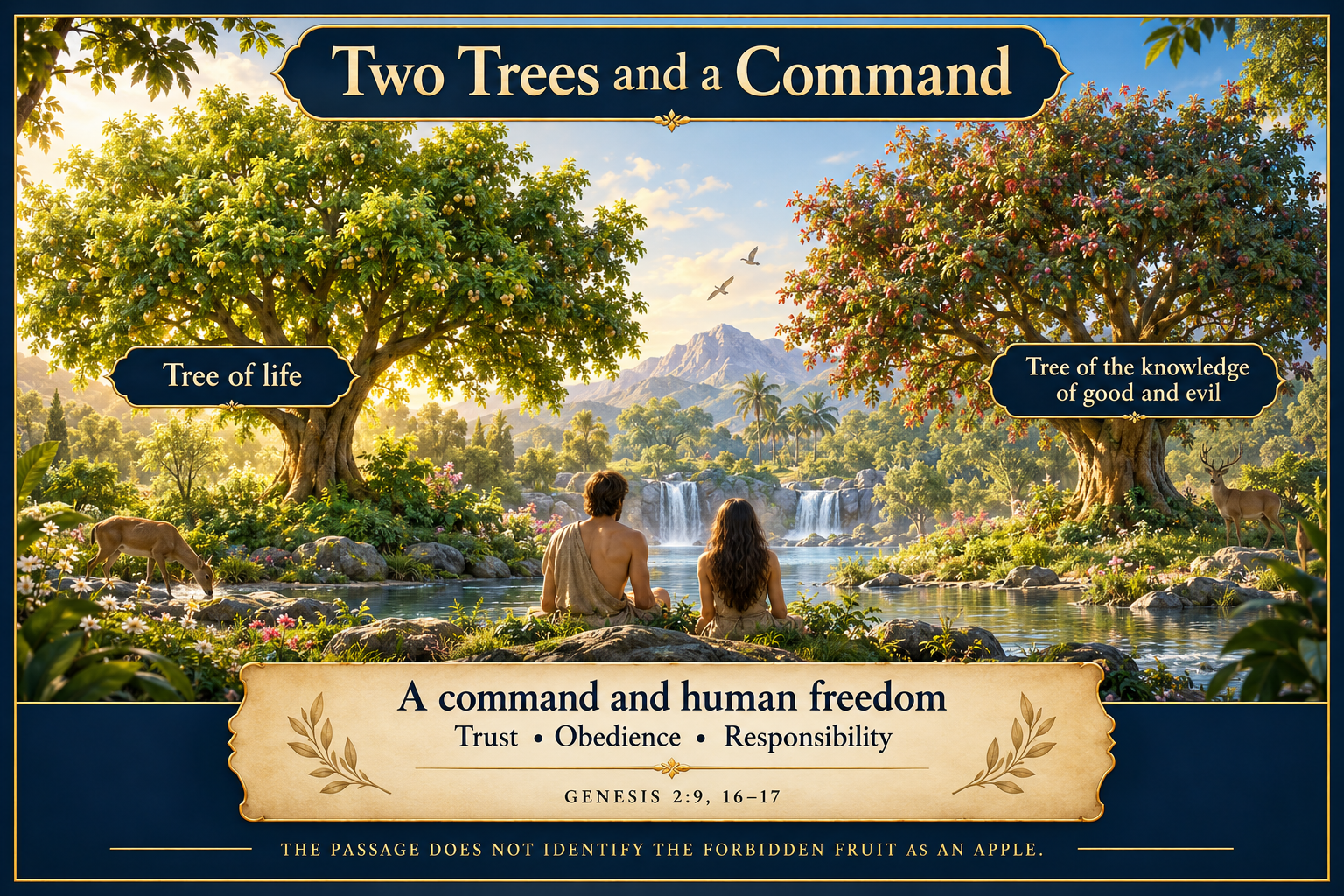
The permission is generous before the prohibition is stated. The command introduces a real limit within a gifted life.
The tree of life and the tree of the knowledge of good and evil have distinct roles. The command does not mean that learning is evil. Catholic reflection connects it with accepting creaturely limits and trusting God rather than claiming absolute moral autonomy.
The threatened death and the consequences of disobedience belong to the continuing narrative in Genesis 3; avoid reducing the passage to a botanical puzzle.
വിലക്കിനു മുമ്പേ വിശാലമായ അനുവാദമുണ്ട്. ദാനമായി ലഭിച്ച ജീവിതത്തിൽ ഒരു യഥാർഥപരിധി കല്പന അവതരിപ്പിക്കുന്നു.
ജീവവൃക്ഷത്തിനും നന്മതിന്മകളുടെ അറിവിന്റെ വൃക്ഷത്തിനും വ്യത്യസ്ത പങ്കുകളാണ്. പഠനവും അറിവും തിന്മയാണെന്നല്ല. ദൈവത്തിൽ ആശ്രയിക്കുകയും സൃഷ്ടിപരമായ പരിധികൾ അംഗീകരിക്കുകയും ചെയ്യുന്നതുമായി ബന്ധപ്പെടുത്തി വായിക്കാം.
അനുസരണക്കേടിന്റെ ഫലങ്ങൾ മൂന്നാം അധ്യായത്തിൽ തുടരുന്നു. ഇതിനെ ഫലത്തിന്റെ ഇനം കണ്ടെത്താനുള്ള ചോദ്യമാക്കി ചുരുക്കരുത്.
Naming animals and seeking companionship • പേരിടലും കൂട്ടായ്മയുടെ അന്വേഷണവും

The naming scene depicts the human recognising and distinguishing other creatures. Yet none supplies the corresponding human companionship sought in the narrative. Animals matter, but the story prepares for the recognition of another who shares human nature.
പേരിടൽ മറ്റു ജീവികളെ തിരിച്ചറിയുന്നതും വേർതിരിക്കുന്നതും കാണിക്കുന്നു. എന്നാൽ മനുഷ്യനു യോജിച്ച കൂട്ടായ്മ അവയിൽ കണ്ടെത്തുന്നില്ല. മനുഷ്യസ്വഭാവം പങ്കിടുന്ന മറ്റൊരാളെ തിരിച്ചറിയുന്നതിനുള്ള ഒരുക്കമാണിത്.
Shared humanity and one flesh • ഒരേ മനുഷ്യസ്വഭാവവും ഒറ്റശരീരവും
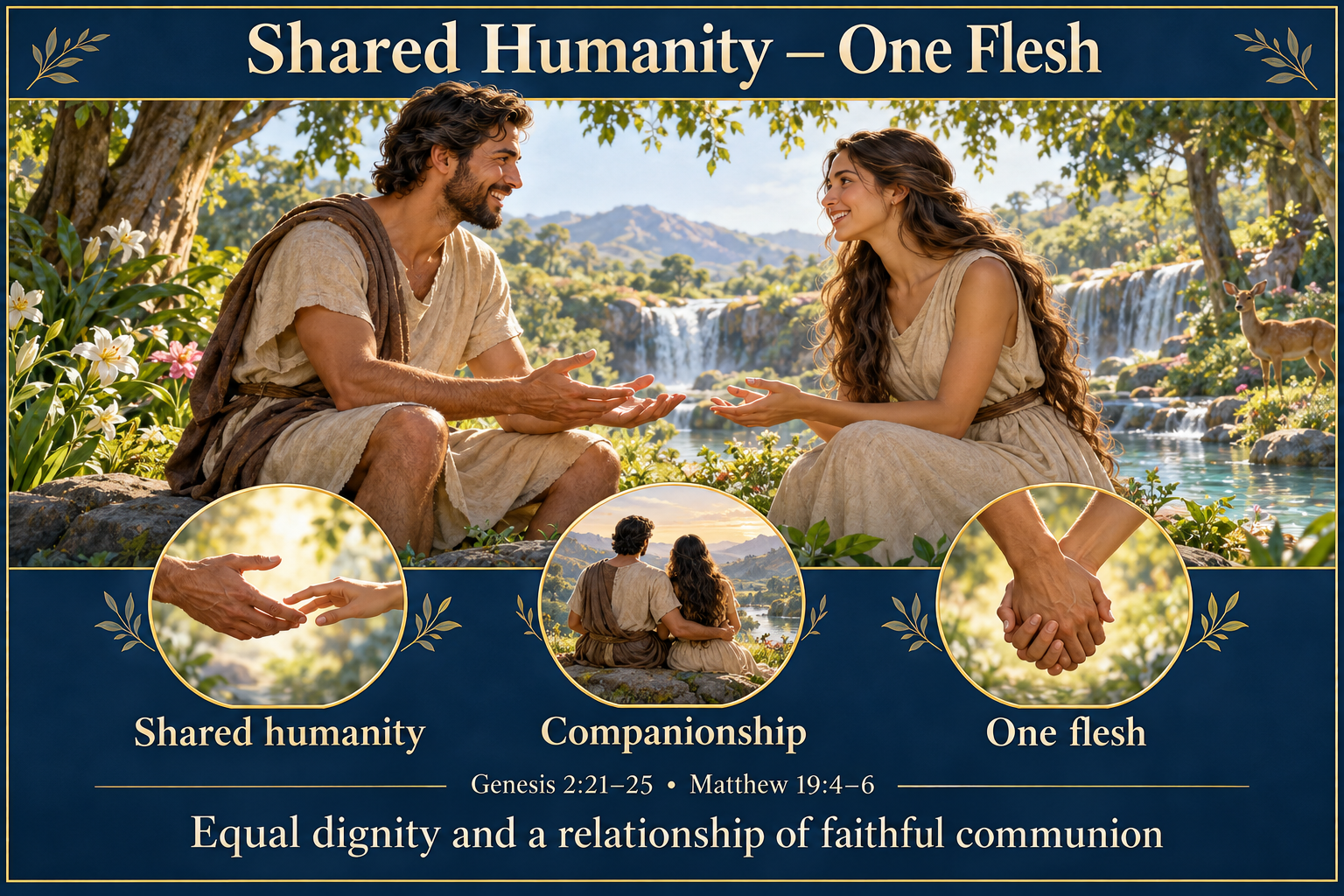
A helper corresponding to him
Helper does not inherently mean inferior. The narrative emphasises fitting companionship and shared humanity, not ownership of one person by another.
തുണ എന്നത് താഴ്ന്ന പദവിയെന്ന അർഥമല്ല. യോജിച്ച കൂട്ടായ്മയും ഒരേ മനുഷ്യസ്വഭാവവുമാണ് ഊന്നൽ.
Rib / side imagery
The formation from the man’s side culminates in recognition of shared flesh and bone. It should not be treated as evidence that men today have fewer ribs than women.
വാരിയെല്ലിന്റെ വിവരണം ഒരേ അസ്ഥിയും മാംസവുമെന്ന തിരിച്ചറിവിൽ എത്തുന്നു. ഇന്നത്തെ പുരുഷന്മാർക്ക് വാരിയെല്ല് കുറവാണെന്ന തെളിവല്ല ഇത്.
Leaving and cleaving
The text describes a new marital bond. Catholic teaching sees marriage as a faithful union of man and woman; Jesus draws on this passage in Matthew 19.
പുതിയ ദാമ്പത്യബന്ധം അവതരിപ്പിക്കുന്നു. മത്തായി 19-ൽ യേശു ഈ വാക്യം ഉപയോഗിക്കുന്നു.
Unashamed trust
Verse 25 presents openness before the rupture of Genesis 3. The artwork uses modest covering as an artistic choice, not as the wording of the verse.
മൂന്നാം അധ്യായത്തിലെ തകർച്ചയ്ക്കുമുമ്പുള്ള തുറന്ന വിശ്വാസമാണ് 25-ാം വാക്യം. ചിത്രത്തിലെ വസ്ത്രധാരണം കലാപരമായ തിരഞ്ഞെടുപ്പാണ്.
Marriage is honoured without making unmarried people inferior in dignity. Human communion also includes family, friendship, service and the life of the Church. See Catechism §§369–373.
Eden, rivers and places • ഏദനും നദികളും സ്ഥലങ്ങളും

| Name / verse | What the passage says | Identification and caution |
|---|---|---|
| Eden • ഏദൻ 2:8, 10 | The garden is planted in Eden; a river flows from Eden to water it. | Distinguish the region Eden from the garden in it. No modern location is conclusively established. |
| Garden • തോട്ടം 2:8–9, 15 | A place of nourishment, vocation and encounter with God. | The illustration is interpretive, not an archaeological reconstruction. |
| Pishon • പിഷോൺ 2:11 | Associated with the land of Havilah. | Its identification is uncertain; do not present a proposed modern river as settled. |
| Havilah • ഹവിലാ 2:11–12 | Associated with good gold, bdellium and a named stone in the English text. | Location and some material identifications are disputed. Names elsewhere in Genesis need not automatically identify the same place. |
| Gihon • ഗിഹോൺ 2:13 | Associated with Cush. | Do not confidently equate it with the Nile or the Jerusalem spring solely from the name. |
| Cush • കുഷ് 2:13 | A region around which Gihon flows in this description. | The name has different proposed geographical interpretations here; it should not simply be fixed to a modern country. |
| Tigris • ടൈഗ്രീസ് 2:14 | Flows east of Assyria / Asshur. | An identifiable Mesopotamian river name. Its recognition does not solve the entire Eden geography. |
| Assyria / Asshur • അസീറിയ 2:14 | A reference point in the Tigris description. | Asshur can denote the ancient city or associated region. Neither meaning establishes a precise garden location. |
| Euphrates • യൂഫ്രട്ടീസ് 2:14 | The fourth named river. | An identifiable major Mesopotamian river, but the ancient description should not be forced into a modern four-river map. |
The river description communicates abundant life and a wider world beyond the garden. Recognisable names coexist with difficult identifications. The diagram follows the narrative’s branches without claiming that modern river courses reproduce it exactly.
നദിവിവരണം ജീവസമൃദ്ധിയെയും തോട്ടത്തിനപ്പുറമുള്ള ലോകത്തെയും അവതരിപ്പിക്കുന്നു. തിരിച്ചറിയാവുന്ന പേരുകൾക്കൊപ്പം അനിശ്ചിതത്വവുമുണ്ട്. ആധുനികനദികൾ ഇതേ രൂപത്തിൽ ഒഴുകുന്നു എന്ന അവകാശവാദമില്ല.
New Testament connections • പുതിയനിയമബന്ധങ്ങൾ
| Genesis theme | New Testament passage | Connection |
|---|---|---|
| Male and female; one flesh | Matthew 19:4–6; Mark 10:6–9 | Jesus brings Genesis 1:27 and 2:24 together in his teaching on marriage. |
| One flesh | Ephesians 5:31–32 | Paul relates the marriage text to the mystery of Christ and the Church. |
| Living being | 1 Corinthians 15:45–49 | Paul quotes Genesis 2:7 while contrasting the first Adam with Christ, the last Adam. |
| Life-giving breath | John 20:22 | Jesus breathing on the disciples invites a new-creation comparison; do not treat Genesis as a complete account of this later event. |
| Tree and river of life | Revelation 22:1–2 | The final biblical vision takes up garden, river and tree imagery in a renewed setting. |
വിവാഹം, ക്രിസ്തുവും സഭയും, ആദവും ക്രിസ്തുവും, പുതുസൃഷ്ടി, ജീവവൃക്ഷം എന്നിവയിലൂടെ ഈ അധ്യായം പുതിയനിയമവുമായി ബന്ധപ്പെടുന്നു. വ്യക്തമായ ഉദ്ധരണിയും ആശയപരമായ സാമ്യവും വേർതിരിച്ചു വായിക്കുക.
Matthew 19 • Ephesians 5 • 1 Corinthians 15 • John 20 • Revelation 22
Further details worth noticing • കൂടുതൽ ശ്രദ്ധിക്കേണ്ട കാര്യങ്ങൾ
- Lord God: the divine designation differs from the repeated God of chapter 1; this is one of the literary features of the distinct presentations.
- Mist / stream: translations differ over the water term in 2:6. It should not become the basis of a confident theory of the entire planet’s ancient weather.
- Woman and man: 2:23 contains a Hebrew wordplay, ishshah / ish, reflected differently in English and Malayalam.
- Deep sleep: compare Genesis 15:12. A repeated expression invites comparison without making the scenes identical.
- Not good to be alone: a striking contrast with the first account’s goodness; relationship is central to the narrative.
- The serpent is not here yet: temptation and disobedience begin in Genesis 3.
ദൈവനാമം, ജലത്തെക്കുറിച്ചുള്ള വിവർത്തനവ്യത്യാസം, നരൻ–നാരി ഭാഷാസാമ്യം, ഗാഢനിദ്ര, ബന്ധത്തിന്റെ ആവശ്യകത എന്നിവ ശ്രദ്ധിക്കാം.
Reflection, prayer and summary • വിചിന്തനവും പ്രാർത്ഥനയും സംഗ്രഹവും
- Do I receive life as a gift rather than a possession? ജീവിതത്തെ സ്വന്തവസ്തുവെന്നതിലുപരി ദാനമായി സ്വീകരിക്കുന്നുണ്ടോ?
- How can work become service and care? അധ്വാനം സേവനവും പരിപാലനവുമാക്കാൻ എങ്ങനെ കഴിയും?
- Do my relationships honour the other person’s equal dignity? മറ്റൊരാളുടെ തുല്യഗൗരവം എന്റെ ബന്ധങ്ങൾ ആദരിക്കുന്നുണ്ടോ?
- What space do I make for worship and rest? ആരാധനയ്ക്കും വിശ്രമത്തിനും ഞാൻ സമയം മാറ്റിവയ്ക്കുന്നുണ്ടോ?
Lord God, you give us life and call us to faithful relationships. Teach us to work with care, respect the limits of freedom and honour every person. Bless our homes with trust, gratitude and peace. Amen.
ദൈവമായ കർത്താവേ, ജീവൻ നൽകി വിശ്വസ്തബന്ധങ്ങളിലേക്ക് അങ്ങ് ഞങ്ങളെ വിളിക്കുന്നു. കരുതലോടെ അധ്വാനിക്കാനും സ്വാതന്ത്ര്യത്തിന്റെ പരിധികൾ ആദരിക്കാനും ഓരോ മനുഷ്യനെയും ബഹുമാനിക്കാനും പഠിപ്പിക്കണമേ. വിശ്വാസവും നന്ദിയും സമാധാനവും നൽകി ഞങ്ങളുടെ ഭവനങ്ങളെ അനുഗ്രഹിക്കണമേ. ആമേൻ.
Summary: Genesis 2 completes the first creation account with sacred rest, then turns to the human in the garden: life received from God, work, a command, other creatures and corresponding companionship. Shared humanity and one flesh prepare the story for the testing of trust in Genesis 3.
സംഗ്രഹം: വിശുദ്ധവിശ്രമത്തോടെ ആദ്യവിവരണം പൂർത്തിയാകുന്നു. തുടർന്ന് തോട്ടത്തിലെ മനുഷ്യന്റെ ജീവനും അധ്വാനവും കല്പനയും മറ്റു ജീവികളും യോജിച്ച കൂട്ടായ്മയും അവതരിപ്പിക്കുന്നു. ഒരേ മനുഷ്യസ്വഭാവവും ഒറ്റശരീരവും മൂന്നാം അധ്യായത്തിലെ വിശ്വാസപരീക്ഷണത്തിന് പശ്ചാത്തലമാകുന്നു.


