


GENESIS • CHAPTER 36 • ENGLISH & MALAYALAM BIBLE STUDY
Esau, Edom and the Peoples of Seir
ഉത്പത്തി 36 • ഏസാവ്, ഏദോം, സെയിറിലെ ജനതകൾ
Esau’s family becomes a people: wives and descendants, the inhabitants of Seir, chiefs and kings.
ഏസാവിന്റെ കുടുംബം ഒരു ജനതയായി വളരുന്നു: ഭാര്യമാരും സന്തതികളും, സെയിറിലെ നിവാസികളും, പ്രമാണികളും രാജാക്കന്മാരും.

How to read the lists • പട്ടികകൾ എങ്ങനെ വായിക്കാം?
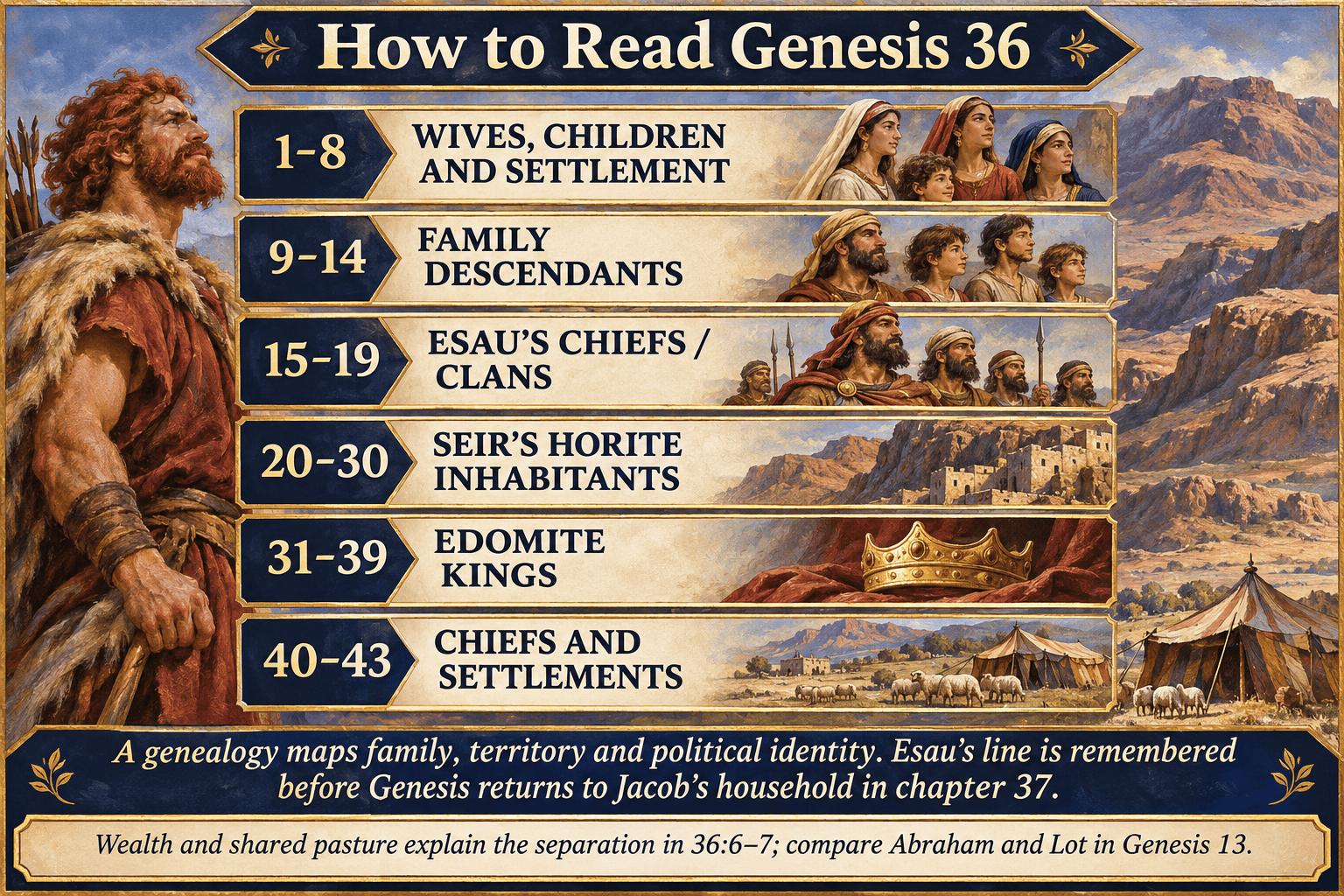
| Verses | Focus |
|---|---|
| 1–8 | Wives, children and settlement • ഭാര്യമാർ, മക്കൾ, വാസസ്ഥലം |
| 9–14 | Family descendants • കുടുംബസന്തതികൾ |
| 15–19 | Esau’s chiefs • ഏസാവിന്റെ പ്രമാണികൾ |
| 20–30 | Seir’s Horite inhabitants • സെയിറിലെ ഹോര്യനിവാസികൾ |
| 31–39 | Edomite kings • ഏദോമ്യരാജാക്കന്മാർ |
| 40–43 | Chiefs and settlements • പ്രമാണികളും വാസസ്ഥലങ്ങളും |
These are related but different kinds of lists. A family genealogy, a clan list and a royal succession should not be merged into a single father-to-son tree. The chapter completes Esau’s family account before the narrative returns to Jacob’s household in chapter 37.
ബന്ധമുള്ളതെങ്കിലും വ്യത്യസ്ത പട്ടികകളാണിവ. കുടുംബവംശാവലിയും ഗോത്രപ്പട്ടികയും രാജാക്കന്മാരുടെ പിന്തുടർച്ചയും ഒറ്റ പിതൃപുത്രവൃക്ഷമാക്കരുത്. 37-ൽ യാക്കോബിന്റെ കുടുംബത്തിലേക്കു മടങ്ങുന്നതിനു മുമ്പ് ഏസാവിന്റെ കുടുംബവിവരണം പൂർത്തിയാക്കുന്നു.
Genesis 36 — Scripture • ഉത്പത്തി 36 — തിരുവചനം
English: Revised Standard Version Catholic Edition. Both supplied texts are preserved with their own verse divisions. In Malayalam, verse 6 includes part of the explanation expressed in English verse 7. Anah’s family wording also differs between the supplied texts (2,14); see the study note below. • നൽകിയ രണ്ടു പാഠങ്ങളുടെയും വാക്യവിഭജനം സൂക്ഷിച്ചിരിക്കുന്നു.
Esau’s descendants • ഏസാവിന്റെ സന്തതികൾ
36:1
These are the descendants of Esau (that is, Edom).
ഏദോം എന്നുകൂടി പേരുള്ള ഏസാവിന്റെ സന്താനപരമ്പര ഇതാണ്.
36:2
Esau took his wives from the Canaanites: Adah the daughter of Elon the Hittite, Oholiba′mah the daughter of Anah the son[a] of Zib′eon the Hivite,
കാനാന്യ സ്ത്രീകളായിരുന്നു ഏസാവിന്റെ ഭാര്യമാര്. ഹിത്യനായ ഏലോന്റെ മകളാണ് ആദാ. ഹിവ്യനായ സിബയോന്റെ മകളായ ആനായുടെ പുത്രിയാണ് ഒഹോലിബാമാ.
36:3
and Bas′emath, Ish′mael’s daughter, the sister of Neba′ioth.
ഇസ്മായേലിന്റെ മകളും നെബായോത്തിന്റെ സാഹോദരിയുമാണ് ബസ്മത്ത്.
36:4
And Adah bore to Esau, El′iphaz; Bas′emath bore Reu′el;
ഏസാവിന് ആദായില് എലിഫാസും ബസ്മത്തില് റവുവേലും ജനിച്ചു.
36:5
and Oholiba′mah bore Je′ush, Jalam, and Korah. These are the sons of Esau who were born to him in the land of Canaan.
ഒഹോലിബാമായില്നിന്ന് അവന്യവുഷുവുംയാലാമും കോറഹും ജനിച്ചു. കാനാന്ദേശത്തുവച്ച് ഏസാവിനുണ്ടായ മക്കളാണ് ഇവര്.
36:6
Then Esau took his wives, his sons, his daughters, and all the members of his household, his cattle, all his beasts, and all his property which he had acquired in the land of Canaan; and he went into a land away from his brother Jacob.
ഏസാവ്, ഭാര്യമാരും പുത്രന്മാരും പുത്രിമാരും വീട്ടിലുള്ള എല്ലാവരുമൊത്ത്, തന്റെ കാലികളും മൃഗങ്ങളും കാനാന്ദേശത്തു താന് നേടിയ സ്വത്തുമായി സഹോദരനായ യാക്കോബിനെ വിട്ട് അകലെയുള്ള ഒരു ദേശത്തേക്കു പോയി. കാരണം, ഒന്നിച്ചു പാര്ക്കാന് വയ്യാത്തവിധം ഇരുവര്ക്കും അത്രയേറെ സമ്പത്തുണ്ടായിരുന്നു.
36:7
For their possessions were too great for them to dwell together; the land of their sojournings could not support them because of their cattle.
അവരുടെ അധിവാസഭൂമിക്കു സംരക്ഷിക്കുവാനാവാത്തവണ്ണം അത്രയധികമായിരുന്നു ആടുമാടുകള്.
36:8
So Esau dwelt in the hill country of Se′ir; Esau is Edom.
അതുകൊണ്ട് ഏസാവ് സെയിര് എന്ന മലനാട്ടില് പാര്ത്തു. ഏസാവും ഏദോമും ഒരാള്തന്നെ.
36:9
These are the descendants of Esau the father of the E′domites in the hill country of Se′ir.
സെയിര്മലയിലെ ഏദോമ്യരുടെ പിതാവായ ഏസാവിന്റെ സന്തതിപരമ്പര:
36:10
These are the names of Esau’s sons: El′iphaz the son of Adah the wife of Esau, Reu′el the son of Bas′emath the wife of Esau.
ഏസാവിന്റെ പുത്രന്മാരുടെ പേരുകള്: ഏസാവിന് ഭാര്യയായ ആദായിലുണ്ടായ മകന് എലിഫാസ്. ഭാര്യയായ ബസ്മത്തിലുണ്ടായ മകന് റവുവേല്.
36:11
The sons of El′iphaz were Teman, Omar, Zepho, Gatam, and Kenaz.
എലിഫാസിന്റെ പുത്രന്മാര് തേമാന്, ഓമര്, സെഫോ, ഗത്താം, കെനസ്.
36:12
(Timna was a concubine of El′iphaz, Esau’s son; she bore Am′alek to El′iphaz.) These are the sons of Adah, Esau’s wife.
ഏസാവിന്റെ മകന് എലിഫാസിനു തിമ്നാ എന്നൊരു ഉപനാരിയുണ്ടായിരുന്നു. എലിഫാസിന് അവളില് അമലേക്ക് എന്നൊരു പുത്രന് ജനിച്ചു. ഏസാവിന് ഭാര്യയായ ആദായിലുണ്ടായ സന്തതികളാണ് ഇവര്.
36:13
These are the sons of Reu′el: Nahath, Zerah, Shammah, and Mizzah. These are the sons of Bas′emath, Esau’s wife.
റവുവേലിന്റെ പുത്രന്മാരാണ് നഹത്ത്, സേറഹ്, ഷമ്മാ, മിസ്സാം എന്നിവര്. ഏസാവിനു ഭാര്യ ബസ്മത്തിലുണ്ടായ സന്തതികളാണ് ഇവര്.
36:14
These are the sons of Oholiba′mah the daughter of Anah the son[b] of Zib′eon, Esau’s wife: she bore to Esau Je′ush, Jalam, and Korah.
സിബയോന്റെ പുത്രിയായ ആനായുടെ മകള് ഒഹോലിബാമായില് ഏസാവിനുണ്ടായ പുത്രന്മാരാണ് യവൂഷും, യാലാമും, കോറഹും.
Chiefs of Esau • ഏസാവിന്റെ പ്രമാണികൾ
36:15
These are the chiefs of the sons of Esau. The sons of El′iphaz the first-born of Esau: the chiefs Teman, Omar, Zepho, Kenaz,
ഏസാവിന്റെ മക്കളില് പ്രധാനര് ഇവരായിരുന്നു: ഏസാവിന്റെ കടിഞ്ഞൂല്പുത്രനായ എലിഫാസിന്റെ മക്കള് തേമാന്, ഓമര്, സെഫോ, കെനസ്,
36:16
Korah, Gatam, and Am′alek; these are the chiefs of El′iphaz in the land of Edom; they are the sons of Adah.
കോറഹ്, ഗത്താം, അമലേക്ക് എന്നിവര് ഏദോം നാട്ടില് എലിഫാസില്നിന്നുണ്ടായ നായകന്മാരാണ്. ഇവരെല്ലാം ആദായുടെ പുത്രന്മാരാണ്.
36:17
These are the sons of Reu′el, Esau’s son: the chiefs Nahath, Zerah, Shammah, and Mizzah; these are the chiefs of Reu′el in the land of Edom; they are the sons of Bas′emath, Esau’s wife.
ഏസാവിന്റെ മകനായ റവുവേലിന്റെ പുത്രന്മാര്: പ്രമുഖരായ നഹത്ത്, സേറഹ്, ഷമ്മാ, മിസ്സാ. ഏദോംനാട്ടില് റവുവേലില് നിന്നുണ്ടായ പ്രധാനപ്പെട്ടവരാണ് ഇവര്. ഇവര് ഏസാവിന്റെ ഭാര്യ ബസ്മത്തിന്റെ സന്തതികളാണ്.
36:18
These are the sons of Oholiba′mah, Esau’s wife: the chiefs Je′ush, Jalam, and Korah; these are the chiefs born of Oholiba′mah the daughter of Anah, Esau’s wife.
ഏസാവിന്റെ ഭാര്യ ഒഹോലിബാമായുടെ പുത്രന്മാര്: പ്രമുഖരായ യവൂഷ്, യലാം, കോറഹ്. ഇവര് ഏസാവിന്റെ ഭാര്യയും ആനായുടെ മകളുമായ ഒഹോലിബാമായില് നിന്നുള്ള നായകന്മാരാണ്.
36:19
These are the sons of Esau (that is, Edom), and these are their chiefs.
ഇവര് ഏസാവിന്റെ സന്തതികളും ഏദോമിലെ പ്രമുഖന്മാരുമാണ്.
The Horites of Seir • സെയിറിലെ ഹോര്യർ
36:20
These are the sons of Se′ir the Horite, the inhabitants of the land: Lotan, Shobal, Zib′eon, Anah,
അന്നാട്ടില് പാര്ത്തിരുന്നവരും സെയിര് എന്ന ഹോര്യന്റെ പുത്രന്മാരുമാണ് ലോത്താന്, ഷോബാല്, സിബയോന്, ആനാ,
36:21
Dishon, Ezer, and Dishan; these are the chiefs of the Horites, the sons of Se′ir in the land of Edom.
ദീഷോന്, ഏസെര്, ദീഷാന്. ഇവര് ഏദോം നാട്ടിലെ സെയിറിന്റെ പുത്രന്മാരും ഹോര്യയിലെ പ്രമാണികളുമാണ്.
36:22
The sons of Lotan were Hori and Heman; and Lotan’s sister was Timna.
ലോത്താന്റെ പുത്രന്മാര് ഹോറി, ഹേമാ. ലോത്താന്റെ സഹോദരിയായിരുന്നു തിമ്നാ.
36:23
These are the sons of Shobal: Alvan, Man′ahath, Ebal, Shepho, and Onam.
ഷോബാലിന്റെ പുത്രന്മാര് അല്വാന്, മനഹത്ത്, ഏബാല്, ഷെഫോ, ഓനാം.
36:24
These are the sons of Zib′eon: A′iah and Anah; he is the Anah who found the hot springs in the wilderness, as he pastured the asses of Zib′eon his father.
സിബയോന്റെ പുത്രന്മാര്: ആയ്യാ, ആനാ. തന്റെ പിതാവായ സിബയോന്റെ കഴുതകളെ മേയ്ക്കുമ്പോള് മരുഭൂമിയില് ചൂടുറവകള് കണ്ടെണ്ടത്തിയ ആനാ ഇവന്തന്നെയാണ്.
36:25
These are the children of Anah: Dishon and Oholiba′mah the daughter of Anah.
ദീഷോന് ആനായുടെ പുത്രനും ഒഹോലിബാമാ പുത്രിയുമായിരുന്നു.
36:26
These are the sons of Dishon: Hemdan, Eshban, Ithran, and Cheran.
ഹെമ്ദാന്, എഷ്ബാന്, ഇത്രാന്, കെറാന് എന്നിവരായിരുന്നു ദീഷോന്റെ പുത്രന്മാര്.
36:27
These are the sons of Ezer: Bilhan, Za′avan, and Akan.
ഏസെറിന്റെ പുത്രന്മാരായിരുന്നു ബില്ഹാനും സാവാനും അക്കാനും.
36:28
These are the sons of Dishan: Uz and Aran.
ദീഷാന്റെ പുത്രന്മാരായിരുന്നു ഊസും അരാനും.
36:29
These are the chiefs of the Horites: the chiefs Lotan, Shobal, Zib′eon, Anah,
ഹോര്യരിലെ പ്രമുഖരായിരുന്നു ലോത്താന്, ഷോബാന്, സിബയോന്, ആനാ എന്നിവര്.
36:30
Dishon, Ezer, and Dishan; these are the chiefs of the Horites, according to their clans in the land of Se′ir.
ദീഷോന്, ഏസെര്, ദീഷാന് എന്നിവര് സെയിര്നാട്ടില് ഹോര്യരിലെ പ്രമുഖരായിരുന്നു.
Kings of Edom • ഏദോമിലെ രാജാക്കന്മാർ
36:31
These are the kings who reigned in the land of Edom, before any king reigned over the Israelites.
ഇസ്രായേല്ക്കാരുടെയിടയില് രാജഭരണം ആരംഭിക്കുന്നതിനുമുന്പ് ഏദോം നാട്ടിലെ ഭരണാധികാരികള് ഇവരായിരുന്നു;
36:32
Bela the son of Be′or reigned in Edom, the name of his city being Din′habah.
ബേയോറിന്റെ മകനായ ബേല ഏദോമില് ഭരിച്ചു. അവന്റെ പട്ടണത്തിന്റെ പേര് ദിന്ഹാബാ എന്നായിരുന്നു.
36:33
Bela died, and Jobab the son of Zerah of Bozrah reigned in his stead.
ബേല മരിച്ചപ്പോള് ബൊസ്രായിലെ സേറഹിന്റെ മകനായ യോബാബ് രാജാവായി.
36:34
Jobab died, and Husham of the land of the Te′manites reigned in his stead.
യോബാബ് മരിച്ചപ്പോള് തേമാന്യനായ ഹൂഷാം രാജാവായി.
36:35
Husham died, and Hadad the son of Bedad, who defeated Mid′ian in the country of Moab, reigned in his stead, the name of his city being Avith.
ഹൂഷാം മരിച്ചപ്പോള് ബദാദിന്റെ പുത്രനായ ഹദാദ് രാജാവായി. അവന് മൊവാബുദേശത്തുവച്ച് മിദിയാനെ തോല്പിച്ചു. അവന്റെ പട്ടണത്തിന്റെ പേര് അവിത് എന്നായിരുന്നു.
36:36
Hadad died, and Samlah of Masre′kah reigned in his stead.
ഹദാദ് മരിച്ചപ്പോള് മസ്റേക്കായിലെ സമ്ലാ രാജാവായി.
36:37
Samlah died, and Shaul of Reho′both on the Euphra′tes reigned in his stead.
സമ്ലാ മരിച്ചപ്പോള് നദീതീരത്തുള്ള റഹോബോത്തിലെ സാവൂള് രാജാവായി.
36:38
Shaul died, and Ba′al-ha′nan the son of Achbor reigned in his stead.
സാവൂള് മരിച്ചപ്പോള് അക്ബോറിന്റെ മകനായ ബാല്ഹാനാന് രാജാവായി.
36:39
Ba′al-ha′nan the son of Achbor died, and Hadar reigned in his stead, the name of his city being Pau; his wife’s name was Mehet′abel, the daughter of Matred, daughter of Me′zahab.
അക്ബോറിന്റെ മകനായ ബാല്ഹാനാന്മരിച്ചപ്പോള് ഹദാറാണു തല്സ്ഥാനത്തു ഭരിച്ചത്. അവന്റെ പട്ടണത്തിന്റെ പേര് പാവൂ എന്നായിരുന്നു. മെസാഹാബിന്റെ പൗത്രിയും മത്രെദിന്റെ പുത്രിയുമായ മെഹേത്തബേല് ആയിരുന്നു അവന്റെ ഭാര്യ.
Chiefs and settlements • പ്രമാണികളും വാസസ്ഥലങ്ങളും
36:40
These are the names of the chiefs of Esau, according to their families and their dwelling places, by their names: the chiefs Timna, Alvah, Jetheth,
കുടുംബവും വാസസ്ഥലവും പേരുമനുസരിച്ച്, ഏസാവില്നിന്നുദ്ഭവിച്ച പ്രമുഖര് തിമ്ന, അല്വാ, യത്തത്ത്,
36:41
Oholiba′mah, Elah, Pinon,
ഒഹോലിബാമാ, ഏലാ, പിനോന്,
36:42
Kenaz, Teman, Mibzar,
കെനസ്, തേമാന്, മിബ്സാര്,
36:43
Mag′diel, and Iram; these are the chiefs of Edom (that is, Esau, the father of Edom), according to their dwelling places in the land of their possession.
മഗ്ദിയേല്, ഈറാം എന്നിവരായിരുന്നു. തങ്ങള് കൈയടക്കിയ നാട്ടിലെ താമസസ്ഥലമനുസരിച്ച് ഏദോംകാരുടെ പ്രമാണികള് ഇവരായിരുന്നു. ഏസാവാണ് ഏദോംകാരുടെ പിതാവ്.
English footnote markers [a] and [b] concern the family wording about Anah in verses 2 and 14. Consult the RSVCE edition notes. The supplied wording has not been silently harmonised. • ആനായുടെ ബന്ധവിവരണത്തിലെ പാഠവ്യത്യാസങ്ങൾ നിശ്ശബ്ദമായി തിരുത്തിയിട്ടില്ല.
Who is Edom? • ഏദോം ആരാണ്?

Edom is Esau (1,8). The name then also identifies his descendants and their country. Edom means “red”; Genesis 25:25,30 connects the name through wordplay with Esau’s appearance and the red food.
ഏദോം ഏസാവാണ് (1,8). പിന്നീട് അവന്റെ സന്തതികളെയും അവരുടെ നാടിനെയും ഈ പേര് സൂചിപ്പിക്കുന്നു. ഏദോം എന്നതിന് “ചുവപ്പ്” എന്ന അർഥമുണ്ട്; ഉത്പത്തി 25:25,30 ഏസാവിന്റെ രൂപത്തോടും ചുവന്ന ഭക്ഷണത്തോടും വാക്കുകളിലൂടെ ബന്ധിപ്പിക്കുന്നു.
Seir is the hill country associated with Edom, broadly south and southeast of the Dead Sea, in the region of modern southern Jordan. “Seir the Horite” in verse 20 is an ancestral figure in the inhabitants’ genealogy; distinguish that personal name from the region.
സെയിർ ഏദോമുമായി ബന്ധപ്പെട്ട മലനാടാണ്; ചാവുകടലിനു തെക്കും തെക്കുകിഴക്കുമായി, ഇന്നത്തെ തെക്കൻ ജോർദാന്റെ പ്രദേശത്താണ് ഏകദേശസ്ഥാനം. 20-ലെ “ഹോര്യനായ സെയിർ” നിവാസികളുടെ വംശാവലിയിലെ പൂർവികനാണ്; വ്യക്തിനാമവും പ്രദേശവും വേർതിരിക്കുക.
Verses 6–7 explain separation from Jacob through their great possessions and the land’s limited pasture. Compare Abraham and Lot in Genesis 13. Esau is already associated with Seir in chapters 32–33, so this family-history summary need not describe a new move after every event in chapter 35.
വലിയ സമ്പത്തും പരിമിതമായ മേച്ചിൽഭൂമിയുമാണ് 6–7-ൽ വേർപാടിന്റെ കാരണം. ഉത്പത്തി 13-ലെ അബ്രാഹവും ലോത്തും ഓർക്കാം. 32–33-ൽ ഏസാവ് സെയിറുമായി നേരത്തേ ബന്ധപ്പെട്ടിരിക്കുന്നു; അതിനാൽ 35-ലെ എല്ലാ സംഭവങ്ങൾക്കും ശേഷമുള്ള പുതിയ നീക്കമായി ഈ കുടുംബചരിത്രസംഗ്രഹം വായിക്കേണ്ടതില്ല.
Wives and sons in this chapter • ഈ അധ്യായത്തിലെ ഭാര്യമാരും പുത്രന്മാരും

| Wife | Family identification | Sons |
|---|---|---|
| Adah • ആദാ | Elon the Hittite’s daughter • ഹിത്യനായ ഏലോന്റെ മകൾ | Eliphaz • എലിഫാസ് |
| Basemath • ബസ്മത്ത് | Ishmael’s daughter; Nebaioth’s sister • ഇസ്മായേലിന്റെ മകൾ; നെബായോത്തിന്റെ സഹോദരി | Reuel • റവുവേൽ |
| Oholibamah • ഒഹോലിബാമാ | Anah’s daughter, linked with Zibeon the Hivite • ആനായുടെ മകൾ; ഹിവ്യനായ സിബയോനുമായി ബന്ധം | Jeush, Jalam, Korah • യവൂഷ്, യാലാം, കോറഹ് |
The five named sons are not necessarily a complete list of every child: verse 6 also mentions daughters without naming them. The chapter’s family relationships connect Esau with both Canaanite households and Ishmael’s family.
പേരുപറഞ്ഞ അഞ്ചു പുത്രന്മാർ എല്ലാ മക്കളുടെയും പൂർണപ്പട്ടികയാകണമെന്നില്ല: 6-ൽ പേരുപറയാതെ പുത്രിമാരെയും പരാമർശിക്കുന്നു. കാനാന്യകുടുംബങ്ങളുമായും ഇസ്മായേലിന്റെ കുടുംബവുമായും ഏസാവിന്റെ ബന്ധം ഇവിടെ കാണാം.
Why do the wife names differ? • ഭാര്യമാരുടെ പേരുകൾ വ്യത്യസ്തമാകുന്നത് എന്തുകൊണ്ട്?

| Passage | Names given |
|---|---|
| 26:34 | Judith, daughter of Beeri the Hittite; Basemath, daughter of Elon the Hittite • ബേരിയുടെ മകൾ യൂദിത്ത്; ഏലോന്റെ മകൾ ബസ്മത്ത് |
| 28:9 | Mahalath, daughter of Ishmael, sister of Nebaioth • ഇസ്മായേലിന്റെ മകൾ മഹലത്ത് |
| 36:2–3 | Adah, Oholibamah and Basemath • ആദാ, ഒഹോലിബാമാ, ബസ്മത്ത് |
The USCCB Catholic study notes explain these differences in terms of differing traditions. Alternative-name explanations have been proposed, but Scripture does not explicitly provide a complete one-to-one identification. Presenting those proposals as certain would hide the difficulty.
വ്യത്യസ്ത പാരമ്പര്യങ്ങളുമായി ബന്ധപ്പെട്ടാണ് USCCB കത്തോലിക്കാ പഠനക്കുറിപ്പുകൾ ഈ വ്യത്യാസങ്ങളെ വിശദീകരിക്കുന്നത്. ഒരാൾക്കു മറ്റൊരു പേരുണ്ടായിരുന്നുവെന്ന വിശദീകരണങ്ങൾ നിർദേശിക്കപ്പെട്ടിട്ടുണ്ട്; എന്നാൽ എല്ലാവരെയും കൃത്യമായി ഒത്തുചേർക്കുന്ന പട്ടിക തിരുവചനം നൽകുന്നില്ല. നിർദേശങ്ങളെ ഉറപ്പായ വസ്തുതയാക്കരുത്.
Likewise, Anah’s relationship to Zibeon has different wording in the supplied Malayalam and English. Zibeon is called Hivite in verse 2 and appears in the Horite list in verse 20. Acknowledge the textual and traditional difficulty rather than treating every label as interchangeable.
അതുപോലെ ആനായും സിബയോനും തമ്മിലുള്ള ബന്ധത്തിന്റെ വാക്കുകൾ നൽകിയ മലയാളത്തിലും ഇംഗ്ലീഷിലും വ്യത്യസ്തമാണ്. 2-ൽ സിബയോൻ ഹിവ്യൻ; 20-ൽ ഹോര്യപ്പട്ടികയിലുമുണ്ട്. എല്ലാ പേരുകളും സമാനമെന്നു കരുതുന്നതിനുപകരം പാഠപരവും പാരമ്പര്യപരവുമായ ബുദ്ധിമുട്ട് അംഗീകരിക്കുക.
Esau’s descendants • ഏസാവിന്റെ സന്തതികൾ

| Parent | Children |
|---|---|
| Eliphaz • എലിഫാസ് | Teman, Omar, Zepho, Gatam, Kenaz • തേമാൻ, ഓമർ, സെഫോ, ഗത്താം, കെനസ് |
| Eliphaz and Timna • എലിഫാസും തിമ്നായും | Amalek • അമലേക്ക് |
| Reuel • റവുവേൽ | Nahath, Zerah, Shammah, Mizzah • നഹത്ത്, സേറഹ്, ഷമ്മാ, മിസ്സാ |
| Esau and Oholibamah • ഏസാവും ഒഹോലിബാമായും | Jeush, Jalam, Korah • യവൂഷ്, യാലാം, കോറഹ് |
The later chief lists relate family names to clans and settlements. A repeated name is not automatically an additional child. Korah appears in the Eliphaz chief list (16) as well as Oholibamah’s branch (18); retain the text without inventing a certain solution to the overlap.
പിന്നീടുള്ള പ്രമാണിപ്പട്ടികകൾ കുടുംബനാമങ്ങളെ ഗോത്രങ്ങളോടും വാസസ്ഥലങ്ങളോടും ബന്ധിപ്പിക്കുന്നു. ആവർത്തിക്കുന്ന പേര് അധികമൊരു കുഞ്ഞിനെ സൂചിപ്പിക്കണമെന്നില്ല. കോറഹ് എലിഫാസിന്റെ പ്രമാണിപ്പട്ടികയിലും (16) ഒഹോലിബാമായുടെ ശാഖയിലും (18) വരുന്നു; ഉറപ്പില്ലാത്ത പരിഹാരം സൃഷ്ടിക്കാതെ പാഠം സൂക്ഷിക്കുക.
Who are these peoples? • ഈ ജനതകൾ ആരാണ്?

| People | Explanation |
|---|---|
| Canaanites • കാനാന്യർ | Broad biblical designation for peoples of Canaan; Genesis 10:15–18 lists related names • കാനാനിലെ ജനവിഭാഗങ്ങളുടെ വിശാലമായ ബൈബിൾ വിശേഷണം |
| Hittites • ഹിത്യർ | Elon’s designation; already encountered in Abraham’s burial-land purchase (23) • ഏലോന്റെ വിശേഷണം; 23-ലെ ഭൂമിവാങ്ങലിൽ നേരത്തേ കണ്ടു |
| Hivites • ഹിവ്യർ | Zibeon’s designation in 36:2; Hamor was called Hivite in 34:2 • 36:2-ലെ സിബയോനും 34:2-ലെ ഹാമോറും |
| Horites • ഹോര്യർ | Earlier inhabitants of Seir; separate list in 36:20–30; compare Deuteronomy 2:12 • സെയിറിലെ മുൻനിവാസികൾ; വേറിട്ട വംശപ്പട്ടിക |
| Ishmael’s family • ഇസ്മായേലിന്റെ കുടുംബം | Basemath’s paternal line, already traced in chapter 25 • ബസ്മത്തിന്റെ പിതൃവംശം; 25-ൽ കണ്ടു |
| Edomites • ഏദോമ്യർ | Esau’s descendants associated with Seir • സെയിറുമായി ബന്ധപ്പെട്ട ഏസാവിന്റെ സന്തതികൾ |
The Hittites named in Genesis should not automatically be equated in every detail with the whole Anatolian Hittite empire. These ancient designations also should not be used as labels for modern racial categories.
ഉത്പത്തിയിലെ ഹിത്യരെ എല്ലാ വിശദാംശങ്ങളിലും അനത്തോളിയയിലെ ഹിത്യസാമ്രാജ്യവുമായി സ്വാഭാവികമായി ഒത്തുചേർക്കരുത്. പുരാതന വിശേഷണങ്ങളെ ഇന്നത്തെ വംശീയവിഭാഗങ്ങളുടെ പേരുകളായും ഉപയോഗിക്കരുത്.
Names that matter later • പിന്നീട് പ്രാധാന്യമുള്ള പേരുകൾ

| Name | Connection |
|---|---|
| Amalek • അമലേക്ക് | Son of Eliphaz and Timna (12); Amalekites oppose Israel in Exodus 17 and 1 Samuel 15. Already mentioned in Genesis 14:7 • എലിഫാസിന്റെയും തിമ്നായുടെയും മകൻ; പിന്നീട് ഇസ്രായേലിന്റെ എതിരാളികൾ |
| Teman • തേമാൻ | Descendant and regional/clan name; Edomite wisdom in Jeremiah 49:7 • വ്യക്തി/ഗോത്ര/പ്രദേശനാമം; ജറെമിയാ 49:7-ൽ ജ്ഞാനബന്ധം |
| Bozrah • ബൊസ്രാ | Jobab’s city (33); later Edomite setting in Jeremiah 49:13,22 • യോബാബിന്റെ നഗരം; പിന്നീടുള്ള പ്രവചനങ്ങളിൽ |
| Eliphaz • എലിഫാസ് | Job’s friend bears this name and is called a Temanite (Job 2:11); identity with Esau’s son is not established • ജോബിന്റെ സുഹൃത്തിനും ഈ പേരുണ്ട്; ഒരേ വ്യക്തിയെന്ന് തെളിവില്ല |
| Midian and Moab • മിദിയാനും മൊവാബും | Hadad’s battle (35); compare Keturah’s son in 25:2 and Lot’s family in 19:37 • ഹദാദിന്റെ യുദ്ധം; മുൻഅധ്യായങ്ങളിലെ കുടുംബബന്ധങ്ങൾ |
Useful cautions: Jobab is not established as Job; Bela son of Beor is not thereby Balaam son of Beor; Shaul here is not Israel’s King Saul. The name Rehoboth in verse 37 does not identify Isaac’s well in Genesis 26.
ശ്രദ്ധിക്കുക: യോബാബ് ജോബ് ആണെന്നു തെളിയുന്നില്ല; ബേയോറിന്റെ മകൻ ബേല എന്നതുകൊണ്ട് ബെയോറിന്റെ മകൻ ബിലെയാം ആകുന്നില്ല; ഇവിടത്തെ സാവൂൾ ഇസ്രായേലിന്റെ രാജാവായ സാവൂൾ അല്ല. 37-ലെ റഹോബോത്ത് ഉത്പത്തി 26-ലെ ഇസഹാക്കിന്റെ കിണറിനെ തിരിച്ചറിയിക്കുന്നില്ല.
Eight kings of Edom • ഏദോമിലെ എട്ട് രാജാക്കന്മാർ

| King | Identification |
|---|---|
| Bela • ബേല | Son of Beor; Dinhabah • ബേയോറിന്റെ മകൻ; ദിൻഹാബാ |
| Jobab • യോബാബ് | Son of Zerah; Bozrah • സേറഹിന്റെ മകൻ; ബൊസ്രാ |
| Husham • ഹൂഷാം | Land of the Temanites • തേമാന്യരുടെ നാട് |
| Hadad • ഹദാദ് | Son of Bedad; Avith; defeated Midian in Moab • ബദാദിന്റെ മകൻ; അവിത്; മിദിയാനെ തോൽപിച്ചു |
| Samlah • സമ്ലാ | Masrekah • മസ്റേക്കാ |
| Shaul • സാവൂൾ | Rehoboth on the Euphrates, in the supplied RSVCE • നൽകിയ RSVCE-യിൽ യൂഫ്രട്ടീസിലെ റഹോബോത്ത് |
| Baal-hanan • ബാൽഹാനാൻ | Son of Achbor • അക്ബോറിന്റെ മകൻ |
| Hadar • ഹദാർ | Pau; wife Mehetabel • പാവൂ; ഭാര്യ മെഹേത്തബേൽ |
“Before any king reigned over the Israelites” is a retrospective comparison. It does not mean all eight rulers lived in Esau’s own generation. Their different fathers and places also mean the list cannot be treated as an uninterrupted hereditary dynasty. The final king is Hadar in the supplied RSVCE; other biblical texts/editions use Hadad.
“ഇസ്രായേലിൽ രാജാവ് ഭരിക്കുന്നതിനു മുമ്പ്” എന്നത് പിന്നോട്ടുനോക്കുന്ന താരതമ്യമാണ്. എട്ടുപേരും ഏസാവിന്റെ സ്വന്തം തലമുറയിൽ ജീവിച്ചെന്നല്ല. വ്യത്യസ്ത പിതാക്കളും സ്ഥലങ്ങളും ഉള്ളതിനാൽ തുടർച്ചയായ പിതൃപുത്രരാജവംശമായി പട്ടികയെ കാണരുത്. നൽകിയ RSVCE-യിൽ അവസാന രാജാവ് ഹദാർ; മറ്റു പാഠങ്ങളിലും പതിപ്പുകളിലും ഹദാദ് എന്ന രൂപമുണ്ട്.
Small details worth noticing • ശ്രദ്ധിക്കേണ്ട ചെറിയ വിവരങ്ങൾ

| Person | What the text associates with them |
|---|---|
| Anah • ആനാ | Finds hot springs while tending his father’s donkeys (24, RSVCE). The difficult term is translated differently in some editions • പിതാവിന്റെ കഴുതകളെ മേയ്ക്കുമ്പോൾ ചൂടുറവകൾ കണ്ടെത്തുന്നു; വിവർത്തനവ്യത്യാസമുണ്ട് |
| Timna • തിമ്നാ | Eliphaz’s concubine and Amalek’s mother (12); a Timna is also named as Lotan’s sister (22) • എലിഫാസിന്റെ ഉപനാരിയും അമലേക്കിന്റെ അമ്മയും; 22-ൽ ലോത്താന്റെ സഹോദരിയായ തിമ്നാ |
| Hadad • ഹദാദ് | Military victory over Midian in Moab (35) • മൊവാബിൽ മിദിയാനെ തോൽപിക്കുന്നു |
| Mehetabel • മെഹേത്തബേൽ | The final king’s wife; her family is named (39) • അവസാന രാജാവിന്റെ ഭാര്യ; കുടുംബവിവരവും പറയുന്നു |
Some names also have intelligible meanings: Edom is “red”; Teman is associated with “south.” Adah is commonly understood as “ornament,” Basemath as related to fragrance, and Oholibamah as “tent of the high place.” Such etymologies should not be turned into predictions of each person’s character or fate. Many other names have uncertain or disputed derivations.
ചില പേരുകൾക്ക് മനസ്സിലാക്കാവുന്ന അർഥങ്ങളുണ്ട്: ഏദോം “ചുവപ്പ്”; തേമാൻ “തെക്ക്” എന്നതുമായി ബന്ധപ്പെട്ടിരിക്കുന്നു. ആദാ സാധാരണയായി “അലങ്കാരം”, ബസ്മത്ത് സുഗന്ധവുമായി ബന്ധപ്പെട്ടത്, ഒഹോലിബാമാ “ഉയർന്ന സ്ഥലത്തെ കൂടാരം” എന്നിങ്ങനെ വ്യാഖ്യാനിക്കപ്പെടുന്നു. പേരിന്റെ അർഥത്തെ വ്യക്തിയുടെ സ്വഭാവത്തിന്റെയോ വിധിയുടെയോ പ്രവചനമാക്കരുത്. മറ്റു പല പേരുകളുടെയും ഉത്ഭവം അനിശ്ചിതമാണ്.
Questions and answers • ചോദ്യോത്തരങ്ങൾ
Why preserve Esau’s genealogy? • ഏസാവിന്റെ വംശാവലി എന്തിന്?
It remembers the family, territory and rulers of a related people before returning to Jacob’s story. • യാക്കോബിന്റെ കഥയിലേക്കു മടങ്ങുന്നതിനുമുമ്പ് ബന്ധമുള്ള ജനതയുടെ കുടുംബവും നാടും ഭരണാധികാരികളും ഓർക്കുന്നു.
Are all these people Esau’s biological children? • എല്ലാവരും ഏസാവിന്റെ മക്കളാണോ?
No. Descendants, chiefs, earlier inhabitants and kings are different lists. • അല്ല. സന്തതികൾ, പ്രമാണികൾ, മുൻനിവാസികൾ, രാജാക്കന്മാർ എന്നിവ വേറിട്ട പട്ടികകളാണ്.
Are the wives certainly known by two names each? • ഓരോ ഭാര്യയ്ക്കും രണ്ടു പേരുണ്ടെന്ന് ഉറപ്പാണോ?
That is a proposed explanation, not an explicit complete identification supplied by the text. Catholic study notes acknowledge different traditions. • അത് നിർദേശിക്കപ്പെട്ട വിശദീകരണമാണ്; പാഠം നൽകുന്ന ഉറപ്പായ തിരിച്ചറിയലല്ല.
Is Edom simply an evil people? • ഏദോം തിന്മയുള്ള ജനത മാത്രമാണോ?
No. Deuteronomy recognises Esau’s land and calls Edom a brother people. Later conflicts do not justify condemning every individual. • അല്ല. നിയമാവർത്തനം ഏസാവിന്റെ നാടിനെ അംഗീകരിക്കുകയും ഏദോമിനെ സഹോദരജനത എന്നു വിളിക്കുകയും ചെയ്യുന്നു.
Does every name have a hidden spiritual message? • എല്ലാ പേരിനും രഹസ്യസന്ദേശമുണ്ടോ?
No. Use reliable meanings where known, and distinguish etymology from spiritual reflection. • ഇല്ല. വിശ്വസനീയമായ അർഥം അറിയുന്നിടത്ത് ഉപയോഗിക്കുക; പദോത്ഭവവും ആത്മീയചിന്തയും വേർതിരിക്കുക.
A brother people • സഹോദരജനത
Deuteronomy 2:4–5 recognises Esau’s land; Deuteronomy 23:7 in the RSVCE (23:8 in the NABRE) calls the Edomite a brother. Read later conflict alongside this kinship. Genesis remembers people beyond the principal covenant line, rather than erasing them.
നിയമാവർത്തനം 2:4–5 ഏസാവിന്റെ നാടിനെ അംഗീകരിക്കുന്നു; RSVCE-യിലെ 23:7 (NABRE-യിൽ 23:8) ഏദോമ്യനെ സഹോദരൻ എന്നു വിളിക്കുന്നു. പിന്നീടുള്ള സംഘർഷത്തോടൊപ്പം ഈ ബന്ധവും ഓർക്കണം. പ്രധാന ഉടമ്പടിവംശത്തിനപ്പുറമുള്ള ജനതകളെയും ഉത്പത്തി മറക്കുന്നില്ല.
For today: Do I dismiss unfamiliar names too quickly? Can I recognise family ties even where there is conflict? What does remembering another people’s story teach me about humility?
ഇന്നത്തെ ചിന്ത: പരിചയമില്ലാത്ത പേരുകളെ വേഗം അവഗണിക്കുന്നുണ്ടോ? സംഘർഷത്തിനിടയിലും ബന്ധം തിരിച്ചറിയാമോ? മറ്റൊരു ജനതയുടെ കഥ ഓർക്കുന്നത് വിനയത്തെക്കുറിച്ച് എന്തു പഠിപ്പിക്കുന്നു?
Prayer: Lord, give us patience to listen, wisdom to read carefully and respect for the people whose stories differ from ours. Amen.
പ്രാർഥന: കർത്താവേ, കേൾക്കാനുള്ള ക്ഷമയും ശ്രദ്ധയോടെ വായിക്കാനുള്ള ജ്ഞാനവും വ്യത്യസ്ത കഥകളുള്ള മനുഷ്യരോടുള്ള ആദരവും തരണമേ. ആമേൻ.
Sources and further reading • കൂടുതൽ പഠനത്തിനായി
- Genesis 36 — RSVCE text and edition notes
- Genesis 36 — USCCB Catholic study notes
- Genesis 25 — Edom and Ishmael
- Genesis 26 — earlier wife names
- Genesis 28 — Mahalath
- Deuteronomy 2 — Seir and the Horites
- Deuteronomy 23 — Edom as a brother people
- Exodus 17 — Amalek
- Jeremiah 49 — Teman and Bozrah
- Job 2 — Eliphaz the Temanite
Illustrations are teaching reconstructions, not portraits or archaeological records. The map is schematic. Study notes distinguish textual statements, later connections and uncertain identifications. • ചിത്രങ്ങൾ പഠനസഹായിയായ കലാവിഷ്കാരങ്ങളാണ്; ഭൂപടം രൂപരേഖയാണ്.


