

GENESIS • CHAPTER 1 • ENGLISH & MALAYALAM BIBLE STUDY
Creation and God’s Goodness
ഉത്പത്തി 1 • സൃഷ്ടിയും ദൈവത്തിന്റെ നന്മയും
God speaks, creation responds, and humanity receives dignity and responsibility. Explore the chapter’s patterns and its meaning within Catholic faith.
ദൈവം അരുളിച്ചെയ്യുന്നു; സൃഷ്ടി രൂപംകൊള്ളുന്നു; മനുഷ്യന് ഗൗരവവും ഉത്തരവാദിത്വവും ലഭിക്കുന്നു. അധ്യായത്തിന്റെ ഘടനയും വിശ്വാസസന്ദേശവും പഠിക്കാം.

God creates the heavens and the earth • ദൈവം പ്രപഞ്ചത്തെ സൃഷ്ടിക്കുന്നു
Genesis 1:1–31 • English: Revised Standard Version Catholic Edition
1:1
[a]In the beginning God created[b] the heavens and the earth.
ആദിയില് ദൈവം ആകാശവും ഭൂമിയും സൃഷ്ടിച്ചു.
1:2
The earth was without form and void, and darkness was upon the face of the deep; and the Spirit[c] of God was moving over the face of the waters.
ഭൂമി രൂപരഹിതവും ശൂന്യവുമായിരുന്നു. ആഴത്തിനുമുകളില് അന്ധകാരം വ്യാപിച്ചിരുന്നു. ദൈവത്തിന്റെ ചൈതന്യം വെള്ളത്തിനുമീതെ ചലിച്ചുകൊണ്ടിരുന്നു.
1:3
And God said, “Let there be light”; and there was light.
ദൈവം അരുളിച്ചെയ്തു: വെളിച്ചം ഉണ്ടാകട്ടെ. വെളിച്ചം ഉണ്ടായി.
1:4
And God saw that the light was good; and God separated the light from the darkness.
വെളിച്ചം നല്ലതെന്നു ദൈവം കണ്ടു. അവിടുന്നു വെളിച്ചത്തെ ഇരുളില്നിന്നു വേര്തിരിച്ചു.
1:5
God called the light Day, and the darkness he called Night. And there was evening and there was morning, one day.
വെളിച്ചത്തിനു പകലെന്നും ഇരുളിനു രാത്രിയെന്നും പേരിട്ടു. സന്ധ്യയായി, പ്രഭാതമായി - ഒന്നാംദിവസം.
1:6
And God said, “Let there be a firmament in the midst of the waters, and let it separate the waters from the waters.”
ദൈവം വീണ്ടും അരുളിച്ചെയ്തു: ജല മധ്യത്തില് ഒരു വിതാനം ഉണ്ടാകട്ടെ, അതു ജലത്തെ രണ്ടായി തിരിക്കട്ടെ.
1:7
And God made the firmament and separated the waters which were under the firmament from the waters which were above the firmament. And it was so.
ദൈവം വിതാനമുണ്ടാക്കുകയും അതിനു താഴെയുള്ള ജലത്തെ മുകളിലുള്ള ജലത്തില്നിന്നു വേര്തിരിക്കുകയും ചെയ്തു. അപ്രകാരം സംഭവിച്ചു.
1:8
And God called the firmament Heaven. And there was evening and there was morning, a second day.
വിതാനത്തിന് അവിടുന്ന് ആകാശമെന്നു പേരിട്ടു. സന്ധ്യയായി, പ്രഭാതമായി - രണ്ടാം ദിവസം.
1:9
And God said, “Let the waters under the heavens be gathered together into one place, and let the dry land appear.” And it was so.
ദൈവം വീണ്ടും അരുളിച്ചെയ്തു: ആകാശത്തിനു കീഴിലുള്ള വെള്ളമെല്ലാം ഒരിടത്ത് ഒരുമിച്ചുകൂടട്ടെ, കര പ്രത്യക്ഷപ്പെടട്ടെ. അങ്ങനെ സംഭവിച്ചു.
1:10
God called the dry land Earth, and the waters that were gathered together he called Seas. And God saw that it was good.
കരയ്ക്കു ഭൂമിയെന്നും ഒരുമിച്ചുകൂടിയ ജലത്തിനു കടലെന്നും ദൈവം പേരിട്ടു. അതു നല്ലതെന്ന് അവിടുന്നു കണ്ടു.
1:11
And God said, “Let the earth put forth vegetation, plants yielding seed, and fruit trees bearing fruit in which is their seed, each according to its kind, upon the earth.” And it was so.
ദൈവം അരുളിച്ചെയ്തു: ഭൂമി എല്ലാത്തരം ഹരിതസസ്യങ്ങളും ധാന്യച്ചെടികളും വിത്തുള്ക്കൊള്ളുന്ന ഫലങ്ങള് കായ്ക്കുന്ന വൃക്ഷങ്ങളും മുളപ്പിക്കട്ടെ. അങ്ങനെ സംഭവിച്ചു.
1:12
The earth brought forth vegetation, plants yielding seed according to their own kinds, and trees bearing fruit in which is their seed, each according to its kind. And God saw that it was good.
ഭൂമി എല്ലാത്തരം ഹരിത സസ്യങ്ങളും ധാന്യച്ചെടികളും വിത്തുള്ള ഫലങ്ങളോടുകൂടിയ വൃക്ഷങ്ങളും മുളപ്പിച്ചു. അവനല്ലതെന്നു ദൈവം കണ്ടു.
1:13
And there was evening and there was morning, a third day.
സന്ധ്യയായി, പ്രഭാതമായി - മൂന്നാം ദിവസം.
1:14
And God said, “Let there be lights in the firmament of the heavens to separate the day from the night; and let them be for signs and for seasons and for days and years,
ദൈവം വീണ്ടും അരുളിച്ചെയ്തു: രാവും പകലും വേര്തിരിക്കാന് ആകാശവിതാനത്തില് പ്രകാശങ്ങള് ഉണ്ടാകട്ടെ. അവ ഋതുക്കളും ദിനങ്ങളും വര്ഷങ്ങളും കുറിക്കുന്ന അടയാളങ്ങളായിരിക്കട്ടെ.
1:15
and let them be lights in the firmament of the heavens to give light upon the earth.” And it was so.
ഭൂമിയില് പ്രകാശം ചൊരിയാന്വേണ്ടി അവ ആകാശവിതാനത്തില് ദീപങ്ങളായി നില്ക്കട്ടെ. അങ്ങനെ സംഭവിച്ചു.
1:16
And God made the two great lights, the greater light to rule the day, and the lesser light to rule the night; he made the stars also.
ദൈവം രണ്ടു മഹാദീപങ്ങള് സൃഷ്ടിച്ചു. പകലിനെ നയിക്കാന് വലുത്, രാത്രിയെ നയിക്കാന് ചെറുത്.
1:17
And God set them in the firmament of the heavens to give light upon the earth,
നക്ഷത്രങ്ങളെയും അവിടുന്നു സൃഷ്ടിച്ചു.
1:18
to rule over the day and over the night, and to separate the light from the darkness. And God saw that it was good.
ഭൂമിയില്പ്രകാശം ചൊരിയാനും രാവിനെയും പകലിനെയും നിയന്ത്രിക്കാനും വെളിച്ചത്തെ ഇരുളില്നിന്നുവേര്തിരിക്കാനും ദൈവം അവയെ ആകാശവിതാനത്തില് സ്ഥാപിച്ചു. അതു നല്ലതെന്നു ദൈവം കണ്ടു.
1:19
And there was evening and there was morning, a fourth day.
സന്ധ്യയായി, പ്രഭാതമായി - നാലാം ദിവസം.
1:20
And God said, “Let the waters bring forth swarms of living creatures, and let birds fly above the earth across the firmament of the heavens.”
ദൈവം വീണ്ടും അരുളിച്ചെയ്തു: വെള്ളം ജീവജാലങ്ങളെ പുറപ്പെടുവിക്കട്ടെ; പക്ഷികള് ഭൂമിക്കു മീതേ ആകാശവിതാനത്തില് പറക്കട്ടെ.
1:21
So God created the great sea monsters and every living creature that moves, with which the waters swarm, according to their kinds, and every winged bird according to its kind. And God saw that it was good.
അങ്ങനെ ദൈവം ഭീമാകാരങ്ങളായ ജലജന്തുക്കളെയും കടലില് പറ്റംചേര്ന്നു ചരിക്കുന്ന സകലവിധ ജീവി കളെയും എല്ലാത്തരം പക്ഷികളെയും സൃഷ്ടിച്ചു. അവ നല്ലതെന്ന് അവിടുന്നു കണ്ടു.
1:22
And God blessed them, saying, “Be fruitful and multiply and fill the waters in the seas, and let birds multiply on the earth.”
ദൈവം അവയെ ഇങ്ങനെ അനുഗ്രഹിച്ചു: സമൃദ്ധമായി പെരുകി കടലില് നിറയുവിന്; പക്ഷികള് ഭൂമിയില് പെരുകട്ടെ.
1:23
And there was evening and there was morning, a fifth day.
സന്ധ്യയായി, പ്രഭാതമായി - അഞ്ചാം ദിവസം.
1:24
And God said, “Let the earth bring forth living creatures according to their kinds: cattle and creeping things and beasts of the earth according to their kinds.” And it was so.
ദൈവം വീണ്ടും അരുളിച്ചെയ്തു : ഭൂമി എല്ലാത്തരം ജീവ ജാലങ്ങളെയും - കന്നുകാലികള്, ഇഴജന്തുക്കള്, കാട്ടുമൃഗങ്ങള് എന്നിവയെ - പുറപ്പെടുവിക്കട്ടെ. അങ്ങനെ സംഭവിച്ചു.
1:25
And God made the beasts of the earth according to their kinds and the cattle according to their kinds, and everything that creeps upon the ground according to its kind. And God saw that it was good.
അങ്ങനെ ദൈവം എല്ലാ ഇനം കാട്ടുമൃഗങ്ങളെയും കന്നുകാലികളെയും ഇഴജന്തുക്കളെയും സൃഷ്ടിച്ചു. അവനല്ലതെന്ന് അവിടുന്നു കണ്ടു.
1:26
Then God said, “Let us make man in our image, after our likeness; and let them have dominion over the fish of the sea, and over the birds of the air, and over the cattle, and over all the earth, and over every creeping thing that creeps upon the earth.”
ദൈവം വീണ്ടും അരുളിച്ചെയ്തു: നമുക്കു നമ്മുടെ ഛായയിലും സാദൃശ്യത്തിലുംമനുഷ്യനെ സൃഷ്ടിക്കാം. അവര്ക്കു കടലിലെ മത്സ്യങ്ങളുടെയും ആകാശത്തിലെ പറവകളുടെയും നാല്ക്കാലികളുടെയും ഭൂമി മുഴുവന്റെയും ഭൂമിയില് ഇഴയുന്ന സര്വ ജീവികളുടെയും മേല് ആധിപത്യം ഉണ്ടായിരിക്കട്ടെ.
1:27
So God created man in his own image, in the image of God he created him; male and female he created them.
അങ്ങനെ ദൈവം തന്റെ ഛായയില് മനുഷ്യനെ സൃഷ്ടിച്ചു. ദൈവത്തിന്റെ ഛായയില് അവിടുന്ന് അവനെ സൃഷ്ടിച്ചു; സ്ത്രീയും പുരുഷനുമായി അവരെ സൃഷ്ടിച്ചു.
1:28
And God blessed them, and God said to them, “Be fruitful and multiply, and fill the earth and subdue it; and have dominion over the fish of the sea and over the birds of the air and over every living thing that moves upon the earth.”
ദൈവം അവരെ ഇങ്ങനെ അനുഗ്രഹിച്ചു: സന്താനപുഷ്ടിയുള്ളവരായി പെരുകുവിന്. ഭൂമിയില് നിറഞ്ഞ് അതിനെ കീഴടക്കുവിന്. കടലിലെ മത്സ്യങ്ങളുടെയും ആകാശത്തിലെ പറവകളുടെയും ഭൂമിയില് ചരിക്കുന്ന സകല ജീവികളുടെയും മേല് നിങ്ങള്ക്ക് ആധിപത്യം ഉണ്ടായിരിക്കട്ടെ.
1:29
And God said, “Behold, I have given you every plant yielding seed which is upon the face of all the earth, and every tree with seed in its fruit; you shall have them for food.
ദൈവം അരുളിച്ചെയ്തു : ഭൂമുഖത്തുള്ള ധാന്യം വിളയുന്ന എല്ലാ ചെടികളും വിത്തുള്ക്കൊള്ളുന്ന പഴങ്ങള് കായ്ക്കുന്ന എല്ലാ വൃക്ഷങ്ങളും ഞാന് നിങ്ങള്ക്കു ഭക്ഷണത്തിനായി തരുന്നു,
1:30
And to every beast of the earth, and to every bird of the air, and to everything that creeps on the earth, everything that has the breath of life, I have given every green plant for food.” And it was so.
ഭൂമിയിലെ മൃഗങ്ങള്ക്കും ആകാശത്തിലെ എല്ലാ പറവകള്ക്കും ഇഴജന്തുക്കള്ക്കും - ജീവശ്വാസമുള്ള സകലതിനും - ആഹാരമായി ഹരിതസസ്യങ്ങള് ഞാന് നല്കിയിരിക്കുന്നു. അങ്ങനെ സംഭവിച്ചു.
1:31
And God saw everything that he had made, and behold, it was very good. And there was evening and there was morning, a sixth day.
താന് സൃഷ്ടിച്ചതെല്ലാം വളരെ നന്നായിരിക്കുന്നുവെന്നു ദൈവം കണ്ടു. സന്ധ്യയായി, പ്രഭാതമായി - ആറാം ദിവസം.
The six days: forming and filling • ആറു ദിവസങ്ങളുടെ ഘടന

| Settings / ക്രമീകരണം | Corresponding lights and life / അനുബന്ധ സൃഷ്ടികൾ |
|---|---|
| Day 1: light and darkness • വെളിച്ചവും ഇരുളും | Day 4: sun, moon and stars • സൂര്യനും ചന്ദ്രനും നക്ഷത്രങ്ങളും |
| Day 2: sky and waters • ആകാശവും ജലവും | Day 5: sea creatures and birds • ജലജീവികളും പക്ഷികളും |
| Day 3: land and vegetation • കരയും സസ്യങ്ങളും | Day 6: land animals and humanity • കരയിലെ ജീവികളും മനുഷ്യരും |
This arrangement helps readers see order and correspondence. It is a literary framework for studying the passage, not a claim to reproduce the physical stages of cosmic or biological development. The account reaches its completion with the seventh day in Genesis 2:1–3.
ക്രമവും പരസ്പരബന്ധവും തിരിച്ചറിയാൻ ഈ ഘടന സഹായിക്കുന്നു. പ്രപഞ്ചത്തിന്റെയോ ജീവന്റെയോ ശാസ്ത്രീയവികാസഘട്ടങ്ങൾ ചിത്രീകരിക്കുകയല്ല. ഏഴാം ദിവസത്തോടെ ഉല്പത്തി 2:1–3-ൽ വിവരണം പൂർത്തിയാകുന്നു.
See the USCCB notes on Genesis 1:1–2:3.
Creation through God’s word • ദൈവവചനത്തിലൂടെ സൃഷ്ടി

God speaks
The narrative repeatedly presents God’s command as effective. Creation depends on divine initiative.
ദൈവത്തിന്റെ കല്പന ഫലപ്രദമാണ്. സൃഷ്ടിയുടെ തുടക്കം ദൈവത്തിന്റെ മുൻകൈയിലാണ്.
Order and distinction
Separation, naming, boundaries and living abundance give the account its ordered rhythm.
വേർതിരിക്കലും പേരിടലും അതിരുകളും ജീവസമൃദ്ധിയും ക്രമത്തെ പ്രകടമാക്കുന്നു.
Blessing and life
Living creatures and humanity receive blessing. Fruitfulness is presented as a gift.
ജീവജാലങ്ങളും മനുഷ്യരും അനുഗ്രഹം സ്വീകരിക്കുന്നു. ഫലദായകത ഒരു ദാനമാണ്.
Evening and morning
The repeated refrain marks the days and contributes to the passage’s deliberate structure.
സന്ധ്യയും പ്രഭാതവും എന്ന ആവർത്തനം ദിവസങ്ങളെയും സാഹിത്യഘടനയെയും അടയാളപ്പെടുത്തുന്നു.
Light before the sun • സൂര്യനുമുമ്പുള്ള വെളിച്ചം
Day 1 distinguishes light and darkness; day 4 introduces the heavenly lights that govern day and night. The pairing can be understood within the chapter’s literary arrangement.
The text does not describe a physical mechanism for first-day light. Catholic teaching does not prescribe one particular scientific explanation for this detail.
Is the sun the Son? No. Their similar sound is English wordplay, not an explanation of the Hebrew text. The sun belongs to creation; the Son is eternal and uncreated. Christ as Light is a theological connection, not an identification with the physical sun.
ഒന്നാം ദിവസം വെളിച്ചവും ഇരുളും വേർതിരിക്കുന്നു; നാലാം ദിവസം രാവും പകലും നിയന്ത്രിക്കുന്ന പ്രകാശങ്ങൾ വരുന്നു. അധ്യായത്തിന്റെ സാഹിത്യക്രമത്തിൽ ഈ ബന്ധം കാണാം.
ആദ്യദിവസത്തെ വെളിച്ചത്തിന്റെ ഭൗതികപ്രവർത്തനം തിരുവചനം വിശദീകരിക്കുന്നില്ല. ഈ കാര്യത്തിന് ഒരു പ്രത്യേക ശാസ്ത്രീയവിശദീകരണം സഭ നിർബന്ധിക്കുന്നില്ല.
സൂര്യൻ യേശുവാണോ? അല്ല. Sun, Son എന്നീ ഇംഗ്ലീഷ് വാക്കുകളുടെ ശബ്ദസാമ്യം എബ്രായവചനത്തിന്റെ വ്യാഖ്യാനമല്ല. സൂര്യൻ സൃഷ്ടിയാണ്; പുത്രൻ നിത്യനും അസൃഷ്ടനുമാണ്.
Creation in the light of the Trinity • പരിശുദ്ധ ത്രിത്വത്തിന്റെ വെളിച്ചത്തിൽ സൃഷ്ടി
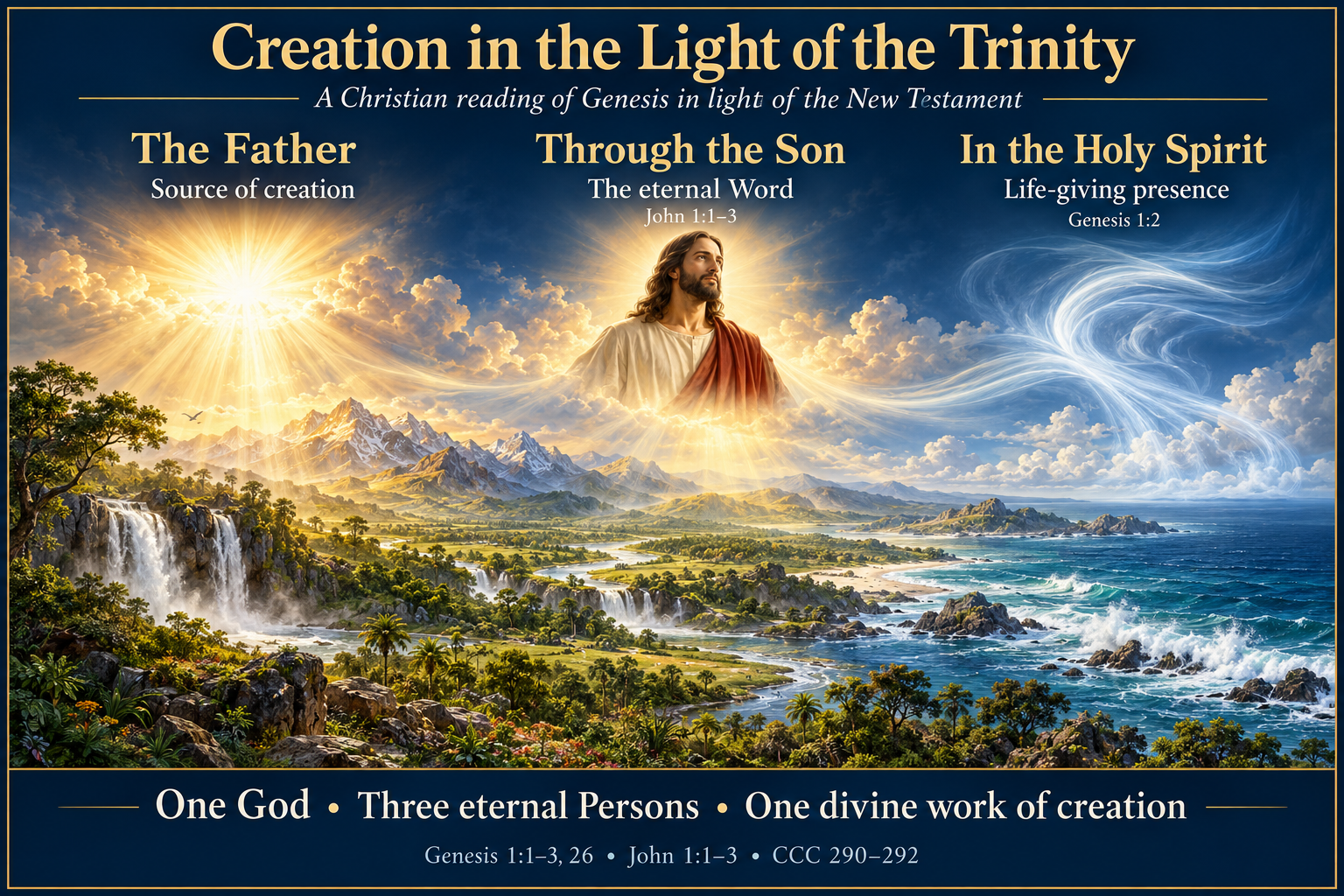
Genesis speaks of God, divine speech and the Spirit over the waters. In the light of the New Testament, Christians confess creation as the shared work of the Father, Son and Holy Spirit.
Let us make: Christians have read Genesis 1:26 in a Trinitarian light. The plural by itself does not establish three Persons; the doctrine is understood through fuller revelation.
The image is a theological interpretation, not a photograph of the beginning. It does not divide creation into separate jobs performed by three gods.
ദൈവവും അവിടുത്തെ വചനവും വെള്ളത്തിനുമീതെയുള്ള ചൈതന്യവും ഉല്പത്തിയിൽ പ്രത്യക്ഷപ്പെടുന്നു. പുതിയനിയമത്തിന്റെ വെളിച്ചത്തിൽ സൃഷ്ടി പിതാവിന്റെയും പുത്രന്റെയും പരിശുദ്ധാത്മാവിന്റെയും പൊതുവായ പ്രവൃത്തിയാണെന്ന് വിശ്വസിക്കുന്നു.
നമുക്ക് സൃഷ്ടിക്കാം: 1:26-നെ ത്രിത്വവിശ്വാസത്തിൽ വായിക്കാം. ബഹുവചനം മാത്രം മൂന്നു വ്യക്തികളെ തെളിയിക്കുന്നില്ല; പൂർണമായ വെളിപാടിന്റെ വെളിച്ചത്തിലാണ് മനസ്സിലാക്കുന്നത്.
ചിത്രം ദൈവശാസ്ത്രപരമായ വിശദീകരണമാണ്. മൂന്നു ദൈവങ്ങൾ വേർതിരിച്ച ജോലികൾ ചെയ്യുന്നു എന്ന അർഥമില്ല.
The term in Genesis 1:2 can be rendered spirit, wind or breath in different translations. Read it within its ancient setting and the Christian reception of Scripture. Catechism §§290–292 explicitly teaches creation as the common work of the Trinity.
Made in God’s image • ദൈവത്തിന്റെ ഛായയിൽ

Male and female share God-given dignity. Image and likeness do not mean that God has a human body. They introduce humanity’s relationship with God and responsibility within creation. Dignity is not earned by strength, appearance, wealth or ability.
സ്ത്രീയും പുരുഷനും ദൈവദത്തമായ ഗൗരവം പങ്കിടുന്നു. ഛായയും സാദൃശ്യവും ദൈവത്തിന് മനുഷ്യശരീരമുണ്ടെന്ന അർഥമല്ല. ദൈവവുമായുള്ള ബന്ധവും സൃഷ്ടിയോടുള്ള ഉത്തരവാദിത്വവും സൂചിപ്പിക്കുന്നു. ശക്തിയോ സൗന്ദര്യമോ സമ്പത്തോ കഴിവോ മനുഷ്യഗൗരവത്തിന്റെ അളവല്ല.
The group portrait illustrates an application to all humanity; it does not depict a population supposedly present before Adam. See Catechism §§355–361.
Dominion as responsible care • ഉത്തരവാദിത്വമുള്ള പരിപാലനം

Authority over creation carries accountability to the Creator. The command to exercise dominion is not permission for unlimited exploitation. Care for land, water and living creatures should accompany respect for people, especially those most affected by environmental harm.
സൃഷ്ടിയിലുള്ള അധികാരത്തോടൊപ്പം സ്രഷ്ടാവിനോടുള്ള ഉത്തരവാദിത്വവുമുണ്ട്. ആധിപത്യം അനിയന്ത്രിതമായ ചൂഷണത്തിനുള്ള അനുമതിയല്ല. ഭൂമി, ജലം, ജീവജാലങ്ങൾ എന്നിവയുടെ പരിപാലനത്തോടൊപ്പം മനുഷ്യരെയും പ്രത്യേകിച്ച് പരിസ്ഥിതിനാശത്തിന്റെ ഇരകളെയും കരുതണം.
The scenes show present-day applications in an illustrative style, not a reconstruction of activities in the first creation account. See Laudato Si’ §67.
Good… very good • നല്ലത്… വളരെ നല്ലത്

The repeated affirmation of goodness reaches a whole-creation assessment in 1:31. Matter and the human body are not inherently evil. Receiving the world as a gift encourages gratitude rather than contempt or careless consumption.
നന്മയെക്കുറിച്ചുള്ള ആവർത്തനം 1:31-ൽ സൃഷ്ടിമുഴുവനെയും ഉൾക്കൊള്ളുന്നു. ഭൗതികലോകവും മനുഷ്യശരീരവും സ്വഭാവതാൽ തിന്മയല്ല. ലോകത്തെ ദാനമായി സ്വീകരിക്കുന്നത് നന്ദിയിലേക്കും ആദരവിലേക്കും നയിക്കുന്നു.
Creation and Christ, the Light • സൃഷ്ടിയും വെളിച്ചമായ ക്രിസ്തുവും

John 1:1–3
The eternal Word exists in the beginning; all things are made through him. Jesus is not a creature first produced on day 1 or day 4.
ആദിയിൽ നിത്യവചനം ഉണ്ട്; എല്ലാം അവനിലൂടെ ഉണ്ടായി. യേശു ഒന്നാമത്തെയോ നാലാമത്തെയോ ദിവസം സൃഷ്ടിക്കപ്പെട്ടവനല്ല.
Colossians 1:15–17
Creation is described as through Christ and for him. He is before all things and sustains their unity.
എല്ലാം ക്രിസ്തുവിലൂടെയും അവനുവേണ്ടിയും സൃഷ്ടിക്കപ്പെട്ടു. അവൻ എല്ലാറ്റിനും മുമ്പുള്ളവനാണ്.
2 Corinthians 4:6
Paul connects God’s command for light with illumination in our hearts through the knowledge of Christ.
വെളിച്ചത്തിനുള്ള ദൈവകല്പനയെ ക്രിസ്തുവിനെ അറിയുന്നതിലൂടെ ഹൃദയത്തിൽ ഉദിക്കുന്ന പ്രകാശവുമായി പൗലോസ് ബന്ധിപ്പിക്കുന്നു.
New creation
Creation opens Scripture’s story; Christian hope looks towards its renewal in Christ. Compare 2 Corinthians 5:17 and Revelation 21:1–5.
സൃഷ്ടിയോടെ തുടങ്ങുന്ന തിരുവചനചരിത്രം ക്രിസ്തുവിലുള്ള പുതുക്കലിലേക്കു നയിക്കുന്നു. 2 കൊറിന്തോസ് 5:17; വെളിപാട് 21:1–5 കാണുക.
Creation questions: teaching and speculation • സൃഷ്ടിയെക്കുറിച്ചുള്ള ചോദ്യങ്ങൾ
Must the days be 24-hour scientific stages?
Catholic interpretation attends to literary form. The six-day presentation need not be imposed as a modern scientific chronology. Theological meaning and scientific study of processes should be distinguished.
സാഹിത്യരൂപം പരിഗണിച്ചാണ് കത്തോലിക്കാ വായന. ആറുദിവസവിവരണം ആധുനിക ശാസ്ത്രീയകാലക്രമമാക്കി നിർബന്ധിക്കേണ്ടതില്ല.
What about the gap theory?
A destroyed world or separate civilisation between Genesis 1:1 and 1:2 is a speculative interpretation, not Catholic doctrine or an event narrated in this chapter.
1:1-നും 1:2-നും ഇടയിൽ നശിച്ച ലോകമോ പ്രത്യേക സംസ്കാരമോ ഉണ്ടായിരുന്നു എന്നത് അനുമാനമാണ്; കത്തോലിക്കാ പ്രബോധനമോ ഇവിടെ വിവരിക്കുന്ന സംഭവമോ അല്ല.
A race before Adam?
The Church does not teach a separate pre-Adamic human civilisation. This must not be confused with scientific investigation of ancient life and human bodily origins.
ആദത്തിനുമുമ്പുള്ള പ്രത്യേക മനുഷ്യസംസ്കാരം സഭ പഠിപ്പിക്കുന്നില്ല. പുരാതനജീവിതത്തെയും മനുഷ്യശരീരത്തിന്റെ ഉദ്ഭവത്തെയും കുറിച്ചുള്ള ശാസ്ത്രപഠനവുമായി ഇത് കലർത്തരുത്.
Faith and evolution
Humani Generis §§36–37 permits investigation of bodily origins from pre-existing living matter, affirms divine creation of the soul and raises doctrinal limits concerning human unity and original sin. It is not an endorsement of every evolutionary or theological model.
ഹ്യുമാനി ജെനേരിസ് 36–37 ശരീരത്തിന്റെ ഉദ്ഭവത്തെക്കുറിച്ചുള്ള പഠനം അനുവദിക്കുമ്പോൾ ആത്മാവിന്റെ ദൈവികസൃഷ്ടിയും മനുഷ്യഐക്യവും ഉത്ഭവപാപവും സംബന്ധിച്ച വിശ്വാസപരിധികളും വ്യക്തമാക്കുന്നു.
Sources: Catechism §§283–289, 296 • Humani Generis §§36–37. An old universe, biological evolution and a destroyed pre-Adamic civilisation are different claims.
Words and details worth noticing • ശ്രദ്ധിക്കേണ്ട വാക്കുകളും കാര്യങ്ങളും
- Heavens and earth: an expression encompassing the whole created order.
- Firmament / sky: ancient cosmological language; the term should not simply be equated with a modern scientific model of the atmosphere.
- Sun and moon: described by their functions as greater and lesser lights; they are creatures, not deities.
- Humanity: the Hebrew term adam can refer collectively to humankind; avoid assuming every occurrence is a personal name.
- According to their kinds: the text’s description of living variety is not identical to the categories of modern biological taxonomy.
- Food as gift: plants are assigned for food in 1:29–30. Compare the later permission concerning meat in Genesis 9:3.
- Chapter boundaries: Eden, the formation from dust and the rib account belong to Genesis 2; the serpent and Fall belong to Genesis 3.
പുരാതനഭാഷയെ ആധുനികശാസ്ത്രത്തിന്റെ പദാവലിയുമായി തുല്യമാക്കരുത്. ഏദെൻ, പൊടിയിൽനിന്നുള്ള രൂപപ്പെടുത്തൽ, വാരിയെല്ലിന്റെ വിവരണം എന്നിവ ഉല്പത്തി 2-ലും സർപ്പവും പതനവും 3-ലുമാണ്.
The account continues: completion and rest • തുടർച്ച: പൂർത്തീകരണവും വിശ്രമവും

The seventh day completes the opening creation account in the next chapter. God’s rest expresses completion and the blessing of sacred time, not divine exhaustion. We will study the passage fully with Genesis 2.
അടുത്ത അധ്യായത്തിലെ ഏഴാം ദിവസം ആദ്യസൃഷ്ടിവിവരണം പൂർത്തിയാക്കുന്നു. ദൈവത്തിന്റെ വിശ്രമം ക്ഷീണമല്ല; പൂർത്തീകരണവും വിശുദ്ധസമയത്തിന്റെ അനുഗ്രഹവുമാണ്. ഉല്പത്തി 2-ൽ വിശദമായി പഠിക്കാം.
Reflection, prayer and summary • വിചിന്തനവും പ്രാർത്ഥനയും സംഗ്രഹവും
- Where can I recognise creation as a gift today? സൃഷ്ടിയെ ദാനമായി എവിടെയാണ് തിരിച്ചറിയാനാവുക?
- Whose dignity do I need to respect more carefully? ആരുടെ ഗൗരവമാണ് കൂടുതൽ ശ്രദ്ധയോടെ ആദരിക്കേണ്ടത്?
- What practical act of care can our family undertake? നമ്മുടെ കുടുംബത്തിന് ഏതു പരിപാലനപ്രവൃത്തി ചെയ്യാനാവും?
Father, through your eternal Son and in the Holy Spirit, you give life and sustain creation. Teach us gratitude, respect for every person and faithful care for your gifts. Let the light of Christ guide our hearts. Amen.
പിതാവേ, നിത്യപുത്രനിലൂടെയും പരിശുദ്ധാത്മാവിലും അങ്ങ് ജീവൻ നൽകുകയും സൃഷ്ടിയെ നിലനിർത്തുകയും ചെയ്യുന്നു. നന്ദിയും ഓരോ മനുഷ്യനോടുമുള്ള ആദരവും അങ്ങയുടെ ദാനങ്ങളുടെ വിശ്വസ്തപരിപാലനവും പഠിപ്പിക്കണമേ. ക്രിസ്തുവിന്റെ പ്രകാശം ഞങ്ങളുടെ ഹൃദയങ്ങളെ നയിക്കട്ടെ. ആമേൻ.
Summary: Genesis 1 proclaims God as Creator, presents an ordered and good world, and gives humanity dignity and responsibility. Christians read its light and divine speech in relation to Christ, while confessing creation as the common work of the Trinity.
സംഗ്രഹം: ഉല്പത്തി 1 ദൈവത്തെ സ്രഷ്ടാവായി പ്രഖ്യാപിക്കുന്നു. സൃഷ്ടിയുടെ ക്രമവും നന്മയും മനുഷ്യന്റെ ഗൗരവവും ഉത്തരവാദിത്വവും വ്യക്തമാക്കുന്നു. ക്രിസ്തുവിന്റെ വെളിച്ചത്തിലും ത്രിത്വവിശ്വാസത്തിലും ഈ അധ്യായം വായിക്കാം.


