


GENESIS • CHAPTER 18 • ENGLISH & MALAYALAM BIBLE STUDY
Genesis 18 – Hospitality, Promise and Intercession
ഉല്പത്തി 18 – ആതിഥ്യം, വാഗ്ദാനം, മാധ്യസ്ഥപ്രാർത്ഥന
A welcome at Mamre, a renewed promise to Sarah and Abraham's plea for justice and mercy.
മാമ്രേയിലെ സ്വീകരണം, സാറായ്ക്കുള്ള പുതുക്കിയ വാഗ്ദാനം, നീതിക്കും കരുണയ്ക്കുമായുള്ള അബ്രാഹത്തിന്റെ അപേക്ഷ.

A Son Promised to Abraham and Sarah ദൈവം സന്ദർശിക്കുന്നു
Genesis 18:1–33 • English: Revised Standard Version Catholic Edition, as supplied. Malayalam: supplied source. Each translation retains its own verse boundaries. Footnote markers [a]–[e] are retained; their explanatory notes were not supplied.
ഉല്പത്തി 18:1–33 • രണ്ടു പരിഭാഷകളുടെയും സ്വന്തം വാക്യവിഭജനം സൂക്ഷിച്ചിരിക്കുന്നു. ഇംഗ്ലീഷ് അടിക്കുറിപ്പടയാളങ്ങൾ നിലനിർത്തിയിട്ടുണ്ട്; അവയുടെ വിശദീകരണങ്ങൾ നൽകിയിട്ടില്ല.
18:1
And the Lord appeared to him by the oaks[a] of Mamre, as he sat at the door of his tent in the heat of the day.
മാമ്രേയുടെ ഓക്കുമരത്തോപ്പിനു സമീപം കര്ത്താവ് അബ്രാഹത്തിനു പ്രത്യക്ഷനായി. വെയില് മൂത്ത സമയത്ത് അബ്രാഹം തന്റെ കൂടാരത്തിന്റെ വാതില്ക്കല് ഇരിക്കുകയായിരുന്നു.
18:2
He lifted up his eyes and looked, and behold, three men stood in front of him. When he saw them, he ran from the tent door to meet them, and bowed himself to the earth,
അവന് തലയുയര്ത്തിനോക്കിയപ്പോള് മൂന്നാളുകള് തനിക്കെതിരേ നില്ക്കുന്നതുകണ്ടു. അവരെക്കണ്ട് അവന് കൂടാരവാതില്ക്കല് നിന്നെഴുന്നേറ്റ് അവരെ എതിരേല്ക്കാന് ഓടിച്ചെന്ന്, നിലംപറ്റെതാണ്, അവരെ വണങ്ങി.
18:3
and said, “My lord, if I have found favor in your sight, do not pass by your servant.
അവന് പറഞ്ഞു: യജമാനനേ, അങ്ങ് എന്നില് സംപ്രീതനെങ്കില് അങ്ങയുടെ ദാസനെ കടന്നുപോകരുതേ!
18:4
Let a little water be brought, and wash your feet, and rest yourselves under the tree,
കാലുകഴുകാന് കുറച്ചുവെള്ളം കൊണ്ടുവരട്ടെ. മരത്തണലിലിരുന്നു വിശ്രമിക്കുക.
18:5
while I fetch a morsel of bread, that you may refresh yourselves, and after that you may pass on—since you have come to your servant.” So they said, “Do as you have said.”
നിങ്ങള് ഈ ദാസന്റെയടുക്കല് വന്ന നിലയ്ക്ക് ഞാന് കുറേഅപ്പം കൊണ്ടുവരാം. വിശപ്പടക്കിയിട്ടു യാത്ര തുടരാം. നീ പറഞ്ഞതുപോലെ ചെയ്യുക എന്ന് അവര് പറഞ്ഞു.
18:6
And Abraham hastened into the tent to Sarah, and said, “Make ready quickly three measures[b] of fine meal, knead it, and make cakes.”
അബ്രാഹം പെട്ടെന്നു കൂടാരത്തിലെത്തി സാറായോടു പറഞ്ഞു: വേഗം മൂന്നിടങ്ങഴി മാവെടുത്തു കുഴച്ച് അപ്പമുണ്ടാക്കുക.
18:7
And Abraham ran to the herd, and took a calf, tender and good, and gave it to the servant, who hastened to prepare it.
അവന് ഓടിച്ചെന്നു കാലിക്കൂട്ടത്തില് നിന്നു കൊഴുത്ത ഒരു ഇളം കാളക്കുട്ടിയെ പിടിച്ചു വേലക്കാരനെ ഏല്പിച്ചു. ഉടനെ അവന് അതു പാകംചെയ്യാന് തുടങ്ങി.
18:8
Then he took curds, and milk, and the calf which he had prepared, and set it before them; and he stood by them under the tree while they ate.
അബ്രാഹം വെണ്ണയും പാലും, പാകം ചെയ്ത മൂരിയിറച്ചിയും അവരുടെ മുമ്പില് വിളമ്പി. അവര് ഭക്ഷിച്ചുകൊണ്ടിരിക്കേ അവന് മരത്തണലില് അവരെ പരിചരിച്ചുകൊണ്ടു നിന്നു.
18:9
They said to him, “Where is Sarah your wife?” And he said, “She is in the tent.”
അവര് അവനോടു ചോദിച്ചു: നിന്റെ ഭാര്യ സാറായെവിടെ? കൂടാരത്തിലുണ്ട്, അവന് മറുപടി പറഞ്ഞു.
18:10
The Lord said, “I will surely return to you in the spring, and Sarah your wife shall have a son.” And Sarah was listening at the tent door behind him.
കര്ത്താവു പറഞ്ഞു: വസന്തത്തില് ഞാന് തീര്ച്ചയായും തിരിയേ വരും. അപ്പോള് നിന്റെ ഭാര്യ സാറായ്ക്ക് ഒരു മകനുണ്ടായിരിക്കും. അവന്റെ പിറകില് കൂടാരവാതില്ക്കല് നിന്നു സാറാ ഇതു കേള്ക്കുന്നുണ്ടായിരുന്നു.
18:11
Now Abraham and Sarah were old, advanced in age; it had ceased to be with Sarah after the manner of women.
അബ്രാഹവും സാറായും വൃദ്ധരായിരുന്നു. അവള്ക്കു ഗര്ഭധാരണപ്രായം കഴിഞ്ഞിരുന്നു.
18:12
So Sarah laughed to herself, saying, “After I have grown old, and my husband is old, shall I have pleasure?”
അതിനാല്, സാറാ ഉള്ളില് ചിരിച്ചുകൊണ്ടുപറഞ്ഞു: എനിക്കു പ്രായമേറെയായി; ഭര്ത്താവും വൃദ്ധനായി. എനിക്കിനി സന്താനസൗഭാഗ്യം ഉണ്ടാകുമോ?
18:13
The Lord said to Abraham, “Why did Sarah laugh, and say, ‘Shall I indeed bear a child, now that I am old?’
കര്ത്താവ് അബ്രാഹത്തോടു ചോദിച്ചു: വൃദ്ധയായ തനിക്കിനി കുഞ്ഞുണ്ടാകുമോ എന്നു ചോദിച്ചു സാറാ ചിരിച്ചതെന്തുകൊണ്ട്?
18:14
Is anything too hard[c] for the Lord? At the appointed time I will return to you, in the spring, and Sarah shall have a son.”
കര്ത്താവിനു കഴിയാത്തത് എന്തെങ്കിലുമുണ്ടോ? നിശ്ചിതസമയത്ത് വസന്തത്തില് ഞാന് നിന്റെ അടുത്തു തിരിച്ചുവരും. അപ്പോള് സാറായ്ക്ക് ഒരു മകനുണ്ടായിരിക്കും.
18:15
But Sarah denied, saying, “I did not laugh”; for she was afraid. He said, “No, but you did laugh.”
സാറാ നിഷേധിച്ചുപറഞ്ഞു: ഞാന് ചിരിച്ചില്ല. എന്തെന്നാല്, അവള് ഭയപ്പെട്ടു. അവിടുന്നുപറഞ്ഞു: അല്ല, നീ ചിരിക്കുകതന്നെ ചെയ്തു. സോദോം-ഗൊമോറാ
Judgment Pronounced on Sodom സോദോമിനെക്കുറിച്ചുള്ള വിധിയും മാധ്യസ്ഥ്യവും
18:16
Then the men set out from there, and they looked toward Sodom; and Abraham went with them to set them on their way.
അവര് അവിടെനിന്നെഴുന്നേറ്റു സോദോമിനു നേരേ തിരിച്ചു. വഴിയിലെത്തുന്നതുവരെ അബ്രാഹം അവരെ അനുയാത്ര ചെയ്തു.
18:17
The Lord said, “Shall I hide from Abraham what I am about to do,
കര്ത്താവ് ആലോചിച്ചു:
18:18
seeing that Abraham shall become a great and mighty nation, and all the nations of the earth shall bless themselves by him?[d]
അബ്രാഹം മഹത്തും ശക്തവുമായ ഒരു ജനതയായിത്തീരുമെന്നും ഭൂമിയിലെ ജനപദങ്ങളെല്ലാം അവനിലൂടെ അനുഗ്രഹിക്കപ്പെടുമെന്നും അറിഞ്ഞിരിക്കേ, ഞാന് ചെയ്യാന് പോകുന്ന കാര്യം അവനില്നിന്നു മറച്ചുവയ്ക്കണമോ?
18:19
No, for I have chosen[e] him, that he may charge his children and his household after him to keep the way of the Lord by doing righteousness and justice; so that the Lord may bring to Abraham what he has promised him.”
ഞാന് അവനെ തിരഞ്ഞെടുത്തിരിക്കുന്നത്, നീതിയും ന്യായവും പ്രവര്ത്തിച്ച കര്ത്താവിന്റെ വഴിയിലൂടെ നടക്കാന് തന്റെ മക്കളോടും പിന്മുറക്കാരോടും അവന് കല്പിക്കുന്നതിനും അങ്ങനെ കര്ത്താവ് അവനോടു ചെയ്ത വാഗ്ദാനം പൂര്ത്തിയാക്കുന്നതിനും വേണ്ടിയാണ്.
18:20
Then the Lord said, “Because the outcry against Sodom and Gomor′rah is great and their sin is very grave,
കര്ത്താവു പറഞ്ഞു: സോദോമിനും ഗൊമോറായ്ക്കുമെതിരേയുള്ള മുറവിളി വളരെ വലുതാണ്.
18:21
I will go down to see whether they have done altogether according to the outcry which has come to me; and if not, I will know.”
അവരുടെ പാപം ഗുരുതരവുമാണ്. അതിനാല്, അവരുടെ പ്രവൃത്തികള് എന്റെ സന്നിധിയിലെത്തിയിട്ടുള്ള വിലാപങ്ങളെ സാധൂകരിക്കുന്നോ ഇല്ലയോ എന്നറിയാന് ഞാന് അവിടംവരെ പോകുകയാണ്.
18:22
So the men turned from there, and went toward Sodom; but Abraham still stood before the Lord.
അവര് അവിടെനിന്നു സോദോമിനു നേരേ നടന്നു. അബ്രാഹം അപ്പോഴും കര്ത്താവിന്റെ മുമ്പില്ത്തന്നെ നിന്നു.
18:23
Then Abraham drew near, and said, “Wilt thou indeed destroy the righteous with the wicked?
അബ്രാഹം അവിടുത്തെ സമീപിച്ചു ചോദിച്ചു: ദുഷ്ടന്മാരോടൊപ്പം നീതിമാന്മാരെയും അങ്ങു നശിപ്പിക്കുമോ?
18:24
Suppose there are fifty righteous within the city; wilt thou then destroy the place and not spare it for the fifty righteous who are in it?
നഗരത്തില് അന്പതു നീതിമാന്മാരുണ്ടെങ്കില് അങ്ങ് അതിനെ നശിപ്പിച്ചുകളയുമോ? അവരെ പ്രതി ആ സ്ഥലത്തെ ശിക്ഷയില് നിന്നൊഴിവാക്കില്ലേ?
18:25
Far be it from thee to do such a thing, to slay the righteous with the wicked, so that the righteous fare as the wicked! Far be that from thee! Shall not the Judge of all the earth do right?”
ദുഷ്ടന്മാരോടൊപ്പം നീതിമാന്മാരെയും സംഹരിക്കുക-അത് അങ്ങില്നിന്ന് ഉണ്ടാകാതിരിക്കട്ടെ. ദുഷ്ടന്മാരുടെ ഗതി തന്നെ നീതിമാന്മാര്ക്കും സംഭവിക്കാതിരിക്കട്ടെ. ഭൂമി മുഴുവന്റെയും വിധികര്ത്താവു നീതി പ്രവര്ത്തിക്കാതിരിക്കുമോ?
18:26
And the Lord said, “If I find at Sodom fifty righteous in the city, I will spare the whole place for their sake.”
കര്ത്താവ് അരുളിച്ചെയ്തു: സോദോം നഗരത്തില് അമ്പതു നീതിമാന്മാരെ ഞാന് കണ്ടെണ്ടത്തുന്നപക്ഷം അവരെപ്രതി ഞാന് ആ സ്ഥലത്തോടു മുഴുവന് ക്ഷമിക്കും.
18:27
Abraham answered, “Behold, I have taken upon myself to speak to the Lord, I who am but dust and ashes.
അബ്രാഹം വീണ്ടും പറഞ്ഞു: പൊടിയും ചാരവുമായ ഞാന് കര്ത്താവിനോടു സംസാരിക്കുവാന് തുനിഞ്ഞല്ലോ.
18:28
Suppose five of the fifty righteous are lacking? Wilt thou destroy the whole city for lack of five?” And he said, “I will not destroy it if I find forty-five there.”
നീതിമാന്മാര് അമ്പതിന് അഞ്ചു കുറവാണെന്നു വന്നാലോ? അഞ്ചുപേര് കുറഞ്ഞാല് നഗരത്തെ മുഴുവന് അങ്ങു നശിപ്പിക്കുമോ? അവിടുന്നു പറഞ്ഞു: നാല്പ്പത്തഞ്ചുപേരെ കണ്ടെണ്ടത്തിയാല് ഞാനതിനെ നശിപ്പിക്കുകയില്ല. അവന് വീണ്ടും ചോദിച്ചു: നാല്പ്പതുപേരേയുള്ളുവെങ്കിലോ?
18:29
Again he spoke to him, and said, “Suppose forty are found there.” He answered, “For the sake of forty I will not do it.”
അവിടുന്നു പ്രതിവചിച്ചു: ആ നാല്പ്പതുപേരെ പ്രതി നഗരം ഞാന് നശിപ്പിക്കുകയില്ല.
18:30
Then he said, “Oh let not the Lord be angry, and I will speak. Suppose thirty are found there.” He answered, “I will not do it, if I find thirty there.”
അവന് പറഞ്ഞു: ഞാന് വീണ്ടും സംസാരിക്കുന്നതുകൊണ്ടു കര്ത്താവു കോപിക്കരുതേ! ഒരുപക്ഷേ, മുപ്പതുപേരെയുള്ളുവെങ്കിലോ? അവിടുന്ന് അരുളിച്ചെയ്തു: മുപ്പതുപേരെ കണ്ടെണ്ടത്തുന്നെങ്കില് ഞാനതു നശിപ്പിക്കുകയില്ല.
18:31
He said, “Behold, I have taken upon myself to speak to the Lord. Suppose twenty are found there.” He answered, “For the sake of twenty I will not destroy it.”
അവന് പറഞ്ഞു: കര്ത്താവിനോടു സംസാരിക്കാന് ഞാന് തുനിഞ്ഞല്ലോ. ഇരുപതുപേരെയുള്ളുവെങ്കിലോ? അവിടുന്ന് അരുളിച്ചെയ്തു: ഇരുപതുപേരെ പ്രതി ഞാനതു നശിപ്പിക്കുകയില്ല.
18:32
Then he said, “Oh let not the Lord be angry, and I will speak again but this once. Suppose ten are found there.” He answered, “For the sake of ten I will not destroy it.”
അവന് പറഞ്ഞു: കര്ത്താവേ, കോപിക്കരുതേ! ഒരു തവണകൂടി മാത്രം ഞാന് സംസാരിക്കട്ടെ. പത്തുപേരെ അവിടെയുള്ളുവെങ്കിലോ? അവിടുന്ന് അരുളിച്ചെയ്തു: ആ പത്തുപേരെപ്രതി ഞാന് അതു നശിപ്പിക്കുകയില്ല.
18:33
And the Lord went his way, when he had finished speaking to Abraham; and Abraham returned to his place.
അബ്രാഹത്തോടു സംസാരിച്ചുകഴിഞ്ഞപ്പോള് കര്ത്താവ് അവിടെനിന്നുപോയി. അബ്രാഹവും സ്വന്തം സ്ഥലത്തേക്കു മടങ്ങി.
Hospitality at Mamre മാമ്രേയിലെ ആതിഥ്യം

Abraham is sitting at the tent entrance in the heat of the day when the Lord appears (18:1). His welcome becomes energetic service: he runs, offers water and rest, asks Sarah to prepare bread, selects a good calf and stands nearby while the guests eat (18:2–8). Sarah and a servant share in this labour. The generous meal exceeds his modest offer of a little food. Hospitality here is attentive action, not merely polite words. Mamre is associated with Abraham near Hebron in 13:18; the narrative does not establish the precise surviving tree or tent site.
പകൽ ചൂടേറിയ സമയത്ത് കൂടാരവാതിൽക്കൽ ഇരിക്കുന്ന അബ്രാഹത്തിനു കർത്താവ് പ്രത്യക്ഷനാകുന്നു (18:1). സ്വീകരണം സജീവശുശ്രൂഷയായി മാറുന്നു: അവൻ ഓടിച്ചെന്ന് വെള്ളവും വിശ്രമവും വാഗ്ദാനം ചെയ്യുന്നു; അപ്പം ഒരുക്കാൻ സാറായോടു പറയുന്നു; നല്ല കാളക്കുട്ടിയെ തിരഞ്ഞെടുത്ത് അതിഥികൾ ഭക്ഷിക്കുമ്പോൾ സമീപത്തു നിൽക്കുന്നു (18:2–8). സാറായും ദാസനും ഈ അധ്വാനത്തിൽ പങ്കുചേരുന്നു. ചെറിയ ഭക്ഷണമെന്ന വാഗ്ദാനത്തേക്കാൾ ഉദാരമാണ് വിരുന്ന്. ആതിഥ്യം വിനയവാക്കുകൾ മാത്രമല്ല, ശ്രദ്ധാപൂർവമായ പ്രവൃത്തിയാണ്. 13:18 മാമ്രേയെ ഹെബ്രോണിനു സമീപമുള്ള അബ്രാഹത്തിന്റെ വാസവുമായി ബന്ധിപ്പിക്കുന്നു; ഇന്നുള്ള ഒരു പ്രത്യേക മരമോ കൂടാരസ്ഥാനമോ ഇതിലൂടെ ഉറപ്പിക്കാനാവില്ല.
What does this welcome ask of us? ഈ സ്വീകരണം നമ്മോട് ആവശ്യപ്പെടുന്നതെന്ത്?
Make room for the stranger with practical care, shared work and respect. Hebrews 13:2 recalls hospitality to angels without knowing it. This is a spiritual connection, not a promise that every visitor is an angel.
അപരിചിതന് പ്രായോഗികകരുതലും പങ്കിട്ട അധ്വാനവും ആദരവും നൽകുക. അറിയാതെ ദൂതന്മാരെ സ്വീകരിച്ചതിനെ ഹെബ്രായർ 13:2 ഓർമിപ്പിക്കുന്നു. ഇത് ആത്മീയബന്ധമാണ്; എല്ലാ അതിഥികളും ദൂതന്മാരാണെന്ന വാഗ്ദാനമല്ല.
Three visitors: text, theophany and interpretation മൂന്ന് സന്ദർശകർ: വചനവും ദൈവപ്രത്യക്ഷതയും വ്യാഖ്യാനവും

Genesis 18:1 identifies the event as an appearance of the Lord; 18:2 describes three men. The narrative moves between the visitors and the Lord speaking, while Genesis 19:1 identifies two visitors arriving at Sodom as angels. A theophany means a manifestation of God. It describes the divine encounter without resolving every detail of how God and the messengers are represented. Some early Christian interpreters understood the Lord here as the eternal Son appearing before the Incarnation. That traditional reading is not an explicit identification made by Genesis itself. Other Christian readings and sacred art see the three visitors as a symbol or foreshadowing of the Trinity. The doctrine of one God in three divine Persons is settled Catholic teaching; identifying these three visitors individually with Father, Son and Holy Spirit is not. This scene is not the Incarnation, which is the Son's taking human nature in Jesus Christ.
ഉല്പത്തി 18:1 ഈ സംഭവത്തെ കർത്താവിന്റെ പ്രത്യക്ഷതയായി അവതരിപ്പിക്കുന്നു; 18:2 മൂന്നു പുരുഷന്മാരെ വിവരിക്കുന്നു. സന്ദർശകരെയും സംസാരിക്കുന്ന കർത്താവിനെയും മാറിമാറി അവതരിപ്പിക്കുന്ന വിവരണത്തിൽ, സോദോമിൽ എത്തുന്ന രണ്ടുപേരെ 19:1 ദൂതന്മാർ എന്നു വിളിക്കുന്നു. ദൈവം തന്നെ വെളിപ്പെടുത്തുന്ന സംഭവത്തെയാണ് ദൈവപ്രത്യക്ഷത എന്നു പറയുന്നത്. ദൈവവും ദൂതന്മാരും എങ്ങനെ പ്രതിനിധീകരിക്കപ്പെടുന്നു എന്ന എല്ലാ വിശദാംശങ്ങളും ഈ പദം തീർപ്പാക്കുന്നില്ല. ചില പുരാതന ക്രൈസ്തവവ്യാഖ്യാതാക്കൾ ഇവിടെ കർത്താവിനെ മനുഷ്യാവതാരത്തിനു മുമ്പ് പ്രത്യക്ഷപ്പെടുന്ന നിത്യപുത്രനായി കണ്ടു. ഉല്പത്തി വ്യക്തമായി നൽകുന്ന തിരിച്ചറിയലല്ല ആ പാരമ്പര്യവായന. മറ്റു ക്രൈസ്തവവായനകളും വിശുദ്ധകലയും മൂന്നു സന്ദർശകരിൽ ത്രിത്വത്തിന്റെ പ്രതീകമോ മുൻസൂചനയോ കാണുന്നു. ഏകദൈവത്തിൽ മൂന്നു ദൈവികവ്യക്തികൾ എന്നത് ഉറപ്പുള്ള കത്തോലിക്കാവിശ്വാസമാണ്; ഈ മൂന്നു സന്ദർശകരെ യഥാക്രമം പിതാവ്, പുത്രൻ, പരിശുദ്ധാത്മാവ് എന്നു നിർബന്ധമായി തിരിച്ചറിയുന്നത് അങ്ങനെയല്ല. ഈ സംഭവം മനുഷ്യാവതാരവുമല്ല; യേശുക്രിസ്തുവിൽ പുത്രൻ മനുഷ്യസ്വഭാവം സ്വീകരിക്കുന്നതാണ് മനുഷ്യാവതാരം.
Does three visitors prove that Abraham saw the Trinity? മൂന്നു സന്ദർശകർ ത്രിത്വത്തെ കണ്ടുവെന്നതിന് തെളിവാണോ?
No. A Christian symbolic reading can illuminate faith, but should be distinguished from the literal narrative and from binding doctrine. Do not turn an image caption or an artistic portrayal into a definitive identification.
അല്ല. ക്രൈസ്തവപ്രതീകവായന വിശ്വാസത്തെ പ്രകാശിപ്പിക്കാം; എന്നാൽ അതിനെ കഥയുടെ നേരിട്ടുള്ള വിവരണത്തിൽനിന്നും നിർബന്ധമായ വിശ്വാസപ്രബോധനത്തിൽനിന്നും വേർതിരിക്കണം. ചിത്രത്തിന്റെ അടിക്കുറിപ്പോ കലാവിഷ്കാരമോ അന്തിമമായ തിരിച്ചറിയലാക്കി മാറ്റരുത്.
Divine encounters through Genesis 18 ഉല്പത്തി 18 വരെയുള്ള ദൈവികസമാഗമങ്ങൾ

Follow the text's own vocabulary. Genesis 12:1–3 records the Lord speaking the call and promise; 12:7 explicitly says that the Lord appeared to Abram. In 13:14–17 the Lord speaks after Lot separates from Abram. Genesis 15:1 describes the word of the Lord coming in a vision; 15:12–21 includes deep sleep and the covenant scene with smoke and fire. Genesis 16:7–13 concerns Hagar's encounter with the angel of the Lord, not an additional appearance to Abraham. Genesis 17:1 explicitly says that the Lord appeared to Abram; 18:1 again explicitly says that the Lord appeared. Thus 12:7, 17:1 and 18:1 are the three explicit 'Lord appeared' passages concerning Abraham through chapter 18. A list of those formulas is not a count of every divine communication in these chapters.
വചനത്തിന്റെ സ്വന്തം പ്രയോഗങ്ങൾ ശ്രദ്ധിക്കുക. 12:1–3 കർത്താവിന്റെ വിളിയും വാഗ്ദാനവുമുള്ള സംസാരമാണ് രേഖപ്പെടുത്തുന്നത്; 12:7 കർത്താവ് അബ്രാമിനു പ്രത്യക്ഷപ്പെട്ടുവെന്ന് വ്യക്തമായി പറയുന്നു. ലോത്ത് വേർപിരിഞ്ഞശേഷം 13:14–17 കർത്താവ് സംസാരിക്കുന്നു. 15:1 ദർശനത്തിൽ കർത്താവിന്റെ വചനം ലഭിച്ചതായി പറയുന്നു; 15:12–21 ഗാഢനിദ്രയും പുകയും അഗ്നിയുമുള്ള ഉടമ്പടിദൃശ്യവും ഉൾക്കൊള്ളുന്നു. 16:7–13 ഹാഗാറും കർത്താവിന്റെ ദൂതനും തമ്മിലുള്ള സമാഗമമാണ്; അബ്രാഹത്തിനുള്ള മറ്റൊരു പ്രത്യക്ഷതയല്ല. 17:1-ലും 18:1-ലും കർത്താവ് പ്രത്യക്ഷപ്പെട്ടുവെന്ന് വ്യക്തമായി പറയുന്നു. അതിനാൽ 18 വരെയുള്ള അബ്രാഹത്തിന്റെ കഥയിൽ കർത്താവ് പ്രത്യക്ഷപ്പെട്ടു എന്ന വ്യക്തമായ പ്രയോഗം 12:7, 17:1, 18:1 എന്നിവയിലാണ്. ഈ പ്രയോഗങ്ങളുടെ പട്ടിക എല്ലാ ദൈവികസംസാരങ്ങളുടെയും എണ്ണമല്ല.
Are speech, vision and appearance interchangeable? സംസാരം, ദർശനം, പ്രത്യക്ഷത എന്നിവ ഒരുപോലെയാണോ?
They overlap as ways of describing revelation, but the narrator does not always use the same form. Preserve the distinctions rather than claiming every speech was a visible appearance.
വെളിപാടിനെ വിവരിക്കുന്ന രീതികളായി അവയ്ക്ക് ബന്ധമുണ്ട്; എന്നാൽ വിവരണകാരൻ എല്ലായിടത്തും ഒരേ രൂപം ഉപയോഗിക്കുന്നില്ല. ഓരോ സംസാരവും ദൃശ്യമായ പ്രത്യക്ഷതയായിരുന്നുവെന്ന് പറയാതെ വ്യത്യാസങ്ങൾ സൂക്ഷിക്കുക.
Sarah's laughter and the appointed time സാറായുടെ ചിരിയും നിശ്ചിതസമയവും

The promise of a son through Sarah, already made in 17:16–21, is renewed within her hearing (18:9–15). The narrator emphasises the couple's advanced age and Sarah's condition. Her inward laughter meets the Lord's question about what lies beyond divine power. The promise includes an appointed time; it is not merely an undefined hope. Her fearful denial is answered directly, yet the promise is not withdrawn. Abraham also laughed in 17:17; Genesis 21:1–7 later brings birth and joyful laughter into the story. These passages develop the theme connected with Isaac's name. Read the supplied 'in the spring' wording without silently replacing it with another translation.
17:16–21-ൽ സാറായിലൂടെ പുത്രനെക്കുറിച്ച് നൽകിയ വാഗ്ദാനം അവൾ കേൾക്കുന്നവിധം വീണ്ടും നൽകുന്നു (18:9–15). ദമ്പതികളുടെ വാർധക്യവും സാറായുടെ അവസ്ഥയും കഥ ഊന്നിപ്പറയുന്നു. അവളുടെ ഉള്ളിലെ ചിരിക്ക് ദൈവശക്തിക്കു അസാധ്യമുള്ളതെന്തെന്ന കർത്താവിന്റെ ചോദ്യം മറുപടിയാകുന്നു. വാഗ്ദാനത്തിന് നിശ്ചിതസമയമുണ്ട്; അവ്യക്തമായ പ്രതീക്ഷ മാത്രമല്ല. ഭയത്താലുള്ള നിഷേധത്തെ കർത്താവ് നേരിടുന്നു; എന്നാലും വാഗ്ദാനം പിൻവലിക്കുന്നില്ല. 17:17-ൽ അബ്രാഹവും ചിരിച്ചിരുന്നു; 21:1–7-ൽ ജനനവും ആനന്ദചിരിയും കഥയിൽ വരുന്നു. ഇസഹാക്കിന്റെ പേരുമായി ബന്ധപ്പെട്ട ചിരിയുടെ പ്രമേയം ഈ ഭാഗങ്ങൾ വികസിപ്പിക്കുന്നു. നൽകിയ ഇംഗ്ലീഷ് പരിഭാഷയിലെ സമയസൂചന മറ്റൊരു പരിഭാഷയുടേതായി മാറ്റാതെ വായിക്കുക.
Does the promise guarantee that every impossible personal wish will happen? അസാധ്യമെന്നു തോന്നുന്ന എല്ലാ ആഗ്രഹങ്ങളും നടക്കുമെന്നാണോ വാഗ്ദാനം?
No. This is a particular covenant promise. It invites trust in God without making a universal promise of pregnancy, healing or a timetable for every prayer.
അല്ല. ഇത് പ്രത്യേകമായ ഉടമ്പടിവാഗ്ദാനമാണ്. എല്ലാ പ്രാർത്ഥനകൾക്കും ഗർഭധാരണമോ സൗഖ്യമോ നിശ്ചിതസമയക്രമമോ ഉറപ്പുനൽകാതെ ദൈവത്തിൽ ആശ്രയിക്കാൻ ഇത് ക്ഷണിക്കുന്നു.
Sodom and Gomorrah: cities and earlier mentions സോദോമും ഗൊമോറയും: നഗരങ്ങളും മുൻപരാമർശങ്ങളും

Sodom and Gomorrah are city names, not the names of two people. They already occur together in the geographical boundary description of Genesis 10:19. Genesis 13:10 compares the well-watered plain before their destruction; 13:12 locates Lot's tents near Sodom and 13:13 comments on its inhabitants' wrongdoing. Genesis 14 names their kings and records the regional conflict, Lot's capture and Abram's rescue. Genesis 18 therefore develops an existing narrative rather than introducing the cities for the first time. The ancient meanings of the names are uncertain. Popular explanations such as 'burning' or 'submersion' should not be presented as secure Hebrew definitions or as explanations supplied by this chapter.
സോദോമും ഗൊമോറയും രണ്ടു നഗരങ്ങളുടെ പേരുകളാണ്; രണ്ടു വ്യക്തികളുടെ പേരുകളല്ല. 10:19-ലെ അതിർത്തിവിവരണത്തിൽ അവ ഒരുമിച്ചു വരുന്നു. നാശത്തിനു മുമ്പുള്ള ജലസമൃദ്ധമായ സമതലത്തെ 13:10 വിവരിക്കുന്നു; 13:12 ലോത്തിന്റെ കൂടാരങ്ങളെ സോദോമിനടുത്ത് സ്ഥാപിക്കുന്നു; 13:13 അവിടത്തെ ജനങ്ങളുടെ പാപത്തെ സൂചിപ്പിക്കുന്നു. 14-ാം അധ്യായം രാജാക്കന്മാരെയും യുദ്ധത്തെയും ലോത്തിന്റെ പിടിക്കപ്പെടലിനെയും അബ്രാമിന്റെ രക്ഷാപ്രവർത്തനത്തെയും വിവരിക്കുന്നു. അതിനാൽ 18-ാം അധ്യായം നഗരങ്ങളെ ആദ്യമായി പരിചയപ്പെടുത്തുകയല്ല; നേരത്തെയുള്ള കഥ തുടരുകയാണ്. പേരുകളുടെ പ്രാചീന അർഥങ്ങൾ ഉറപ്പില്ലാത്തവയാണ്. കത്തൽ, മുങ്ങൽ തുടങ്ങിയ ജനപ്രിയവ്യാഖ്യാനങ്ങളെ ഉറപ്പുള്ള എബ്രായനിർവചനങ്ങളായോ ഈ അധ്യായം നൽകുന്ന വിശദീകരണങ്ങളായോ അവതരിപ്പിക്കരുത്.
Does Genesis give an exact modern map location? ഉല്പത്തി കൃത്യമായ ആധുനികസ്ഥാനം നൽകുന്നുണ്ടോ?
It supplies a regional narrative setting associated with the plain and the Dead Sea area. Matching that setting with a particular excavated site remains debated; an illustrative map is not proof.
സമതലത്തോടും ചാവുകടൽപ്രദേശത്തോടും ബന്ധപ്പെട്ട കഥാപശ്ചാത്തലമാണ് നൽകുന്നത്. അതിനെ ഒരു പ്രത്യേക ഉത്ഖനനസ്ഥാനവുമായി ബന്ധിപ്പിക്കുന്നത് തർക്കവിഷയമാണ്; വിവരണചിത്രം തെളിവല്ല.
Why disclose the matter to Abraham? അബ്രാഹത്തോട് കാര്യം വെളിപ്പെടുത്തുന്നതെന്തിന്?
Verses 17–19 present the Lord's deliberation about sharing what is to happen. Abraham's vocation to become a nation and a blessing is tied to teaching his household righteousness and justice. Verses 20–21 then disclose the outcry and the intention to investigate. The reader hears the Lord's deliberation before Abraham's intercession begins. The scene draws Abraham into the moral seriousness of his calling: election is responsibility for just living and blessing others, not immunity from judgment. The chapter does not say that Abraham received this information by an additional dream or vision.
17–19 വാക്യങ്ങൾ സംഭവിക്കാൻ പോകുന്ന കാര്യം പങ്കുവയ്ക്കുന്നതിനെക്കുറിച്ചുള്ള കർത്താവിന്റെ ആലോചന അവതരിപ്പിക്കുന്നു. ജനതയായിത്തീരാനും അനുഗ്രഹമാകാനുമുള്ള അബ്രാഹത്തിന്റെ വിളി കുടുംബത്തെ നീതിയും ന്യായവും പഠിപ്പിക്കുന്നതുമായി ബന്ധിപ്പിക്കുന്നു. 20–21 നിലവിളിയും അന്വേഷിക്കാനുള്ള ഉദ്ദേശ്യവും വെളിപ്പെടുത്തുന്നു. അബ്രാഹത്തിന്റെ മാധ്യസ്ഥ്യം തുടങ്ങുന്നതിനുമുമ്പ് വായനക്കാരൻ ദൈവികആലോചന കേൾക്കുന്നു. തെരഞ്ഞെടുപ്പ് നീതിജീവിതത്തിനും മറ്റുള്ളവരുടെ അനുഗ്രഹത്തിനുമുള്ള ഉത്തരവാദിത്വമാണെന്ന് ഈ രംഗം വ്യക്തമാക്കുന്നു; വിധിയിൽനിന്നുള്ള ഒഴിവല്ല. മറ്റൊരു സ്വപ്നത്തിലൂടെയോ ദർശനത്തിലൂടെയോ ഈ വിവരം ലഭിച്ചുവെന്ന് അധ്യായം പറയുന്നില്ല.
Is God's friendship merely private privilege? ദൈവസൗഹൃദം സ്വകാര്യമായ ആനുകൂല്യം മാത്രമാണോ?
No. In this passage it leads toward a household formed in justice and toward prayer for others, including a city outside Abraham's own camp.
അല്ല. ഈ ഭാഗത്ത് അത് നീതിയിൽ വളരുന്ന കുടുംബത്തിലേക്കും സ്വന്തം പാളയത്തിനു പുറത്തുള്ള നഗരത്തിനുവേണ്ടിയുള്ള പ്രാർത്ഥനയിലേക്കും നയിക്കുന്നു.
The outcry and God's 'going down' നിലവിളിയും ദൈവം ഇറങ്ങിച്ചെല്ലുന്നതും

Verse 20 describes a great outcry against Sodom and Gomorrah and very grave sin. An outcry is the language of wrong demanding attention and justice; the text does not name each person crying out. Verse 21 describes going down to see and know. This is human-shaped narrative language presenting judgment as attentive and just, rather than arbitrary punishment based on rumour. It should not be turned into a denial of God's knowledge or a claim that God needs travel to discover facts. Genesis 19 continues the narrative by showing the visitors' encounter with the city. Concern for the victims and careful judgment belong together.
20-ാം വാക്യം സോദോമിനും ഗൊമോറയ്ക്കുമെതിരെയുള്ള വലിയ നിലവിളിയും ഗുരുതരമായ പാപവും പറയുന്നു. ശ്രദ്ധയും നീതിയും ആവശ്യപ്പെടുന്ന അനീതിയുടെ ഭാഷയാണ് നിലവിളി; നിലവിളിക്കുന്ന ഓരോ വ്യക്തിയെയും വാക്യം പേരെടുത്തു പറയുന്നില്ല. 21-ാം വാക്യം ഇറങ്ങിച്ചെന്ന് കണ്ടറിയുന്നതായി വിവരിക്കുന്നു. കേട്ടുകേൾവിയുടെ അടിസ്ഥാനത്തിലുള്ള ഏകപക്ഷീയശിക്ഷയ്ക്കുപകരം ശ്രദ്ധാപൂർവവും നീതിയുക്തവുമായ വിധിയെ അവതരിപ്പിക്കുന്ന മനുഷ്യാനുഭവത്തിന്റെ ഭാഷയാണിത്. ദൈവത്തിന്റെ അറിവിനെ നിഷേധിക്കാനോ വസ്തുതകൾ അറിയാൻ ദൈവം യാത്രചെയ്യണം എന്നു വാദിക്കാനോ ഇതുപയോഗിക്കരുത്. സന്ദർശകരുടെ നഗരാനുഭവത്തിലൂടെ 19-ാം അധ്യായം കഥ തുടരുന്നു. പീഡിതരോടുള്ള കരുതലും സൂക്ഷ്മമായ വിധിയും ഒന്നിച്ചു പോകുന്നു.
Is the outcry just Abraham's complaint? നിലവിളി അബ്രാഹത്തിന്റെ പരാതി മാത്രമാണോ?
No. The Lord reports an outcry already reaching him before Abraham asks for the city to be spared. The petition for mercy does not erase the wrong that prompted the outcry.
അല്ല. നഗരത്തെ രക്ഷിക്കാൻ അബ്രാഹം അപേക്ഷിക്കുന്നതിനു മുമ്പേ നിലവിളി തന്നിലേക്കെത്തിയതായി കർത്താവ് പറയുന്നു. കരുണയ്ക്കുള്ള അപേക്ഷ നിലവിളിക്കു കാരണമായ അനീതിയെ ഇല്ലാതാക്കുന്നില്ല.
Reading the wrongdoing across Scripture തിരുവചനത്തിലെ വിവിധ ഭാഗങ്ങളിൽ പാപത്തെ വായിക്കുക
Genesis 18 announces grave wrongdoing without listing every offence. Genesis 19:4–11 depicts a mob threatening sexual assault against guests, coercion and violent hostility toward the stranger. Lot's proposal involving his daughters is also morally appalling; narration is not approval. Ezekiel 16:49–50 indicts Sodom's pride, abundance, complacency and failure to support the poor and needy, together with haughtiness and abominations. Jude 7 recalls sexual immorality and pursuit of other flesh; interpretations of that expression must attend to the angelic visitors in Genesis 19 and Jude's surrounding argument. These texts together resist reducing the account either to poor hospitality alone or to a single slogan detached from violence, sexual wrongdoing, arrogance and neglect of the vulnerable. No reading licenses hatred or mistreatment of any person.
ഉല്പത്തി 18 എല്ലാ കുറ്റങ്ങളും പട്ടികപ്പെടുത്താതെ ഗുരുതരപാപം പ്രഖ്യാപിക്കുന്നു. 19:4–11 അതിഥികൾക്കെതിരെയുള്ള കൂട്ടത്തിന്റെ ലൈംഗികാക്രമണഭീഷണിയും ബലപ്രയോഗവും അപരിചിതനോടുള്ള അക്രമവും കാണിക്കുന്നു. പുത്രിമാരെക്കുറിച്ചുള്ള ലോത്തിന്റെ നിർദേശവും ധാർമികമായി ഭയാനകമാണ്; വിവരിക്കുന്നത് അംഗീകരിക്കുന്നതല്ല. എസെക്കിയേൽ 16:49–50 അഹങ്കാരം, സമൃദ്ധി, ആത്മസംതൃപ്തി, ദരിദ്രരെയും ആവശ്യക്കാരെയും സഹായിക്കാതിരിക്കൽ, ഗർവ്, മ്ലേച്ഛതകൾ എന്നിവ കുറ്റപ്പെടുത്തുന്നു. യൂദാസ് 7 ലൈംഗികദുർനടപ്പിനെയും അന്യശരീരത്തെ തേടുന്നതിനെയും ഓർമിപ്പിക്കുന്നു; ഈ പ്രയോഗം വ്യാഖ്യാനിക്കുമ്പോൾ ഉല്പത്തി 19-ലെ ദൂതന്മാരെയും യൂദാസിന്റെ സമീപവാദത്തെയും പരിഗണിക്കണം. ആതിഥ്യക്കുറവു മാത്രമായോ അക്രമം, ലൈംഗികപാപം, അഹങ്കാരം, ദുർബലരെ അവഗണിക്കൽ എന്നിവയിൽനിന്നു വേർപെടുത്തിയ ഒറ്റ മുദ്രാവാക്യമായോ കഥയെ ചുരുക്കരുത്. ആരോടുമുള്ള വിദ്വേഷത്തിനോ പീഡനത്തിനോ ഒരു വായനയും അനുമതി നൽകുന്നില്ല.
Do Ezekiel and Jude cancel one another? എസെക്കിയേലും യൂദാസും പരസ്പരം റദ്ദാക്കുന്നുണ്ടോ?
No. They emphasise different aspects for their own audiences. Read each in context and let the wider biblical witness challenge both personal immorality and social injustice.
അല്ല. സ്വന്തം ശ്രോതാക്കൾക്കായി വ്യത്യസ്തവശങ്ങൾ ഊന്നിപ്പറയുന്നു. ഓരോന്നും പശ്ചാത്തലത്തിൽ വായിച്ച് വ്യക്തിപരമായ അധാർമികതയെയും സാമൂഹികഅനീതിയെയും ചോദ്യംചെയ്യാൻ മുഴുവൻ തിരുവചനസാക്ഷ്യത്തെയും അനുവദിക്കുക.
50 → 45 → 40 → 30 → 20 → 10 അമ്പത് മുതൽ പത്തുവരെ: മാധ്യസ്ഥപ്രാർത്ഥന
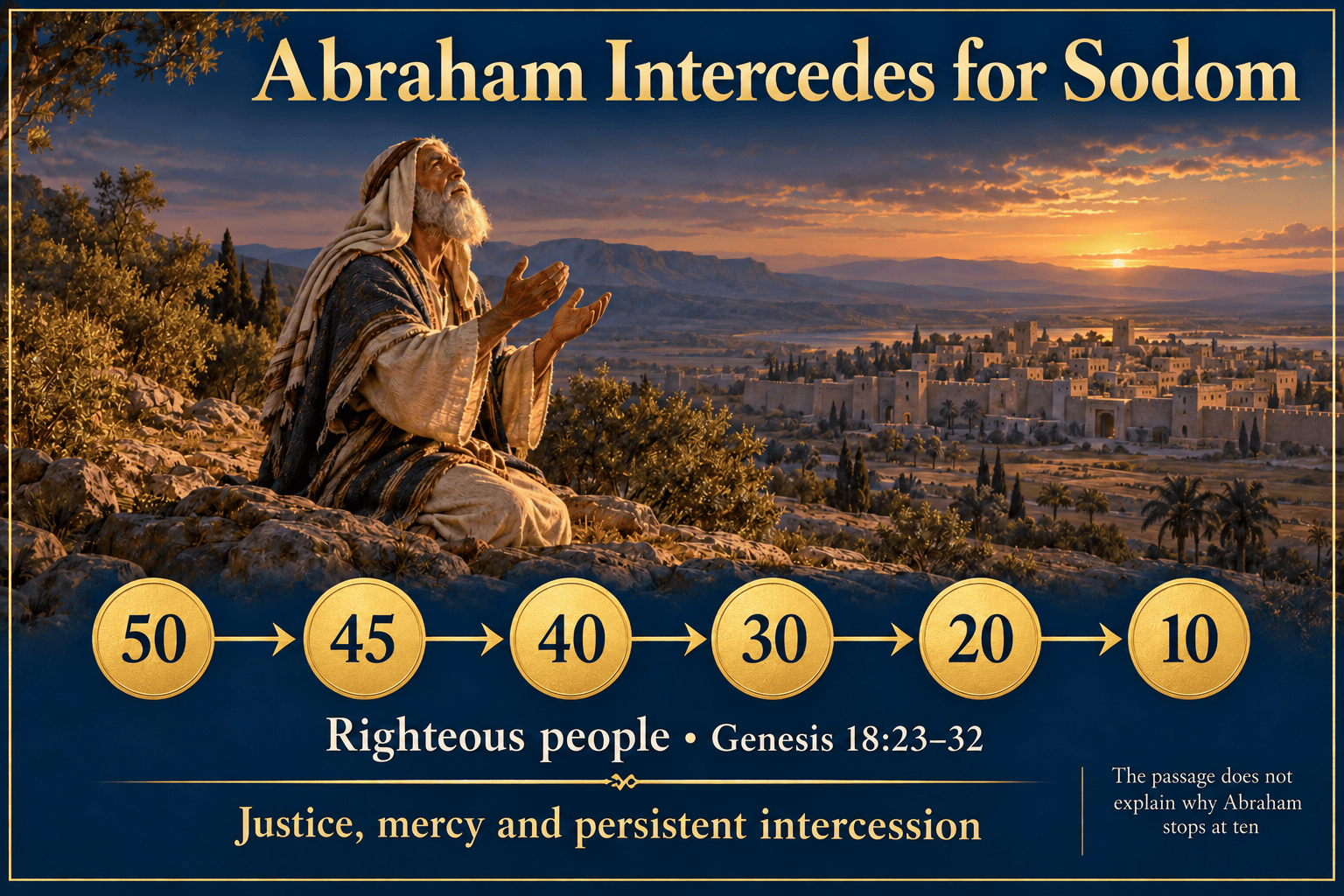
Abraham approaches with boldness and humility (18:23–32), appealing to the Judge's justice and asking that the entire place be spared for the sake of the righteous. The successive requests are fifty (24–26), forty-five (28), forty (29), thirty (30), twenty (31) and ten (32). Each receives an assurance of sparing the city at that number. This is not a formula for calculating acceptable collateral harm. Nor does the chapter explain why Abraham stops at ten; later associations should not be substituted for its silence. Catholic teaching presents intercession as prayer on behalf of others, participating in Christ's intercession (CCC 2634–2636); CCC 2571 specifically recalls Abraham's intercession. God's justice takes evil seriously, while mercy seeks salvation and conversion. Benedict XVI's audience of 18 May 2011 reads Abraham's plea in this relationship between justice and mercy. Genesis 19:29 later explicitly connects God's remembering Abraham with Lot's rescue.
അബ്രാഹം ധൈര്യത്തോടും വിനയത്തോടും സമീപിക്കുന്നു (18:23–32). നീതിമാന്മാരെപ്രതി മുഴുവൻ സ്ഥലവും രക്ഷിക്കണമെന്നാണ് നീതിയുള്ള വിധികർത്താവിനോട് അപേക്ഷിക്കുന്നത്. ക്രമം: അമ്പത് (24–26), നാൽപ്പത്തഞ്ച് (28), നാൽപ്പത് (29), മുപ്പത് (30), ഇരുപത് (31), പത്ത് (32). ഓരോ സംഖ്യയ്ക്കും നഗരം നശിപ്പിക്കില്ലെന്ന ഉറപ്പു ലഭിക്കുന്നു. നിരപരാധികളുടെ നഷ്ടം എത്രവരെ അനുവദിക്കാമെന്ന കണക്കുസൂത്രമല്ല ഇത്. പത്തിൽ നിർത്തിയതിന്റെ കാരണവും അധ്യായം വിശദീകരിക്കുന്നില്ല; പിന്നീടുള്ള ബന്ധങ്ങൾ ആ നിശ്ശബ്ദതയ്ക്കു പകരമാക്കരുത്. മറ്റുള്ളവർക്കുവേണ്ടിയുള്ള പ്രാർത്ഥനയായി മാധ്യസ്ഥ്യത്തെ സഭ അവതരിപ്പിക്കുന്നു; അത് ക്രിസ്തുവിന്റെ മാധ്യസ്ഥ്യത്തിൽ പങ്കുചേരുന്നു (CCC 2634–2636). CCC 2571 അബ്രാഹത്തിന്റെ മാധ്യസ്ഥ്യത്തെ പ്രത്യേകം ഓർമിപ്പിക്കുന്നു. ദൈവനീതി തിന്മയെ ഗൗരവമായി കാണുന്നു; കരുണ രക്ഷയും മാനസാന്തരവും തേടുന്നു. 2011 മേയ് 18-ലെ പൊതുദർശനത്തിൽ ബെനഡിക്ട് പതിനാറാമൻ ഈ നീതി–കരുണബന്ധത്തിൽ അബ്രാഹത്തിന്റെ അപേക്ഷ വായിക്കുന്നു. ദൈവം അബ്രാഹത്തെ ഓർത്ത് ലോത്തിനെ രക്ഷിച്ചതായി 19:29 പിന്നീട് വ്യക്തമായി പറയുന്നു.
Did Abraham persuade an unwilling God to become merciful? കരുണയില്ലാത്ത ദൈവത്തെ അബ്രാഹം കരുണയുള്ളവനാക്കിയോ?
That is an inadequate reading. The dialogue reveals God's willingness to spare and forms Abraham in concern for others. Prayer draws the intercessor into God's mercy rather than making justice irrelevant.
അത് അപൂർണമായ വായനയാണ്. രക്ഷിക്കാനുള്ള ദൈവത്തിന്റെ സന്നദ്ധത വെളിപ്പെടുത്തുകയും അബ്രാഹത്തെ പരകരുതലിൽ രൂപപ്പെടുത്തുകയും ചെയ്യുന്ന സംഭാഷണമാണിത്. നീതിയെ അപ്രസക്തമാക്കാതെ പ്രാർത്ഥകനെ ദൈവകരുണയിൽ പങ്കുചേർക്കുന്നു.
Places, archaeology and the limits of evidence സ്ഥലങ്ങളും പുരാവസ്തുശാസ്ത്രവും തെളിവിന്റെ പരിധികളും

Bab edh-Dhra and Numeira, near the southeastern Dead Sea, are Early Bronze Age sites proposed in some reconstructions as candidates for the cities of the plain. Their occupation histories and destruction horizons require careful dating; neither identification with Sodom or Gomorrah is established by a name inscription. Tall el-Hammam in the northeastern Dead Sea region is another disputed proposal, associated with a different archaeological chronology. Regional location, a destruction layer or evidence of fire cannot by itself identify a biblical city or demonstrate divine judgment. The 2021 Scientific Reports paper proposing an airburst destruction at Tall el-Hammam was retracted on 24 April 2025. Its airburst claim must not be presented as proven science or proof of the Genesis account. The retraction does not settle every question about the site; it removes that paper as reliable support for its conclusions. Maps and generated illustrations on this page are teaching aids, not excavation photographs or archaeological evidence.
ചാവുകടലിന്റെ തെക്കുകിഴക്കൻ പ്രദേശത്തെ പ്രാരംഭ വെങ്കലയുഗസ്ഥാനങ്ങളായ ബാബ് എദ്-ധ്രായെയും നുമൈറയെയും ചില പുനർനിർമാണങ്ങൾ സമതലനഗരങ്ങളുടെ സ്ഥാനാർഥികളായി നിർദേശിക്കുന്നു. വാസചരിത്രവും നാശപാളികളും സൂക്ഷ്മമായി തീയതിനിർണയിക്കണം; സോദോം അല്ലെങ്കിൽ ഗൊമോറ എന്ന തിരിച്ചറിയൽ പേരുള്ള ശിലാലിഖിതം ഉറപ്പിച്ചിട്ടില്ല. വടക്കുകിഴക്കൻ ചാവുകടൽപ്രദേശത്തെ തൽ എൽ-ഹമ്മാം വ്യത്യസ്ത പുരാവസ്തുകാലക്രമമുള്ള മറ്റൊരു തർക്കവിഷയമായ നിർദേശമാണ്. പ്രദേശസാമ്യം, നാശപാളി, തീയുടെ തെളിവ് എന്നിവ മാത്രം ബൈബിൾനഗരത്തെ തിരിച്ചറിയുകയോ ദൈവവിധി തെളിയിക്കുകയോ ചെയ്യുന്നില്ല. തൽ എൽ-ഹമ്മാമിന്റെ നാശത്തിന് ആകാശവിസ്ഫോടനം നിർദേശിച്ച 2021-ലെ Scientific Reports ലേഖനം 2025 ഏപ്രിൽ 24-ന് പിൻവലിക്കപ്പെട്ടു. ആ വാദത്തെ തെളിയിക്കപ്പെട്ട ശാസ്ത്രമോ ഉല്പത്തിയുടെ തെളിവോ ആയി അവതരിപ്പിക്കരുത്. പിൻവലിക്കൽ സ്ഥലത്തെക്കുറിച്ചുള്ള എല്ലാ ചോദ്യങ്ങളും തീർപ്പാക്കുന്നില്ല; ലേഖനത്തിന്റെ നിഗമനങ്ങൾക്ക് അതിനെ വിശ്വസനീയമായ പിന്തുണയായി ഉപയോഗിക്കാനാവില്ല. ഈ പേജിലെ ഭൂപടങ്ങളും സൃഷ്ടിച്ച ചിത്രങ്ങളും പഠനസഹായികളാണ്; ഉത്ഖനനഫോട്ടോകളോ പുരാവസ്തുതെളിവുകളോ അല്ല.
Can we say archaeology has proved where Sodom was? സോദോമിന്റെ സ്ഥാനം പുരാവസ്തുശാസ്ത്രം തെളിയിച്ചുവെന്ന് പറയാമോ?
No. Present these sites as disputed proposals with different chronologies. Keep material findings, proposed identifications and theological interpretation distinct.
ഇല്ല. വ്യത്യസ്തകാലക്രമങ്ങളുള്ള തർക്കവിഷയമായ നിർദേശങ്ങളായി ഈ സ്ഥലങ്ങളെ അവതരിപ്പിക്കുക. ഭൗതികകണ്ടെത്തലുകൾ, നിർദേശിക്കുന്ന തിരിച്ചറിയലുകൾ, ദൈവശാസ്ത്രവ്യാഖ്യാനം എന്നിവ വേർതിരിക്കുക.
Reflection, prayer and summary വിചിന്തനം, പ്രാർത്ഥന, സംഗ്രഹം
- Who needs my practical welcome this week? ഈ ആഴ്ച എന്റെ പ്രായോഗികസ്വീകരണം ആർക്കാണ് ആവശ്യം?
- Can I name my doubts honestly before God? ദൈവത്തിനു മുമ്പിൽ എന്റെ സംശയങ്ങൾ സത്യസന്ധമായി പറയാമോ?
- Whose cry have I ignored while enjoying comfort? സുഖത്തിൽ കഴിയുമ്പോൾ ആരുടെ നിലവിളിയാണ് ഞാൻ അവഗണിച്ചത്?
- Do I pray beyond my own circle while seeking justice for those harmed? പീഡിതർക്കു നീതി തേടിക്കൊണ്ട് എന്റെ വൃത്തത്തിനു പുറത്തുള്ളവർക്കും വേണ്ടി പ്രാർത്ഥിക്കുന്നുണ്ടോ?
Lord of Abraham and Sarah, open our homes and hearts to those who need welcome. Strengthen our trust when your promise exceeds our understanding. Hear the cry of those who suffer, turn us from pride and wrongdoing, and teach us to seek justice with mercy. Make us faithful in prayer for our neighbours and for the whole world. Through Christ our Lord. Amen.
അബ്രാഹത്തിന്റെയും സാറായുടെയും കർത്താവേ, സ്വീകരണം ആവശ്യമുള്ളവർക്കായി ഞങ്ങളുടെ വീടുകളും ഹൃദയങ്ങളും തുറക്കണമേ. അങ്ങയുടെ വാഗ്ദാനം ഞങ്ങളുടെ ഗ്രഹണശക്തിയെ കവിയുമ്പോൾ വിശ്വാസം ഉറപ്പിക്കണമേ. പീഡിതരുടെ നിലവിളി കേൾക്കണമേ; അഹങ്കാരത്തിൽനിന്നും തിന്മയിൽനിന്നും ഞങ്ങളെ പിന്തിരിപ്പിച്ച് കരുണയോടെ നീതി തേടാൻ പഠിപ്പിക്കണമേ. അയൽക്കാർക്കും ലോകം മുഴുവനും വേണ്ടിയുള്ള പ്രാർത്ഥനയിൽ വിശ്വസ്തരാക്കണമേ. ഞങ്ങളുടെ കർത്താവായ ക്രിസ്തുവഴി. ആമേൻ.
Summary: Genesis 18 joins generous hospitality, the promise of Sarah’s son and prayer for a threatened city. God’s disclosure connects Abraham’s election with righteousness and justice. His intercession seeks mercy for the whole place without denying grave wrongdoing. Distinguish Christian interpretation from explicit identification, and treat archaeological proposals with appropriate caution.
സംഗ്രഹം: ഉദാരമായ ആതിഥ്യവും സാറായുടെ പുത്രനെക്കുറിച്ചുള്ള വാഗ്ദാനവും ഭീഷണിനേരിടുന്ന നഗരത്തിനുവേണ്ടിയുള്ള പ്രാർത്ഥനയും ഉല്പത്തി 18 ബന്ധിപ്പിക്കുന്നു. ദൈവത്തിന്റെ വെളിപ്പെടുത്തൽ അബ്രാഹത്തിന്റെ തെരഞ്ഞെടുപ്പിനെ നീതിയോടും ന്യായത്തോടും ചേർക്കുന്നു. ഗുരുതരമായ പാപത്തെ നിഷേധിക്കാതെ മുഴുവൻ സ്ഥലത്തിനും കരുണ തേടുന്നതാണ് മാധ്യസ്ഥ്യം. ക്രൈസ്തവവ്യാഖ്യാനത്തെ വ്യക്തമായ തിരിച്ചറിയലിൽനിന്നു വേർതിരിക്കുക; പുരാവസ്തുനിർദേശങ്ങളെ ജാഗ്രതയോടെ വിലയിരുത്തുക.


