


GENESIS • CHAPTER 47 • ENGLISH & MALAYALAM BIBLE STUDY
Settlement, Survival and Jacob’s Last Request
ഉത്പത്തി 47 • താമസവും അതിജീവനവും യാക്കോബിന്റെ അന്ത്യാഭിലാഷവും
Jacob’s household receives a home in Egypt. Famine transforms the land and its people’s freedom, while Jacob asks for a promise that looks beyond Egypt.
യാക്കോബിന്റെ കുടുംബത്തിന് ഈജിപ്തിൽ വാസസ്ഥലം ലഭിക്കുന്നു. ക്ഷാമം ഭൂമിയുടെ ഉടമസ്ഥതയും ജനങ്ങളുടെ സ്വാതന്ത്ര്യവും മാറ്റുന്നു; ഈജിപ്തിനപ്പുറത്തേക്കു നോക്കുന്ന ഒരു വാഗ്ദാനം യാക്കോബ് ആവശ്യപ്പെടുന്നു.

Genesis 47 — Scripture • ഉത്പത്തി 47 — തിരുവചനം
English: supplied Revised Standard Version Catholic Edition. Malayalam: supplied reading text. Wording and verse boundaries are retained; chapter headings are displayed separately. Commentary is distinct from Scripture. • നൽകിയ രണ്ടു പാഠങ്ങളുടെയും വാക്കുകളും വാക്യവിഭജനവും സൂക്ഷിച്ചിരിക്കുന്നു; വിഭാഗതലക്കെട്ടുകൾ വേർതിരിച്ചിരിക്കുന്നു.
Jacob in Goshen • യാക്കോബ് ഗോഷെനിൽ
47:1
So Joseph went in and told Pharaoh, “My father and my brothers, with their flocks and herds and all that they possess, have come from the land of Canaan; they are now in the land of Goshen.”
ജോസഫ് ഫറവോയുടെ അടുത്തുചെന്നു പറഞ്ഞു: കാനാന്ദേശത്തുനിന്ന് എന്റെ പിതാവും സഹോദരന്മാരും വന്നിട്ടുണ്ട്. അവരുടെ ആടുമാടുകളും അവര്ക്കുള്ള സകലതും കൂടെ കൊണ്ടുവന്നിട്ടുണ്ട്. അവരിപ്പോള് ഗോഷെന് ദേശത്താണ്.
47:2
And from among his brothers he took five men and presented them to Pharaoh.
തന്റെ സഹോദരന്മാരില് അഞ്ചുപേരെ അവന് ഫറവോയുടെ മുന്പില് കൊണ്ടുചെന്നു.
47:3
Pharaoh said to his brothers, “What is your occupation?” And they said to Pharaoh, “Your servants are shepherds, as our fathers were.”
അവന്റെ സഹോദരന്മാരോടു ഫറവോ ചോദിച്ചു: നിങ്ങളുടെ തൊഴില് എന്താണ്? അവര് പറഞ്ഞു: അങ്ങയുടെ ദാസര് ഇടയന്മാരാണ്; ഞങ്ങളുടെ പിതാക്കന്മാരും അങ്ങനെയായിരുന്നു.
47:4
They said to Pharaoh, “We have come to sojourn in the land; for there is no pasture for your servants’ flocks, for the famine is severe in the land of Canaan; and now, we pray you, let your servants dwell in the land of Goshen.”
അവര് തുടര്ന്നു പറഞ്ഞു: ഇവിടെ താമസിക്കാനാണ് ഞങ്ങള് വന്നിരിക്കുന്നത്. കാനാന്ദേശത്തു ക്ഷാമം രൂക്ഷമായതുകൊണ്ട് അങ്ങയുടെ ദാസരുടെ കാലികള്ക്ക് അവിടെ തീറ്റിയില്ല. ദയചെയ്തു ഗോഷെന് ദേശത്തു താമസിക്കാന് ഞങ്ങളെ അനുവദിക്കണം.
47:5
Then Pharaoh said to Joseph, “Your father and your brothers have come to you.
അപ്പോള് ഫറവോ ജോസഫിനോടു പറഞ്ഞു: നിന്റെ പിതാവും സഹോദരന്മാരും നിന്റെയടുത്തേക്കു വന്നിരിക്കുന്നു.
47:6
The land of Egypt is before you; settle your father and your brothers in the best of the land; let them dwell in the land of Goshen; and if you know any able men among them, put them in charge of my cattle.”
ഈജിപ്തുദേശം മുഴുവനും നിനക്കധീനമാണ്. നാട്ടില് ഏറ്റവും നല്ല സ്ഥലത്തു നിന്റെ പിതാവിനെയും സഹോദരന്മാരെയും പാര്പ്പിക്കുക. അവര് ഗോഷെന്ദേശത്തു താമസിക്കട്ടെ. അവരില് കാര്യശേഷിയുള്ളവരെ നിനക്കറിയാമെങ്കില് എന്റെ കാലികളെ അവരെ ഭരമേല്പിക്കുക.
47:7
Then Joseph brought in Jacob his father, and set him before Pharaoh, and Jacob blessed Pharaoh.
അതിനുശേഷം ജോസഫ് തന്റെ പിതാവായ യാക്കോബിനെ ഫറവോയുടെ മുന്പില് കൊണ്ടുചെന്നു.
47:8
And Pharaoh said to Jacob, “How many are the days of the years of your life?”
യാക്കോബ് ഫറവോയെ അനുഗ്രഹിച്ചു. നിങ്ങള്ക്കു വയസ്സെത്രയായി? ഫറവോ ചോദിച്ചു.
47:9
And Jacob said to Pharaoh, “The days of the years of my sojourning are a hundred and thirty years; few and evil have been the days of the years of my life, and they have not attained to the days of the years of the life of my fathers in the days of their sojourning.”
എന്റെ ദേശാന്തരവാസകാലം നൂറ്റിമുപ്പതു വര്ഷമായിരിക്കുന്നു. അത് ഹ്രസ്വവും കഷ്ടപ്പാടുകള് നിറഞ്ഞതുമായിരുന്നു. എന്റെ പിതാക്കന്മാരുടെ ദേശാന്തരവാസകാലത്തോളം ആയിട്ടില്ല അത്.
47:10
And Jacob blessed Pharaoh, and went out from the presence of Pharaoh.
ഫറവോയെ അനുഗ്രഹിച്ചതിനുശേഷം യാക്കോബ് അവന്റെ അടുത്തുനിന്നു പോയി.
47:11
Then Joseph settled his father and his brothers, and gave them a possession in the land of Egypt, in the best of the land, in the land of Ram′eses, as Pharaoh had commanded.
ഫറവോ കല്പിച്ചതുപോലെ ജോസഫ് തന്റെ പിതാവിനും സഹോദരന്മാര്ക്കും ഈജിപ്തിലെ ഒരു ദേശം, അവകാശമായി നല്കി, അവരെ അവിടെ പാര്പ്പിച്ചു. നാട്ടിലെ ഏറ്റവും നല്ല ദേശമായ റമ്സേസ് ആണ് അവന് അവര്ക്കു കൊടുത്തത്.
47:12
And Joseph provided his father, his brothers, and all his father’s household with food, according to the number of their dependents.
ജോസഫ് തന്റെ പിതാവിനും സഹോദരന്മാര്ക്കും പിതാവിന്റെ വീട്ടുകാര്ക്കുമെല്ലാം അംഗസംഖ്യയനുസരിച്ച് ആഹാരം കൊടുത്തുപോന്നു.
The famine intensifies • ക്ഷാമം രൂക്ഷമാകുന്നു
47:13
Now there was no food in all the land; for the famine was very severe, so that the land of Egypt and the land of Canaan languished by reason of the famine.
ഒരു ദേശത്തും ആഹാരം കിട്ടാനില്ലായിരുന്നു. ക്ഷാമം അത്ര രൂക്ഷമായി. ഈജിപ്തും കാനാന്ദേശവും ക്ഷാമം മൂലം കഷ്ടപ്പെട്ടു.
47:14
And Joseph gathered up all the money that was found in the land of Egypt and in the land of Canaan, for the grain which they bought; and Joseph brought the money into Pharaoh’s house.
ഈജിപ്തിലെയും കാനാന്ദേശത്തിലെയും പണം മുഴുവന് ആളുകള് വാങ്ങിയ ധാന്യത്തിന്റെ വിലയായി ജോസഫ് ശേഖരിച്ചു; അതു ഫറവോയുടെ ഭവനത്തിലെത്തിച്ചു.
47:15
And when the money was all spent in the land of Egypt and in the land of Canaan, all the Egyptians came to Joseph, and said, “Give us food; why should we die before your eyes? For our money is gone.”
ഈജിപ്തിലും കാനാനിലുമുള്ള പണമൊക്കെയും തീര്ന്നപ്പോള് ഈജിപ്തുകാര് ജോസഫിന്റെയടുത്തു വന്നു പറഞ്ഞു: ഞങ്ങള്ക്ക് ആഹാരം തരുക. അങ്ങയുടെ മുന്പില്ക്കിടന്നു ഞങ്ങള് മരിക്കാന് ഇടയാക്കരുത്. ഞങ്ങളുടെ പണമെല്ലാം തീര്ന്നുപോയി.
47:16
And Joseph answered, “Give your cattle, and I will give you food in exchange for your cattle, if your money is gone.”
ജോസഫ് പറഞ്ഞു: പണം തീര്ന്നെങ്കില് കന്നുകാലികളെ തരുക; കാലികള്ക്കു പകരമായി ഞാന് ആഹാരം തരാം.
47:17
So they brought their cattle to Joseph; and Joseph gave them food in exchange for the horses, the flocks, the herds, and the asses: and he supplied them with food in exchange for all their cattle that year.
തങ്ങളുടെ കന്നുകാലികളെ അവര് ജോസഫിന്റെയടുത്തു കൊണ്ടു വന്നു. കുതിരകള്ക്കും ആടുമാടുകള്ക്കും കഴുതകള്ക്കും പകരമായി അവന് അവര്ക്ക് ആഹാരം കൊടുത്തു. അവന് അവരുടെ കന്നുകാലികള്ക്കെല്ലാം പകരമായി അവര്ക്ക് ഒരുവര്ഷത്തേക്ക് ആഹാരം നല്കി.
47:18
And when that year was ended, they came to him the following year, and said to him, “We will not hide from my lord that our money is all spent; and the herds of cattle are my lord’s; there is nothing left in the sight of my lord but our bodies and our lands.
അടുത്ത വര്ഷം അവര് ജോസഫിന്റെയടുത്തുചെന്നു പറഞ്ഞു: പണം തീര്ന്ന കാര്യം യജമാനനില് നിന്നു ഞങ്ങള് ഒളിച്ചുവയ്ക്കുന്നില്ല. ഞങ്ങളുടെ കന്നുകാലികളും അങ്ങയുടേതായി; ഞങ്ങളുടെ ദേഹവും നിലവുമല്ലാതെ ഞങ്ങള്ക്കിനി ഒന്നും ബാക്കിയില്ലെന്ന് അങ്ങേക്കു കാണാമല്ലോ.
47:19
Why should we die before your eyes, both we and our land? Buy us and our land for food, and we with our land will be slaves to Pharaoh; and give us seed, that we may live, and not die, and that the land may not be desolate.”
ഞങ്ങളും ഞങ്ങളുടെ നിലവും അങ്ങയുടെ കണ്മുന്പില് നശിക്കാതിരിക്കാന് ഞങ്ങളെയും നിലത്തെയും വാങ്ങി പകരം ഞങ്ങള്ക്ക് ആഹാരം തരുക. ഞങ്ങളും നിലവും ഫറവോയ്ക്ക് അടിമകളായിരുന്നുകൊള്ളാം. ഞങ്ങള് മരിച്ചുപോകാതിരിക്കാനും നിലം ശൂന്യമാകാതിരിക്കാനും വേണ്ടി ഞങ്ങള്ക്കു ധാന്യം നല്കുക.
47:20
So Joseph bought all the land of Egypt for Pharaoh; for all the Egyptians sold their fields, because the famine was severe upon them. The land became Pharaoh’s;
അതുകൊണ്ട് ജോസഫ് ഈജിപ്തിലെ നിലംമുഴുവന് ഫറവോയ്ക്കുവേണ്ടി വാങ്ങി. ക്ഷാമം വളരെ കഠിനമായിത്തീര്ന്നതിനാല് ഈജിപ്തുകാരെല്ലാവരും തങ്ങളുടെ നിലം വിറ്റു. അങ്ങനെ നിലമെല്ലാം ഫറവോയുടേതായി.
47:21
and as for the people, he made slaves of them[a] from one end of Egypt to the other.
ഈജിപ്തിന്റെ ഒരറ്റം മുതല് മറ്റേയറ്റം വരെയുള്ള സകലരും അടിമകളായി.
47:22
Only the land of the priests he did not buy; for the priests had a fixed allowance from Pharaoh, and lived on the allowance which Pharaoh gave them; therefore they did not sell their land.
പുരോഹിതന്മാരുടെ നിലം മാത്രം അവന് വാങ്ങിയില്ല. പുരോഹിതന്മാര്ക്ക് ഉപജീവനത്തിനായി ഫറവോ ഒരു വിഹിതം നിശ്ചയിച്ചിട്ടുണ്ടായിരുന്നു. അതിനാല്, അവര് തങ്ങളുടെ നിലം വിറ്റില്ല.
47:23
Then Joseph said to the people, “Behold, I have this day bought you and your land for Pharaoh. Now here is seed for you, and you shall sow the land.
ജോസഫ് ജനങ്ങളോടു പറഞ്ഞു: ഇന്നു ഞാന് നിങ്ങളെയും നിങ്ങളുടെ നിലത്തെയും ഫറവോയ്ക്കായി വാങ്ങിയിരിക്കുന്നു. ഇതാ വിത്ത്, കൊണ്ടുപോയി വിതച്ചുകൊള്ളുവിന്.
47:24
And at the harvests you shall give a fifth to Pharaoh, and four fifths shall be your own, as seed for the field and as food for yourselves and your households, and as food for your little ones.”
കൊയ്യുമ്പോള് അഞ്ചിലൊന്നു ഫറവോയ്ക്കുകൊടുക്കണം. അഞ്ചില് നാലും നിങ്ങളുടേതായിരിക്കും. വിത്തിനായും നിങ്ങള്ക്കും വീട്ടുകാര്ക്കും കുഞ്ഞുങ്ങള്ക്കുമുള്ള ആഹാരത്തിനായും അതെടുത്തു കൊള്ളുക.
47:25
And they said, “You have saved our lives; may it please my lord, we will be slaves to Pharaoh.”
അവര് പറഞ്ഞു: അങ്ങ് ഞങ്ങളുടെ ജീവന് രക്ഷിച്ചു. യജമാനനു ഞങ്ങളില് കൃപയുണ്ടാകണം. ഞങ്ങള് ഫറവോയുടെ അടിമകളായിരുന്നു കൊള്ളാം.
47:26
So Joseph made it a statute concerning the land of Egypt, and it stands to this day, that Pharaoh should have the fifth; the land of the priests alone did not become Pharaoh’s.
അങ്ങനെ ജോസഫ് ഈജിപ്തിലെ നിലത്തെ സംബന്ധിച്ച്, അഞ്ചിലൊന്നു ഫറവോയ്ക്ക് എന്നൊരു നിയമം ഉണ്ടാക്കി. അത് ഇന്നും നിലനില്ക്കുന്നു. പുരോഹിതന്മാരുടെ നിലംമാത്രം ഫറവോയുടേതായില്ല.
Jacob’s last request • യാക്കോബിന്റെ അന്ത്യാഭിലാഷം
47:27
Thus Israel dwelt in the land of Egypt, in the land of Goshen; and they gained possessions in it, and were fruitful and multiplied exceedingly.
ഇസ്രായേല് ഈജിപ്തിലെ ഗോഷെന്ദേശത്തു പാര്ത്തു. അവര്ക്ക് അവിടെ ധാരാളം സ്വത്തുണ്ടായി. അവര് സന്താന സമൃദ്ധിയുള്ളവരായി പെരുകി.
47:28
And Jacob lived in the land of Egypt seventeen years; so the days of Jacob, the years of his life, were a hundred and forty-seven years.
യാക്കോബ് ഈജിപ്തില് പതിനേഴുവര്ഷം ജീവിച്ചു. യാക്കോബിന്റെ ആയുഷ്കാലം നൂറ്റിനാല്പത്തിയേഴു വര്ഷമായിരുന്നു.
47:29
And when the time drew near that Israel must die, he called his son Joseph and said to him, “If now I have found favor in your sight, put your hand under my thigh, and promise to deal loyally and truly with me. Do not bury me in Egypt,
മരണസമയമടുത്തപ്പോള് ഇസ്രായേല് ജോസഫിനെ വിളിച്ചു പറഞ്ഞു: നിനക്ക് എന്നില് പ്രീതിയുണ്ടെങ്കില് എന്നോടു വിശ്വസ്തമായും സത്യസന്ധമായും പ്രവര്ത്തിക്കാമെന്ന്, എന്റെ തുടയ്ക്കുകീഴെ കൈവച്ച് സത്യംചെയ്യുക. എന്നെ ഈജിപ്തില് സംസ്കരിക്കരുത്.
47:30
but let me lie with my fathers; carry me out of Egypt and bury me in their burying place.” He answered, “I will do as you have said.”
എനിക്ക് എന്റെ പിതാക്കന്മാരോടൊപ്പം വിശ്രമിക്കുന്നതിന് എന്നെ ഈജിപ്തില്നിന്നു കൊണ്ടുപോയി അവരുടെ ശ്മശാനത്തില് അടക്കുക. ജോസഫ് സമ്മതിച്ചു: അങ്ങു പറഞ്ഞതുപോലെ ഞാന് ചെയ്യാം.
47:31
And he said, “Swear to me”; and he swore to him. Then Israel bowed himself upon the head of his bed.
എന്നോടു സത്യം ചെയ്യുക; അവന് ആവശ്യപ്പെട്ടു. ജോസഫ് സത്യം ചെയ്തു. അപ്പോള് ഇസ്രായേല് കട്ടില്ത്തലയ്ക്കല് ശിരസ്സു നമിച്ചു.
RSVCE footnote [a], 47:21: the slavery wording follows the Samaritan and Greek, compared with Latin; the Hebrew reads “he removed them to the cities”. This textual difference is discussed below. • 21-ാം വാക്യത്തിലെ പാഠഭേദം താഴെ വിശദീകരിക്കുന്നു.
A home in Egypt, a promise beyond it • ഈജിപ്തിൽ വാസം, അതിനപ്പുറം വാഗ്ദാനം
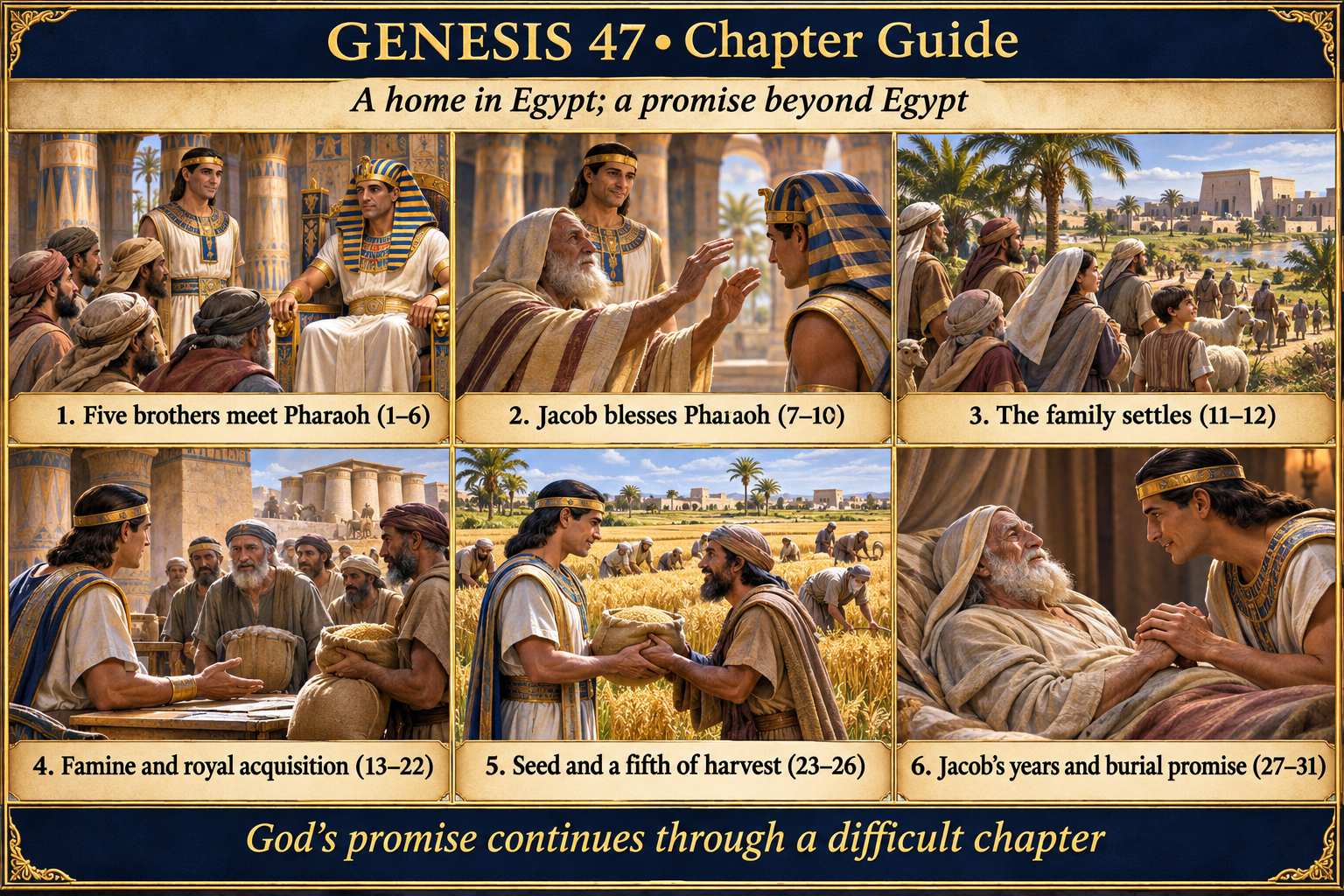
| Verses | Event • സംഭവം |
|---|---|
| 1–6 | Five brothers ask to settle in Goshen • അഞ്ചു സഹോദരന്മാർ ഗോഷെനിൽ താമസം അപേക്ഷിക്കുന്നു |
| 7–10 | Jacob speaks of his years and blesses Pharaoh • ജീവിതവർഷങ്ങൾ വിവരിച്ച് യാക്കോബ് ഫറവോയെ അനുഗ്രഹിക്കുന്നു |
| 11–12 | Joseph settles and feeds the household • കുടുംബത്തിനു താമസവും ഭക്ഷണവും നൽകുന്നു |
| 13–22 | Money, livestock, land and freedom • പണവും കാലികളും ഭൂമിയും സ്വാതന്ത്ര്യവും |
| 23–26 | Seed and the one-fifth harvest share • വിത്തും വിളവിന്റെ അഞ്ചിലൊന്നും |
| 27–31 | Seventeen years and a solemn burial request • പതിനേഴു വർഷവും സംസ്കാരത്തെക്കുറിച്ചുള്ള സത്യവാഗ്ദാനവും |
Pharaoh: a title, not a personal name • ഫറവോ: വ്യക്തിനാമമല്ല, രാജപദവി

Pharaoh derives from an Egyptian expression meaning “great house”, originally the royal palace and subsequently the ruler. Here it is a royal designation, not the king’s personal name. The text does not identify his dynasty or personal name.
വലിയ ഭവനം എന്നർഥമുള്ള ഈജിപ്തീയപ്രയോഗത്തിൽനിന്നാണ് ഫറവോ വന്നത്; ആദ്യം രാജകൊട്ടാരത്തെയും പിന്നീട് രാജാവിനെയും സൂചിപ്പിച്ചു. ഇവിടെ രാജപദവിയാണ്, വ്യക്തിനാമമല്ല. രാജവംശമോ സ്വന്തം പേരോ പാഠം വ്യക്തമാക്കുന്നില്ല.
The title alone cannot prove that this is Ramesses II or the same individual as every Pharaoh elsewhere in Genesis. Keep the history of the title separate from speculative dating of Joseph.
ഈ പദവി മാത്രം ഉപയോഗിച്ച് രാജാവ് റാംസെസ് രണ്ടാമനാണെന്നോ ഉത്പത്തിയിലെ എല്ലാ ഫറവോയും ഒരേ വ്യക്തിയാണെന്നോ തെളിയിക്കാനാവില്ല. പദവിയുടെ ചരിത്രവും ജോസഫിന്റെ കാലത്തെക്കുറിച്ചുള്ള അനുമാനവും വേർതിരിക്കുക.
Why five brothers? What do they say? • അഞ്ചു സഹോദരന്മാർ എന്തിന്? മറുപടി എന്ത്?

Joseph selects five brothers, but their names and the reason for the number are not supplied. A representative delegation is a reasonable description. Claims that they were the weakest, strongest or chosen for a hidden meaning go beyond the text.
ജോസഫ് അഞ്ചു സഹോദരന്മാരെ തിരഞ്ഞെടുക്കുന്നു; പേരുകളോ അഞ്ചെന്ന എണ്ണത്തിന്റെ കാരണമോ നൽകിയിട്ടില്ല. പ്രതിനിധിസംഘമെന്ന വിവരണം യോജിക്കുന്നു. ഏറ്റവും ദുർബലരോ ശക്തരോ രഹസ്യാർഥത്തിനായി തിരഞ്ഞെടുക്കപ്പെട്ടവരോ എന്നു പാഠത്തിനപ്പുറം പറയരുത്.
| Question / response | Content • ഉള്ളടക്കം |
|---|---|
| Pharaoh asks • ഫറവോ ചോദിക്കുന്നു | What is your occupation? • നിങ്ങളുടെ തൊഴിൽ എന്താണ്? |
| Brothers answer • സഹോദരന്മാർ മറുപടി പറയുന്നു | We and our fathers are shepherds • ഞങ്ങളും പിതാക്കന്മാരും ഇടയന്മാരാണ് |
| They request • അപേക്ഷ | Sojourn in Goshen because Canaan has no pasture in the famine • കാനാനിൽ മേയ്ച്ചിലില്ലാത്തതിനാൽ ഗോഷെനിൽ പാർക്കാൻ അനുമതി |
| Pharaoh permits • അനുമതി | Good land in Goshen; capable men may oversee his livestock • ഗോഷെനിലെ നല്ല ഭൂമി; കഴിവുള്ളവർക്ക് രാജകാലികളുടെ മേൽനോട്ടം |
They truthfully follow Joseph’s preparation in chapter 46. Pharaoh’s own livestock also shows why we should not claim that Egyptians had no pastoral economy.
46-ലെ ജോസഫിന്റെ നിർദേശം അവർ സത്യസന്ധമായി പാലിക്കുന്നു. ഫറവോയ്ക്കുതന്നെ കാലികളുണ്ടെന്നത് ഈജിപ്തിൽ കാലിവളർത്തൽ ഇല്ലായിരുന്നെന്നു പറയരുതെന്ന് ഓർമിപ്പിക്കുന്നു.
Goshen and the region of Rameses • ഗോഷെനും റാമെസെസ് പ്രദേശവും

The family settles in Goshen, described in verse 11 as the region of Rameses. The USCCB note identifies the same region in this account. Locate it broadly in the eastern Nile Delta, southwest of Canaan, with Sinai between them. Exact boundaries and the household’s settlement site are uncertain.
കുടുംബം ഗോഷെനിൽ പാർക്കുന്നു; 11-ാം വാക്യത്തിൽ റാമെസെസ് പ്രദേശമെന്നു പറയുന്നു. ഈ വിവരണത്തിൽ ഒരേ പ്രദേശമാണെന്ന് USCCB കുറിപ്പ് വ്യക്തമാക്കുന്നു. കാനാന്റെ തെക്കുപടിഞ്ഞാറായി, ഇടയിൽ സീനായിയുള്ള നൈൽ ഡെൽറ്റയുടെ കിഴക്കുഭാഗത്ത് ഏകദേശമായി കാണിക്കുക. കൃത്യഅതിരുകളും കുടുംബത്തിന്റെ വാസസ്ഥലവും ഉറപ്പില്ല.
A regional place-name does not by itself identify the reigning Pharaoh. Joseph supplies food according to the household’s dependents: land and continuing care appear together.
പ്രാദേശികപേരുകൊണ്ടുമാത്രം ഭരണാധികാരിയെ തിരിച്ചറിയാനാവില്ല. കുടുംബാംഗങ്ങളുടെ ആവശ്യത്തിനനുസരിച്ച് ജോസഫ് ഭക്ഷണം നൽകുന്നു; ഭൂമിയോടൊപ്പം തുടർച്ചയായ കരുതലുമുണ്ട്.
Jacob’s answer and blessing • യാക്കോബിന്റെ മറുപടിയും അനുഗ്രഹവും

Pharaoh asks Jacob his age. He replies that his sojourning has lasted 130 years, few and hard compared with his fathers’ years. “Few” is comparative; “evil” in the RSVCE wording describes hardship here, not a verdict that everything Jacob did was morally wicked.
പ്രായം ചോദിച്ച ഫറവോയോട് ദേശാന്തരവാസം 130 വർഷമായെന്നും പിതാക്കന്മാരുടെ വർഷങ്ങളുമായി താരതമ്യം ചെയ്യുമ്പോൾ ഹ്രസ്വവും കഷ്ടപ്പാടുള്ളതുമായിരുന്നെന്നും യാക്കോബ് പറയുന്നു. ഹ്രസ്വം താരതമ്യമാണ്; ഇംഗ്ലീഷിലെ evil ഇവിടെ ക്ലേശത്തെ സൂചിപ്പിക്കുന്നു, അവന്റെ എല്ലാ പ്രവൃത്തിയും ധാർമികമായി ദുഷിച്ചതെന്ന വിധിയല്ല.
His actual migrant life matters first. The wording also supports reflection on human beings as temporary residents on earth, as the USCCB note observes. Hebrews 11:13–16 develops the theme of strangers seeking a homeland. Do not erase the real experience of displacement by making it only an abstract symbol.
അവന്റെ യഥാർഥ ദേശാന്തരജീവിതമാണ് ആദ്യം പ്രധാനം. USCCB കുറിപ്പ് പറയുന്നതുപോലെ ഭൂമിയിൽ മനുഷ്യർ താൽക്കാലികവാസികളാണെന്ന ധ്യാനത്തിനും വാക്കുകൾ സഹായിക്കുന്നു. എബ്രായർ 11:13–16 സ്വദേശം തേടുന്ന പരദേശികളുടെ വിഷയം വികസിപ്പിക്കുന്നു. യഥാർഥ ദേശവിടലിന്റെ അനുഭവത്തെ വെറും പ്രതീകമാക്കി മാറ്റരുത്.
Jacob blesses Pharaoh on entering and leaving. The aged foreign patriarch becomes a source of blessing to his royal host. This can be read alongside the Abrahamic promise of blessing to other peoples, but the words of the blessing are not recorded. It does not establish Pharaoh’s conversion or approve every royal policy.
പ്രവേശിക്കുമ്പോഴും പോകുമ്പോഴും യാക്കോബ് ഫറവോയെ അനുഗ്രഹിക്കുന്നു. വൃദ്ധനായ വിദേശപിതാവ് രാജാവിന് അനുഗ്രഹത്തിന്റെ ഉറവാകുന്നു. മറ്റു ജനങ്ങൾക്കുള്ള അബ്രാഹത്തിന്റെ അനുഗ്രഹവാഗ്ദാനത്തോടു ചേർത്തുവായിക്കാം; അനുഗ്രഹവാക്കുകൾ രേഖപ്പെടുത്തിയിട്ടില്ല. ഫറവോയുടെ മാനസാന്തരമോ എല്ലാ രാജനയങ്ങൾക്കും അംഗീകാരമോ ഇതു തെളിയിക്കുന്നില്ല.
The famine economy: what changes hands? • ക്ഷാമത്തിൽ എന്തെല്ലാം കൈമാറുന്നു?

| Stage | What happens | Reading caution |
|---|---|---|
| Money • പണം | Payments go to Pharaoh’s treasury • ഫറവോയുടെ ഭണ്ഡാരത്തിലേക്ക് | Not Joseph’s private wealth • ജോസഫിന്റെ സ്വകാര്യസമ്പാദ്യമെന്നു പറയുന്നില്ല |
| Livestock • കാലികൾ | Food is exchanged for animals • മൃഗങ്ങൾക്കു പകരം ഭക്ഷണം | Resources are being exhausted • ജനങ്ങളുടെ വിഭവങ്ങൾ തീരുന്നു |
| Land and people • ഭൂമിയും ജനങ്ങളും | Acquired for Pharaoh • ഫറവോയ്ക്കായി വാങ്ങുന്നു | Famine constrains consent • ക്ഷാമം തിരഞ്ഞെടുപ്പിനെ പരിമിതപ്പെടുത്തുന്നു |
| Seed • വിത്ത് | Joseph supplies seed for sowing • വിതയ്ക്കാൻ വിത്തുനൽകുന്നു | Ownership and freedom are not simply restored • ഉടമസ്ഥതയും സ്വാതന്ത്ര്യവും തിരിച്ചുകിട്ടിയെന്നല്ല |
The people propose selling themselves and their land, but describe death as the alternative. Their acknowledgement that Joseph saved their lives stands alongside the loss of land and freedom. Both belong in an honest reading.
സ്വന്തം ഭൂമിയും തങ്ങളെയും വിൽക്കാൻ ജനങ്ങൾ നിർദേശിക്കുന്നെങ്കിലും മറ്റൊരു സാധ്യതയായി മരണമാണു കാണുന്നത്. ജോസഫ് ജീവൻ രക്ഷിച്ചെന്ന നന്ദിക്കൊപ്പം ഭൂമിയും സ്വാതന്ത്ര്യവും നഷ്ടപ്പെടുന്നു. സത്യസന്ധവായനയിൽ രണ്ടും ഉൾപ്പെടണം.
Joseph’s actions preserve food access, provide seed and secure Pharaoh’s ownership and revenue. His complete private motives are not explained. The narrator does not call this policy God’s command or say Joseph enriched himself privately. Land acquisition is described for Egypt, not the annexation of all Canaan.
ജോസഫിന്റെ നടപടികൾ ഭക്ഷണലഭ്യതയും വിത്തും നൽകുകയും ഫറവോയുടെ ഉടമസ്ഥതയും വരുമാനവും ഉറപ്പാക്കുകയും ചെയ്യുന്നു. എല്ലാ സ്വകാര്യഉദ്ദേശ്യങ്ങളും വിശദീകരിക്കുന്നില്ല. ഇത് ദൈവകൽപനയാണെന്നോ സ്വന്തം സമ്പാദ്യത്തിനാണെന്നോ കഥാകൃത്ത് പറയുന്നില്ല. ഭൂമിവാങ്ങൽ ഈജിപ്തിനെക്കുറിച്ചാണ്; കാനാൻ മുഴുവൻ പിടിച്ചടക്കിയെന്നല്ല.
One fifth to Pharaoh • അഞ്ചിലൊന്ന് ഫറവോയ്ക്ക്

1/5 = 20% to Pharaoh; 4/5 = 80% retained for seed and household food. The remaining share is not pure profit. The statute concerns produce from land owned by Pharaoh and becomes an ongoing arrangement in the account.
1/5 = 20% ഫറവോയ്ക്ക്; 4/5 = 80% വിത്തിനും കുടുംബഭക്ഷണത്തിനും. ശേഷിച്ചത് ശുദ്ധലാഭമല്ല. ഫറവോയുടെ ഭൂമിയിലെ വിളവിനെക്കുറിച്ചുള്ള ക്രമം കഥയിൽ തുടർനിയമമാകുന്നു.
It is not a Christian command to pay twenty percent, a tithe, or evidence that the fields were returned to their former owners.
ഇത് ക്രൈസ്തവർ ഇരുപതു ശതമാനം നൽകണമെന്ന കൽപനയോ ദശാംശമോ നിലം പഴയ ഉടമകൾക്കു തിരികെ നൽകിയതിന്റെ തെളിവോ അല്ല.
Who were the priests? Why the exception? • പുരോഹിതന്മാർ ആരായിരുന്നു? ഒഴിവ് എന്തുകൊണ്ട്?

These are Egyptian priests, not Israel’s later Levites or Christian clergy. Pharaoh gives them a fixed allowance, so they can live without selling their land. The text supplies that practical reason for the exception.
ഇവർ ഈജിപ്തിലെ പുരോഹിതന്മാരാണ്; പിന്നീടുള്ള ഇസ്രായേൽ ലേവ്യരോ ക്രൈസ്തവവൈദികരോ അല്ല. ഫറവോ സ്ഥിരവിഹിതം നൽകിയതിനാൽ ഭൂമി വിൽക്കാതെ ജീവിക്കാനാകുന്നു. ഒഴിവിനുള്ള പ്രായോഗികകാരണം പാഠം പറയുന്നു.
The privilege is not an endorsement of their worship or a rule that Christian clergy should receive the same treatment. Their particular temples or deities are not all identified in the chapter.
ഈ പ്രത്യേകാവകാശം അവരുടെ ആരാധനയ്ക്കുള്ള അംഗീകാരമോ ക്രൈസ്തവവൈദികർക്ക് ഇതേ ക്രമം വേണമെന്ന നിയമമോ അല്ല. ഓരോരുത്തന്റെയും ക്ഷേത്രമോ ദേവതയോ അധ്യായം മുഴുവൻ വ്യക്തമാക്കുന്നില്ല.
Slavery, Scripture and Catholic teaching • അടിമത്തവും തിരുവചനവും കത്തോലിക്കാപ്രബോധനവും

The supplied readings use slavery language. Do not soften the loss of freedom into harmless employment. Hunger-driven consent is not the same as an ordinary free bargain. Ancient forms of dependence also need not be identical in every detail to every later slave system.
നൽകിയ പാഠങ്ങൾ അടിമത്തഭാഷ ഉപയോഗിക്കുന്നു. സ്വാതന്ത്ര്യനഷ്ടത്തെ ദോഷമില്ലാത്ത ജോലിയായി ലഘൂകരിക്കരുത്. പട്ടിണിയാൽ നിർബന്ധിതമായ സമ്മതം സാധാരണസ്വതന്ത്രകരാറല്ല. അതേസമയം എല്ലാ പുരാതനആശ്രിതത്വവും പിന്നീടുള്ള എല്ലാ അടിമവ്യവസ്ഥയുടെയും എല്ലാ വിശദാംശത്തിലും ഒരേപോലെയാകണമെന്നില്ല.
Scripture sometimes regulates ancient slavery rather than abolishing it immediately (Exodus 21). It also condemns kidnapping and selling people (21:16), narrates liberation from slavery, and calls for a slave to be received as a beloved brother (Philemon 16). An ancient narrative does not authorise enslavement today.
പുറപ്പാട് 21 പോലുള്ള ഭാഗങ്ങൾ പുരാതനഅടിമത്തം ഉടൻ ഇല്ലാതാക്കാതെ നിയന്ത്രിക്കുന്നു. മനുഷ്യരെ തട്ടിക്കൊണ്ടുപോയി വിൽക്കുന്നതിനെ കുറ്റപ്പെടുത്തുകയും (21:16), അടിമത്തവിമോചനം വിവരിക്കുകയും, അടിമയെ പ്രിയസഹോദരനായി സ്വീകരിക്കാൻ പറയുകയും ചെയ്യുന്നു (ഫിലമോൻ 16). പുരാതനവിവരണം ഇന്നത്തെ അടിമത്തത്തിന് അനുമതിയല്ല.
Catechism 2414 rejects enslavement and treating persons as merchandise, contrary to their dignity. This is the Catholic moral principle for reflection here, not an official verse-by-verse verdict on Joseph’s intentions. Preserving life matters; exploitation does not become acceptable because people are desperate.
മതബോധനഗ്രന്ഥം 2414 മനുഷ്യരെ അടിമകളാക്കുന്നതും അവരുടെ മാന്യത ലംഘിച്ച് ചരക്കുകളായി കാണുന്നതും നിരസിക്കുന്നു. ഇവിടെ ധ്യാനത്തിനുള്ള കത്തോലിക്കാധാർമികതത്ത്വമാണിത്; ജോസഫിന്റെ ഉദ്ദേശ്യങ്ങളെക്കുറിച്ചുള്ള ഔദ്യോഗികവാക്യാനുസൃതവിധിയല്ല. ജീവൻ സംരക്ഷിക്കണം; ജനങ്ങളുടെ നിസ്സഹായത ചൂഷണത്തെ അംഗീകരിക്കാവുന്നതാക്കുന്നില്ല.
Textual note, 47:21: the RSVCE follows the slavery reading; the footnote records the Hebrew reading about moving people to cities. Slavery language also appears in verses 19,23,25, so the ethical issue does not disappear through this one variant.
47:21-ലെ പാഠഭേദം: അടിമത്തം പറയുന്ന വായനയാണ് RSVCE പിന്തുടരുന്നത്; നഗരങ്ങളിലേക്കു മാറ്റി എന്ന ഹീബ്രുവായന അടിക്കുറിപ്പിൽ പറയുന്നു. 19,23,25 വാക്യങ്ങളിലും അടിമത്തഭാഷയുള്ളതിനാൽ ഈ ഒരു വ്യത്യാസംകൊണ്ട് ധാർമികചോദ്യം ഇല്ലാതാകുന്നില്ല.
Jacob’s years and sojourning • യാക്കോബിന്റെ വർഷങ്ങളും ദേശാന്തരവാസവും

| Event | Years |
|---|---|
| Arrival and audience • വരവും കൂടിക്കാഴ്ചയും | 130 |
| Residence in Egypt • ഈജിപ്തിലെ താമസം | 17 |
| Total lifespan • ആകെ ആയുസ്സ് | 147 |
| Abraham, comparison • അബ്രാഹം, താരതമ്യം | 175 (25:7) |
| Isaac, comparison • ഇസഹാക്ക്, താരതമ്യം | 180 (35:28) |
The family gains possessions and multiplies in Goshen while the famine account describes others losing resources. Notice that narrative contrast without concluding that other families deserved hunger or loss of freedom.
ക്ഷാമവിവരണത്തിൽ മറ്റുള്ളവർക്ക് വിഭവങ്ങൾ നഷ്ടപ്പെടുമ്പോൾ ഗോഷെനിൽ കുടുംബം സമ്പാദിച്ച് വർധിക്കുന്നു. ഈ കഥാവ്യത്യാസം ശ്രദ്ധിക്കാം; മറ്റു കുടുംബങ്ങൾ പട്ടിണിയോ സ്വാതന്ത്ര്യനഷ്ടമോ അർഹിച്ചുവെന്നു നിഗമനം ചെയ്യരുത്.
The promise Joseph must make • ജോസഫ് ചെയ്യേണ്ട സത്യവാഗ്ദാനം

Jacob asks Joseph to swear that he will not bury him in Egypt, but carry him to his ancestors’ burial place. The hand-under-thigh gesture marks a solemn oath; compare Abraham’s arrangement in 24:2–3. Its precise symbolism is debated and need not be stated as certain.
ഈജിപ്തിൽ അടക്കാതെ പിതാക്കന്മാരുടെ ശ്മശാനത്തിലേക്കു കൊണ്ടുപോകാമെന്ന് സത്യംചെയ്യാൻ യാക്കോബ് ആവശ്യപ്പെടുന്നു. തുടയ്ക്കുകീഴെ കൈവയ്ക്കൽ ഗൗരവമുള്ള സത്യത്തിന്റെ ആചാരമാണ്; 24:2–3-ലെ അബ്രാഹത്തിന്റെ ക്രമവുമായി താരതമ്യം ചെയ്യാം. കൃത്യപ്രതീകാർഥം ചർച്ചാവിഷയമാണ്; ഉറപ്പായി പറയേണ്ടതില്ല.
The site is later specified as Machpelah near Hebron (49:29–32), purchased by Abraham in chapter 23. Burial takes place in chapter 50. The request connects family loyalty with the land promise; it does not make Egypt inherently defiling or require all believers to be buried in their birthplace.
23-ൽ അബ്രാഹം വാങ്ങിയ ഹെബ്രോണിനടുത്തുള്ള മക്പേലയാണ് പിന്നീടു വ്യക്തമാക്കുന്ന സ്ഥലം (49:29–32). സംസ്കാരം 50-ലാണ്. കുടുംബവിശ്വസ്തതയും ഭൂമിവാഗ്ദാനവും അഭ്യർഥനയിൽ ബന്ധപ്പെടുന്നു; ഈജിപ്ത് സ്വതവേ അശുദ്ധമാണെന്നോ വിശ്വാസികളെല്ലാം ജന്മദേശത്ത് അടക്കപ്പെടണമെന്നോ അല്ല.
The supplied readings end with Jacob bowing at the head of his bed. The Greek “staff” reading lies behind Hebrews 11:21. This is a textual difference, not a reason to force both images into one literal action.
നൽകിയ പാഠങ്ങൾ കട്ടിൽത്തലയ്ക്കൽ യാക്കോബ് നമിക്കുന്നതോടെ അവസാനിക്കുന്നു. എബ്രായർ 11:21-ന്റെ പിന്നിൽ ഗ്രീക്കിലെ വടി എന്ന വായനയുണ്ട്. ഇത് പാഠഭേദമാണ്; രണ്ടു ദൃശ്യങ്ങളെയും ഒരേ അക്ഷരാർഥപ്രവൃത്തിയാക്കേണ്ടതില്ല.
Questions and answers • ചോദ്യോത്തരങ്ങൾ
Is Pharaoh his personal name? • ഫറവോ വ്യക്തിനാമമാണോ?
No. It designates Egypt’s ruler; his own name is not given here. • അല്ല; ഈജിപ്തിലെ ഭരണാധികാരിയെ സൂചിപ്പിക്കുന്നു; സ്വന്തം പേര് ഇവിടെ പറയുന്നില്ല.
Which five brothers? • ഏത് അഞ്ചു സഹോദരന്മാർ?
The text does not name them or explain the selection. • പേരുകളോ തിരഞ്ഞെടുപ്പിന്റെ കാരണമോ പാഠം പറയുന്നില്ല.
Was Jacob 147 when he arrived? • വന്നപ്പോൾ യാക്കോബിന് 147 വയസ്സോ?
No. He arrived at 130 and lived seventeen more years in Egypt. • അല്ല; 130-ൽ വന്ന് ഈജിപ്തിൽ പതിനേഴു വർഷംകൂടി ജീവിച്ചു.
Did the priests sell their land? • പുരോഹിതന്മാർ ഭൂമി വിറ്റോ?
No. Pharaoh’s allowance supported them. • ഇല്ല; ഫറവോയുടെ വിഹിതം അവരെ പോറ്റി.
Were four fifths pure profit? • അഞ്ചിൽ നാലും ലാഭമായിരുന്നോ?
No. It provided seed and food for households. • അല്ല; വിത്തിനും കുടുംബഭക്ഷണത്തിനുമായിരുന്നു.
Does this approve slavery today? • ഇന്നത്തെ അടിമത്തത്തെ ഇത് അംഗീകരിക്കുമോ?
No. Catechism 2414 rejects enslavement and treating people as merchandise. • ഇല്ല; മതബോധനഗ്രന്ഥം 2414 അടിമത്തവും മനുഷ്യരെ ചരക്കാക്കലും നിരസിക്കുന്നു.
Is Jacob buried here in chapter 47? • 47-ൽ യാക്കോബിനെ അടക്കുന്നോ?
No. He secures the promise; the burial comes in chapter 50. • ഇല്ല; വാഗ്ദാനം ഉറപ്പാക്കുന്നു; സംസ്കാരം 50-ലാണ്.
For today’s reading • ഇന്നത്തെ വായനയ്ക്കായി
How can relief preserve both life and dignity? What does Jacob’s sojourning teach us about possessions and belonging? How can promises express faithful love without reducing faith to material success? Choose one verse to share with the group.
സഹായം ജീവനും മാന്യതയും എങ്ങനെ സംരക്ഷിക്കും? യാക്കോബിന്റെ ദേശാന്തരവാസം സ്വത്തും സ്വന്തമെന്ന ബോധവും സംബന്ധിച്ച് എന്തു പഠിപ്പിക്കുന്നു? വിശ്വാസത്തെ ഭൗതികവിജയമാക്കി ചുരുക്കാതെ വാഗ്ദാനങ്ങൾ എങ്ങനെ വിശ്വസ്തസ്നേഹം പ്രകടിപ്പിക്കും? ഒരു വാക്യം തിരഞ്ഞെടുത്ത് കൂട്ടായ്മയിൽ പങ്കുവയ്ക്കുക.
Prayer: Lord, help us care for hungry families, honour every person’s dignity and remain faithful to our promises. Teach us to live as pilgrims who trust your goodness. Amen.
പ്രാർഥന: കർത്താവേ, വിശക്കുന്ന കുടുംബങ്ങളെ കരുതാനും ഓരോ വ്യക്തിയുടെയും മാന്യത ആദരിക്കാനും വാഗ്ദാനങ്ങളിൽ വിശ്വസ്തരാകാനും സഹായിക്കണമേ. അങ്ങയുടെ നന്മയിൽ ആശ്രയിക്കുന്ന തീർഥാടകരായി ജീവിക്കാൻ പഠിപ്പിക്കണമേ. ആമേൻ.
Sources and further reading • കൂടുതൽ പഠനത്തിനായി
- Genesis 47 — RSVCE and textual footnote
- Genesis 47 — USCCB and study notes
- Catechism 2414 — dignity and enslavement
- Exodus 21 — ancient laws and historical notes
- Hebrews 11 — sojourners and the staff reading
- Getty — the designation Pharaoh
- British Museum — the “great house” expression
- Genesis 25 — Abraham’s lifespan
- Genesis 35 — Isaac’s lifespan
Images are artistic teaching reconstructions. Clothing, gestures, buildings and attendance are illustrative; no historical Pharaoh is identified. The map is schematic. Commentary distinguishes events, interpretations and Catholic moral principles. • ചിത്രങ്ങൾ പഠനസഹായിയായ കലാവിഷ്കാരങ്ങളാണ്; ഭൂപടം ഏകദേശരൂപരേഖയാണ്.


