


GENESIS • CHAPTER 46 • ENGLISH & MALAYALAM BIBLE STUDY
God Goes With Jacob: The Journey and the Reunion
ഉത്പത്തി 46 • യാക്കോബിനോടൊപ്പം ദൈവം: യാത്രയും പുനഃസംഗമവും
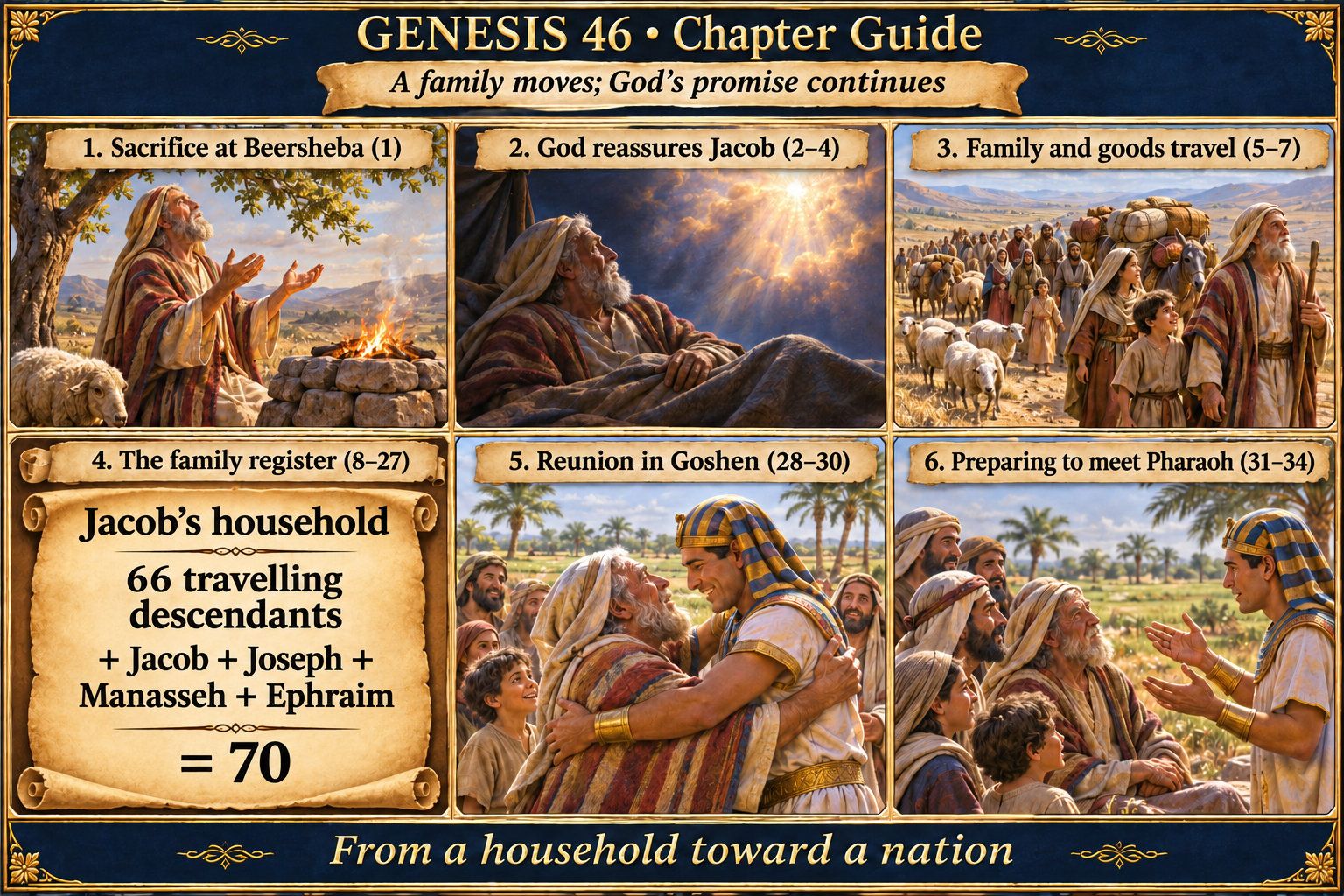
At Beersheba God reassures Jacob. His household travels to Egypt, the family register unfolds, and father and son meet at last in Goshen.
ബേർഷെബായിൽ ദൈവം യാക്കോബിനെ ധൈര്യപ്പെടുത്തുന്നു. കുടുംബം ഈജിപ്തിലേക്കു യാത്രചെയ്യുന്നു; വംശാവലി വിവരിക്കുന്നു; ഒടുവിൽ പിതാവും പുത്രനും ഗോഷെനിൽ കണ്ടുമുട്ടുന്നു.

Genesis 46 — Scripture • ഉത്പത്തി 46 — തിരുവചനം
English: supplied Revised Standard Version Catholic Edition. Malayalam: supplied reading text. Each retains its wording and verse divisions. Study commentary and family charts are distinct from Scripture. • നൽകിയ രണ്ടു പാഠങ്ങളുടെയും വാക്കുകളും വാക്യവിഭജനവും സൂക്ഷിച്ചിരിക്കുന്നു.
Journey and reassurance • യാത്രയും ദൈവത്തിന്റെ ആശ്വാസവും
46:1
So Israel took his journey with all that he had, and came to Beer-sheba, and offered sacrifices to the God of his father Isaac.
തന്റെ സ്വത്തുക്കളെല്ലാം ശേഖരിച്ച് ഇസ്രായേല്യാത്രതിരിച്ചു. ബേര്ഷെബായിലെത്തിയപ്പോള് അവന് തന്റെ പിതാവായ ഇസഹാക്കിന്റെ ദൈവത്തിനു ബലികളര്പ്പിച്ചു.
46:2
And God spoke to Israel in visions of the night, and said, “Jacob, Jacob.” And he said, “Here am I.”
രാത്രിയിലുണ്ടായ ദര്ശനങ്ങളിലൂടെ ദൈവം ഇസ്രായേലിനോടു സംസാരിച്ചു. യാക്കോബേ, യാക്കോബേ, അവിടുന്നു വിളിച്ചു. ഇതാ ഞാന്, അവന് വിളി കേട്ടു.
46:3
Then he said, “I am God, the God of your father; do not be afraid to go down to Egypt; for I will there make of you a great nation.
അവിടുന്നു പറഞ്ഞു: ഞാന് ദൈവമാണ്, നിന്റെ പിതാവിന്റെ ദൈവം. ഈജിപ്തിലേക്കു പോകാന് ഭയപ്പെടേണ്ടാ. കാരണം, അവിടെ ഞാന് നിന്നെ വലിയൊരു ജനമാക്കി വളര്ത്തും.
46:4
I will go down with you to Egypt, and I will also bring you up again; and Joseph’s hand shall close your eyes.”
ഞാന് നിന്റെ കൂടെ ഈജിപ്തിലേക്കു വരും. നിന്നെ തിരിയേ കൊണ്ടുവരുകയും ചെയ്യും. മരണസമയത്തു ജോസഫ് നിന്നെ ശുശ്രൂഷിക്കും.
46:5
Then Jacob set out from Beer-sheba; and the sons of Israel carried Jacob their father, their little ones, and their wives, in the wagons which Pharaoh had sent to carry him.
യാക്കോബ് ബേര്ഷെബായില്നിന്നു യാത്രയായി. ഫറവോ കൊടുത്തയച്ചിരുന്ന രഥങ്ങളില് ഇസ്രായേലിന്റെ മക്കള് പിതാവായ യാക്കോബിനെയും തങ്ങളുടെ കുഞ്ഞുങ്ങളെയും ഭാര്യമാരെയും കയറ്റിക്കൊണ്ടുപോയി.
46:6
They also took their cattle and their goods, which they had gained in the land of Canaan, and came into Egypt, Jacob and all his offspring with him,
തങ്ങളുടെ കന്നുകാലികളും കാനാന് നാട്ടില് തങ്ങള്ക്കുണ്ടായിരുന്ന വസ്തുവകകളും അവര് കൂടെ കൊണ്ടുപോയി.
46:7
his sons, and his sons’ sons with him, his daughters, and his sons’ daughters; all his offspring he brought with him into Egypt.
യാക്കോബും സന്തതികളും ഈജിപ്തിലെത്തി പുത്രന്മാരെയും, അവരുടെ പുത്രന്മാരെയും, പുത്രിമാരെയും, പുത്രന്മാരുടെ പുത്രിമാരെയും, തന്റെ സന്തതികള് എല്ലാവരെയും അവന് ഈജിപ്തിലേക്കുകൊണ്ടുപോയി.
The family register • കുടുംബത്തിന്റെ പേരുവിവരം
46:8
Now these are the names of the descendants of Israel, who came into Egypt, Jacob and his sons. Reuben, Jacob’s first-born,
ഈജിപ്തിലേക്കുവന്ന ഇസ്രായേലിന്റെ മക്കളുടെ പേരുവിവരം: യാക്കോബും അവന്റെ പുത്രന്മാരും: യാക്കോബിന്റെ കടിഞ്ഞൂല് സന്താനമായ റൂബന്.
46:9
and the sons of Reuben: Hanoch, Pallu, Hezron, and Carmi.
റൂബന്റെ പുത്രന്മാര്: ഹനോക്ക്, പല്ലു, ഹെസ്രോന്, കര്മി.
46:10
The sons of Simeon: Jem′uel, Jamin, Ohad, Jachin, Zohar, and Sha′ul, the son of a Canaanitish woman.
ശിമയോന്റെ പുത്രന്മാര്: യെമൂവേല്, യാമീന്, ഓഹദ്, യാക്കിന്, സോഹാര്, കാനാന്യ സ്ത്രീയില് അവനുജനിച്ച സാവൂള്.
46:11
The sons of Levi: Gershon, Kohath, and Merar′i.
ലേവിയുടെ പുത്രന്മാര്: ഗര്ഷോന്, കൊഹാത്ത്, മെറാറി.
46:12
The sons of Judah: Er, Onan, Shelah, Perez, and Zerah (but Er and Onan died in the land of Canaan); and the sons of Perez were Hezron and Hamul.
യൂദായുടെ പുത്രന്മാര്: ഏര്, ഓനാന്, ഷേലാഹ്, പേരെസ്, സോഹ്. ഏറും, ഓനാനും കാനാന്ദേശത്തുവച്ചുമരിച്ചു. പേരെസിന്റെ പുത്രന്മാര്: ഹെസ്രോന്, ഹാമൂല്.
46:13
The sons of Is′sachar: Tola, Puvah, Iob, and Shimron.
ഇസാക്കറിന്റെ പുത്രന്മാര്: തോലാ, ഫൂവ്വാ, യോബ്, ഷിമ്റോന്.
46:14
The sons of Zeb′ulun: Sered, Elon, and Jah′leel
സെബുലൂണിന്റെ പുത്രന്മാര്: സേരെദ്, ഏലോന്, യഹ്ലേല്.
46:15
(these are the sons of Leah, whom she bore to Jacob in Paddan-aram, together with his daughter Dinah; altogether his sons and his daughters numbered thirty-three).
പാദാന്ആരാമില് വച്ചു യാക്കോബിനുലെയായില് ജനിച്ച പുത്രന്മാരാണ് ഇവര്. അവളില് അവനു ദീന എന്ന പുത്രിയും ജനിച്ചു. അവന്റെ സന്താനങ്ങളുടെ ആകെ എണ്ണം മുപ്പത്തിമൂന്നായിരുന്നു.
46:16
The sons of Gad: Ziph′ion, Haggi, Shuni, Ezbon, Eri, Aro′di, and Are′li.
ഗാദിന്റെ പുത്രന്മാര്: സിഫിയോന്, ഹഗ്ഗി, ഷൂനി, എസ്ബോന്, ഏരി, അരോദി, അരേലി.
46:17
The sons of Asher: Imnah, Ishvah, Ishvi, Beri′ah, with Serah their sister. And the sons of Beri′ah: Heber and Mal′chi′el
ആഷേറിന്റെ പുത്രന്മാര്: ഇമ്നാ, ഇഷ്വാ, ഇഷ്വി, ബറിയാ, അവരുടെ സഹോദരി സേറഹ്. ബറിയായുടെ പുത്രന്മാര്: ഹേബര്, മല്ക്കിയേല്.
46:18
(these are the sons of Zilpah, whom Laban gave to Leah his daughter; and these she bore to Jacob—sixteen persons).
ലാബാന് തന്റെ മകളായ ലെയായ്ക്കു പരിചാരികയായിക്കൊടുത്ത സില്ഫയുടെ മക്കളാണിവര്. യാക്കോബിനു സില്ഫയില് പതിനാറു മക്കളുണ്ടായി.
46:19
The sons of Rachel, Jacob’s wife: Joseph and Benjamin.
യാക്കോബിന്റെ ഭാര്യയായ റാഹേലിന്റെ മക്കള്: ജോസഫ്, ബഞ്ചമിന്.
46:20
And to Joseph in the land of Egypt were born Manas′seh and E′phraim, whom As′enath, the daughter of Poti′phera the priest of On, bore to him.
ജോസഫിന് ഈജിപ്തില്വെച്ച് ഓനിലെ പുരോഹിതനായ പൊത്തിഫെറായുടെ പുത്രി അസ്നത്തില് മനാസ്സെയും എഫ്രായിമും ജനിച്ചു.
46:21
And the sons of Benjamin: Bela, Becher, Ashbel, Gera, Na′aman, Ehi, Rosh, Muppim, Huppim, and Ard
ബഞ്ചമിന്റെ പുത്രന്മാര് ബേലാ, ബേക്കെര്, അഷ്ബേല്, ഗേരാ, നാമാന്, ഏഹിറോഷ്, മുപ്പീം, ഹുപ്പീം, ആരെദ്.
46:22
(these are the sons of Rachel, who were born to Jacob—fourteen persons in all).
യാക്കോബിന് റാഹേലില് ജനിച്ച മക്കളാണ് ഈ പതിനാലുപേരും.
46:23
The sons of Dan: Hushim.
ദാനിന്റെ പുത്രന്: ഹുഷിം.
46:24
The sons of Naph′tali: Jahzeel, Guni, Jezer, and Shillem
നഫ്ത്താലിയുടെ പുത്രന്മാര്: യഹ്സേല്, ഗൂനി, യേസെര്, ഷില്ലെം.
46:25
(these are the sons of Bilhah, whom Laban gave to Rachel his daughter, and these she bore to Jacob—seven persons in all).
ലാബാന് തന്റെ മകളായ റാഹേലിനു കൊടുത്ത ബില്ഹാ എന്ന പരിചാരികയില് യാക്കോബിനുണ്ടായ പുത്രന്മാരാണ് ഈ ഏഴു പേര്.
46:26
All the persons belonging to Jacob who came into Egypt, who were his own offspring, not including Jacob’s sons’ wives, were sixty-six persons in all;
പുത്രന്മാരുടെ ഭാര്യമാരെക്കൂടാതെ യാക്കോബിന്റെ കൂടെ ഈജിപ്തിലേക്കു വന്ന അവന്റെ സന്താനങ്ങള് അറുപത്താറുപേരാണ്.
46:27
and the sons of Joseph, who were born to him in Egypt, were two; all the persons of the house of Jacob, that came into Egypt, were seventy.
ഈജിപ്തില്വച്ചു ജോസഫിനു രണ്ടു പുത്രന്മാര് ജനിച്ചു. അങ്ങനെ ഈജിപ്തിലേക്കു വന്ന യാക്കോബിന്റെ കുടുംബക്കാര് ആകെ എഴുപതു പേരാണ്.
Arrival and reunion • വരവും പുനഃസംഗമവും
46:28
He sent Judah before him to Joseph, to appear[a] before him in Goshen; and they came into the land of Goshen.
ഗോഷെനിലേക്കുള്ള വഴി കാണിക്കണമെന്നാവശ്യപ്പെട്ടുകൊണ്ട് യാക്കോബ് ജോസഫിന്റെ യടുത്തേക്കു യൂദായെ മുന്കൂട്ടി അയച്ചു. അവര് ഗോഷെനിലെത്തിച്ചേര്ന്നു.
46:29
Then Joseph made ready his chariot and went up to meet Israel his father in Goshen; and he presented himself to him, and fell on his neck, and wept on his neck a good while.
ജോസഫ് തന്റെ പിതാവായ ഇസ്രായേലിനെ എതിരേല്ക്കാന് രഥമൊരുക്കി ഗോഷെ നിലെത്തി. അവന് പിതാവിനെ കെട്ടിപ്പിടിച്ചു ദീര്ഘനേരം കരഞ്ഞു.
46:30
Israel said to Joseph, “Now let me die, since I have seen your face and know that you are still alive.”
ഇസ്രായേല് ജോസഫിനോടു പറഞ്ഞു: ഇനി ഞാന് മരിച്ചുകൊള്ളട്ടെ! എന്തെന്നാല്, ഞാന് നിന്റെ മുഖം കാണുകയും നീ ജീവനോടെയിരിക്കുന്നു എന്ന് അറിയുകയും ചെയ്തിരിക്കുന്നു.
46:31
Joseph said to his brothers and to his father’s household, “I will go up and tell Pharaoh, and will say to him, ‘My brothers and my father’s household, who were in the land of Canaan, have come to me;
ജോസഫ് തന്റെ സഹോദരന്മാരോടും പിതൃകുടുംബത്തോടുമായിപ്പറഞ്ഞു: ഞാന് പോയി ഫറവോയോടു പറയട്ടെ; കാനാന്ദേശത്തായിരുന്ന എന്റെ സഹോദരന്മാരും പിതൃകുടുംബം മുഴുവനും എന്റെയടുത്ത് എത്തിച്ചേര്ന്നിരിക്കുന്നു.
46:32
and the men are shepherds, for they have been keepers of cattle; and they have brought their flocks, and their herds, and all that they have.’
ഇവര് ഇടയന്മാരാണ്; കാലിമേയ്ക്കലാണ് ഇവരുടെ തൊഴില്: ആടും മാടും അവര്ക്കുള്ളതൊക്കെയും അവര് കൂടെ കൊണ്ടുവന്നിട്ടുണ്ട്.
46:33
When Pharaoh calls you, and says, ‘What is your occupation?’
ഫറവോ നിങ്ങളെ വിളിച്ചു നിങ്ങളുടെ തൊഴില് എന്താണെന്നു ചോദിക്കുമ്പോള്,
46:34
you shall say, ‘Your servants have been keepers of cattle from our youth even until now, both we and our fathers,’ in order that you may dwell in the land of Goshen; for every shepherd is an abomination to the Egyptians.”
അങ്ങയുടെ ദാസന്മാര് ചെറുപ്പംമുതല് ഇന്നുവരെയും കാലിമേയ്ക്കുന്നവരാണ്. ഞങ്ങളുടെ പിതാക്കന്മാരും അങ്ങനെയായിരുന്നു എന്നുപറയണം. അങ്ങനെ പറഞ്ഞെങ്കിലേ ഗോഷെന് നാട്ടില് നിങ്ങള്ക്കു പാര്ക്കാനൊക്കൂ. കാരണം ഇടയന്മാരോട് ഈജിപ്തുകാര്ക്ക് അവജ്ഞയാണ്.
RSVCE footnote [a], 46:28: Samaritan and Syriac, compared with Greek and Latin; Hebrew reads “to show the way”. In the supplied Malayalam 46:21, “ഏഹിറോഷ്” appears together; the English lists Ehi and Rosh separately. The reference charts follow the RSVCE names and distinguish both. • നൽകിയ പാഠം മാറ്റാതെ സൂക്ഷിക്കുന്നു; പഠനപ്പട്ടികയിൽ ഏഹിയും റോഷും വേറിട്ട പേരുകളാണ്.
Chapter guide • അധ്യായം ഒറ്റനോട്ടത്തിൽ
Canaan → Beersheba → Goshen • കാനാൻ → ബേർഷെബാ → ഗോഷെൻ

The chapter names Beersheba as the sacrifice stop and Goshen as the place of arrival and reunion. It does not name the departure town or every road and border crossing. The map shows broad directions; Goshen’s ancient boundaries are uncertain.
ബലികളർപ്പിച്ച ഇടമായി ബേർഷെബായെയും എത്തിച്ചേർന്ന് കണ്ടുമുട്ടിയ ഇടമായി ഗോഷെനെയും അധ്യായം പറയുന്നു. പുറപ്പെട്ട പട്ടണമോ എല്ലാ വഴികളും അതിർത്തികടക്കലുകളും പറയുന്നില്ല. ഭൂപടം ഏകദേശദിശകളാണ് കാണിക്കുന്നത്; ഗോഷെന്റെ പുരാതനഅതിരുകൾ ഉറപ്പില്ല.
Beersheba already belongs to the family’s story of worship and promise (21:31–33; 26:23–25). Jacob sacrifices to the God of his father Isaac. The number and type of offerings, and the construction of a new altar, are not specified here.
ആരാധനയുടെയും വാഗ്ദാനത്തിന്റെയും കുടുംബകഥയിൽ ബേർഷെബാ മുമ്പേ പ്രധാനമാണ് (21:31–33; 26:23–25). പിതാവായ ഇസഹാക്കിന്റെ ദൈവത്തിനു യാക്കോബ് ബലികളർപ്പിക്കുന്നു. ബലികളുടെ എണ്ണമോ തരമോ പുതിയ ബലിപീഠനിർമാണമോ ഇവിടെ വ്യക്തമാക്കുന്നില്ല.
God’s assurances at Beersheba • ബേർഷെബായിൽ ദൈവത്തിന്റെ ഉറപ്പുകൾ

| God’s word | Significance • പ്രാധാന്യം |
|---|---|
| Do not fear going to Egypt • ഈജിപ്തിലേക്കു പോകാൻ ഭയപ്പെടേണ്ട | Specific reassurance for this journey • ഈ യാത്രയ്ക്കുള്ള പ്രത്യേകധൈര്യം |
| A great nation there • അവിടെ വലിയൊരു ജനത | The household’s future grows beyond its present size • കുടുംബത്തിന്റെ ഭാവി ഇപ്പോഴത്തെ വലിപ്പത്തിനപ്പുറം വളരും |
| I will go with you • ഞാൻ കൂടെ വരും | God’s presence continues outside Canaan • കാനാനു പുറത്തും ദൈവസാന്നിധ്യം |
| I will bring you up again • തിരികെ കൊണ്ടുവരും | Read with Jacob’s burial in Canaan and the wider return of his descendants • കാനാനിലെ സംസ്കാരത്തോടും സന്തതികളുടെ മടക്കത്തോടും ചേർത്തുവായിക്കുക |
| Joseph will close your eyes • മരണത്തിൽ ജോസഫ് അടുത്തുണ്ടാകും | A tender assurance of Joseph’s presence at death • മരണസമയത്തെ സ്നേഹപൂർവമായ സാന്നിധ്യം |
The promise of return does not mean Jacob will personally come back alive: he dies in Egypt and is buried in Canaan (50:12–13). God’s direction to Jacob differs from the instruction to Isaac in 26:2 because the circumstances and recipient differ.
മടക്കവാഗ്ദാനം യാക്കോബ് ജീവനോടെ തിരിച്ചുവരുമെന്നല്ല; അവൻ ഈജിപ്തിൽ മരിച്ച് കാനാനിൽ അടക്കപ്പെടുന്നു (50:12–13). സാഹചര്യവും വ്യക്തിയും വ്യത്യസ്തമായതിനാൽ 26:2-ൽ ഇസഹാക്കിനുള്ള നിർദേശത്തിൽനിന്ന് യാക്കോബിനുള്ള ദൈവനിർദേശം വ്യത്യസ്തമാണ്.
God calls him Jacob while the narrator also uses Israel. They are the same man; this is not another renaming.
ദൈവം യാക്കോബ് എന്നു വിളിക്കുമ്പോഴും കഥാകൃത്ത് ഇസ്രായേൽ എന്നും ഉപയോഗിക്കുന്നു. ഒരേ വ്യക്തിയാണ്; വീണ്ടും പേരുമാറ്റമല്ല.
Who and what travelled? • ആരെല്ലാം, എന്തെല്ലാം കൊണ്ടുപോയി?
Jacob, children, grandchildren, the sons’ wives and little ones travel with livestock and possessions acquired in Canaan. Pharaoh’s wagons carry the family. Joseph and his two sons are already in Egypt; Er and Onan have died in Canaan.
യാക്കോബും മക്കളും പേരക്കുട്ടികളും പുത്രന്മാരുടെ ഭാര്യമാരും കുഞ്ഞുങ്ങളും കാനാനിൽ നേടിയ സ്വത്തും കാലികളുമായി യാത്രചെയ്യുന്നു. ഫറവോയുടെ വണ്ടികൾ കുടുംബത്തെ കൊണ്ടുപോകുന്നു. ജോസഫും രണ്ടു പുത്രന്മാരും ഈജിപ്തിൽ മുമ്പേ ഉണ്ട്; ഏറും ഓനാനും കാനാനിൽ മരിച്ചു.
Jacob has twelve named sons, and Dinah is his only named daughter. References to daughters and granddaughters do not justify inventing missing names or insisting that no other daughters existed. Rachel died before this journey (35:19). The maternal headings organise descent; they do not mean all four women were travelling.
പന്ത്രണ്ടു പുത്രന്മാരെ പേരോടെ അറിയുന്നു; പേരോടെ പറയുന്ന ഏക പുത്രി ദീനയാണ്. പുത്രിമാരും പേരക്കുട്ടികളും എന്ന പ്രയോഗം പേരുകൾ സൃഷ്ടിക്കാനോ മറ്റു പുത്രിമാർ ഉണ്ടായിരുന്നില്ലെന്നു ഉറപ്പിക്കാനോ അടിസ്ഥാനമല്ല. റാഹേൽ ഈ യാത്രയ്ക്കുമുമ്പ് മരിച്ചു (35:19). മാതൃവിഭാഗങ്ങൾ വംശബന്ധം ക്രമപ്പെടുത്തുന്നു; നാലു സ്ത്രീകളും യാത്രചെയ്തുവെന്നല്ല.
Understanding 16, 33, 66 and 70 • കുടുംബത്തിലെ എണ്ണങ്ങൾ മനസ്സിലാക്കാം
| Branch | Sons / പുത്രന്മാർ | Daughters / പുത്രിമാർ | Grandsons / പൗത്രന്മാർ | Granddaughters / പൗത്രിമാർ | Great-grandsons / പ്രപൗത്രന്മാർ | Total |
|---|---|---|---|---|---|---|
| Leah • ലെയാ | 6 | 1 | 23 | 0 | 2 | 32 |
| Zilpah • സിൽഫാ | 2 | 0 | 11 | 1 | 2 | 16 |
| Rachel • റാഹേൽ | 2 | 0 | 12 | 0 | 0 | 14 |
| Bilhah • ബിൽഹാ | 2 | 0 | 5 | 0 | 0 | 7 |
| Total • ആകെ | 12 | 1 | 51 | 1 | 4 | 69 |
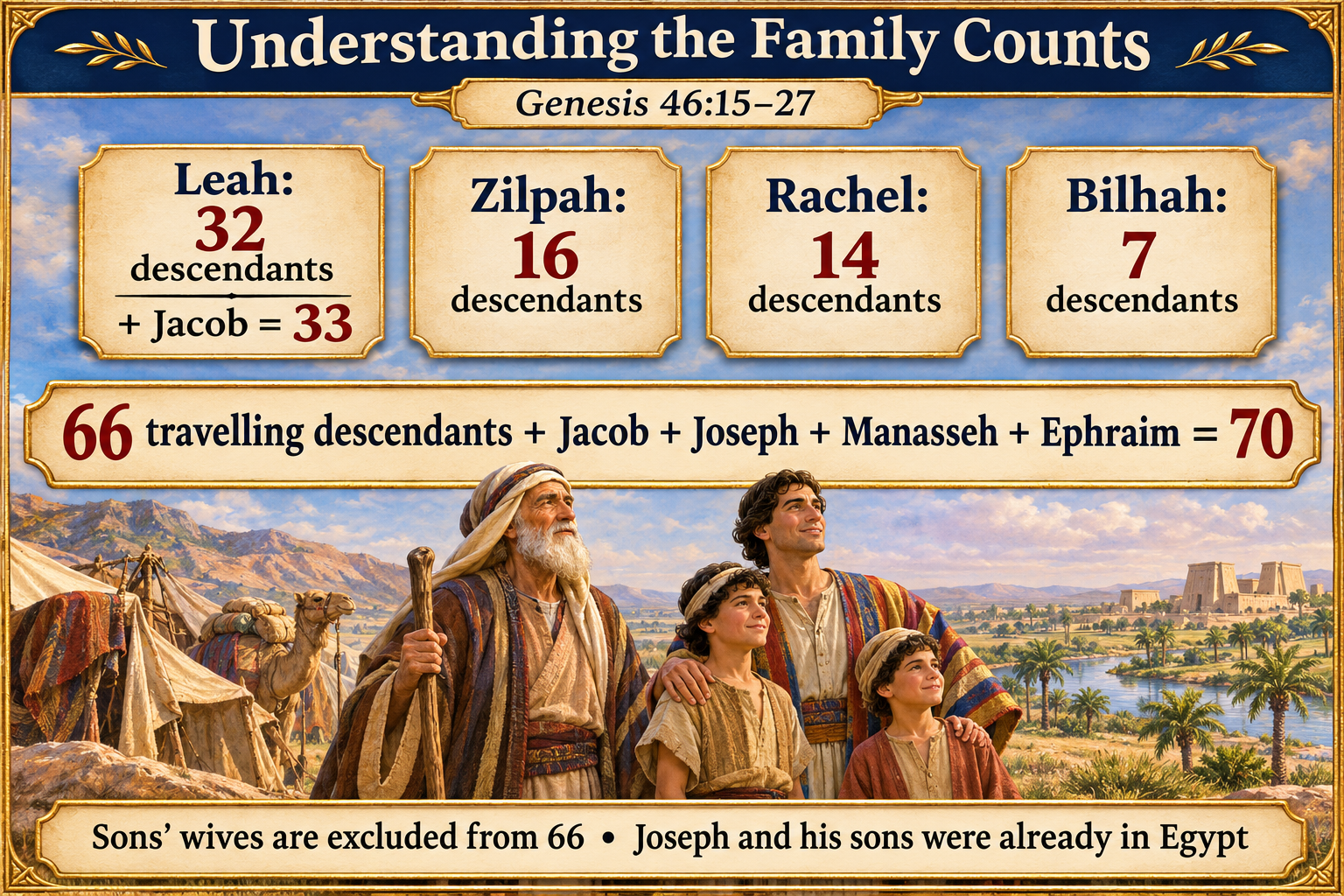
69 living descendants + Jacob = 70. The four great-grandsons are Hezron and Hamul through Perez, and Heber and Malchiel through Beriah. Hezron son of Reuben is a different person from Hezron son of Perez.
ജീവനുള്ള 69 സന്തതികൾ + യാക്കോബ് = 70. പേരെസിലൂടെ ഹെസ്രോനും ഹാമൂലും, ബറിയായിലൂടെ ഹേബറും മൽക്കിയേലുമാണ് നാലു പ്രപൗത്രന്മാർ. റൂബന്റെ മകൻ ഹെസ്രോനും പേരെസിന്റെ മകൻ ഹെസ്രോനും വ്യത്യസ്തരാണ്.
Zilpah’s sixteen includes her two sons, their children and their grandchildren. Leah’s stated thirty-three can commonly be reconciled as her 32 named living descendants plus Jacob with the first group. This is an accounting explanation, not wording explicitly added by verse 15. Er and Onan are excluded as deceased.
സിൽഫായുടെ പതിനാറിൽ രണ്ടു പുത്രന്മാരും അവരുടെ മക്കളും പേരക്കുട്ടികളും ഉൾപ്പെടുന്നു. ലെയായുടെ മുപ്പത്തിമൂന്ന് എന്നത് ജീവനുള്ള 32 സന്തതികളോടൊപ്പം ആദ്യവിഭാഗത്തിൽ യാക്കോബിനെയും ചേർത്തുള്ള സാധാരണവിശദീകരണമാണ്. ഇത് എണ്ണത്തിന്റെ വിശദീകരണമാണ്; 15-ാം വാക്യം നേരിട്ട് ചേർത്ത വാക്കുകളല്ല. മരിച്ച ഏറും ഓനാനും ഒഴിവാക്കപ്പെടുന്നു.
66 travelling descendants + Jacob + Joseph + Manasseh + Ephraim = 70. The sons’ wives are explicitly excluded from 66; Joseph’s household of three is already in Egypt. Neither number gives the entire caravan’s population.
യാത്രചെയ്യുന്ന 66 സന്തതികൾ + യാക്കോബ് + ജോസഫ് + മനാസ്സെ + എഫ്രായിം = 70. 66-ൽ പുത്രന്മാരുടെ ഭാര്യമാരില്ല; ജോസഫും മക്കളും മുമ്പേ ഈജിപ്തിലാണ്. മുഴുവൻ യാത്രാസംഘത്തിന്റെ ജനസംഖ്യ ഈ എണ്ണങ്ങളിലൊന്നുമല്ല.
Acts 7:14 gives seventy-five, following the Greek textual tradition’s different reckoning. Preserve the seventy of this RSVCE chapter rather than silently treating the lists as identical.
ഗ്രീക്കുപാഠപരമ്പരയിലെ വ്യത്യസ്തകണക്കനുസരിച്ച് അപ്പസ്തോലപ്രവർത്തനങ്ങൾ 7:14 എഴുപത്തഞ്ച് പറയുന്നു. പട്ടികകൾ ഒരേപോലെയെന്നു കരുതി മാറ്റാതെ ഈ RSVCE അധ്യായത്തിലെ എഴുപത് സൂക്ഷിക്കുക.
Leah’s branch • ലെയായുടെ സന്തതികൾ


Leah’s six sons and Dinah form the first maternal group. Judah’s living branch includes two grandsons through Perez; Er and Onan remain in the historical list but not the living total. The diagrams’ branch totals include the named son of Jacob.
ലെയായുടെ ആറു പുത്രന്മാരും ദീനയും ആദ്യമാതൃവിഭാഗത്തിലാണ്. യൂദായുടെ ജീവനുള്ള വിഭാഗത്തിൽ പേരെസിന്റെ രണ്ടു പുത്രന്മാരും ഉൾപ്പെടുന്നു. ഏറും ഓനാനും ചരിത്രപ്പട്ടികയിൽ ഉണ്ടെങ്കിലും ജീവനുള്ള എണ്ണത്തിലില്ല. ഓരോ വിഭാഗത്തിന്റെ എണ്ണത്തിലും യാക്കോബിന്റെ ആ പുത്രനും ഉൾപ്പെടുന്നു.
Why Zilpah’s branch is sixteen • സിൽഫായുടെ വിഭാഗം പതിനാറാകുന്നത് എങ്ങനെ?

Gad plus his seven sons makes eight. Asher plus four sons, daughter Serah and Beriah’s two sons makes another eight. Therefore 8 + 8 = 16. Zilpah did not personally bear sixteen children to Jacob.
ഗാദും ഏഴു പുത്രന്മാരും എട്ടുപേരാണ്. ആഷേറും നാലു പുത്രന്മാരും പുത്രി സേറഹും ബറിയായുടെ രണ്ടു പുത്രന്മാരും മറ്റൊരു എട്ടുപേരാണ്. അതിനാൽ 8 + 8 = 16. സിൽഫാ യാക്കോബിന് നേരിട്ട് പതിനാറു കുഞ്ഞുങ്ങളെ പ്രസവിച്ചുവെന്നല്ല.
Rachel’s branch: fourteen • റാഹേലിന്റെ വിഭാഗം: പതിനാല്

Joseph, Manasseh and Ephraim total three, already in Egypt. Benjamin’s branch totals eleven in this register. Asenath is named as mother of Joseph’s sons but is not added to the fourteen-descendant subtotal.
ഈജിപ്തിൽ മുമ്പേയുള്ള ജോസഫും മനാസ്സെയും എഫ്രായിമും മൂന്നു പേരാണ്. ഈ പട്ടികയിൽ ബഞ്ചമിന്റെ വിഭാഗം പതിനൊന്നാണ്. മക്കളുടെ അമ്മയായി അസ്നത്തിനെ പറയുന്നുണ്ടെങ്കിലും പതിനാലു സന്തതികളുടെ എണ്ണത്തിൽ അവളെ ചേർക്കുന്നില്ല.
These are genealogical groupings, not a detailed birth chronology. Numbers 26 and 1 Chronicles 7–8 differ in the Benjamin arrangements. Follow the Genesis 46 links here while acknowledging the differences; do not confidently calculate everyone’s age.
ഇത് വംശാവലിക്രമമാണ്; വിശദജനനകാലക്രമമല്ല. സംഖ്യ 26-ലും ദിനവൃത്താന്തം 7–8-ലും ബഞ്ചമിന്റെ ക്രമത്തിൽ വ്യത്യാസങ്ങളുണ്ട്. വ്യത്യാസങ്ങൾ അംഗീകരിച്ചുകൊണ്ട് ഇവിടെ ഉത്പത്തി 46-ന്റെ ബന്ധങ്ങൾ പിന്തുടരുന്നു; എല്ലാവരുടെയും പ്രായം ഉറപ്പോടെ കണക്കാക്കരുത്.
Bilhah’s branch: seven • ബിൽഹായുടെ വിഭാഗം: ഏഴ്

Dan and Hushim make two; Naphtali and his four sons make five. The whole branch is seven. Later lists use Shuham in comparison with Hushim; the names reference flags the variation.
ദാനും ഹുഷിമും രണ്ടുപേരാണ്; നഫ്താലിയും നാലു പുത്രന്മാരും അഞ്ചുപേർ. വിഭാഗം ആകെ ഏഴ്. പിന്നീടുള്ള പട്ടികയിൽ ഹുഷിമിനു സമാന്തരമായി ഷൂഹാം എന്ന രൂപമുണ്ട്; പേരുവിവരപ്പട്ടിക വ്യത്യാസം ചൂണ്ടിക്കാട്ടുന്നു.
Each son’s family: twelve branches • ഓരോ പുത്രന്റെയും കുടുംബം
These readable trees follow the Genesis 46 register. Each total includes the son heading and living named descendants beneath him. The twelve branch totals sum to 68; add Dinah for 69 descendants, and Jacob for 70. Dinah is Jacob and Leah’s daughter, not a child of one of the twelve sons.
വായിക്കാൻ എളുപ്പമുള്ള ഈ വംശവൃക്ഷങ്ങൾ ഉത്പത്തി 46 പിന്തുടരുന്നു. തലക്കെട്ടിലെ പുത്രനും താഴെയുള്ള ജീവനുള്ള സന്തതികളും ഓരോ എണ്ണത്തിലും ഉൾപ്പെടുന്നു. പന്ത്രണ്ടു വിഭാഗങ്ങൾ 68; ദീനയെ ചേർത്താൽ 69 സന്തതികൾ; യാക്കോബിനെ ചേർത്താൽ 70. ദീന യാക്കോബിന്റെയും ലെയായുടെയും പുത്രിയാണ്; പന്ത്രണ്ടു പുത്രന്മാരിൽ ഒരാളുടെ മകളല്ല.
Reuben • Leah
Living branch / ജീവനുള്ള വിഭാഗം: 5
- Hanoch
- Pallu
- Hezron
- Carmi
Simeon • Leah
Living branch / ജീവനുള്ള വിഭാഗം: 7
- Jemuel
- Jamin
- Ohad
- Jachin
- Zohar
- Shaul
Levi • Leah
Living branch / ജീവനുള്ള വിഭാഗം: 4
- Gershon
- Kohath
- Merari
Judah • Leah
Living branch / ജീവനുള്ള വിഭാഗം: 6
- Er — died in Canaan • കാനാനിൽ മരിച്ചു
- Onan — died in Canaan • കാനാനിൽ മരിച്ചു
- Shelah
- Perez
- Hezron
- Hamul
- Zerah
Issachar • Leah
Living branch / ജീവനുള്ള വിഭാഗം: 5
- Tola
- Puvah
- Iob
- Shimron
Zebulun • Leah
Living branch / ജീവനുള്ള വിഭാഗം: 4
- Sered
- Elon
- Jahleel
Gad • Zilpah
Living branch / ജീവനുള്ള വിഭാഗം: 8
- Ziphion
- Haggi
- Shuni
- Ezbon
- Eri
- Arodi
- Areli
Asher • Zilpah
Living branch / ജീവനുള്ള വിഭാഗം: 8
- Imnah
- Ishvah
- Ishvi
- Beriah
- Heber
- Malchiel
- Serah (daughter • പുത്രി)
Joseph • Rachel
Living branch / ജീവനുള്ള വിഭാഗം: 3
- Manasseh — already in Egypt • മുമ്പേ ഈജിപ്തിൽ
- Ephraim — already in Egypt • മുമ്പേ ഈജിപ്തിൽ
Benjamin • Rachel
Living branch / ജീവനുള്ള വിഭാഗം: 11
- Bela
- Becher
- Ashbel
- Gera
- Naaman
- Ehi
- Rosh
- Muppim
- Huppim
- Ard
Dan • Bilhah
Living branch / ജീവനുള്ള വിഭാഗം: 2
- Hushim
Naphtali • Bilhah
Living branch / ജീവനുള്ള വിഭാഗം: 5
- Jahzeel
- Guni
- Jezer
- Shillem
Names, meanings and later connections • പേരുകളും അർഥവും തുടർപരാമർശങ്ങളും
All 71 named descendants are listed below, including Er and Onan, who died before the journey. Meanings are approximate or traditional where qualified; uncertain derivations should not be turned into definite translations. Spelling follows the English register so the later references can be compared. A shared name does not establish the same person.
യാത്രയ്ക്കുമുമ്പ് മരിച്ച ഏറും ഓനാനും ഉൾപ്പെടെ പേരോടെ പറയുന്ന 71 സന്തതികളെ താഴെ ചേർത്തിരിക്കുന്നു. സൂചിപ്പിച്ചിടത്ത് അർഥങ്ങൾ ഏകദേശമോ പരമ്പരാഗതമോ ആണ്; അനിശ്ചിതവ്യുത്പത്തിയെ ഉറച്ച പരിഭാഷയാക്കരുത്. തുടർപരാമർശങ്ങൾ താരതമ്യം ചെയ്യാൻ ഇംഗ്ലീഷ് പേരുരൂപങ്ങൾ ഉപയോഗിക്കുന്നു. ഒരേ പേരെന്നതുകൊണ്ട് ഒരേ വ്യക്തിയല്ല.
71 named descendants • പേരോടെ പറയുന്ന 71 സന്തതികൾ
| Name | Parent | Branch | Generation from Jacob | Meaning, qualified | Later references / cautions | Status | Lexicon source |
|---|---|---|---|---|---|---|---|
| Reuben | Jacob | Leah | 1 | See, a son | Genesis 49:3–4 | Travelling-descendant register | 46:8 |
| Simeon | Jacob | Leah | 1 | Hearing; heard | Genesis 49:5–7 | Travelling-descendant register | 46:10 |
| Levi | Jacob | Leah | 1 | Attached; joined (Genesis 29 wordplay) | Exodus 6:16; Numbers 3 | Travelling-descendant register | 46:11 |
| Judah | Jacob | Leah | 1 | Praise; praised | Genesis 49:8–12; Matthew 1:2–3 | Travelling-descendant register | 46:12 |
| Issachar | Jacob | Leah | 1 | Reward / recompense (Genesis 30 wordplay) | Genesis 49:14–15 | Travelling-descendant register | 46:13 |
| Zebulun | Jacob | Leah | 1 | Dwelling / honour (Genesis 30 wordplay) | Genesis 49:13 | Travelling-descendant register | 46:14 |
| Gad | Jacob | Zilpah | 1 | Good fortune (Genesis 30 wordplay) | Genesis 49:19 | Travelling-descendant register | 46:16 |
| Asher | Jacob | Zilpah | 1 | Happy / blessed | Genesis 49:20 | Travelling-descendant register | 46:17 |
| Joseph | Jacob | Rachel | 1 | May he add (Genesis 30 wordplay) | Genesis 48–50 | Already in Egypt | 46:19 |
| Benjamin | Jacob | Rachel | 1 | Son of the right hand | Genesis 49:27 | Travelling-descendant register | 46:21 |
| Dan | Jacob | Bilhah | 1 | Judge / he judged (Genesis 30 wordplay) | Genesis 49:16–18 | Travelling-descendant register | 46:23 |
| Naphtali | Jacob | Bilhah | 1 | My wrestling (Genesis 30 wordplay) | Genesis 49:21 | Travelling-descendant register | 46:24 |
| Hanoch | Reuben | Leah | 2 | Initiated / dedicated | Numbers 26:5 | Travelling-descendant register | 46:9 |
| Pallu | Reuben | Leah | 2 | Distinguished | Numbers 26:5,8 | Travelling-descendant register | 46:9 |
| Hezron | Reuben | Leah | 2 | Enclosure / courtyard | Numbers 26:6; not Perez’s son | Travelling-descendant register | 46:9 |
| Carmi | Reuben | Leah | 2 | Vineyard-related; gardener | Numbers 26:6 | Travelling-descendant register | 46:9 |
| Jemuel | Simeon | Leah | 2 | Uncertain; traditionally day of God | Exodus 6:15; compare Nemuel, Numbers 26:12 | Travelling-descendant register | 46:10 |
| Jamin | Simeon | Leah | 2 | Right hand | Numbers 26:12 | Travelling-descendant register | 46:10 |
| Ohad | Simeon | Leah | 2 | Uncertain; traditionally unity | Exodus 6:15; absent from Numbers 26 list | Travelling-descendant register | 46:10 |
| Jachin | Simeon | Leah | 2 | He will establish | Numbers 26:12; temple pillar of same name is not this person | Travelling-descendant register | 46:10 |
| Zohar | Simeon | Leah | 2 | Whiteness / brightness, traditional | Exodus 6:15; compare Zerah, Numbers 26:13 | Travelling-descendant register | 46:10 |
| Shaul | Simeon | Leah | 2 | Asked for | Numbers 26:13; not King Saul | Travelling-descendant register | 46:10 |
| Gershon | Levi | Leah | 2 | Expulsion / refugee, traditional | Exodus 6:16–17; Numbers 3:21–26 | Travelling-descendant register | 46:11 |
| Kohath | Levi | Leah | 2 | Uncertain; traditionally assembly / alliance | Exodus 6:18–20; line of Amram, Moses and Aaron | Travelling-descendant register | 46:11 |
| Merari | Levi | Leah | 2 | Bitter | Exodus 6:19; Numbers 3:33–37 | Travelling-descendant register | 46:11 |
| Er | Judah | Leah | 2 | Watchful, traditional | Genesis 38:7; Numbers 26:19; died before migration | Died before migration | 46:12 |
| Onan | Judah | Leah | 2 | Strong / vigorous | Genesis 38:8–10; Numbers 26:19; died before migration | Died before migration | 46:12 |
| Shelah | Judah | Leah | 2 | Uncertain; traditionally request | Numbers 26:20 | Travelling-descendant register | 46:12 |
| Perez | Judah | Leah | 2 | Breach / breaking through (Genesis 38 wordplay) | Ruth 4:18–22; Matthew 1:3 | Travelling-descendant register | 46:12 |
| Zerah | Judah | Leah | 2 | Rising / dawning | Numbers 26:20; Matthew 1:3 | Travelling-descendant register | 46:12 |
| Tola | Issachar | Leah | 2 | Worm / scarlet-worm | Numbers 26:23; judge Tola in Judges 10 is a different person | Travelling-descendant register | 46:13 |
| Puvah | Issachar | Leah | 2 | Uncertain; traditionally blast | Numbers 26:23; Puah spelling in 1 Chronicles 7:1 | Travelling-descendant register | 46:13 |
| Iob | Issachar | Leah | 2 | Uncertain; do not assume Job of the book | Compare Jashub, Numbers 26:24; textual variant | Travelling-descendant register | 46:13 |
| Shimron | Issachar | Leah | 2 | Guarding / guardianship | Numbers 26:24; distinguish place of same name | Travelling-descendant register | 46:13 |
| Sered | Zebulun | Leah | 2 | Uncertain; traditionally trembling | Numbers 26:26 | Travelling-descendant register | 46:14 |
| Elon | Zebulun | Leah | 2 | Terebinth / oak | Numbers 26:26; judge Elon is a different person | Travelling-descendant register | 46:14 |
| Jahleel | Zebulun | Leah | 2 | Waiting / hoping for God | Numbers 26:26 | Travelling-descendant register | 46:14 |
| Ziphion | Gad | Zilpah | 2 | Lookout / watchtower | Compare Zephon, Numbers 26:15 | Travelling-descendant register | 46:16 |
| Haggi | Gad | Zilpah | 2 | Festive | Numbers 26:15 | Travelling-descendant register | 46:16 |
| Shuni | Gad | Zilpah | 2 | Quiet, traditional; uncertain | Numbers 26:15 | Travelling-descendant register | 46:16 |
| Ezbon | Gad | Zilpah | 2 | Uncertain | Compare Ozni in parallel slot, Numbers 26:16 | Travelling-descendant register | 46:16 |
| Eri | Gad | Zilpah | 2 | Watchful | Numbers 26:16 | Travelling-descendant register | 46:16 |
| Arodi | Gad | Zilpah | 2 | Uncertain; related to Arod | Compare Arod, Numbers 26:17 | Travelling-descendant register | 46:16 |
| Areli | Gad | Zilpah | 2 | Uncertain; traditionally lion of God | Numbers 26:17 | Travelling-descendant register | 46:16 |
| Imnah | Asher | Zilpah | 2 | Good fortune / right-hand association | Numbers 26:44 | Travelling-descendant register | 46:17 |
| Ishvah | Asher | Zilpah | 2 | He will level, traditional | 1 Chronicles 7:30; absent from Numbers 26 list | Travelling-descendant register | 46:17 |
| Ishvi | Asher | Zilpah | 2 | Level / equal, traditional | Numbers 26:44 | Travelling-descendant register | 46:17 |
| Beriah | Asher | Zilpah | 2 | Uncertain; traditionally in trouble | Numbers 26:44–45; distinguish others of same name | Travelling-descendant register | 46:17 |
| Manasseh | Joseph | Rachel | 2 | Causing to forget (Genesis 41 explanation) | Genesis 48; Numbers 26:28–34 | Already in Egypt | 46:20 |
| Ephraim | Joseph | Rachel | 2 | Fruitfulness (Genesis 41 explanation) | Genesis 48; Numbers 26:35–37 | Already in Egypt | 46:20 |
| Bela | Benjamin | Rachel | 2 | Swallowing / destruction, root association | Numbers 26:38–40; 1 Chronicles 8:1 | Travelling-descendant register | 46:21 |
| Becher | Benjamin | Rachel | 2 | Young camel, traditional | 1 Chronicles 7:6; same name elsewhere need not be same person | Travelling-descendant register | 46:21 |
| Ashbel | Benjamin | Rachel | 2 | Uncertain; traditionally flowing | Numbers 26:38 | Travelling-descendant register | 46:21 |
| Gera | Benjamin | Rachel | 2 | Uncertain; traditionally grain | 1 Chronicles 8:3; distinguish later people of same name | Travelling-descendant register | 46:21 |
| Naaman | Benjamin | Rachel | 2 | Pleasant / pleasantness | Numbers 26:40 groups him under Bela; not Syrian commander | Travelling-descendant register | 46:21 |
| Ehi | Benjamin | Rachel | 2 | Uncertain | Possible comparison with Ahiram, Numbers 26:38; not certain | Travelling-descendant register | 46:21 |
| Rosh | Benjamin | Rachel | 2 | Head / chief | No clear later continuation of this individual | Travelling-descendant register | 46:21 |
| Muppim | Benjamin | Rachel | 2 | Uncertain; traditionally wavings | Compare Shupham, Numbers 26:39; Shuppim, 1 Chronicles 7:12 | Travelling-descendant register | 46:21 |
| Huppim | Benjamin | Rachel | 2 | Covering, root association; uncertain | Compare Hupham, Numbers 26:39; 1 Chronicles 7:12 | Travelling-descendant register | 46:21 |
| Ard | Benjamin | Rachel | 2 | Uncertain; traditionally fugitive | Numbers 26:40 groups him under Bela | Travelling-descendant register | 46:21 |
| Hushim | Dan | Bilhah | 2 | Uncertain; traditionally haste | Compare Shuham, Numbers 26:42 | Travelling-descendant register | 46:23 |
| Jahzeel | Naphtali | Bilhah | 2 | God apportions | Numbers 26:48 | Travelling-descendant register | 46:24 |
| Guni | Naphtali | Bilhah | 2 | Protected, traditional; uncertain | Numbers 26:48 | Travelling-descendant register | 46:24 |
| Jezer | Naphtali | Bilhah | 2 | Form / formation, root association | Numbers 26:49 | Travelling-descendant register | 46:24 |
| Shillem | Naphtali | Bilhah | 2 | Repayment / recompense, root association | Numbers 26:49 | Travelling-descendant register | 46:24 |
| Dinah (F) | Jacob | Leah | 1 | Judgment / judged, traditional | Genesis 30:21; 34; no later independent narrative in Genesis | Travelling-descendant register | 46:15 |
| Serah (F) | Asher | Zilpah | 2 | Abundance / extension, traditional | Numbers 26:46; 1 Chronicles 7:30 | Travelling-descendant register | 46:17 |
| Hezron | Perez | Leah | 3 | Enclosure / courtyard | Ruth 4:18–19; Matthew 1:3; not Reuben’s son | Travelling-descendant register | 46:12 |
| Hamul | Perez | Leah | 3 | Spared / pitied | Numbers 26:21 | Travelling-descendant register | 46:12 |
| Heber | Beriah | Zilpah | 3 | Association / community | Numbers 26:45; not the Kenite Heber of Judges 4 | Travelling-descendant register | 46:17 |
| Malchiel | Beriah | Zilpah | 3 | My king is God | Numbers 26:45 | Travelling-descendant register | 46:17 |
| Name | Role | Meaning / caution | Connections |
|---|---|---|---|
| Jacob / Israel | Family head | Jacob: heel-related narrative wordplay; Israel: striving with God in Genesis 32 | Genesis 32:28; 35:10; 49–50 |
| Isaac | Jacob’s father | He laughs | Genesis 21; 26; 35:27–29 |
| Leah | Mother of six sons and Dinah | Uncertain; do not insist on weary | Genesis 29–30; 49:31 |
| Zilpah | Mother of Gad and Asher | Uncertain | Genesis 29:24; 30:9–13 |
| Rachel | Mother of Joseph and Benjamin | Ewe | Genesis 29–35; died before migration |
| Bilhah | Mother of Dan and Naphtali | Uncertain | Genesis 29:29; 30:3–8; 35:22 |
| Laban | Gave the two attendants to his daughters | White | Genesis 24; 29–31 |
| Asenath | Joseph’s wife; mother of two sons in Egypt | Egyptian name, commonly related to belonging to Neith | Genesis 41:45,50 |
| Potiphera | Asenath’s father, priest of On | Egyptian name commonly related to Ra giving | Genesis 41:45,50; not automatically Potiphar |
| Pharaoh | Egyptian royal title, not a personal name | Great house, Egyptian title | Genesis 41–50 |
| Name | Role | Meaning / caution |
|---|---|---|
| Canaan | Departure land | Exact departure town is not given in Genesis 46 |
| Beersheba | Sacrifice and night vision | Well of oath / seven narrative wordplay; Genesis 21:31; 26:33 |
| Goshen | Settlement and reunion | Meaning uncertain; approximate eastern Nile Delta |
| Egypt | Destination country | Do not impose a symbolic meaning as a translation |
| Paddan-aram | Earlier family setting | Plain / field of Aram, traditional |
| On | Potiphera’s priestly city | Heliopolis; name meaning not established here |
Especially useful links: Perez → Hezron in Ruth 4 and Matthew 1; Kohath → Amram in Exodus 6; Joseph’s sons in Genesis 48. Iob is not established as the Job of the book. Naaman here is not the Syrian commander; Shaul is not King Saul.
പ്രധാനബന്ധങ്ങൾ: റൂത്ത് 4-ലും മത്തായി 1-ലും പേരെസ് → ഹെസ്രോൻ; പുറപ്പാട് 6-ൽ കൊഹാത്ത് → അമ്രാം; ഉത്പത്തി 48-ൽ ജോസഫിന്റെ പുത്രന്മാർ. ഇവിടത്തെ യോബിനെ പുസ്തകത്തിലെ യോബായി ഉറപ്പിക്കാനാവില്ല. ഇവിടത്തെ നാമാൻ സിറിയൻ സൈന്യാധിപനല്ല; സാവൂൾ രാജാവായ സാവൂളുമല്ല.
At last, father and son • ഒടുവിൽ പിതാവും പുത്രനും

Jacob sends Judah ahead to Joseph. Joseph prepares his chariot, comes to Goshen and embraces his father in prolonged tears. Judah’s advance role can be read alongside his responsibility in chapters 43–44: he now helps bring the family together.
യാക്കോബ് യൂദായെ ജോസഫിന്റെ അടുത്തേക്കു മുൻകൂട്ടി അയയ്ക്കുന്നു. രഥമൊരുക്കി ഗോഷെനിലെത്തുന്ന ജോസഫ് പിതാവിനെ കെട്ടിപ്പിടിച്ച് ദീർഘനേരം കരയുന്നു. 43–44-ലെ ഉത്തരവാദിത്തത്തോടൊപ്പം യൂദായുടെ മുൻകൂട്ടിയുള്ള വരവ് വായിക്കാം; ഇപ്പോൾ കുടുംബത്തെ ഒന്നിപ്പിക്കാൻ സഹായിക്കുന്നു.
Jacob’s words about being ready to die express fulfilment after seeing Joseph alive. He does not die here; he later lives seventeen years in Egypt (47:28).
ജോസഫ് ജീവനോടെയിരിക്കുന്നതു കണ്ടതിലെ തൃപ്തിയാണ് ഇനി മരിച്ചുകൊള്ളട്ടെ എന്ന വാക്കുകൾ. ഇവിടെ മരിക്കുന്നില്ല; പിന്നീട് ഈജിപ്തിൽ പതിനേഴു വർഷം ജീവിക്കുന്നു (47:28).
Why describe their livestock occupation? • കാലിമേയ്ക്കൽ പറയാൻ നിർദേശിച്ചത് എന്തിന്?

Joseph intends to tell Pharaoh they are shepherds and prepares them to give the same truthful account of their longstanding work. The stated purpose is settlement in Goshen. He is not telling them to lie or conceal that they keep sheep.
അവർ ഇടയന്മാരാണെന്നു ഫറവോയോടു പറയാനാണ് ജോസഫ് ഉദ്ദേശിക്കുന്നത്; പാരമ്പര്യത്തൊഴിലിനെക്കുറിച്ച് അതേ സത്യമായ മറുപടി നൽകാൻ അവരെ തയ്യാറാക്കുന്നു. ഗോഷെനിൽ താമസം ലഭിക്കലാണ് പറഞ്ഞ ലക്ഷ്യം. നുണ പറയാനോ ആടുമേയ്ക്കൽ മറയ്ക്കാനോ അല്ല.
Goshen suits their animals and household setting. The narrator reports Egyptian distaste for shepherds without a complete historical explanation. Egyptians also kept livestock: do not claim Egypt had no shepherds or impose one attitude on every Egyptian in every era. The meeting with Pharaoh is prepared here and takes place in chapter 47.
ഗോഷെൻ മൃഗങ്ങൾക്കും കുടുംബത്തിന്റെ ജീവിതരീതിക്കും യോജിക്കുന്നു. ഇടയന്മാരോടുള്ള ഈജിപ്തുകാരുടെ അവജ്ഞ പറയുന്നെങ്കിലും സമ്പൂർണചരിത്രകാരണം നൽകുന്നില്ല. ഈജിപ്തുകാരും കാലികളെ വളർത്തിയിരുന്നു; അവിടെ ഇടയന്മാരില്ലെന്നോ എല്ലാകാലത്തും എല്ലാവർക്കും ഒരേ മനോഭാവമെന്നോ പറയരുത്. ഇവിടെ ഒരുക്കുന്ന ഫറവോയുമായുള്ള കൂടിക്കാഴ്ച 47-ലാണ്.
Questions and answers • ചോദ്യോത്തരങ്ങൾ
Did Zilpah bear sixteen children? • സിൽഫാ പതിനാറു കുഞ്ഞുങ്ങളെ പ്രസവിച്ചോ?
No. Her two sons’ wider branches total sixteen. • ഇല്ല; രണ്ടു പുത്രന്മാരുടെ വിശാലവിഭാഗങ്ങൾ പതിനാറാണ്.
Why Leah’s thirty-three? • ലെയായുടെ മുപ്പത്തിമൂന്ന് എങ്ങനെ?
A common explanation adds Jacob to her 32 named living descendants. • ജീവനുള്ള 32 സന്തതികളോടൊപ്പം യാക്കോബിനെ ചേർക്കുന്നതാണ് സാധാരണവിശദീകരണം.
Did exactly seventy people travel in the caravan? • യാത്രാസംഘം കൃത്യം എഴുപതുപേരോ?
No full caravan total is given; wives are excluded from the descendant count. • മുഴുവൻ സംഘത്തിന്റെ എണ്ണം നൽകിയിട്ടില്ല; സന്തതികളുടെ എണ്ണത്തിൽ ഭാര്യമാരില്ല.
Was Rachel travelling? • റാഹേൽ യാത്രചെയ്തോ?
No. She had died earlier; her name heads a family branch. • ഇല്ല; മുമ്പ് മരിച്ചു; പേര് കുടുംബവിഭാഗത്തിന്റെ തലക്കെട്ടാണ്.
Are the two Hezrons one man? • രണ്ടു ഹെസ്രോന്മാരും ഒരാളോ?
No. One is Reuben’s son; the other is Perez’s son. • അല്ല; ഒരാൾ റൂബന്റെ മകൻ, മറ്റൊരാൾ പേരെസിന്റെ മകൻ.
Does Jacob die at the reunion? • കൂടിക്കാഴ്ചയിൽ യാക്കോബ് മരിക്കുന്നോ?
No. His words express fulfilment; he lives on. • ഇല്ല; തൃപ്തി പ്രകടിപ്പിക്കുന്ന വാക്കുകളാണ്; അവൻ തുടർന്നു ജീവിക്കുന്നു.
For today’s reading • ഇന്നത്തെ വായനയ്ക്കായി
The household brings goods and animals, but its deepest assurance is God’s presence. The long register links ordinary families with the promise of a nation. When circumstances change, do I seek God’s guidance as well as practical provision? Share one verse that struck you.
കുടുംബം സ്വത്തും മൃഗങ്ങളും കൊണ്ടുവരുന്നു; എന്നാൽ ഏറ്റവും ആഴത്തിലുള്ള ഉറപ്പ് ദൈവസാന്നിധ്യമാണ്. ദീർഘപേരുവിവരം സാധാരണകുടുംബങ്ങളെ ഒരു ജനതയുടെ വാഗ്ദാനത്തോടു ബന്ധിപ്പിക്കുന്നു. സാഹചര്യങ്ങൾ മാറുമ്പോൾ പ്രായോഗികസൗകര്യത്തോടൊപ്പം ദൈവത്തിന്റെ വഴിനടത്തലും തേടുന്നുണ്ടോ? സ്പർശിച്ച ഒരു വാക്യം പങ്കുവയ്ക്കുക.
Prayer: Lord, go with families facing change. Give us courage to follow your guidance, gratitude for reunion and care for every generation. Amen.
പ്രാർഥന: കർത്താവേ, മാറ്റങ്ങളെ നേരിടുന്ന കുടുംബങ്ങളോടൊപ്പം വരണമേ. അങ്ങയുടെ വഴിനടത്തൽ പിന്തുടരാൻ ധൈര്യവും പുനഃസംഗമത്തിന് നന്ദിയും എല്ലാ തലമുറകളോടും കരുതലും നൽകണമേ. ആമേൻ.
Sources and further reading • കൂടുതൽ പഠനത്തിനായി
- Genesis 46 — RSVCE
- NET Genesis 46 — counting and textual notes
- Numbers 26 — later clan lists
- Acts 7 — the Greek tradition’s seventy-five
- Genesis 47 — settlement and Jacob’s years
- Genesis 50 — burial in Canaan
- Hebrew lexicon — each names-table row links its verse
Images are artistic teaching reconstructions, not portraits or archaeological records. The map is schematic. Tree totals follow the living names in this register; they do not establish a complete birth chronology. Name meanings may be uncertain and are not a hidden prophecy. • ചിത്രങ്ങൾ പഠനസഹായിയായ കലാവിഷ്കാരങ്ങളാണ്; പേരർഥങ്ങളിൽ അനിശ്ചിതത്വമുണ്ടാകാം.


