

GENESIS • CHAPTER 22 • ENGLISH & MALAYALAM BIBLE STUDY
Abraham’s Test, God’s Provision and Christ Foreshadowed
ഉത്പത്തി 22 • അബ്രാഹത്തിന്റെ പരീക്ഷണവും ദൈവപരിപാലനവും ക്രിസ്തുവിന്റെ മുൻസൂചനകളും
The son of promise, the ram provided, the blessing renewed and the family of Rebekah.
വാഗ്ദാനത്തിന്റെ പുത്രൻ, പകരം നൽകപ്പെട്ട മുട്ടാട്, പുതുക്കപ്പെട്ട അനുഗ്രഹം, റബേക്കായുടെ കുടുംബം.

The chapter at a glance • അധ്യായത്തിന്റെ രൂപരേഖ
The main account (22:1–19) tells of Abraham’s test and God’s provision. The closing genealogy (22:20–24) introduces Rebekah’s family, preparing for Isaac’s marriage in chapter 24. The story moves from the apparent threat to the promise to its future continuation.
22:1–19 അബ്രാഹത്തിന്റെ പരീക്ഷണവും ദൈവം നൽകുന്ന പരിഹാരവും വിവരിക്കുന്നു. അവസാനത്തെ വംശാവലി (22:20–24) റബേക്കായുടെ കുടുംബത്തെ പരിചയപ്പെടുത്തി, ഇരുപത്തിനാലാം അധ്യായത്തിലെ ഇസഹാക്കിന്റെ വിവാഹത്തിന് വഴിയൊരുക്കുന്നു. വാഗ്ദാനത്തിന് നേരിടുന്ന ഭീഷണിയിൽനിന്ന് അതിന്റെ തുടർച്ചയിലേക്കാണ് കഥ നീങ്ങുന്നത്.
Genesis 22 — Scripture • ഉല്പത്തി 22 — തിരുവചനം
Genesis 22:1–24 • English: Revised Standard Version Catholic Edition
The Command to Sacrifice Isaac • അബ്രാഹത്തിന്റെ ബലി
22:1
After these things God tested Abraham, and said to him, “Abraham!” And he said, “Here am I.”
പിന്നീടൊരിക്കല് ദൈവം അബ്രാഹത്തെ പരീക്ഷിച്ചു. അബ്രാഹം, അവിടുന്നു വിളിച്ചു. ഇതാ ഞാന്, അവന് വിളികേട്ടു.
22:2
He said, “Take your son, your only son Isaac, whom you love, and go to the land of Mori′ah, and offer him there as a burnt offering upon one of the mountains of which I shall tell you.”
നീ സ്നേഹിക്കുന്ന നിന്റെ ഏകമകന് ഇസഹാക്കിനെയും കൂട്ടിക്കൊണ്ടു മോറിയാ ദേശത്തേക്കു പോവുക. അവിടെ ഞാന് കാണിച്ചുതരുന്ന മലമുകളില് നീ അവനെ എനിക്ക് ഒരു ദഹനബലിയായി അര്പ്പിക്കണം.
22:3
So Abraham rose early in the morning, saddled his ass, and took two of his young men with him, and his son Isaac; and he cut the wood for the burnt offering, and arose and went to the place of which God had told him.
അബ്രാഹം അതിരാവിലെ എഴുന്നേറ്റു കഴുതയ്ക്കു ജീനിയിട്ട് രണ്ടു വേലക്കാരെയും മകന് ഇസഹാക്കിനെയും കൂട്ടി ബലിക്കുവേണ്ട വിറകും കീറിയെടുത്ത്, ദൈവം പറഞ്ഞ സ്ഥലത്തേക്കു പുറപ്പെട്ടു.
22:4
On the third day Abraham lifted up his eyes and saw the place afar off.
മൂന്നാം ദിവസം അവന് തലയുയര്ത്തി നോക്കിയപ്പോള് അകലെ ആ സ്ഥലം കണ്ടു.
22:5
Then Abraham said to his young men, “Stay here with the ass; I and the lad will go yonder and worship, and come again to you.”
അവന് വേലക്കാരോടു പറഞ്ഞു: കഴുതയുമായി നിങ്ങള് ഇവിടെ നില്ക്കുക. ഞാനും മകനും അവിടെപ്പോയി ആരാധിച്ചു തിരിച്ചുവരാം.
22:6
And Abraham took the wood of the burnt offering, and laid it on Isaac his son;[a] and he took in his hand the fire and the knife. So they went both of them together.
അബ്രാഹം ദഹനബലിക്കുള്ള വിറകെടുത്ത് മകന് ഇസഹാക്കിന്റെ ചുമലില് വച്ചു. കത്തിയും തീയും അവന് തന്നെ എടുത്തു. അവര് ഒരുമിച്ചു മുമ്പോട്ടു നടന്നു.
22:7
And Isaac said to his father Abraham, “My father!” And he said, “Here am I, my son.” He said, “Behold, the fire and the wood; but where is the lamb for a burnt offering?”
ഇസഹാക്ക് തന്റെ പിതാവായ അബ്രാഹത്തെ വിളിച്ചു: പിതാവേ! എന്താ മകനേ, അവന് വിളികേട്ടു. ഇസഹാക്കു പറഞ്ഞു: തീയും വിറകുമുണ്ടല്ലോ; എന്നാല്, ദഹനബലിക്കുള്ള കുഞ്ഞാടെവിടെ?
22:8
Abraham said, “God will provide himself the lamb for a burnt offering, my son.” So they went both of them together.
അവന് മറുപടി പറഞ്ഞു: ബലിക്കുള്ള കുഞ്ഞാടിനെ ദൈവം തന്നെ തരും. അവരൊന്നിച്ചു മുമ്പോട്ടു പോയി.
22:9
When they came to the place of which God had told him, Abraham built an altar there, and laid the wood in order, and bound Isaac his son, and laid him on the altar, upon the wood.
ദൈവം പറഞ്ഞ സ്ഥലത്തെത്തിയപ്പോള്, അബ്രാഹം അവിടെ ഒരു ബലിപീഠം പണിതു. വിറക് അടുക്കിവച്ചിട്ട് ഇസഹാക്കിനെ ബന്ധിച്ചു വിറകിനു മീതേ കിടത്തി.
22:10
Then Abraham put forth his hand, and took the knife to slay his son.
മകനെ ബലികഴിക്കാന് അബ്രാഹം കത്തി കൈയിലെടുത്തു.
22:11
But the angel of the Lord called to him from heaven, and said, “Abraham, Abraham!” And he said, “Here am I.”
തത്ക്ഷണം കര്ത്താവിന്റെ ദൂതന് ആകാശത്തു നിന്ന് അബ്രാഹം, അബ്രാഹം എന്നു വിളിച്ചു. ഇതാ ഞാന്, അവന് വിളികേട്ടു.
22:12
He said, “Do not lay your hand on the lad or do anything to him; for now I know that you fear God, seeing you have not withheld your son, your only son, from me.”
കുട്ടിയുടെ മേല്കൈവയ്ക്കരുത്. അവനെ ഒന്നും ചെയ്യരുത്. നീ ദൈവത്തെ ഭയപ്പെടുന്നു വെന്ന് എനിക്കിപ്പോള് ഉറപ്പായി. കാരണം, നിന്റെ ഏക പുത്രനെ എനിക്കു തരാന് നീ മടി കാണിച്ചില്ല.
22:13
And Abraham lifted up his eyes and looked, and behold, behind him was a ram, caught in a thicket by his horns; and Abraham went and took the ram, and offered it up as a burnt offering instead of his son.
അബ്രാഹം തലപൊക്കി നോക്കിയപ്പോള്, തന്റെ പിന്നില്, മുള്ച്ചെടികളില് കൊമ്പുടക്കിക്കിടക്കുന്ന ഒരു മുട്ടാടിനെക്കണ്ടു. അവന് അതിനെ മകനുപകരം ദഹന ബലിയര്പ്പിച്ചു.
22:14
So Abraham called the name of that place The Lord will provide;[b] as it is said to this day, “On the mount of the Lord it shall be provided.”[c]
അബ്രാഹം ആ സ്ഥലത്തിനു യാഹ്വെയിരെ എന്നു പേരിട്ടു. കര്ത്താവിന്റെ മലയില് അവിടുന്നു വേണ്ടതു പ്രദാനം ചെയ്യുന്നു വെന്ന് ഇന്നുവരെയും പറയപ്പെടുന്നു.
22:15
And the angel of the Lord called to Abraham a second time from heaven,
കര്ത്താവിന്റെ ദൂതന് ആകാശത്തുനിന്നു വീണ്ടും അബ്രാഹത്തെ വിളിച്ചു പറഞ്ഞു:
22:16
and said, “By myself I have sworn, says the Lord, because you have done this, and have not withheld your son, your only son,
കര്ത്താവ് അരുളിച്ചെയ്യുന്നു, നീ നിന്റെ ഏകപുത്രനെപ്പോലും എനിക്കു തരാന്മടിക്കായ്കകൊണ്ടു ഞാന് ശപഥം ചെയ്യുന്നു:
22:17
I will indeed bless you, and I will multiply your descendants as the stars of heaven and as the sand which is on the seashore. And your descendants shall possess the gate of their enemies,
ഞാന് നിന്നെ സമൃദ്ധമായി അനുഗ്രഹിക്കും. നിന്റെ സന്തതികളെ ആ കാശത്തിലെ നക്ഷത്രങ്ങള് പോലെയും കടല്ത്തീരത്തിലെ മണല്ത്തരിപോലെയും ഞാന് വര്ധിപ്പിക്കും. ശത്രുവിന്റെ നഗര കവാടങ്ങള് അവര് പിടിച്ചെടുക്കും.
22:18
and by your descendants shall all the nations of the earth bless themselves, because you have obeyed my voice.”
നീ എന്റെ വാക്ക് അനുസരിച്ചതുകൊണ്ടു നിന്റെ സന്തതിയിലൂടെ ലോകത്തിലെ ജനതകളെല്ലാം അനുഗ്രഹിക്കപ്പെടും.
22:19
So Abraham returned to his young men, and they arose and went together to Beer-sheba; and Abraham dwelt at Beer-sheba.[d]
അബ്രാഹം എഴുന്നേറ്റ് തന്റെ വേലക്കാരുടെ അടുത്തേക്കു ചെന്നു. അവരൊന്നിച്ച് ബേര്ഷെ ബയിലേക്കു തിരിച്ചുപോയി. അബ്രാഹം ബേര്ഷെബയില് പാര്ത്തു.
The Children of Nahor • നാഹോറിന്റെ സന്തതികൾ
22:20
Now after these things it was told Abraham, “Behold, Milcah also has borne children to your brother Nahor:
തന്റെ സഹോദരനായ നാഹോറിനു മില്ക്കായില് മക്കളുണ്ടായ വിവരം അബ്രാഹം അറിഞ്ഞു.
22:21
Uz the first-born, Buz his brother, Kemu′el the father of Aram,
അവര്, മൂത്തവനായ ഊസ്, അവന്റെ സഹോദരന് ബൂസ്, ആരാമിന്റെ പിതാവായ കെമുവേല്,
22:22
Chesed, Hazo, Pildash, Jidlaph, and Bethu′el.”
കേസെദ്, ഹാസോ, പില്ഷാദ്, ഇദ്ലാഫ്, ബത്തുവേല് എന്നിവരായിരുന്നു.
22:23
Bethu′el became the father of Rebekah. These eight Milcah bore to Nahor, Abraham’s brother.
ബത്തുവേല് റബേക്കായുടെ പിതാവായിരുന്നു. അബ്രാഹത്തിന്റെ സഹോദരനായ നാഹോറിനു മില്ക്കായിലുണ്ടായവരാണ് ഈ എട്ടുപേരും.
22:24
Moreover, his concubine, whose name was Reumah, bore Tebah, Gaham, Tahash, and Ma′acah.
അതിനുപുറമേ അവന്റെ ഉപനാരിയായ റവുമായില്നിന്ന് തേബഹ്, ഗഹം, തഹഷ്, മാക്കാഹ് എന്നീ മക്കള് ജനിച്ചു.
Footnote guide: [a] A traditional comparison with Christ bearing the Cross. [b] An alternative rendering concerns seeing. [c] Another rendering concerns the Lord being seen. [d] The note discusses the whole test, faith and obedience, and rejection of human sacrifice. Read the RSVCE footnotes.
Study note: Isaac bearing the wood is read in Christian tradition alongside Jesus bearing the Cross. “The LORD will provide” also carries a Hebrew association with seeing. Verse 19’s mention of Abraham returning does not establish that Isaac died or disappeared.
Why the test? • എന്തിനായിരുന്നു പരീക്ഷണം?
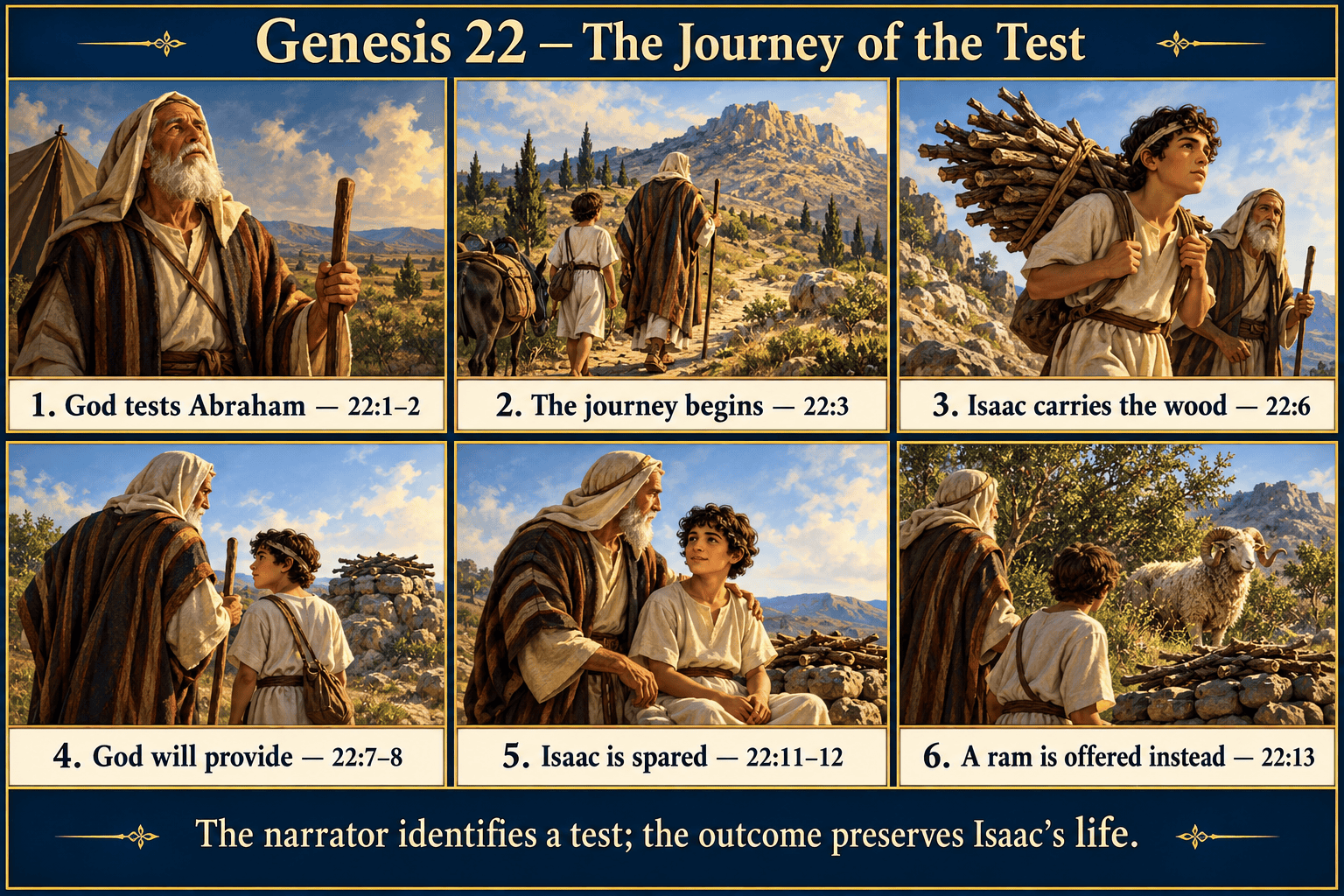
The reader is told from the beginning: this is a test. Isaac is the son through whom God has promised descendants (21:12). The command therefore seems to threaten the very promise Abraham has learned to trust. The narrator gives little access to his thoughts; we should not invent a detailed account of God’s hidden motives.
ഇതൊരു പരീക്ഷണമാണെന്ന് ആദ്യമേ വായനക്കാരനെ അറിയിക്കുന്നു. ഇസഹാക്കിലൂടെയാണ് സന്തതികളെ ദൈവം വാഗ്ദാനം ചെയ്തിരിക്കുന്നത് (21:12). അതിനാൽ കല്പന വാഗ്ദാനത്തെയേ തന്നെ അപകടപ്പെടുത്തുന്നതായി തോന്നുന്നു. അബ്രാഹത്തിന്റെ ചിന്തകൾ കഥാകാരൻ വിശദീകരിക്കുന്നില്ല; ദൈവത്തിന്റെ രഹസ്യോദ്ദേശ്യങ്ങളെക്കുറിച്ച് കൃത്രിമമായ വിശദീകരണം ചേർക്കരുത്.
The Catechism describes the episode as a final stage in the purification of Abraham’s faith (CCC 2572). The gift is entrusted back to the giver. The conclusion is indispensable: God stops Isaac’s death. The ram, not Isaac, becomes the completed burnt offering.
വിശ്വാസത്തിന്റെ ശുദ്ധീകരണത്തിലെ അവസാനഘട്ടമായി മതബോധനഗ്രന്ഥം ഈ സംഭവത്തെ വായിക്കുന്നു (CCC 2572). ലഭിച്ച ദാനം ദാതാവിൽ വീണ്ടും വിശ്വാസത്തോടെ ഏൽപ്പിക്കപ്പെടുന്നു. അവസാനം നിർണായകമാണ്: ദൈവം ഇസഹാക്കിന്റെ മരണം തടയുന്നു. പൂർത്തിയാകുന്ന ദഹനബലി ഇസഹാക്കല്ല, മുട്ടാടാണ്.
This account is not permission to harm a child or to imitate the act literally. Scripture elsewhere condemns child sacrifice (Deuteronomy 12:31; Jeremiah 7:31). Catholic teaching distinguishes a trial through which faith matures from temptation to evil (CCC 2847; James 1:13).
കുട്ടിയെ ദ്രോഹിക്കാനോ പ്രവൃത്തി അക്ഷരാർഥത്തിൽ അനുകരിക്കാനോ ഈ വിവരണം അനുമതിയല്ല. തിരുവചനം മറ്റിടങ്ങളിൽ ശിശുബലിയെ അപലപിക്കുന്നു (നിയമാവർത്തനം 12:31; ജെറെമിയാ 7:31). വിശ്വാസം വളരുന്ന പരീക്ഷണത്തെയും തിന്മയിലേക്കുള്ള പ്രലോഭനത്തെയും കത്തോലിക്കാപഠനം വേർതിരിക്കുന്നു (CCC 2847; യാക്കോബ് 1:13).
The repeated “Here am I” (22:1,7,11) links Abraham’s attentiveness to God with his response to his son. “The two of them together” (22:6,8) makes the father–son relationship central. The emotional force comes partly from what the narrator leaves unsaid.
ആവർത്തിക്കുന്ന “ഇതാ ഞാൻ” (22:1,7,11) ദൈവത്തോടുള്ള അബ്രാഹത്തിന്റെ ശ്രദ്ധയെയും മകനോടുള്ള പ്രതികരണത്തെയും ബന്ധിപ്പിക്കുന്നു. “അവരൊന്നിച്ചു” (22:6,8) എന്ന പ്രയോഗം പിതൃപുത്രബന്ധത്തെ കേന്ദ്രത്തിലാക്കുന്നു. പറയാതെ വിടുന്ന കാര്യങ്ങളും കഥയുടെ തീവ്രത വർധിപ്പിക്കുന്നു.
Christ foreshadowed • ക്രിസ്തുവിന്റെ മുൻസൂചനകൾ

Christian typology reads earlier persons and events in the light of Christ. It respects their original story while recognising a fuller fulfilment. It does not require every object or movement to be a secret code. CCC 2572 and the Church’s reflection on the Passion explicitly connect Abraham’s offering with the Father’s gift of his Son.
ക്രിസ്തീയ പ്രതീകാത്മകവായന മുൻകാലവ്യക്തികളെയും സംഭവങ്ങളെയും ക്രിസ്തുവിന്റെ വെളിച്ചത്തിൽ വായിക്കുന്നു. ആദ്യകഥയുടെ അർത്ഥം മാനിച്ചുകൊണ്ട് പൂർണമായ നിറവ് തിരിച്ചറിയുന്നു. ഓരോ വസ്തുവും പ്രവൃത്തിയും രഹസ്യസന്ദേശമാക്കേണ്ടതില്ല. CCC 2572-ഉം പീഡാനുഭവത്തെക്കുറിച്ചുള്ള സഭയുടെ വിചിന്തനവും അബ്രാഹത്തിന്റെ സമർപ്പണത്തെ പിതാവ് പുത്രനെ നൽകുന്നതുമായി ബന്ധിപ്പിക്കുന്നു.
| Genesis detail | Christian connection | Distinction to retain |
|---|---|---|
| Beloved son • പ്രിയപുത്രൻ 22:2 | The Father gives his Son; Romans 8:32. • പിതാവ് പുത്രനെ നൽകുന്നു. | Isaac is the uniquely promised son through Sarah, not Abraham’s only biological child. |
| Isaac carries the wood • വിറക് ചുമക്കുന്നു 22:6 | Jesus carries the Cross; John 19:17. • യേശു കുരിശു ചുമക്കുന്നു. | A traditional foreshadowing; Genesis does not explicitly mention the future Cross. |
| Father and son walk together • ഒരുമിച്ചു നടക്കുന്നു 22:6,8 | The saving purpose of Father and Son; John 10:17–18. | Jesus’ free self-offering is explicit; Isaac’s inner thoughts and consent are not narrated. |
| The third day • മൂന്നാം ദിവസം 22:4 | A resurrection resonance for Christian meditation. | The text means the third day of the journey; Isaac did not die and rise then. |
| God provides • ദൈവം നൽകുന്നു 22:8,13 | Christ, the Lamb of God; John 1:29. | Isaac asks about a lamb; a ram is actually offered. |
| Ram offered instead • പകരം ബലി 22:13 | Christ’s saving self-offering for others. | Isaac and the ram illuminate different aspects; neither image exhausts Christ’s mystery. |
| Isaac received back alive • ജീവനോടെ തിരികെ Hebrews 11:19 | A figurative return from death; resurrection hope. | Isaac is spared. Jesus truly dies and truly rises. |
| All nations blessed • ജനതകൾക്ക് അനുഗ്രഹം 22:18 | Galatians 3:16; Acts 3:25–26. | The promise opens towards blessing beyond a single household. |
The thicket and Christ’s crown of thorns can be compared devotionally, but the New Testament does not explicitly interpret that detail. The donkey, two servants, knife and fire need no invented individual identities. The fulfilment is greater than the figure: Jesus freely offers himself; the Father and Son are united in saving love.
മുൾച്ചെടിയെയും ക്രിസ്തുവിന്റെ മുൾക്കിരീടത്തെയും ഭക്തിപരമായി താരതമ്യം ചെയ്യാം; എന്നാൽ പുതിയനിയമം ആ വിശദാംശത്തെ വ്യക്തമായി അങ്ങനെ വ്യാഖ്യാനിക്കുന്നില്ല. കഴുതയ്ക്കും രണ്ടു വേലക്കാർക്കും കത്തിക്കും തീക്കും കൃത്രിമമായ വ്യക്തിപരമായ പ്രതീകങ്ങൾ നൽകേണ്ടതില്ല. മുൻസൂചനയെക്കാൾ മഹത്താണ് നിറവ്: യേശു സ്വതന്ത്രമായി സ്വയം സമർപ്പിക്കുന്നു; രക്ഷാകരസ്നേഹത്തിൽ പിതാവും പുത്രനും ഒന്നാണ്.
The Lord will provide • കർത്താവ് പ്രദാനം ചെയ്യും

A burnt offering is an offering consumed by fire, rather than a sacrifice shared as a meal. The decisive phrase in 22:13 is “instead of his son”: the ram takes Isaac’s place. The story holds together trust, divine intervention and a life preserved.
ദഹനബലി അഗ്നിയിൽ ദഹിപ്പിക്കപ്പെടുന്ന സമർപ്പണമാണ്; പങ്കിട്ടു ഭക്ഷിക്കുന്ന ബലിഭോജനത്തിൽനിന്നു വ്യത്യസ്തം. 22:13-ലെ നിർണായകപ്രയോഗം “മകനുപകരം” എന്നാണ്: മുട്ടാട് ഇസഹാക്കിന്റെ സ്ഥാനം എടുക്കുന്നു. വിശ്വാസവും ദൈവികഇടപെടലും സംരക്ഷിക്കപ്പെട്ട ജീവനുമാണ് കഥ ഒരുമിച്ചു കാണിക്കുന്നത്.
| Expression | Meaning / study note |
|---|---|
| Akedah • അകേദാ | The binding of Isaac: a traditional Jewish title associated with the verb in 22:9. • ഇസഹാക്കിന്റെ ബന്ധനം എന്ന പരമ്പരാഗത യഹൂദപേര്. |
| Yahweh-yireh • യാഹ്വെയിരെ | The LORD will see/provide: a Hebrew wordplay involving seeing and provision (22:8,14). • കാണുന്നതും നൽകുന്നതും ബന്ധിപ്പിക്കുന്ന പദപ്രയോഗം. |
| Fear of God • ദൈവഭയം | Reverent fidelity expressed in action (22:12), not simply panic. • പ്രവൃത്തിയിൽ പ്രകടമാകുന്ന ഭക്തിപൂർവമായ വിശ്വസ്തത. |
| Your only son • നിന്റെ ഏകപുത്രൻ | Intensifies the preciousness of Isaac, the son of promise through Sarah. Ishmael remains part of the larger narrative. • സാറായിലൂടെയുള്ള വാഗ്ദാനപുത്രന്റെ അമൂല്യത. |
“The LORD will provide” is a confession of trust, not a formula guaranteeing wealth or an easy outcome in every trial. Christian reading looks to God’s ultimate gift in Christ without erasing the distress of this particular story.
“കർത്താവ് പ്രദാനം ചെയ്യും” എന്നത് വിശ്വാസപ്രഖ്യാപനമാണ്; സമ്പത്തോ എല്ലാ പരീക്ഷണങ്ങളിലും എളുപ്പമുള്ള പരിഹാരമോ ഉറപ്പിക്കുന്ന സൂത്രമല്ല. ഈ കഥയിലെ ക്ലേശം ഇല്ലാതാക്കാതെ ക്രിസ്തുവിലുള്ള ദൈവത്തിന്റെ പരമദാനത്തിലേക്കാണ് ക്രൈസ്തവവായന നോക്കുന്നത്.
Faith, deeds and resurrection hope • വിശ്വാസവും പ്രവൃത്തിയും പുനരുത്ഥാനപ്രത്യാശയും

Hebrews 11:17–19 explains Abraham’s confidence by his belief that God can raise the dead. Isaac’s return is figurative deliverance from death, not an actual resurrection. Abraham’s “we will come again” (22:5) can be read alongside that New Testament interpretation.
മരിച്ചവരെ ഉയിർപ്പിക്കാൻ ദൈവത്തിന് കഴിയുമെന്ന വിശ്വാസത്തിലൂടെയാണ് ഹെബ്രായർ 11:17–19 അബ്രാഹത്തിന്റെ ആശ്രയം വിശദീകരിക്കുന്നത്. ഇസഹാക്കിന്റെ തിരിച്ചുവരവ് മരണത്തിൽനിന്നുള്ള പ്രതീകാത്മകരക്ഷയാണ്; യഥാർഥ പുനരുത്ഥാനമല്ല. “തിരിച്ചുവരാം” (22:5) എന്ന വാക്ക് ആ പുതിയനിയമവ്യാഖ്യാനത്തോടൊപ്പം വായിക്കാം.
James 2:21–23 emphasises faith working with deeds and being brought to maturity through them. For Catholic readers, these passages belong together: faith is a response to grace that becomes living obedience, not a claim that human effort purchases God’s promise.
യാക്കോബ് 2:21–23 പ്രവൃത്തികളോടൊപ്പം പ്രവർത്തിക്കുകയും അവയിലൂടെ പൂർണതയിലേക്ക് വളരുകയും ചെയ്യുന്ന വിശ്വാസത്തെ ഊന്നിപ്പറയുന്നു. കത്തോലിക്കാവായനയിൽ ഇവ ഒരുമിച്ചു നിൽക്കുന്നു: കൃപയോടുള്ള വിശ്വാസപ്രതികരണം ജീവനുള്ള അനുസരണമായി മാറുന്നു; മനുഷ്യപരിശ്രമംകൊണ്ട് ദൈവവാഗ്ദാനം വാങ്ങുന്നു എന്നല്ല.
The renewed blessing • പുതുക്കപ്പെട്ട അനുഗ്രഹം

God renews the promise with an oath by himself. Hebrews 6:13–18 explains that there is no one greater by whom God could swear; the oath assures believers of his fidelity. The stars and seashore sand express descendants beyond counting. The promise of blessing for the nations continues the horizon of Genesis 12:3.
ദൈവം തന്നെച്ചൊല്ലി ശപഥംചെയ്ത് വാഗ്ദാനം പുതുക്കുന്നു. ദൈവത്തേക്കാൾ വലിയവൻ ഇല്ലാത്തതിനാലാണ് അങ്ങനെ ശപഥം ചെയ്യുന്നതെന്ന് ഹെബ്രായർ 6:13–18 വിശദീകരിക്കുന്നു; അത് ദൈവവിശ്വസ്തതയുടെ ഉറപ്പാണ്. നക്ഷത്രങ്ങളും കടൽത്തീരത്തിലെ മണലും എണ്ണമറ്റ സന്തതികളെ സൂചിപ്പിക്കുന്നു. ജനതകൾക്കുള്ള അനുഗ്രഹം ഉല്പത്തി 12:3-ലെ ദർശനം തുടരുന്നു.
Possessing the enemy’s gate is ancient language for victory and security: a city’s gate was central to its defence and public life. It is not a personal instruction to seize another community’s property. Galatians 3:16 reads the promise’s fulfilment in Christ.
ശത്രുവിന്റെ കവാടം കൈവശപ്പെടുത്തുക എന്നത് വിജയത്തിന്റെയും സുരക്ഷയുടെയും പുരാതനഭാഷയാണ്; നഗരസംരക്ഷണത്തിലും പൊതുജീവിതത്തിലും കവാടം പ്രധാനമായിരുന്നു. മറ്റൊരു സമൂഹത്തിന്റെ സ്വത്ത് പിടിച്ചെടുക്കാനുള്ള വ്യക്തിപരമായ നിർദേശമല്ല ഇത്. ഗലാത്തിയർ 3:16 വാഗ്ദാനത്തിന്റെ നിറവ് ക്രിസ്തുവിൽ വായിക്കുന്നു.
Moriah, the Temple and Calvary • മോറിയായും ദേവാലയവും കാൽവരിയും

| Place | What Scripture establishes | What remains uncertain |
|---|---|---|
| Land of Moriah • മോറിയാ ദേശം | A mountain God indicates is the destination (22:2). | Genesis supplies no exact modern coordinates or surveyed route. |
| Mount Moriah / Jerusalem • മോറിയാമല / ജറുസലേം | 2 Chronicles 3:1 associates Mount Moriah with Solomon’s Temple site. | This is a later biblical connection; Genesis itself does not name Jerusalem here. |
| Calvary / Golgotha • കാൽവരി / ഗൊൽഗോഥാ | The place of Christ’s Crucifixion; compare John 19:17–18. | The biblical connection does not prove Isaac’s altar and Calvary were the same exact spot. |
| Beer-sheba • ബേർഷെബ | Abraham returns to his servants and dwells there (22:19). | Isaac’s omission from the sentence is not evidence of his death or disappearance. |
The pictures are teaching illustrations, not archaeological reconstructions. The mountain scene belongs to Abraham’s narrative; the Temple and Calvary scenes belong to later periods. Their theological relationship should not collapse their geography or chronology.
ചിത്രങ്ങൾ പഠനസഹായികളാണ്; പുരാവസ്തുപുനർനിർമാണങ്ങളല്ല. മലയുടെ രംഗം അബ്രാഹത്തിന്റെ കഥയിലും ദേവാലയവും കാൽവരിയും പിന്നീടുള്ള കാലഘട്ടങ്ങളിലുമാണ്. ദൈവശാസ്ത്രബന്ധം സ്ഥലവും കാലവും ഒരുപോലെയാക്കുന്നില്ല.
Nahor’s family: why here? • നാഹോറിന്റെ കുടുംബം ഇവിടെ എന്തിന്?

The genealogy concerns Nahor, Abraham’s brother, not the earlier Nahor who was Terah’s father. Its key introduction is Rebekah, Bethuel’s daughter. After the son’s life is preserved, the narrative prepares for the marriage through which the family continues in Genesis 24. News of births does not mean that all these children were born immediately after the test.
ഈ വംശാവലി അബ്രാഹത്തിന്റെ സഹോദരനായ നാഹോറിനെക്കുറിച്ചാണ്; തേരാഹിന്റെ പിതാവായ മുൻകാല നാഹോറിനെക്കുറിച്ചല്ല. ബത്തുവേലിന്റെ മകളായ റബേക്കായുടെ പരിചയപ്പെടുത്തലാണ് പ്രധാനം. പുത്രന്റെ ജീവൻ സംരക്ഷിക്കപ്പെട്ടശേഷം കുടുംബം തുടരുന്ന വിവാഹത്തിന് ഉല്പത്തി 24-ലേക്ക് കഥ വഴിയൊരുക്കുന്നു. ജനനവാർത്ത ലഭിച്ചതിനാൽ എല്ലാവരും പരീക്ഷണത്തിനുതൊട്ടുപിന്നാലെ ജനിച്ചെന്നില്ല.
| Person / group | Relationship and significance |
|---|---|
| Terah • തേരാഹ് | Father of Abraham, Nahor and Haran (11:27). • അബ്രാഹം, നാഹോർ, ഹാരാൻ എന്നിവരുടെ പിതാവ്. |
| Milcah • മിൽക്കാ | Haran’s daughter and Nahor’s wife (11:29). • ഹാരാന്റെ മകളും നാഹോറിന്റെ ഭാര്യയും. |
| Eight sons of Nahor and Milcah | Uz, Buz, Kemuel, Chesed, Hazo, Pildash, Jidlaph, Bethuel. • ഊസ്, ബൂസ്, കെമുവേൽ, കേസെദ്, ഹാസോ, പിൽഷാദ്, ഇദ്ലാഫ്, ബത്തുവേൽ. |
| Kemuel → Aram • കെമുവേൽ → ആരാം | Aram is Kemuel’s son (22:21), not Bethuel’s son. |
| Bethuel → Rebekah • ബത്തുവേൽ → റബേക്കാ | Rebekah is Bethuel’s daughter and Nahor’s granddaughter. • ബത്തുവേലിന്റെ മകൾ; നാഹോറിന്റെ പേരക്കുട്ടി. |
| Reumah’s four children • റവുമായുടെ നാലു മക്കൾ | Tebah, Gaham, Tahash, Maacah (22:24). • തേബഹ്, ഗഹം, തഹഷ്, മാക്കാഹ്. |
| Isaac and Rebekah • ഇസഹാക്കും റബേക്കായും | Through Nahor, Isaac and Bethuel are first cousins; Rebekah is Isaac’s first cousin once removed. • നാഹോറിന്റെ ശാഖയിൽ ഇസഹാക്കും ബത്തുവേലും ഒന്നാം കസിൻ ബന്ധം; റബേക്കാ അടുത്ത തലമുറയിൽ. |
The family tree highlights the paternal route through Nahor. Milcah’s additional relationship through Haran explains why the wider family is more interconnected than the simplified diagram. These ancient marriages and secondary partnerships describe their setting; they are not a prescription for Christian marriage.
ചിത്രം നാഹോറിലൂടെയുള്ള പിതൃവംശബന്ധം എടുത്തുകാണിക്കുന്നു. ഹാരാനിലൂടെ മിൽക്കായ്ക്കുള്ള മറ്റൊരു ബന്ധം കാരണം വിശാലകുടുംബം ലളിതചിത്രത്തേക്കാൾ പരസ്പരബന്ധിതമാണ്. പുരാതനവിവാഹങ്ങളും ഉപനാരീബന്ധങ്ങളും അന്നത്തെ സാഹചര്യം വിവരിക്കുന്നു; ക്രൈസ്തവവിവാഹത്തിനുള്ള നിർദേശമല്ല.
The eight-plus-four arrangement also resembles the later twelve sons of Jacob through his wives and secondary partners. This is a literary observation; the individuals and families remain distinct. The main narrative purpose here is to bring Rebekah into view.
എട്ടും നാലും ചേർന്ന ക്രമം പിന്നീട് യാക്കോബിന് ഭാര്യമാരിലൂടെയും ദാസിമാരിലൂടെയും ഉണ്ടായ പന്ത്രണ്ടു പുത്രന്മാരുടെ ക്രമത്തോടും സാമ്യമുണ്ട്. ഇത് സാഹിത്യനിരീക്ഷണമാണ്; വ്യക്തികളും കുടുംബങ്ങളും വ്യത്യസ്തരാണ്. റബേക്കായെ പരിചയപ്പെടുത്തുകയാണ് ഇവിടെ പ്രധാനകഥാലക്ഷ്യം.
Questions readers ask • വായനക്കാരുടെ ചോദ്യങ്ങൾ
Did God not know Abraham’s faith before the test? • ദൈവത്തിന് മുമ്പ് അറിയില്ലായിരുന്നോ?
“Now I know” presents fidelity manifested in action within the story. It need not be read as a denial of God’s knowledge. The narrative makes visible the trust being tested.
“ഇപ്പോൾ എനിക്കറിയാം” എന്നത് കഥയിൽ വിശ്വസ്തത പ്രവൃത്തിയിലൂടെ വെളിപ്പെട്ടതിനെ അവതരിപ്പിക്കുന്നു. ദൈവത്തിന്റെ അറിവിനെ നിഷേധിക്കുന്നതായി വായിക്കേണ്ടതില്ല. പരീക്ഷിക്കപ്പെടുന്ന ആശ്രയം ദൃശ്യമാകുന്നു.
How old was Isaac? • ഇസഹാക്കിന് എത്ര വയസ്സായിരുന്നു?
The chapter does not say. He carries wood and converses with his father. Ages such as 12, 33 or 37 belong to later proposals or traditions, not an explicit statement here. His age in the illustrations is artistic.
അധ്യായം പറയുന്നില്ല. അവൻ വിറക് ചുമക്കുകയും പിതാവുമായി സംസാരിക്കുകയും ചെയ്യുന്നു. 12, 33, 37 തുടങ്ങിയ പ്രായങ്ങൾ പിന്നീടുള്ള അഭിപ്രായങ്ങളിലോ പാരമ്പര്യങ്ങളിലോ വരുന്നതാണ്; ഇവിടെ വ്യക്തമായ വചനമല്ല. ചിത്രത്തിലെ പ്രായം കലാപരമാണ്.
Did Isaac freely agree? • ഇസഹാക്ക് സമ്മതിച്ചിരുന്നോ?
Genesis does not explicitly narrate consent or resistance. Later tradition explores willing cooperation, but it must be labelled as interpretation. Jesus’ freedom to lay down his life is explicit in John 10:17–18.
സമ്മതമോ എതിർപ്പോ ഉല്പത്തി വ്യക്തമായി വിവരിക്കുന്നില്ല. സ്വമനസ്സാലെയുള്ള സഹകരണത്തെ പിന്നീടുള്ള പാരമ്പര്യം വിചിന്തനം ചെയ്യുന്നു; അത് വ്യാഖ്യാനമാണെന്നു വ്യക്തമാക്കണം. യോഹന്നാൻ 10:17–18-ൽ ജീവൻ സമർപ്പിക്കുന്ന യേശുവിന്റെ സ്വാതന്ത്ര്യം വ്യക്തമാണ്.
Why “only son” when Ishmael lives? • ഇസ്മായേലുള്ളപ്പോൾ ഏകപുത്രൻ എന്നു പറയുന്നതെന്തിന്?
The phrase heightens Isaac’s unique place as Sarah’s son and bearer of the promised line. The wider narrative continues to recognise Ishmael; “only” should not erase him from Abraham’s family.
സാറായുടെ പുത്രനും വാഗ്ദാനപരമ്പരയുടെ വഹിതാവുമായ ഇസഹാക്കിന്റെ അനന്യസ്ഥാനമാണ് പ്രയോഗം ഊന്നുന്നത്. വിശാലകഥ ഇസ്മായേലിനെ അംഗീകരിച്ചുകൊണ്ടിരിക്കുന്നു; ഏകപുത്രൻ എന്ന പ്രയോഗം അവനെ കുടുംബത്തിൽനിന്ന് മായ്ക്കുന്നില്ല.
Is the angel certainly Jesus before the Incarnation? • ദൂതൻ മനുഷ്യാവതാരത്തിനുമുമ്പുള്ള യേശുവാണോ?
The messenger speaks with divine authority, but Genesis 22 does not explicitly identify him as Jesus. Such an identification belongs to theological interpretation, not a required conclusion from this text.
ദൂതൻ ദൈവാധികാരത്തോടെ സംസാരിക്കുന്നു; എന്നാൽ ഉല്പത്തി 22 അവനെ യേശുവെന്ന് വ്യക്തമായി തിരിച്ചറിയിക്കുന്നില്ല. അത്തരം തിരിച്ചറിയൽ ദൈവശാസ്ത്രവ്യാഖ്യാനമാണ്; ഈ വചനത്തിൽനിന്നുള്ള നിർബന്ധിതനിഗമനമല്ല.
Does sacrifice mean God wants suffering for its own sake? • ദൈവം വേദന തന്നെ ആഗ്രഹിക്കുന്നുവോ?
The story’s outcome preserves life and provides an offering. In Christian fulfilment, Christ’s sacrifice is a free act of saving love, not suffering treated as good in itself. The faithful response today protects life and expresses trust through love.
കഥയുടെ അവസാനം ജീവൻ സംരക്ഷിക്കപ്പെടുകയും ബലി നൽകപ്പെടുകയും ചെയ്യുന്നു. ക്രൈസ്തവനിറവിൽ ക്രിസ്തുവിന്റെ ബലി സ്വതന്ത്രമായ രക്ഷാകരസ്നേഹപ്രവൃത്തിയാണ്; വേദന സ്വയം നന്മയാണെന്നല്ല. ഇന്നത്തെ വിശ്വാസപ്രതികരണം ജീവൻ സംരക്ഷിക്കുകയും സ്നേഹത്തിലൂടെ ആശ്രയം പ്രകടിപ്പിക്കുകയും ചെയ്യുന്നു.
Reflection and prayer • വിചിന്തനവും പ്രാർഥനയും
- Do I trust God only when I can see the outcome? ഫലം കാണുമ്പോൾ മാത്രമാണോ എന്റെ ആശ്രയം?
- How does my faith become practical love? എന്റെ വിശ്വാസം എങ്ങനെ പ്രായോഗികസ്നേഹമാകുന്നു?
- Can I receive God’s gifts without trying to control their future? ഭാവിയെ നിയന്ത്രിക്കാതെ ദാനങ്ങൾ സ്വീകരിക്കാമോ?
- How can I protect and encourage someone vulnerable today? ഇന്ന് ദുർബലനായ ഒരാളെ സംരക്ഷിക്കാനും പ്രോത്സാഹിപ്പിക്കാനും എന്തു ചെയ്യാം?
Faithful Father, deepen our trust in your promises. Keep us attentive to your word and tender towards those entrusted to us. Teach us the obedience of love, and lead us to Jesus, who freely gave himself for the life of the world. Through Christ our Lord. Amen.
വിശ്വസ്തനായ പിതാവേ, അങ്ങയുടെ വാഗ്ദാനങ്ങളിലുള്ള ആശ്രയം ആഴപ്പെടുത്തണമേ. വചനം ശ്രദ്ധിക്കുന്നവരും ഞങ്ങളെ ഏൽപ്പിച്ചവരോട് കരുണയുള്ളവരുമാക്കണമേ. സ്നേഹത്തിന്റെ അനുസരണം പഠിപ്പിച്ച് ലോകത്തിന്റെ ജീവനുവേണ്ടി സ്വയം സമർപ്പിച്ച യേശുവിലേക്ക് നയിക്കണമേ. ഞങ്ങളുടെ കർത്താവായ ക്രിസ്തുവഴി. ആമേൻ.


