


GENESIS • CHAPTER 48 • ENGLISH & MALAYALAM BIBLE STUDY
Jacob Blesses Ephraim and Manasseh
ഉത്പത്തി 48 • എഫ്രായിമിനെയും മനാസ്സെയെയും അനുഗ്രഹിക്കുന്നു
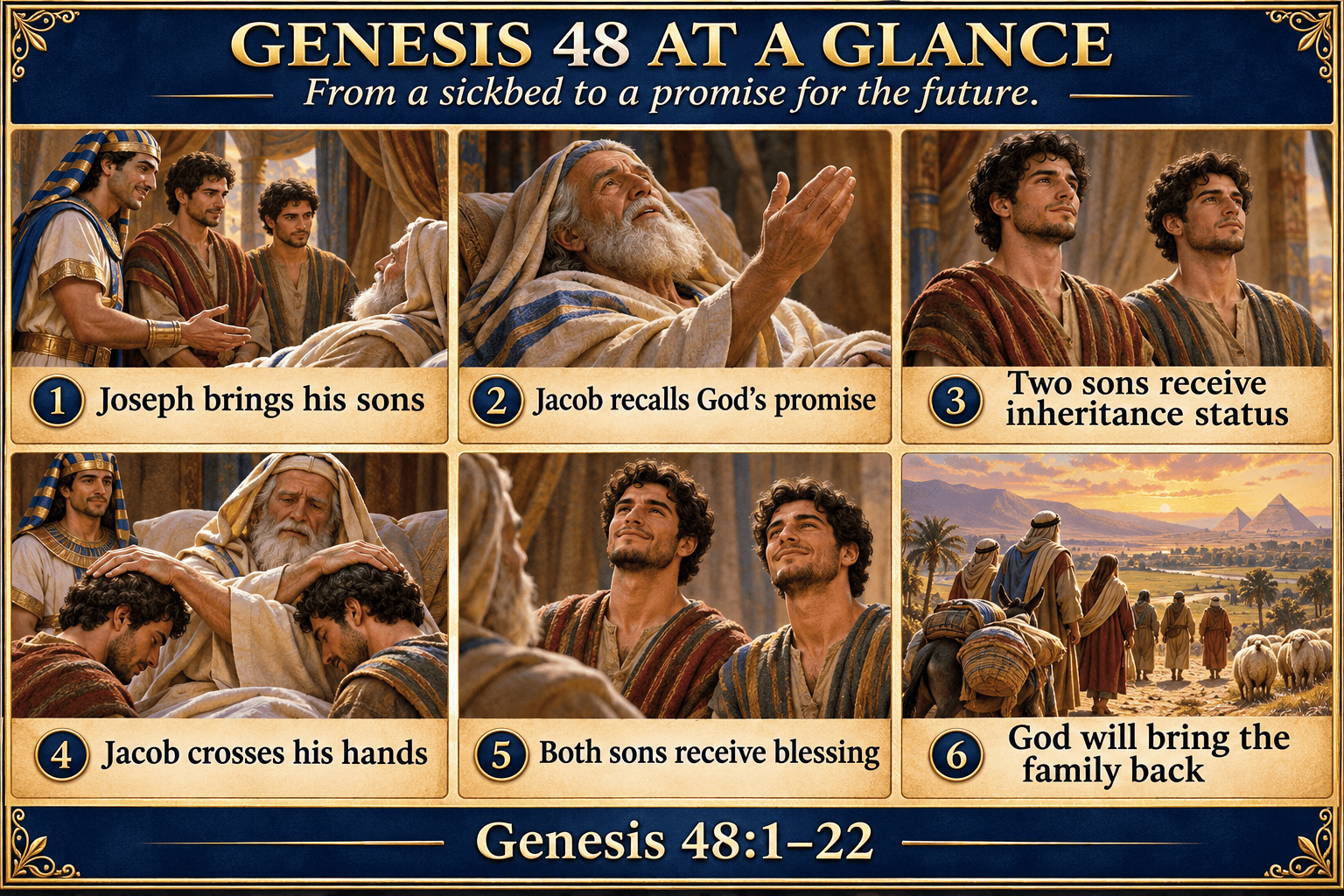
Jacob recalls God’s promise, gives Joseph’s sons a place among Israel’s tribal heirs, and blesses the next generation in faith.
യാക്കോബ് ദൈവവാഗ്ദാനം അനുസ്മരിക്കുന്നു; ജോസഫിന്റെ പുത്രന്മാർക്ക് ഇസ്രായേലിന്റെ ഗോത്രാവകാശികളിൽ സ്ഥാനം നൽകി അടുത്ത തലമുറയെ വിശ്വാസത്തോടെ അനുഗ്രഹിക്കുന്നു.

Genesis 48 — Scripture • ഉത്പത്തി 48 — തിരുവചനം
English: supplied RSVCE. Malayalam: supplied reading. Scripture and commentary are displayed separately. The unrelated pasted phrase “സംഖ്യാപുസ്തകം പഠനം” is omitted. • തിരുവചനവും വിശദീകരണവും വേർതിരിച്ചിരിക്കുന്നു; പാഠത്തിനിടയിലെ ബന്ധമില്ലാത്ത തലക്കെട്ട് ഒഴിവാക്കിയിരിക്കുന്നു.
48:1
After this Joseph was told, “Behold, your father is ill”; so he took with him his two sons, Manas′seh and E′phraim.
പിതാവിനു സുഖമില്ലെന്നു കേട്ട് ജോസഫ് മക്കളായ മനാസ്സെയെയും എഫ്രായിമിനെയും കൂട്ടിക്കൊണ്ട് അവന്റെ അടുത്തേയ്ക്കുപോയി.
48:2
And it was told to Jacob, “Your son Joseph has come to you”; then Israel summoned his strength, and sat up in bed.
മകനായ ജോസഫ് വരുന്നുണ്ട് എന്നു യാക്കോബു കേട്ടു. അവന് ശക്തി സംഭരിച്ചു കിടക്കയില് എഴുന്നേറ്റിരുന്നു.
48:3
And Jacob said to Joseph, “God Almighty[a] appeared to me at Luz in the land of Canaan and blessed me,
യാക്കോബ് ജോസഫിനോടു പറഞ്ഞു: സര്വശക്തനായ ദൈവം കാനാന്ദേശത്തുള്ള ലൂസില്വച്ച് എനിക്കു പ്രത്യക്ഷപ്പെട്ട് എന്നെ അനുഗ്രഹിച്ചു. അവിടുന്ന് അരുളിച്ചെയ്തു:
48:4
and said to me, ‘Behold, I will make you fruitful, and multiply you, and I will make of you a company of peoples, and will give this land to your descendants after you for an everlasting possession.’
ഞാന് നിന്നെ സന്താന സമൃദ്ധിയുള്ളവനാക്കി നിന്റെ സംഖ്യ വര്ധിപ്പിക്കും. നിന്നില്നിന്നു ഞാന് ജനതതികളെ പുറപ്പെടുവിക്കും. നിനക്കുശേഷം ഈ നാടു നിന്റെ സന്തതികള്ക്കു ഞാന് നിത്യാവകാശമായി നല്കും.
48:5
And now your two sons, who were born to you in the land of Egypt before I came to you in Egypt, are mine; E′phraim and Manas′seh shall be mine, as Reuben and Simeon are.
ഞാന് ഈജിപ്തില് നിന്റെ അടുത്ത് എത്തുന്നതിനുമുന്പ് ഈജിപ്തില്വച്ചു നിനക്കുണ്ടായ പുത്രന്മാരിരുവരും, എഫ്രായിമും മനാസ്സെയും എന്റേതാണ്. റൂബനും ശിമയോനും എന്നപോലെ അവരെന്റേതായിരിക്കും.
48:6
And the offspring born to you after them shall be yours; they shall be called by the name of their brothers in their inheritance.
അവര്ക്കുശേഷം നിനക്കുണ്ടാകുന്ന സന്തതികള് നിന്റേതായിരിക്കും. അവര്ക്കു ലഭിക്കുന്ന അവകാശം അവരുടെ സഹോദരങ്ങളുടെ പേരിലായിരിക്കും അറിയപ്പെടുക.
48:7
For when I came from Paddan, Rachel to my sorrow died in the land of Canaan on the way, when there was still some distance to go to Ephrath; and I buried her there on the way to Ephrath (that is, Bethlehem).”
ഞാന് പാദാനില്നിന്നു പോയപ്പോള്, വഴിക്കു കാനാന് ദേശത്തുവച്ച് എന്നെ ദുഃഖത്തിലാഴ്ത്തിക്കൊണ്ടു റാഹേല് മരിച്ചു. എഫ്രാത്തായിലെത്താന് കുറച്ചുദൂരം മാത്രമേ ഉണ്ടായിരുന്നുള്ളു. ബേത്ലെഹെം എന്നറിയപ്പെടുന്ന എഫ്രാത്തായിലേക്കുള്ള വഴിയില് ഞാന് അവളെ അടക്കി.
48:8
When Israel saw Joseph’s sons, he said, “Who are these?”
ജോസഫിന്റെ പുത്രന്മാരെക്കണ്ടപ്പോള് ഇസ്രായേല്, ഇവരാരാണ്? എന്നുചോദിച്ചു.
48:9
Joseph said to his father, “They are my sons, whom God has given me here.” And he said, “Bring them to me, I pray you, that I may bless them.”
ജോസഫ് പറഞ്ഞു: ഇവര് എന്റെ മക്കളാണ്, ഇവിടെവച്ചു ദൈവം എനിക്കു തന്നവര്. അവന് പറഞ്ഞു: അവരെ എന്റെ അടുക്കല് കൊണ്ടുവരുക, ഞാന് അവരെ അനുഗ്രഹിക്കട്ടെ.
48:10
Now the eyes of Israel were dim with age, so that he could not see. So Joseph brought them near him; and he kissed them and embraced them.
ഇസ്രായേലിനു പ്രായം കൊണ്ടു കണ്ണുകള് മങ്ങി, കാഴ്ച നഷ്ടപ്പെട്ടിരുന്നു. ജോസഫ് അവരെ അവന്റെ അടുത്തു കൊണ്ടുചെന്നു. അവന് അവരെ കെട്ടിപ്പിടിച്ചു ചുംബിച്ചു.
48:11
And Israel said to Joseph, “I had not thought to see your face; and lo, God has let me see your children also.”
ഇസ്രായേല് ജോസഫിനോടു പറഞ്ഞു: നിന്റെ മുഖം കാണുമെന്നു ഞാന് വിചാരിച്ചിരുന്നില്ല. എന്നാല് ഇതാ, നിന്റെ മക്കളെക്കൂടി കാണാന് ദൈവം എന്നെ അനുവദിച്ചിരിക്കുന്നു!
48:12
Then Joseph removed them from his knees, and he bowed himself with his face to the earth.
അപ്പോള് ജോസഫ് കുട്ടികളെ അവന്റെ അടുത്തുനിന്നു മാറ്റിയിട്ടു നിലംപറ്റെ കുനിഞ്ഞു നമസ്കരിച്ചു.
48:13
And Joseph took them both, E′phraim in his right hand toward Israel’s left hand, and Manas′seh in his left hand toward Israel’s right hand, and brought them near him.
ജോസഫ് എഫ്രായിമിനെ തന്റെ വലത്തു കൈകൊണ്ടു പിടിച്ച് ഇസ്രായേലിന്റെ ഇടത്തു കൈക്കു നേരെയും, മനാസ്സെയെ ഇടത്തു കൈകൊണ്ടു പിടിച്ച് ഇസ്രായേലിന്റെ വലത്തു കൈക്കു നേരെയും നിര്ത്തി അവന്റെയടുത്തേക്കു കൊണ്ടുചെന്നു.
48:14
And Israel stretched out his right hand and laid it upon the head of E′phraim, who was the younger, and his left hand upon the head of Manas′seh, crossing his hands, for Manas′seh was the first-born.
എന്നാല്, ഇസ്രായേല് കൈകള്പിണച്ച് വലംകൈ ഇളയവനായ എഫ്രായിമിന്റെ തലയിലും ഇടംകൈ മനാസ്സെയുടെ തലയിലും ആണു വച്ചത്. മനാസ്സെയായിരുന്നുവല്ലോ കടിഞ്ഞൂല്പുത്രന്.
48:15
And he blessed Joseph, and said, “The God before whom my fathers Abraham and Isaac walked, the God who has led me all my life long to this day,
അവന് ജോസഫിനെ അനുഗ്രഹിച്ചുകൊണ്ടു പറഞ്ഞു: എന്റെ പിതാക്കന്മാരായ അബ്രാഹവും ഇസഹാക്കും ആരാധിച്ചിരുന്ന ദൈവം, ഇന്നുവരെ എന്റെ ജീവിതകാലം മുഴുവന് എന്റെ ഇടയനായിരുന്ന ദൈവം,
48:16
the angel who has redeemed me from all evil, bless the lads; and in them let my name be perpetuated, and the name of my fathers Abraham and Isaac; and let them grow into a multitude in the midst of the earth.”
എല്ലാ തിന്മകളിലും നിന്ന് എന്നെ കാത്തുപോന്ന ദൂതന് ഈ ബാലന്മാരെ അനുഗ്രഹിക്കട്ടെ! എന്റെയും എന്റെ പിതാക്കന്മാരായ അബ്രാഹത്തിന്റെയും ഇസഹാക്കിന്റെയും നാമം അവരില് നിലനില്ക്കട്ടെ. അവര് ഭൂമിയുടെ മധ്യത്തില് ശക്തമായ ഒരു സമൂഹമായി വളര്ന്നുവരട്ടെ!
48:17
When Joseph saw that his father laid his right hand upon the head of E′phraim, it displeased him; and he took his father’s hand, to remove it from E′phraim’s head to Manas′seh’s head.
തന്റെ പിതാവു വലംകൈ എഫ്രായിമിന്റെ തലയില് വച്ചതു ജോസഫിന് ഇഷ്ടപ്പെട്ടില്ല. എഫ്രായിമിന്റെ തലയില്നിന്നു മനാസ്സെയുടെ തലയിലേക്കു മാറ്റാന് അവന് പിതാവിന്റെ കൈയ്ക്കു പിടിച്ചു.
48:18
And Joseph said to his father, “Not so, my father; for this one is the first-born; put your right hand upon his head.”
ജോസഫ് പിതാവിനോടു പറഞ്ഞു: പിതാവേ, അങ്ങനെയല്ല, ഇവനാണു മൂത്ത മകന് . വലംകൈ ഇവന്റെ തലയില് വയ്ക്കുക. അവന് വഴങ്ങിയില്ല.
48:19
But his father refused, and said, “I know, my son, I know; he also shall become a people, and he also shall be great; nevertheless his younger brother shall be greater than he, and his descendants shall become a multitude of nations.”
അവന് പറഞ്ഞു: എനിക്കറിയാം, മകനേ, എനിക്കറിയാം. അവനില് നിന്നും ഒരു ജനതയുണ്ടാകും; അവനും വലിയവനാകും. എന്നാല് അവന്റെ അനുജന് അവനെക്കാള് വലിയവനാകും; അവന്റെ സന്തതികളോ അനവധി ജനതകളും.
48:20
So he blessed them that day, saying, “By you Israel will pronounce blessings, saying, ‘God make you as E′phraim and as Manas′seh’”; and thus he put E′phraim before Manas′seh.
അവരെ അനുഗ്രഹിച്ചുകൊണ്ട് അവന് പറഞ്ഞു: നിങ്ങളുടെ നാമം ഉച്ചരിച്ച്, ദൈവം നിങ്ങളെ എഫ്രായിമിനെയും മനാസ്സെയും പോലെ ആക്കട്ടെ, എന്നു പറഞ്ഞു കൊണ്ടായിരിക്കും ഇസ്രായേലില് അനുഗ്ര ഹങ്ങള് ആശംസിക്കപ്പെടുക. അവന് എഫ്രായിമിനെ മനാസ്സെക്കു മുന്പനാക്കി.
48:21
Then Israel said to Joseph, “Behold, I am about to die, but God will be with you, and will bring you again to the land of your fathers.
അതു കഴിഞ്ഞ്, ഇസ്രായേല് ജോസഫിനോടു പറഞ്ഞു: ഞാന് ഇതാ, മരിക്കാറായി. ദൈവം നിന്റെ കൂടെയുണ്ടാവും. നിന്റെ പിതാക്കന്മാരുടെ നാട്ടിലേക്കു നിന്നെ തിരിയേ കൊണ്ടുപോവുകയും ചെയ്യും.
48:22
Moreover I have given to you rather than to your brothers one mountain slope[b] which I took from the hand of the Amorites with my sword and with my bow.”
നിന്റെ സഹോദരന്മാര്ക്കു നല്കിയ ഓഹരിയെക്കാള് കൂടുതലായി വാളും വില്ലും കൊണ്ട് അമോര്യരുടെ കൈയില്നിന്നു ഞാന് പിടിച്ചടക്കിയ ഷെക്കെം നിനക്കു തന്നിരിക്കുന്നു.
RSVCE footnotes: [a] 48:3 — Hebrew El Shaddai. [b] 48:22 — Hebrew shekem, shoulder. The Malayalam names Shechem; the supplied English renders “one mountain slope”. See the explanation below. • 22-ലെ വിവർത്തനവ്യത്യാസം താഴെ വിശദീകരിക്കുന്നു.
The chapter at a glance • അധ്യായക്രമം
| Verses | Event • സംഭവം |
|---|---|
| 1–7 | Visit, promise and adoption • സന്ദർശനവും വാഗ്ദാനവും പുത്രസ്വീകരണവും |
| 8–12 | Welcome and embrace • സ്വീകരണവും ആലിംഗനവും |
| 13–16 | Crossed hands and prayer • പിണച്ച കൈകളും പ്രാർഥനയും |
| 17–20 | Joseph objects; Jacob confirms his choice • ജോസഫിന്റെ എതിർപ്പും യാക്കോബിന്റെ ഉറപ്പും |
| 21–22 | Return and Joseph’s portion • തിരിച്ചുവരവും ജോസഫിന്റെ ഓഹരിയും |
The promise at Luz • ലൂസിലെ വാഗ്ദാനം

Jacob recalls God Almighty’s appearance at Luz, the older name of Bethel. Fruitfulness, a company of peoples and the land for his descendants continue the promises of Genesis 28 and 35. Egypt is their present home; Canaan remains the land of promise.
ബേഥേലിന്റെ പഴയ പേരായ ലൂസിൽ സർവശക്തനായ ദൈവം പ്രത്യക്ഷപ്പെട്ടത് യാക്കോബ് ഓർക്കുന്നു. സന്താനസമൃദ്ധിയും ജനതകളുടെ സമൂഹവും ദേശാവകാശവും 28, 35 അധ്യായങ്ങളിലെ വാഗ്ദാനത്തിന്റെ തുടർച്ചയാണ്. ഇപ്പോഴത്തെ വാസം ഈജിപ്തിലാണെങ്കിലും വാഗ്ദാനദേശം കാനാനാണ്.
He also remembers Rachel’s death on the way to Bethlehem. Her loss remains part of this joyful family encounter. The USCCB notes connect the adoption with the continuation of Rachel’s branch of the family.
ബേത്ലെഹെമിലേക്കുള്ള വഴിയിൽ റാഹേൽ മരിച്ചതും അവൻ ഓർക്കുന്നു. സന്തോഷകരമായ ഈ കൂടിക്കാഴ്ചയിലും നഷ്ടത്തിന്റെ ഓർമയുണ്ട്. റാഹേലിന്റെ കുടുംബശാഖയുടെ തുടർച്ചയുമായി ഈ പുത്രസ്വീകരണത്തെ USCCB കുറിപ്പുകൾ ബന്ധപ്പെടുത്തുന്നു.
Why are Joseph’s sons called Jacob’s? • ജോസഫിന്റെ പുത്രന്മാർ യാക്കോബിന്റേതാകുന്നതെങ്ങനെ?

Ephraim and Manasseh receive the inheritance status of Jacob’s sons, comparable to Reuben and Simeon. Joseph remains their biological father. Two tribal branches give Joseph a double share; this does not make Jacob the biological father of fourteen sons.
റൂബനും ശിമയോനും പോലുള്ള യാക്കോബിന്റെ പുത്രന്മാരുടെ അവകാശസ്ഥാനം എഫ്രായിമിനും മനാസ്സെക്കും ലഭിക്കുന്നു. അവരുടെ ജന്മപിതാവ് ജോസഫ് തന്നെയാണ്. രണ്ടു ഗോത്രശാഖകൾ വഴി ജോസഫിന് ഇരട്ട ഓഹരി ലഭിക്കുന്നു; യാക്കോബിന് പതിനാലു സ്വന്തം പുത്രന്മാരുണ്ടായെന്നല്ല.
Any later children of Joseph would inherit within their brothers’ branches, rather than form additional tribes. This is a provision for possible later offspring, not a statement that more children were born. First Chronicles 5:1–2 links Joseph’s birthright to Reuben’s misconduct and distinguishes it from Judah’s royal leadership.
പിന്നീട് ജോസഫിന് മക്കളുണ്ടായാൽ അവർ പുതിയ ഗോത്രങ്ങളാകാതെ സഹോദരന്മാരുടെ ശാഖകളിൽ അവകാശം നേടും. കൂടുതൽ മക്കൾ ജനിച്ചെന്ന വാർത്തയല്ല ഇത്. 1 ദിനവൃത്താന്തം 5:1–2 റൂബന്റെ തെറ്റുമായി ജോസഫിന്റെ കടിഞ്ഞൂലവകാശത്തെ ബന്ധപ്പെടുത്തുന്നു; യൂദായുടെ രാജനേതൃത്വത്തിൽനിന്ന് അതിനെ വേർതിരിക്കുന്നു.
The sons and their names • പുത്രന്മാരും പേരുകളും

| Son | Narrative explanation • പേരിന് നൽകിയ വിശദീകരണം |
|---|---|
| Manasseh • മനാസ്സെ | Older son; God has made Joseph forget his hardship • മൂത്തവൻ; കഷ്ടപ്പാടുകൾ മറക്കാൻ ദൈവം ഇടയാക്കി |
| Ephraim • എഫ്രായിം | Younger son; God made Joseph fruitful in affliction • ഇളയവൻ; ദുരിതദേശത്ത് ദൈവം ഫലസമൃദ്ധി നൽകി |
Their mother is Asenath. Both were born in Egypt before the famine. Their exact ages are unstated, but seventeen years have passed since Jacob arrived in Egypt, so they should not be imagined as toddlers here. The names convey the Hebrew word associations explained in Genesis 41; “forgetting” does not mean Joseph ceased loving his family.
അമ്മ അസ്നത്താണ്. ഇരുവരും ക്ഷാമത്തിനുമുമ്പ് ഈജിപ്തിൽ ജനിച്ചു. കൃത്യപ്രായം പറയുന്നില്ല; യാക്കോബ് ഈജിപ്തിലെത്തിയിട്ട് പതിനേഴു വർഷമായതിനാൽ ഇവിടെ അവരെ പിഞ്ചുകുഞ്ഞുങ്ങളായി കരുതരുത്. 41-ൽ പേരുകളോട് ചേർത്തുപറയുന്ന ഹീബ്രുപദബന്ധങ്ങളാണ് വിശദീകരണം; മറന്നു എന്നത് കുടുംബസ്നേഹം ഇല്ലാതായി എന്നല്ല.
More joy than Jacob expected • പ്രതീക്ഷയ്ക്കപ്പുറമുള്ള സന്തോഷം
Jacob summons strength to sit up. His eyes are dim, and he asks who the young men are; after Joseph introduces them, he kisses and embraces them. He once believed Joseph dead, yet now sees his children too. The question belongs beside the explanation of poor eyesight; it does not prove this was their first meeting.
യാക്കോബ് ശക്തി സംഭരിച്ച് എഴുന്നേറ്റിരിക്കുന്നു. കാഴ്ച മങ്ങിയതിനാൽ ഇവരാരെന്നു ചോദിക്കുന്നു; ജോസഫ് പരിചയപ്പെടുത്തിയപ്പോൾ ആലിംഗനം ചെയ്ത് ചുംബിക്കുന്നു. മരിച്ചെന്നു കരുതിയ ജോസഫിനെയും ഇപ്പോൾ അവന്റെ മക്കളെയും കാണുന്നു. കാഴ്ചക്കുറവിന്റെ പശ്ചാത്തലത്തിൽ ചോദ്യം വായിക്കണം; ആദ്യകൂടിക്കാഴ്ചയാണെന്ന തെളിവല്ല അത്.
The positioning and crossed hands • നിർത്തിയ ക്രമവും പിണച്ച കൈകളും

| Son | Joseph’s positioning | Jacob’s blessing |
|---|---|---|
| Manasseh • മനാസ്സെ | Joseph’s left → Jacob’s right • ജോസഫിന്റെ ഇടത് → യാക്കോബിന്റെ വലത് | Jacob’s left hand • യാക്കോബിന്റെ ഇടംകൈ |
| Ephraim • എഫ്രായിം | Joseph’s right → Jacob’s left • ജോസഫിന്റെ വലത് → യാക്കോബിന്റെ ഇടത് | Jacob’s right hand • യാക്കോബിന്റെ വലംകൈ |
Joseph expects the firstborn to receive the right-hand blessing. Jacob crosses his hands deliberately to give Ephraim greater prominence. The action expresses his prophetic blessing, not a magical technique for producing God’s favour.
കടിഞ്ഞൂൽപുത്രന് വലംകൈയുടെ അനുഗ്രഹം ലഭിക്കുമെന്നാണ് ജോസഫിന്റെ പ്രതീക്ഷ. എഫ്രായിമിന് മുൻസ്ഥാനം നൽകാൻ യാക്കോബ് മനഃപൂർവം കൈകൾ പിണക്കുന്നു. ഇത് പ്രവചനാത്മക അനുഗ്രഹത്തിന്റെ അടയാളമാണ്; ദൈവാനുഗ്രഹം സൃഷ്ടിക്കുന്ന മാന്ത്രികരീതിയല്ല.
Joseph’s concern and Jacob’s answer • ജോസഫിന്റെ ആശങ്കയും യാക്കോബിന്റെ മറുപടിയും

Joseph tries to move the right hand to Manasseh. Jacob’s refusal shows that failing eyesight has not caused an accidental exchange. Both sons will become great, but Ephraim will have the greater prominence. Manasseh is neither cursed nor disinherited.
വലംകൈ മനാസ്സെയുടെ തലയിലേക്ക് മാറ്റാൻ ജോസഫ് ശ്രമിക്കുന്നു. യാക്കോബ് വഴങ്ങാത്തത് കാഴ്ചക്കുറവുകൊണ്ടുള്ള അബദ്ധമല്ലെന്ന് വ്യക്തമാക്കുന്നു. ഇരുവരും വലിയവരാകും; എഫ്രായിമിന് കൂടുതൽ മുൻസ്ഥാനം ലഭിക്കും. മനാസ്സെ ശപിക്കപ്പെടുകയോ അവകാശം നഷ്ടപ്പെടുകയോ ചെയ്യുന്നില്ല.
The God who shepherded Jacob • യാക്കോബിനെ നയിച്ച ഇടയനായ ദൈവം

The prayer remembers the God before whom Abraham and Isaac walked, God’s guidance throughout Jacob’s life, and the angel who delivered him from harm. No name is given for the angel. The RSVCE says Jacob blessed Joseph, while the prayer blesses the sons: Joseph receives blessing through his descendants.
അബ്രാഹവും ഇസഹാക്കും ആരാധിച്ച ദൈവത്തെയും ജീവിതമൊട്ടാകെയുള്ള ദൈവപരിപാലനത്തെയും തിന്മയിൽനിന്ന് രക്ഷിച്ച ദൂതനെയും പ്രാർഥന ഓർക്കുന്നു. ദൂതന്റെ പേര് പറയുന്നില്ല. ജോസഫിനെ അനുഗ്രഹിച്ചു എന്നു പറഞ്ഞശേഷം പുത്രന്മാരെ അനുഗ്രഹിക്കുന്നു; സന്തതികൾ വഴി പിതാവിനും അനുഗ്രഹം ലഭിക്കുന്നു.
Some early Christian writers, including Novatian in On the Trinity, chapter 19, read the redeeming angel in relation to the divine Word. This is an interpretive connection, not an explicit naming of Jesus in Genesis. Hebrews 11:21 highlights Jacob’s faith as he blesses Joseph’s sons.
നോവേഷ്യന്റെ On the Trinity 19 ഉൾപ്പെടെ ചില ആദ്യകാല ക്രൈസ്തവവ്യാഖ്യാനങ്ങൾ രക്ഷിക്കുന്ന ദൂതനെ ദൈവവചനവുമായി ബന്ധപ്പെടുത്തി വായിക്കുന്നു. ഇത് വ്യാഖ്യാനബന്ധമാണ്; ഉത്പത്തിയിൽ യേശുവെന്ന് നേരിട്ട് പേര് പറയുന്നില്ല. ജോസഫിന്റെ പുത്രന്മാരെ അനുഗ്രഹിച്ച യാക്കോബിന്റെ വിശ്വാസത്തെ എബ്രായർ 11:21 എടുത്തുകാട്ടുന്നു.
A Christian reading of the crossed hands • പിണച്ച കൈകളുടെ ക്രൈസ്തവവായന

St John of Damascus saw the crossed hands as a foreshadowing of Christ’s Cross. This is a genuine patristic typology: an earlier biblical sign read in the light of Christ. Genesis explicitly connects the gesture with the brothers’ future; it does not directly announce the Crucifixion here.
പിണച്ച കൈകളിൽ ക്രിസ്തുവിന്റെ കുരിശിന്റെ മുൻസൂചനയാണ് വിശുദ്ധ ജോൺ ഡമാസീൻ കണ്ടത്. ക്രിസ്തുവിന്റെ വെളിച്ചത്തിൽ പഴയ തിരുവചനസംഭവം വായിക്കുന്ന പിതൃവ്യാഖ്യാനമാണിത്. ഉത്പത്തി നേരിട്ട് സഹോദരന്മാരുടെ ഭാവിയോടാണ് ഈ പ്രവൃത്തിയെ ബന്ധിപ്പിക്കുന്നത്; ഇവിടെ കുരിശുമരണം നേരിട്ട് പ്രഖ്യാപിക്കുന്നില്ല.
Blessings and later connections • അനുഗ്രഹങ്ങളും പിന്നീടുള്ള ബന്ധങ്ങളും

| Blessing / theme | Later connection • പിന്നീടുള്ള ബന്ധം |
|---|---|
| Family identity and inheritance • കുടുംബനാമവും അവകാശവും | Ephraim and Manasseh receive tribal territories — Joshua 16–17 • ഗോത്രദേശങ്ങൾ ലഭിക്കുന്നു |
| Multitude and greatness • സംഖ്യാവർധനയും മഹത്വവും | The numerous and strong house of Joseph — Joshua 17:14–18 • ശക്തവും അനേകരുമുള്ള ജോസഫിന്റെ ഭവനം |
| Ephraim’s prominence • എഫ്രായിമിന്റെ മുൻസ്ഥാനം | Joshua is an Ephraimite — Numbers 13:8,16; Jeroboam becomes king — 1 Kings 11:26–38 • ജോഷ്വയും ജറോബോവാമും |
| A blessing formula • അനുഗ്രഹാശംസ | Israel will invoke the names Ephraim and Manasseh — Genesis 48:20 • ഈ പേരുകളിൽ അനുഗ്രഹം ആശംസിക്കും |
| God’s presence and return • ദൈവസാന്നിധ്യവും തിരിച്ചുവരവും | Exodus and settlement; Joseph’s bones at Shechem — Joshua 24:32 • പുറപ്പാടും ദേശപ്രവേശവും ഷെക്കെമിലെ സംസ്കാരവും |
These passages show later connections; Ephraim’s prominence is not the claim that his census was always larger. Numbers 26:34–37 actually counts more men in Manasseh. Manasseh also receives substantial territory on both sides of the Jordan. The blessing is not a moral approval of everything later rulers did.
ഇവ പിന്നീടുള്ള ബന്ധങ്ങളാണ്; എഫ്രായിമിന്റെ മുൻസ്ഥാനം എല്ലായ്പ്പോഴും കൂടുതൽ ആളുകളുണ്ടായിരുന്നു എന്നല്ല. സംഖ്യ 26:34–37-ൽ മനാസ്സെയിലാണ് കൂടുതൽ പുരുഷന്മാർ. യോർദാന്റെ ഇരുകരകളിലും മനാസ്സെക്ക് വിശാലദേശം ലഭിക്കുന്നു. പിന്നീടുള്ള ഭരണാധികാരികളുടെ എല്ലാ പ്രവൃത്തിക്കും അനുഗ്രഹം ധാർമികഅംഗീകാരമല്ല.
The promised return and Joseph’s portion • തിരിച്ചുവരവിന്റെ വാഗ്ദാനവും ജോസഫിന്റെ ഓഹരിയും

Jacob expects to die, but God will remain with the family and bring them back to their ancestors’ land. The promise reaches beyond the present Egyptian prosperity.
യാക്കോബ് മരണത്തെ പ്രതീക്ഷിക്കുന്നു; എന്നാൽ ദൈവം കുടുംബത്തോടുകൂടെ ഉണ്ടായിരിക്കുകയും പിതാക്കന്മാരുടെ നാട്ടിലേക്കു തിരികെ കൊണ്ടുവരികയും ചെയ്യും. ഇപ്പോഴത്തെ ഈജിപ്തീയസമൃദ്ധിക്കപ്പുറത്തേക്കാണ് വാഗ്ദാനം നോക്കുന്നത്.
Verse 22 has difficult wording and an uncertain historical reference. The supplied Malayalam names Shechem; the English says one mountain slope. Hebrew shekem can involve a shoulder or ridge and the place-name. Some translations use an additional portion. Do not invent an unrecorded battle by Jacob or treat the violence of chapter 34 as his approved campaign. Compare the purchased land in 33:19, John 4:5 and Joshua 24:32.
22-ാം വാക്യത്തിലെ പദപ്രയോഗവും ചരിത്രസൂചനയും ചർച്ചാവിഷയമാണ്. മലയാളത്തിൽ ഷെക്കെം; ഇംഗ്ലീഷിൽ ഒരു മലഞ്ചരിവ് എന്നു പറയുന്നു. ഹീബ്രുവിലെ shekem തോളിനെയോ മലഞ്ചരിവിനെയോ സ്ഥലനാമത്തെയോ സൂചിപ്പിക്കാം. ചില വിവർത്തനങ്ങളിൽ അധികഓഹരിയുണ്ട്. യാക്കോബിന്റെ രേഖപ്പെടുത്താത്ത യുദ്ധം സങ്കൽപ്പിക്കരുത്; 34-ലെ അക്രമം അവൻ അംഗീകരിച്ച യുദ്ധമായി അവതരിപ്പിക്കരുത്. 33:19-ലെ ഭൂമിവാങ്ങലും യോഹന്നാൻ 4:5-ഉം ജോഷ്വ 24:32-ഉം താരതമ്യം ചെയ്യുക.
Questions and answers • ചോദ്യോത്തരങ്ങൾ
Did Jacob have fourteen biological sons? • യാക്കോബിന് പതിനാലു സ്വന്തം പുത്രന്മാരോ?
No. The grandsons receive inheritance status through adoption. • അല്ല; പുത്രസ്വീകരണത്തിലൂടെ പൗത്രന്മാർക്ക് അവകാശസ്ഥാനം ലഭിക്കുന്നു.
Was Manasseh rejected? • മനാസ്സെ തള്ളപ്പെട്ടോ?
No. He also receives blessing and a promise of greatness. • ഇല്ല; അവനും അനുഗ്രഹവും മഹത്വവാഗ്ദാനവും ലഭിക്കുന്നു.
Did blindness cause a mistake? • കാഴ്ചക്കുറവ് അബദ്ധമുണ്ടാക്കിയോ?
No. Jacob knowingly confirms his choice. • ഇല്ല; യാക്കോബ് അറിഞ്ഞുകൊണ്ട് തീരുമാനം ഉറപ്പിക്കുന്നു.
Is the Cross explicitly predicted here? • കുരിശ് ഇവിടെ നേരിട്ട് പ്രവചിക്കുന്നുണ്ടോ?
The Cross connection is a Christian typological reading, attested by St John of Damascus. • വിശുദ്ധ ജോൺ ഡമാസീൻ സാക്ഷ്യപ്പെടുത്തുന്ന ക്രൈസ്തവ പ്രതീകവായനയാണിത്.
Is the angel named? • ദൂതന്റെ പേര് പറയുന്നുണ്ടോ?
No personal name is supplied. • വ്യക്തിനാമം നൽകിയിട്ടില്ല.
Why are both Jacob and Israel used? • യാക്കോബും ഇസ്രായേലും എന്ന പേരുകൾ എന്തിന്?
Both refer to the same patriarch; the narrative continues to use both names. • രണ്ടും ഒരേ പിതാവിനെ സൂചിപ്പിക്കുന്നു; കഥയിൽ രണ്ടു പേരുകളും തുടരുന്നു.
Faith that blesses the next generation • അടുത്ത തലമുറയെ അനുഗ്രഹിക്കുന്ന വിശ്വാസം
Jacob’s failing body does not end his trust in God’s future. Unlike the deception surrounding his own blessing in chapter 27, he now knowingly blesses the younger son. What promises have sustained your family? How can you bless younger people without making worth depend on status or achievement?
ശരീരം ക്ഷയിച്ചാലും ദൈവത്തിന്റെ ഭാവിയിൽ യാക്കോബിന്റെ വിശ്വാസം അവസാനിക്കുന്നില്ല. 27-ലെ സ്വന്തം അനുഗ്രഹത്തിനു ചുറ്റുമുണ്ടായ ചതിയിൽനിന്നു വ്യത്യസ്തമായി ഇപ്പോൾ അറിഞ്ഞുകൊണ്ട് ഇളയവനെ അനുഗ്രഹിക്കുന്നു. നിങ്ങളുടെ കുടുംബത്തെ താങ്ങിയ വാഗ്ദാനങ്ങൾ ഏവ? പദവിയോ നേട്ടമോ മാത്രം വിലമതിക്കാതെ ചെറുപ്പക്കാരെ എങ്ങനെ അനുഗ്രഹിക്കാം?
Prayer: God of Abraham, Isaac and Jacob, thank you for guiding us through joy and sorrow. Help us trust your promises and bless the generations who follow us. Amen.
പ്രാർഥന: അബ്രാഹത്തിന്റെയും ഇസഹാക്കിന്റെയും യാക്കോബിന്റെയും ദൈവമേ, സന്തോഷത്തിലും ദുഃഖത്തിലും നയിച്ചതിന് നന്ദി. അങ്ങയുടെ വാഗ്ദാനങ്ങളിൽ ആശ്രയിക്കാനും വരുംതലമുറകളെ അനുഗ്രഹിക്കാനും സഹായിക്കണമേ. ആമേൻ.
Sources and further reading • കൂടുതൽ പഠനത്തിനായി
- Genesis 48 — RSVCE
- Genesis 48 — USCCB and study notes
- Genesis 41 — the sons and their names
- 1 Chronicles 5 — birthright and leadership
- St John of Damascus — On the Orthodox Faith IV.11
- Novatian — On the Trinity 19
- Hebrews 11 — Jacob’s faith
- Joshua 17 — the house of Joseph
- Numbers 13 — Joshua’s tribe
- Numbers 26 — later census
- 1 Kings 11 — Jeroboam
- Joshua 24 — Joseph’s burial
Images are artistic teaching reconstructions. The positioning diagram is schematic; the Cross panel is a Christian interpretive connection. • ചിത്രങ്ങൾ പഠനസഹായിയായ കലാവിഷ്കാരങ്ങളാണ്; കൈകളുടെ ചിത്രം രൂപരേഖയാണ്; കുരിശുമായുള്ള ബന്ധം ക്രൈസ്തവവ്യാഖ്യാനമാണ്.


