


GENESIS • CHAPTER 44 • ENGLISH & MALAYALAM BIBLE STUDY
The Silver Cup and Judah’s Offer
ഉത്പത്തി 44 • വെള്ളിക്കപ്പും യൂദായുടെ ആത്മസമർപ്പണവും
A hidden cup puts Benjamin at risk. The brothers return together, and Judah offers to remain in his place.
ഒളിപ്പിച്ച വെള്ളിക്കപ്പ് ബഞ്ചമിനെ അപകടത്തിലാക്കുന്നു. സഹോദരന്മാർ ഒരുമിച്ചു മടങ്ങുന്നു; അവനുപകരം നിൽക്കാൻ യൂദാ തയ്യാറാകുന്നു.

Genesis 44 — Scripture • ഉത്പത്തി 44 — തിരുവചനം
English: supplied Revised Standard Version Catholic Edition. Malayalam: supplied reading text. Each retains its wording and verse divisions. Study commentary is distinct from Scripture. • നൽകിയ ഇംഗ്ലീഷ്, മലയാളം പാഠങ്ങളുടെ വാക്കുകളും വാക്യവിഭജനവും സൂക്ഷിച്ചിരിക്കുന്നു.
Joseph detains Benjamin • ബഞ്ചമിനെ തടഞ്ഞുനിർത്തുന്നു
44:1
Then he commanded the steward of his house, “Fill the men’s sacks with food, as much as they can carry, and put each man’s money in the mouth of his sack,
ജോസഫ് വീട്ടുകാര്യസ്ഥനെ വിളിച്ചുപറഞ്ഞു: അവരുടെ ചാക്കുകളിലെല്ലാം അവര്ക്കു കൊണ്ടുപോകാവുന്നിടത്തോളം ധാന്യം നിറയ്ക്കുക. ഓരോരുത്തരുടെയും പണം അവരവരുടെ ചാക്കിന്റെ മുകള്ഭാഗത്തു വയ്ക്കണം.
44:2
and put my cup, the silver cup, in the mouth of the sack of the youngest, with his money for the grain.” And he did as Joseph told him.
ഇളയവന്റെ ചാക്കിന്റെ മുകള്ഭാഗത്തു ധാന്യവിലയായ പണത്തിന്റെ കൂടെ എന്റെ വെള്ളിക്കപ്പും വയ്ക്കുക. അവന് ജോസഫ് പറഞ്ഞതുപോലെ ചെയ്തു.
44:3
As soon as the morning was light, the men were sent away with their asses.
നേരം പുലര്ന്നപ്പോള് അവന് അവരെ തങ്ങളുടെ കഴുതകളോടുകൂടി യാത്രയാക്കി.
44:4
When they had gone but a short distance from the city, Joseph said to his steward, “Up, follow after the men; and when you overtake them, say to them, ‘Why have you returned evil for good? Why have you stolen my silver cup?[a]
അവര് നഗരംവിട്ട് അധികം കഴിയുംമുന്പ് ജോസഫ് കാര്യസ്ഥനെ വിളിച്ചുപറഞ്ഞു: ഉടനെ അവരുടെ പുറകേയെത്തുക. അവരുടെ അടുത്തെത്തുമ്പോള് അവരോടു പറയുക: നിങ്ങള് നന്മയ്ക്കു പകരം തിന്മ ചെയ്തത് എന്തുകൊണ്ട്? നിങ്ങള് എന്റെ വെള്ളിക്കപ്പു കട്ടെടുത്തത് എന്തിന്?
44:5
Is it not from this that my lord drinks, and by this that he divines? You have done wrong in so doing.’”
ഇതില് നിന്നല്ലേ, എന്റെ യജമാനന് പാനംചെയ്യുന്നത്? ഇതുപയോഗിച്ചല്ലേ, അദ്ദേഹം പ്രവചനംനടത്തുന്നത്? നിങ്ങള് ചെയ്തതു തെറ്റായിപ്പോയി.
44:6
When he overtook them, he spoke to them these words.
അവരുടെ ഒപ്പമെത്തിയപ്പോള് അവന് അവരോട് അപ്രകാരംതന്നെ പറഞ്ഞു.
44:7
They said to him, “Why does my lord speak such words as these? Far be it from your servants that they should do such a thing!
അവര് അവനോടു പറഞ്ഞു: യജമാനന് എന്താണ് ഇങ്ങനെ സംസാരിക്കുന്നത്? അങ്ങയുടെ ദാസന്മാര് ഇത്തരമൊരു കാര്യം ഒരിക്കലും ചെയ്യാന് ഇടയാകാതിരിക്കട്ടെ!
44:8
Behold, the money which we found in the mouth of our sacks, we brought back to you from the land of Canaan; how then should we steal silver or gold from your lord’s house?
ഞങ്ങളുടെ ചാക്കില് കണ്ട പണം കാനാന്ദേശത്തുനിന്നു ഞങ്ങള് അങ്ങയുടെ അടുത്തു തിരിയേ കൊണ്ടുവന്നല്ലോ? അപ്പോള് പിന്നെ ഞങ്ങള് അങ്ങയുടെ യജമാനന്റെ വീട്ടില്നിന്നു പൊന്നും വെള്ളിയും മോഷ്ടിക്കുമോ?
44:9
With whomever of your servants it be found, let him die, and we also will be my lord’s slaves.”
അത് അങ്ങയുടെ ദാസരില് ആരുടെ പക്കല്കാണുന്നുവോ അവന് മരിക്കണം. ഞങ്ങളെല്ലാവരും യജമാനന് അടിമകളുമായിക്കൊള്ളാം.
44:10
He said, “Let it be as you say: he with whom it is found shall be my slave, and the rest of you shall be blameless.”
അവന് പറഞ്ഞു: നിങ്ങള് പറയുന്നതുപോലെയാവട്ടെ, അത് ആരുടെ കൈയില് കാണുന്നുവോ അവന് എന്റെ അടിമയാകും. മറ്റുള്ളവര് നിരപരാധരായിരിക്കും.
44:11
Then every man quickly lowered his sack to the ground, and every man opened his sack.
ഉടന്തന്നെ ഓരോരുത്തരും താന്താങ്ങളുടെ ചാക്ക് താഴെയിറക്കി കെട്ടഴിച്ചു.
44:12
And he searched, beginning with the eldest and ending with the youngest; and the cup was found in Benjamin’s sack.
മൂത്തവന്മുതല് ഇളയവന് വരെ എല്ലാവരെയും അവന് പരിശോധിച്ചു.
44:13
Then they rent their clothes, and every man loaded his ass, and they returned to the city.
ബഞ്ചമിന്റെ ചാക്കില് കപ്പു കണ്ടെത്തി. അവര് തങ്ങളുടെ വസ്ത്രം വലിച്ചുകീറി, ഓരോരുത്തനും ചുമടു കഴുതപ്പുറത്ത് കയറ്റി, പട്ടണത്തിലേക്കുതന്നെ മടങ്ങി.
44:14
When Judah and his brothers came to Joseph’s house, he was still there; and they fell before him to the ground.
യൂദായും സഹോദരന്മാരും ജോസഫിന്റെ വീട്ടിലെത്തി. അവന് അപ്പോഴും അവിടെ ഉണ്ടായിരുന്നു. അവര് അവന്റെ മുന്പില് കമിഴ്ന്നു വീണു.
44:15
Joseph said to them, “What deed is this that you have done? Do you not know that such a man as I can indeed divine?”
ജോസഫ് അവരോടു ചോദിച്ചു: എന്തു പ്രവൃത്തിയാണു നിങ്ങള് ചെയ്തത്? എന്നെപ്പോലൊരുവന് ഊഹിച്ചറിയാന് കഴിയുമെന്നു നിങ്ങള്ക്കറിഞ്ഞുകൂടെ?
44:16
And Judah said, “What shall we say to my lord? What shall we speak? Or how can we clear ourselves? God has found out the guilt of your servants; behold, we are my lord’s slaves, both we and he also in whose hand the cup has been found.”
യൂദാ അവനോടു പറഞ്ഞു: ഞങ്ങള് എന്താണ് യജമാനനോടു പറയുക? ഞങ്ങള് നിരപരാധരാണെന്ന് എങ്ങനെ തെളിയിക്കും? ദൈവം അങ്ങയുടെ ദാസരുടെ കുറ്റം കണ്ടുപിടിച്ചിരിക്കുന്നു. ഇതാ, ഞങ്ങള് അവിടുത്തെ അടിമകളാണ് - ഞങ്ങളും കപ്പു കൈവശമുണ്ടായിരുന്നവനും.
44:17
But he said, “Far be it from me that I should do so! Only the man in whose hand the cup was found shall be my slave; but as for you, go up in peace to your father.”
എന്നാല്, അവന് പറഞ്ഞു: ഞാനൊരിക്കലും അങ്ങനെ ചെയ്യുകയില്ല. കപ്പു കൈവശമിരുന്നവന് മാത്രം എനിക്ക് അടിമയായിരുന്നാല് മതി. മറ്റുള്ളവര്ക്കു സമാധാനമായി പിതാവിന്റെ അടുത്തേക്കു പോകാം.
Judah pleads for Benjamin • ബഞ്ചമിനുവേണ്ടി യൂദായുടെ അപേക്ഷ
44:18
Then Judah went up to him and said, “O my lord, let your servant, I pray you, speak a word in my lord’s ears, and let not your anger burn against your servant; for you are like Pharaoh himself.
അപ്പോള് യൂദാ അവന്റെ അടുത്തുചെന്നു പറഞ്ഞു: എന്റെ യജമാനനേ, ഒരു വാക്കുകൂടി പറഞ്ഞുകൊള്ളട്ടെ! എന്റെ നേരേ അങ്ങു കോപിക്കരുതേ. അങ്ങു ഫറവോയ്ക്കു സമനാണല്ലോ.
44:19
My lord asked his servants, saying, ‘Have you a father, or a brother?’
യജമാനനായ അങ്ങ് ദാസന്മാരോട്, നിങ്ങള്ക്കു പിതാവോ സഹോദരനോ ഉണ്ടോ? എന്നു ചോദിച്ചു.
44:20
And we said to my lord, ‘We have a father, an old man, and a young brother, the child of his old age; and his brother is dead, and he alone is left of his mother’s children; and his father loves him.’
അപ്പോള്, ഞങ്ങള് യജമാനനോടു പറഞ്ഞു: ഞങ്ങള്ക്കു വൃദ്ധനായ പിതാവും പിതാവിന്റെ വാര്ധക്യത്തിലെ മകനായ ഒരു കൊച്ചു സഹോദരനുമുണ്ട്. അവന്റെ സഹോദരന് മരിച്ചു പോയി. അവന്റെ അമ്മയുടെ മക്കളില് അവന് മാത്രമേ ശേഷിച്ചിട്ടുള്ളു. പിതാവിന് അവന് വളരെ പ്രിയപ്പെട്ടവനാണ്.
44:21
Then you said to your servants, ‘Bring him down to me, that I may set my eyes upon him.’
അപ്പോള് അങ്ങ് അങ്ങയുടെ ദാസരോട്, അവനെ എന്റെയടുത്തുകൂട്ടിക്കൊണ്ടു വരുക. എനിക്കവനെ കാണണം എന്നുപറഞ്ഞു.
44:22
We said to my lord, ‘The lad cannot leave his father, for if he should leave his father, his father would die.’
ഞങ്ങള് അങ്ങയോടുണര്ത്തിച്ചു: ബാലനു പിതാവിനെ വിട്ടുപോരാന് വയ്യാ. കാരണം, അവന് പോന്നാല് പിതാവു മരിച്ചുപോകും.
44:23
Then you said to your servants, ‘Unless your youngest brother comes down with you, you shall see my face no more.’
നിങ്ങളുടെ സഹോദരന് കൂടെ വരുന്നില്ലെങ്കില് നിങ്ങള് ഇനി എന്നെ കാണുകയില്ല എന്ന് അങ്ങു പറഞ്ഞു.
44:24
When we went back to your servant my father we told him the words of my lord.
അങ്ങയുടെ ദാസനായ ഞങ്ങളുടെ പിതാവിന്റെ അടുത്തെത്തിയപ്പോള് അങ്ങു പറഞ്ഞതെല്ലാം ഞങ്ങള് അവനെ അറിയിച്ചു.
44:25
And when our father said, ‘Go again, buy us a little food,’
പിതാവ് ഞങ്ങളോട്, വീണ്ടും പോയി കുറെധാന്യംകൂടി വാങ്ങിക്കൊണ്ടുവരാന് ആവശ്യപ്പെട്ടു.
44:26
we said, ‘We cannot go down. If our youngest brother goes with us, then we will go down; for we cannot see the man’s face unless our youngest brother is with us.’
ഞങ്ങള്ക്കു പോകാന് വയ്യാ; എന്നാല്, ഇളയ സഹോദരനെക്കൂടി അയയ്ക്കുന്നപക്ഷം ഞങ്ങള്പോകാം. ബാലന് കൂടെയില്ലെങ്കില് ഞങ്ങള്ക്ക് അവനെ കാണാന് സാധിക്കയില്ല എന്നു ഞങ്ങള് പിതാവിനോടു പറഞ്ഞു.
44:27
Then your servant my father said to us, ‘You know that my wife bore me two sons;
അപ്പോള് അങ്ങയുടെ ദാസനായ ഞങ്ങളുടെ പിതാവു പറഞ്ഞു: എന്റെ ഭാര്യ രണ്ടു പുത്രന്മാരെ എനിക്കുനല്കി എന്നു നിങ്ങള്ക്കറിയാമല്ലോ.
44:28
one left me, and I said, Surely he has been torn to pieces; and I have never seen him since.
ഒരുവന് എന്നെ വിട്ടുപോയി. അപ്പോള് ഞാന് പറഞ്ഞു: തീര്ച്ചയായും അവനെ വന്യമൃഗം ചീന്തിക്കീറിക്കാണും. പിന്നെ അവനെ ഞാന് കണ്ടിട്ടില്ല.
44:29
If you take this one also from me, and harm befalls him, you will bring down my gray hairs in sorrow to Sheol.’
ഇവനെയും കൊണ്ടുപോയിട്ട് ഇവനെന്തെങ്കിലും പിണഞ്ഞാല് വൃദ്ധനായ എന്നെ ദുഃഖത്തോടെ നിങ്ങള് പാതാളത്തിലാഴ്ത്തുകയായിരിക്കും ചെയ്യുക.
44:30
Now therefore, when I come to your servant my father, and the lad is not with us, then, as his life is bound up in the lad’s life,
അവന്റെ ജീവന് ബാലന്റെ ജീവനുമായി ബന്ധിക്കപ്പെട്ടിരിക്കകൊണ്ട്
44:31
when he sees that the lad is not with us, he will die; and your servants will bring down the gray hairs of your servant our father with sorrow to Sheol.
ഞാന് അവനെക്കൂടാതെ പിതാവിന്റെ അടുത്തുചെന്നാല് ബാലന് ഇല്ലെന്നു കാണുമ്പോള് അവന് മരിക്കും. വൃദ്ധനായ പിതാവിനെ ദുഃഖത്തോടെ ഞങ്ങള് പാതാളത്തിലാഴ്ത്തുകയായിരിക്കുംചെയ്യുക.
44:32
For your servant became surety for the lad to my father, saying, ‘If I do not bring him back to you, then I shall bear the blame in the sight of my father all my life.’
കൂടാതെ, ഞാന് അവനെ അങ്ങയുടെ പക്കല് തിരിച്ചെത്തിക്കുന്നില്ലെങ്കില് ജീവിതകാലം മുഴുവന് ഞാന് അങ്ങയുടെ സമക്ഷം കുറ്റക്കാരനായിരിക്കും എന്നുപറഞ്ഞ് അങ്ങയുടെ ദാസനായ ഞാന് ബാലനെക്കുറിച്ചു പിതാവിന്റെ മുന്പില് ഉത്തരവാദിത്വം ഏറ്റെടുക്കുകയും ചെയ്തിട്ടുണ്ട്.
44:33
Now therefore, let your servant, I pray you, remain instead of the lad as a slave to my lord; and let the lad go back with his brothers.
അതിനാല് ബാലനുപകരം അങ്ങയുടെ അടിമയായി നില്ക്കാന് എന്നെ അനുവദിക്കണമെന്നു ഞാന് അപേക്ഷിക്കുന്നു. ബാലന് സഹോദരന്മാരുടെ കൂടെ തിരിച്ചു പൊയ്ക്കൊള്ളട്ടെ.
44:34
For how can I go back to my father if the lad is not with me? I fear to see the evil that would come upon my father.”
അവനെക്കൂടാതെ ഞാന് എങ്ങനെ പിതാവിന്റെ അടുത്തുചെല്ലും? അവനു സംഭവിക്കുന്ന ദുരന്തം ഞാന് എങ്ങനെ സഹിക്കും?
RSVCE footnote [a], 44:4: the question about stealing the silver cup follows the Greek, compared with the Latin; the Hebrew lacks that question. • ഈ ചോദ്യം സംബന്ധിച്ച പാഠഭേദമാണ് ഇംഗ്ലീഷ് അടിക്കുറിപ്പ് സൂചിപ്പിക്കുന്നത്.
From the cup to the appeal • കപ്പിൽനിന്ന് അപേക്ഷയിലേക്ക്
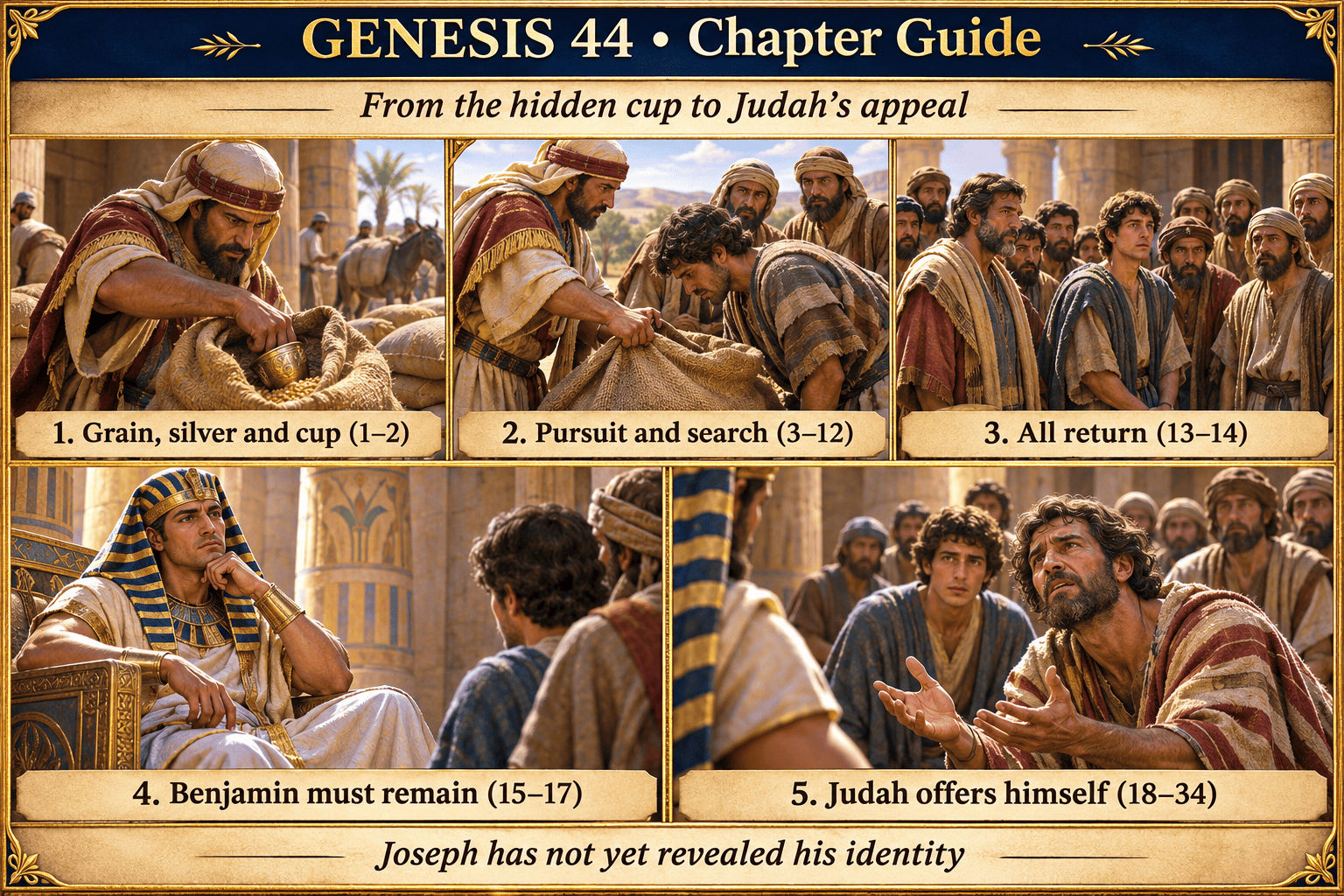
| Verses | Event • സംഭവം |
|---|---|
| 1–2 | Joseph orders grain, returned money and the hidden cup • ധാന്യവും തിരിച്ചുവയ്ക്കുന്ന പണവും ഒളിപ്പിക്കുന്ന കപ്പും |
| 3–12 | Departure, pursuit, accusation and search • പുറപ്പെടലും പിന്തുടരലും ആരോപണവും പരിശോധനയും |
| 13–14 | All return and fall before Joseph • എല്ലാവരും മടങ്ങി ജോസഫിന്റെ മുമ്പിൽ വീഴുന്നു |
| 15–17 | Joseph insists that Benjamin alone remain • ബഞ്ചമിൻ മാത്രം നിൽക്കണമെന്ന് ജോസഫ് പറയുന്നു |
| 18–34 | Judah recalls his pledge and offers himself • യൂദാ ഉറപ്പ് ഓർത്ത് സ്വയം പകരമായി വാഗ്ദാനം ചെയ്യുന്നു |
A planted cup, an innocent Benjamin • ഒളിപ്പിച്ച കപ്പും നിരപരാധിയായ ബഞ്ചമിനും

Joseph commands his steward to fill the sacks with food and return each payment. His own silver cup goes into the youngest brother’s sack alongside the money. The reader knows the accusation is staged: Benjamin has not stolen the cup.
ചാക്കുകളിൽ ഭക്ഷണം നിറച്ച് ഓരോരുത്തന്റെ പണം തിരിച്ചുവയ്ക്കാൻ ജോസഫ് കൽപിക്കുന്നു. ഇളയവന്റെ ചാക്കിൽ പണത്തോടൊപ്പം സ്വന്തം വെള്ളിക്കപ്പും വയ്ക്കുന്നു. ആരോപണം ഒരുക്കിയതാണെന്ന് വായനക്കാരനറിയാം; ബഞ്ചമിൻ കപ്പ് മോഷ്ടിച്ചിട്ടില്ല.
The returned money recalls chapter 42, but the cup now drives the crisis. Joseph’s possession becomes apparent evidence against an innocent person. The account does not make false accusations an example for believers to imitate.
തിരിച്ചുവച്ച പണം 42-ാം അധ്യായം ഓർമിപ്പിക്കുന്നു; ഇപ്പോൾ പ്രതിസന്ധിക്കു കാരണമാകുന്നത് കപ്പാണ്. ജോസഫിന്റെ വസ്തു നിരപരാധിക്കെതിരായ തെളിവുപോലെ തോന്നുന്നു. വ്യാജാരോപണം വിശ്വാസികൾ അനുകരിക്കേണ്ട മാതൃകയായി ഈ വിവരണം അവതരിപ്പിക്കരുത്.
The search—and everyone’s return • പരിശോധനയും എല്ലാവരുടെയും മടക്കവും

They leave at dawn and are overtaken a short distance outside the city. Its name and exact location are not given. The brothers appeal to their earlier honesty in returning the money and confidently deny theft. The search proceeds from eldest to youngest, ending with Benjamin.
പുലർച്ചെ പുറപ്പെട്ടവരെ നഗരത്തിനു കുറച്ചകലെ വച്ച് കാര്യസ്ഥൻ പിടികൂടുന്നു. നഗരത്തിന്റെ പേരോ കൃത്യസ്ഥലമോ നൽകിയിട്ടില്ല. പണം മടക്കിനൽകിയ സത്യസന്ധത ചൂണ്ടിക്കാട്ടി അവർ മോഷണം നിഷേധിക്കുന്നു. മൂത്തവനിൽ തുടങ്ങി ഇളയവനിൽ പരിശോധന അവസാനിക്കുന്നു.
| Speaker / verses | Proposal • നിർദേശം |
|---|---|
| Brothers, 9 • സഹോദരന്മാർ | Death for the possessor; slavery for the rest • കപ്പ് കണ്ടവന് മരണം; മറ്റുള്ളവർക്ക് അടിമത്തം |
| Steward, 10 • കാര്യസ്ഥൻ | Only the possessor becomes a slave; the others are free • കപ്പ് കണ്ടവൻ മാത്രം അടിമ; മറ്റുള്ളവർ കുറ്റമില്ലാത്തവർ |
| Judah, 16 • യൂദാ | Offers the whole group as slaves • എല്ലാവരും അടിമകളാകാമെന്ന് പറയുന്നു |
| Joseph, 17 • ജോസഫ് | Only Benjamin remains; the others may return • ബഞ്ചമിൻ മാത്രം നിൽക്കണം; മറ്റുള്ളവർക്ക് മടങ്ങാം |
The death proposed by the brothers is not carried out. They tear their clothes in distress, reload their donkeys and all return. Benjamin is not left behind. Their renewed bowing also recalls Joseph’s dreams in chapter 37.
സഹോദരന്മാർ നിർദേശിച്ച മരണം നടപ്പാക്കുന്നില്ല. ദുഃഖത്തോടെ വസ്ത്രം കീറി കഴുതകളിൽ ചുമടേറ്റി എല്ലാവരും മടങ്ങുന്നു. ബഞ്ചമിനെ ഉപേക്ഷിക്കുന്നില്ല. വീണ്ടും താണുവീഴുന്നത് 37-ലെ ജോസഫിന്റെ സ്വപ്നങ്ങളും ഓർമിപ്പിക്കുന്നു.
What might Joseph be testing? • ജോസഫ് എന്താണ് പരീക്ഷിക്കുന്നത്?

The situation offers a revealing choice: leave Rachel’s younger son in slavery and go home, or stand beside him. Reading this as a test of changed loyalty is strongly supported by the story’s pattern. The narrator nevertheless does not explicitly disclose every intention behind Joseph’s actions.
റാഹേലിന്റെ ഇളയ പുത്രനെ അടിമത്തത്തിൽ വിട്ട് മടങ്ങണമോ, അവനോടൊപ്പം നിൽക്കണമോ എന്ന വെളിപ്പെടുത്തുന്ന തിരഞ്ഞെടുപ്പാണ് സാഹചര്യം. മാറിയ വിശ്വസ്തതയുടെ പരീക്ഷണമായി വായിക്കാൻ കഥയുടെ ക്രമം ശക്തമായ പിന്തുണ നൽകുന്നു. എങ്കിലും ജോസഫിന്റെ എല്ലാ ഉദ്ദേശ്യങ്ങളും കഥാകൃത്ത് വ്യക്തമായി പറയുന്നില്ല.
This scene recalls their earlier treatment of Joseph while giving them an opportunity to act differently. It is emotionally severe. Reconciliation in our own lives does not require copying Joseph’s staged accusation.
ജോസഫിനോടുള്ള പഴയ പെരുമാറ്റം ഓർമിപ്പിക്കുമ്പോഴും വ്യത്യസ്തമായി പ്രവർത്തിക്കാൻ അവർക്കിപ്പോൾ അവസരമുണ്ട്. വൈകാരികമായി കഠിനമായ രംഗമാണിത്. സ്വന്തം ജീവിതത്തിലെ അനുരഞ്ജനത്തിന് ജോസഫിന്റെ ഒരുക്കിയ ആരോപണം അനുകരിക്കേണ്ടതില്ല.
Judah’s words about God uncovering their guilt do not prove Benjamin’s guilt. An echo of their earlier wrongdoing against Joseph is a reasonable reading, but Judah does not expressly name that act here.
ദൈവം കുറ്റം കണ്ടെത്തിയെന്ന യൂദായുടെ വാക്കുകൾ ബഞ്ചമിന്റെ കുറ്റം തെളിയിക്കുന്നില്ല. ജോസഫിനെതിരായ പഴയ തെറ്റിന്റെ പ്രതിധ്വനിയായി വായിക്കാം; ആ പ്രവൃത്തി യൂദാ ഇവിടെ വ്യക്തമായി പേരെടുത്തു പറയുന്നില്ല.
Why does Judah step forward? • യൂദാ മുന്നോട്ടുവരുന്നത് എന്തിന്?

Judah is Jacob and Leah’s fourth son. Benjamin is Jacob’s youngest son and Joseph’s full brother, both sons of Rachel. Judah had personally guaranteed Benjamin’s return. Now he turns that promise into a costly offer: keep me as your slave and let Benjamin go home.
യൂദാ യാക്കോബിനും ലെയായ്ക്കും ജനിച്ച നാലാമത്തെ പുത്രനാണ്. ബഞ്ചമിൻ യാക്കോബിന്റെ ഇളയ പുത്രനും ജോസഫിന്റെ ഒരേ അമ്മയിൽ ജനിച്ച സഹോദരനുമാണ്; ഇരുവരും റാഹേലിന്റെ മക്കൾ. ബഞ്ചമിന്റെ മടക്കത്തിന് യൂദാ വ്യക്തിപരമായി ഉറപ്പുനൽകിയിരുന്നു. ഇപ്പോൾ ആ ഉറപ്പ് വിലകൊടുക്കേണ്ട വാഗ്ദാനമാകുന്നു: എന്നെ അടിമയാക്കി ബഞ്ചമിനെ വീട്ടിലേക്കയയ്ക്കുക.
| Movement | Focus • വിഷയം |
|---|---|
| Respectful approach, 18 • ആദരവോടെ സമീപിക്കുന്നു | Acknowledges the official’s authority • ഉദ്യോഗസ്ഥന്റെ അധികാരം അംഗീകരിക്കുന്നു |
| Family history, 19–29 • കുടുംബവിവരണം | Explains the demand for Benjamin and Jacob’s fears • ബഞ്ചമിനെ ആവശ്യപ്പെട്ടതും യാക്കോബിന്റെ ഭയവും |
| Father’s grief, 30–31 • പിതാവിന്റെ ദുഃഖം | Describes the cost of another loss • മറ്റൊരു നഷ്ടത്തിന്റെ വേദന വിവരിക്കുന്നു |
| Personal pledge, 32 • സ്വന്തം ഉറപ്പ് | Accepts responsibility for safe return • സുരക്ഷിതമടക്കത്തിന്റെ ഉത്തരവാദിത്തം |
| Substitution, 33–34 • പകരം നിൽക്കൽ | Offers his own freedom to protect Benjamin and Jacob • ബഞ്ചമിനെയും യാക്കോബിനെയും സംരക്ഷിക്കാൻ സ്വന്തം സ്വാതന്ത്ര്യം നൽകാൻ തയ്യാറാകുന്നു |
Judah still does not know that the official is Joseph. His offer is made, but this chapter does not record Joseph accepting it or Judah actually becoming a slave.
ഉദ്യോഗസ്ഥൻ ജോസഫാണെന്ന് യൂദായ്ക്ക് ഇനിയും അറിയില്ല. അവൻ വാഗ്ദാനം ചെയ്യുന്നു; ജോസഫ് അത് സ്വീകരിച്ചതായോ യൂദാ യഥാർഥത്തിൽ അടിമയായതായോ ഈ അധ്യായം രേഖപ്പെടുത്തുന്നില്ല.
Judah then and now • അന്നും ഇന്നും യൂദാ

| Earlier • മുമ്പ് | Now • ഇപ്പോൾ |
|---|---|
| Proposes selling Joseph • ജോസഫിനെ വിൽക്കാൻ നിർദേശിക്കുന്നു | Offers his own enslavement • സ്വന്തം അടിമത്തം വാഗ്ദാനം ചെയ്യുന്നു |
| A favoured brother is abandoned • പ്രിയപ്പെട്ട സഹോദരൻ ഉപേക്ഷിക്കപ്പെടുന്നു | A favoured brother is protected • പ്രിയപ്പെട്ട സഹോദരൻ സംരക്ഷിക്കപ്പെടുന്നു |
| Jacob’s grief follows the brothers’ actions • സഹോദരന്മാരുടെ പ്രവൃത്തികൾ യാക്കോബിനെ ദുഃഖിപ്പിക്കുന്നു | Judah makes his father’s grief central • പിതാവിന്റെ ദുഃഖം യൂദാ പ്രധാനമായി പരിഗണിക്കുന്നു |
The change is visible in what Judah is willing to do, not merely in an apology. His acknowledgement of wrongdoing in chapter 38 also contributes to his wider character story. Growth does not mean every earlier action was right or that he is now flawless.
യൂദാ ചെയ്യാൻ തയ്യാറാകുന്നതിലാണ് മാറ്റം കാണുന്നത്; ക്ഷമാപണത്തിൽ മാത്രമല്ല. 38-ലെ തെറ്റുസമ്മതവും അവന്റെ വിശാലമായ ജീവിതകഥയിൽ പ്രധാനമാണ്. വളർച്ചയുണ്ടെന്നത് പഴയ എല്ലാ പ്രവൃത്തിയും ശരിയെന്നോ ഇപ്പോൾ കുറ്റമറ്റവനെന്നോ അർഥമാക്കുന്നില്ല.
A father’s life bound to his son • മകന്റെ ജീവനുമായി ബന്ധിക്കപ്പെട്ട പിതാവിന്റെ ജീവൻ

Judah’s account centres on Jacob’s love and vulnerability. Rachel’s two sons are Joseph and Benjamin; references to only two sons here do not mean Jacob had no other children. The family believes Joseph is dead. The reader—and Joseph—knows otherwise, making the appeal especially moving.
യാക്കോബിന്റെ സ്നേഹവും ദുർബലതയും യൂദായുടെ വിവരണത്തിന്റെ കേന്ദ്രമാണ്. റാഹേലിന്റെ രണ്ടു പുത്രന്മാർ ജോസഫും ബഞ്ചമിനുമാണ്; ഇവിടെ രണ്ടു മക്കളെ പറയുന്നത് യാക്കോബിന് മറ്റു മക്കളില്ലെന്നല്ല. ജോസഫ് മരിച്ചെന്നാണ് കുടുംബത്തിന്റെ ധാരണ. വായനക്കാരനും ജോസഫിനും മറിച്ചറിയാം; അതിനാൽ അപേക്ഷ കൂടുതൽ ഹൃദയസ്പർശിയാകുന്നു.
Sheol in the speech refers to the realm of the dead; it should not automatically be translated as eternal punishment. Judah’s fear concerns his father dying in grief.
പ്രസംഗത്തിലെ ഷെയോൾ മരിച്ചവരുടെ ലോകത്തെ സൂചിപ്പിക്കുന്നു; നിത്യശിക്ഷയെന്നു സ്വയം വ്യാഖ്യാനിക്കരുത്. ദുഃഖത്തിൽ പിതാവ് മരിക്കുമോ എന്നതാണ് യൂദായുടെ ഭയം.
The cup and divination • കപ്പും ഭാവിപ്രവചനവും
The accusation and Joseph’s speech associate the cup with divination (5,15). No ritual is narrated. Joseph already knows where it is because he ordered it planted. Whether the language describes a habitual practice or his maintained Egyptian persona is not settled by this scene alone.
ആരോപണവും ജോസഫിന്റെ വാക്കുകളും കപ്പിനെ ഭാവിപ്രവചനവുമായി ബന്ധിപ്പിക്കുന്നു (5,15). ഒരു ചടങ്ങും വിവരിക്കുന്നില്ല. താൻ വയ്ക്കാൻ കൽപിച്ചതിനാൽ കപ്പ് എവിടെയെന്ന് ജോസഫിനറിയാം. പതിവുപ്രവൃത്തിയെയാണോ നിലനിർത്തുന്ന ഈജിപ്തുകാരന്റെ വേഷത്തെയാണോ ഭാഷ സൂചിപ്പിക്കുന്നത് എന്നത് ഈ രംഗം മാത്രം തീർപ്പാക്കുന്നില്ല.
Catholic teaching rejects divination and encourages trust in God’s providence (Catechism 2115–2116). A narrative reference to a practice is not a recommendation to use it. Joseph’s earlier insistence that interpretation belongs to God (40:8; 41:16) is useful context.
കത്തോലിക്കാ പ്രബോധനം ഭാവിപ്രവചനവിദ്യകളെ നിരസിക്കുകയും ദൈവപരിപാലനത്തിൽ ആശ്രയിക്കാൻ പഠിപ്പിക്കുകയും ചെയ്യുന്നു (മതബോധനഗ്രന്ഥം 2115–2116). ഒരു രീതി കഥയിൽ പരാമർശിക്കുന്നത് അതു ചെയ്യാനുള്ള നിർദേശമല്ല. വ്യാഖ്യാനം ദൈവത്തിന്റേതാണെന്ന ജോസഫിന്റെ മുൻവാക്കുകളും പ്രസക്തമാണ് (40:8; 41:16).
Questions and answers • ചോദ്യോത്തരങ്ങൾ
Did Benjamin steal the cup? • ബഞ്ചമിൻ കപ്പ് മോഷ്ടിച്ചോ?
No. Joseph ordered the steward to put it in his sack. • ഇല്ല; അവന്റെ ചാക്കിൽ വയ്ക്കാൻ ജോസഫ് കൽപിച്ചു.
Did the brothers abandon him? • സഹോദരന്മാർ അവനെ ഉപേക്ഷിച്ചോ?
No. All returned together. • ഇല്ല; എല്ലാവരും ഒരുമിച്ചു മടങ്ങി.
Was the proposed death penalty carried out? • നിർദേശിച്ച മരണശിക്ഷ നടപ്പാക്കിയോ?
No. The steward limited the consequence to slavery for the possessor. • ഇല്ല; കപ്പ് കണ്ടവന്റെ അടിമത്തമായി കാര്യസ്ഥൻ പരിമിതപ്പെടുത്തി.
Why Judah rather than Reuben? • റൂബനുപകരം യൂദാ എന്തിന്?
Judah had guaranteed Benjamin’s return and now honours that responsibility. • ബഞ്ചമിന്റെ മടക്കത്തിന് ഉറപ്പുനൽകിയ യൂദാ ഉത്തരവാദിത്തം ഏറ്റെടുക്കുന്നു.
Is Joseph’s identity revealed? • ജോസഫ് വ്യക്തിത്വം വെളിപ്പെടുത്തിയോ?
Not in chapter 44. The revelation follows in chapter 45. • 44-ൽ ഇല്ല; 45-ലാണ് വെളിപ്പെടുത്തൽ.
Christian reflection • ക്രൈസ്തവധ്യാനം
Judah’s willingness to take another’s place can prompt reflection on self-giving love and Christ’s saving work. This is a Christian theological comparison; the chapter itself does not explicitly call Judah’s offer a prophecy of Jesus.
മറ്റൊരാളുടെ പകരം നിൽക്കാനുള്ള യൂദായുടെ സന്നദ്ധത ആത്മദാനസ്നേഹത്തെയും ക്രിസ്തുവിന്റെ രക്ഷാകർമ്മത്തെയും കുറിച്ച് ധ്യാനിക്കാൻ സഹായിക്കുന്നു. ഇത് ക്രൈസ്തവദൈവശാസ്ത്രപരമായ താരതമ്യമാണ്; യൂദായുടെ വാഗ്ദാനം യേശുവിനെക്കുറിച്ചുള്ള പ്രവചനമാണെന്ന് അധ്യായം നേരിട്ട് പറയുന്നില്ല.
Do I protect someone when it costs me something? Can my changed actions make an apology credible? Choose one verse to share with the group and explain why it struck you.
എനിക്ക് വിലകൊടുക്കേണ്ടിവന്നാലും മറ്റൊരാളെ സംരക്ഷിക്കുമോ? മാറിയ പ്രവൃത്തികളിലൂടെ ക്ഷമാപണത്തിന് വിശ്വാസ്യത നൽകാമോ? നിങ്ങളെ സ്പർശിച്ച ഒരു വാക്യം തിരഞ്ഞെടുത്ത് കാരണം കൂട്ടായ്മയിൽ പങ്കുവയ്ക്കുക.
Prayer: Lord, teach us to accept responsibility, protect the vulnerable and act with self-giving love. Guide wounded families toward truth and peace. Amen.
പ്രാർഥന: കർത്താവേ, ഉത്തരവാദിത്തം ഏറ്റെടുക്കാനും ദുർബലരെ സംരക്ഷിക്കാനും ആത്മദാനസ്നേഹത്തോടെ പ്രവർത്തിക്കാനും പഠിപ്പിക്കണമേ. മുറിവേറ്റ കുടുംബങ്ങളെ സത്യത്തിലേക്കും സമാധാനത്തിലേക്കും നയിക്കണമേ. ആമേൻ.
Sources and further reading • കൂടുതൽ പഠനത്തിനായി
- Genesis 44 — RSVCE and textual footnote
- Genesis 44 — USCCB and study notes
- Genesis 37 — the earlier sale
- Genesis 43 — Judah’s pledge
- Catechism 2115–2117 — providence and divination
Images are artistic teaching reconstructions. Clothing, architecture, gestures and arrangements are illustrative; the exact Egyptian city is not identified. Interpretations of unstated motives are distinguished from explicit events. • ചിത്രങ്ങൾ പഠനസഹായിയായ കലാവിഷ്കാരങ്ങളാണ്; പുരാവസ്തുരേഖകളല്ല.


