


GENESIS • CHAPTER 38 • ENGLISH & MALAYALAM BIBLE STUDY
Judah and Tamar: Responsibility and Recognition
ഉത്പത്തി 38 • യൂദായും താമാറും: ഉത്തരവാദിത്വവും തിരിച്ചറിവും
A withheld obligation, identifying pledges and an unexpected birth preserve a family line remembered in Jesus’ genealogy.
നിറവേറ്റാത്ത കടമയും തിരിച്ചറിയിക്കുന്ന ഈടുകളും അപ്രതീക്ഷിത ജനനവും: യേശുവിന്റെ വംശാവലിയിൽ ഓർക്കപ്പെടുന്ന കുടുംബകഥ.

Genesis 38 — Scripture • ഉത്പത്തി 38 — തിരുവചനം
English: Revised Standard Version Catholic Edition. Both supplied texts retain their own verse boundaries. These differ in 2–4 and 24–25. Verse 5 also differs on who was in Chezib, and verse 18 uses different words for the pledges. These differences have not been silently harmonised. • നൽകിയ പാഠങ്ങളിലെ വാക്യവിഭജനവും പാഠവ്യത്യാസങ്ങളും സൂക്ഷിച്ചിരിക്കുന്നു.
Judah’s household • യൂദായുടെ കുടുംബം
38:1
It happened at that time that Judah went down from his brothers, and turned in to a certain Adul′lamite, whose name was Hirah.
അക്കാലത്ത് യൂദാ തന്റെ സഹോദരന്മാരെ വിട്ട് ഹീറാ എന്നു പേരായ ഒരു അദുല്ലാംകാരന്റെ അടുത്തേക്കു പോയി.
38:2
There Judah saw the daughter of a certain Canaanite whose name was Shua; he married her and went in to her,
അവിടെ അവന് ഷൂവാ എന്നുപേരായ ഒരു കാനാന്കാരന്റെ മകളെക്കണ്ടു.
38:3
and she conceived and bore a son, and he called his name Er.
അവളെ ഭാര്യയായി സ്വീകരിച്ച്, അവളോടു ചേര്ന്നു. അവള് ഗര്ഭംധരിച്ച് ഒരു പുത്രനെ പ്രസവിച്ചു. യൂദാ അവന് ഏര് എന്നുപേരിട്ടു. അവള് വീണ്ടും ഗര്ഭംധരിച്ച് ഒരു പുത്രനെ പ്രസവിച്ചു.
38:4
Again she conceived and bore a son, and she called his name Onan.
അവനെ അവള് ഓനാന് എന്നുവിളിച്ചു.
38:5
Yet again she bore a son, and she called his name Shelah. She[a] was in Chezib when she bore him.
അവള് വീണ്ടും ഗര്ഭിണിയാകുകയും ഒരു മകനെ പ്രസവിക്കുകയും ചെയ്തു. അവനെ അവള് ഷേലാ എന്നുവിളിച്ചു. അവന് ജനിക്കുമ്പോള് യൂദാ കെസീബിലായിരുന്നു.
38:6
And Judah took a wife for Er his first-born, and her name was Tamar.
തന്റെ കടിഞ്ഞൂല്പുത്രനായ ഏറിന് യൂദാ ഒരു ഭാര്യയെ തിരഞ്ഞെടുത്തു. അവളുടെ പേര് താമാര് എന്നായിരുന്നു.
38:7
But Er, Judah’s first-born, was wicked in the sight of the Lord; and the Lord slew him.
എന്നാല്, യൂദായുടെ കടിഞ്ഞൂല്പുത്രനായ ഏര് കര്ത്താവിന്റെ മുന്പില് ദുഷിച്ചവനായിരുന്നു. കര്ത്താവ് അവനെ മരണത്തിനിരയാക്കി.
38:8
Then Judah said to Onan, “Go in to your brother’s wife, and perform the duty of a brother-in-law to her, and raise up offspring for your brother.”
അപ്പോള് യൂദാ ഓനാനെ വിളിച്ചു പറഞ്ഞു: നിന്റെ സഹോദരന്റെ ഭാര്യയെ വിവാഹം ചെയ്ത് സഹോദരനുവേണ്ടി സന്താനങ്ങളെ ജനിപ്പിക്കുക.
38:9
But Onan knew that the offspring would not be his; so when he went in to his brother’s wife he spilled the semen on the ground, lest he should give offspring to his brother.
സന്തതി തന്റേതായിരിക്കില്ലെന്ന് അറിയാമായിരുന്ന ഓനാന് തന്റെ സഹോദരനു വേണ്ടി സന്താനങ്ങളെ ഉത്പാദിപ്പിക്കാതിരിക്കാന്, സഹോദരഭാര്യയുമായിച്ചേര്ന്നപ്പോള് ബീജം നിലത്തു വീഴ്ത്തിക്കളഞ്ഞു.
38:10
And what he did was displeasing in the sight of the Lord, and he slew him also.
അവന് ചെയ്തത് കര്ത്താവിന് അനിഷ്ടമായതിനാല് അവനെയും അവിടുന്നു മരണത്തിനിരയാക്കി.
38:11
Then Judah said to Tamar his daughter-in-law, “Remain a widow in your father’s house, till Shelah my son grows up”—for he feared that he would die, like his brothers. So Tamar went and dwelt in her father’s house.
അപ്പോള് യൂദാ തന്റെ മരുമകളായ താമാറിനോടു പറഞ്ഞു: എന്റെ മകന് ഷേലാ വളരുന്നതുവരെ നിന്റെ പിതാവിന്റെ വീട്ടില് ഒരു വിധവയായി പാര്ക്കുക. അവനും സഹോദരന്മാരെപ്പോലെ മരിച്ചേക്കുമെന്നു യൂദാ ഭയപ്പെട്ടു. താമാര് തന്റെ പിതാവിന്റെ വീട്ടില് പോയി താമസിച്ചു.
Tamar and the pledges • താമാറും ഈടുകളും
38:12
In course of time the wife of Judah, Shua’s daughter, died; and when Judah was comforted, he went up to Timnah to his sheepshearers, he and his friend Hirah the Adullamite.
കുറേനാള് കഴിഞ്ഞ് യൂദായുടെ ഭാര്യ, ഷൂവായുടെ മകള്, മരിച്ചു. ദുഃഖത്തിന് ആ ശ്വാസമുണ്ടായപ്പോള് അവന് തന്റെ സുഹൃത്ത് അദുല്ലാംകാരന് ഹീറായുടെകൂടെ തിമ്നായില് ആടുകളുടെ രോമം കത്രിക്കുന്നവരുടെ അടുത്തേക്കു പോയി.
38:13
And when Tamar was told, “Your father-in-law is going up to Timnah to shear his sheep,”
നിന്റെ അമ്മായിയപ്പന് ആടുകളുടെ രോമം മുറിക്കാന് തിമ്നായിലേക്കു പോകുന്നുണ്ട് എന്ന് ആളുകള് താമാറിനോടു പറഞ്ഞു:
38:14
she put off her widow’s garments, and put on a veil, wrapping herself up, and sat at the entrance to Enaim, which is on the road to Timnah; for she saw that Shelah was grown up, and she had not been given to him in marriage.
ഷേലായ്ക്കു പ്രായമായിട്ടും തന്നെ അവനു വിവാഹം ചെയ്തുകൊടുക്കുന്നില്ലെന്നു കണ്ട് താമാര് തന്റെ വിധവാവസ്ത്രങ്ങള് മാറ്റി, ഒരു മൂടുപടംകൊണ്ടു ദേഹമാകെ മറച്ചു തിമ്നായിലേക്കുള്ള വഴിയില് എനയീം പട്ടണത്തിന്റെ വാതില്ക്കല് ചെന്നിരിപ്പായി.
38:15
When Judah saw her, he thought her to be a harlot, for she had covered her face.
മുഖം മൂടിയിരുന്നതുകൊണ്ട് അവള് ഒരു വേശ്യായാണെന്ന് യൂദാ വിചാരിച്ചു.
38:16
He went over to her at the road side, and said, “Come, let me come in to you,” for he did not know that she was his daughter-in-law. She said, “What will you give me, that you may come in to me?”
വഴിവക്കത്ത് അവളുടെ അടുത്തുചെന്ന് അവന് പറഞ്ഞു: വരൂ, ഞാന് നിന്നെ പ്രാപിക്കട്ടെ. തന്റെ മരുമകളാണ് അവളെന്ന് അവന് അറിഞ്ഞില്ല. അവള് ചോദിച്ചു: അങ്ങ് എനിക്ക് എന്തു പ്രതിഫലം തരും?
38:17
He answered, “I will send you a kid from the flock.” And she said, “Will you give me a pledge, till you send it?”
അവന് പറഞ്ഞു: ആട്ടിന്കൂട്ടത്തില്നിന്ന് ഒരു ആട്ടിന്കുട്ടിയെ ഞാന് കൊടുത്തയയ്ക്കാം. അവള് ചോദിച്ചു: അതിനെ കൊടുത്തയയ്ക്കുന്നതുവരെ എന്തുറപ്പാണ് എനിക്കുതരുക?
38:18
He said, “What pledge shall I give you?” She replied, “Your signet and your cord, and your staff that is in your hand.” So he gave them to her, and went in to her, and she conceived by him.
അവന് ചോദിച്ചു: ഉറപ്പായി എന്താണ് ഞാന് നിനക്കു തരേണ്ടത്? അവള് പറഞ്ഞു: അങ്ങയുടെ മുദ്രമോതിരവും വളയും കൈയിലെ വടിയും. അവന് അവയെല്ലാം അവള്ക്കു കൊടുക്കുകയും അവളെ പ്രാപിക്കുകയും ചെയ്തു. അങ്ങനെ അവള് അവനില്നിന്നു ഗര്ഭംധരിച്ചു.
38:19
Then she arose and went away, and taking off her veil she put on the garments of her widowhood.
അവള് അവിടെനിന്നുപോയി തന്റെ മൂടുപടം മാറ്റി വിധവാവസ്ത്രം ധരിച്ചു.
38:20
When Judah sent the kid by his friend the Adullamite, to receive the pledge from the woman’s hand, he could not find her.
താന് ഈടുകൊടുത്തവ ആ സ്ത്രീയുടെ കൈയില്നിന്നു തിരിച്ചെടുക്കാന് യൂദാ അദുല്ലാംകാരനായ സ്നേഹിതന്റെ കൈയില് ആട്ടിന്കുട്ടിയെ കൊടുത്തയച്ചു. എന്നാല്, അവന് അവളെ കണ്ടുപിടിക്കാന് കഴിഞ്ഞില്ല.
38:21
And he asked the men of the place, “Where is the harlot[b] who was at Enaim by the wayside?” And they said, “No harlot[c] has been here.”
അവന് സ്ഥലത്തുള്ളവരോടു ചോദിച്ചു: എനയീമിലെ വഴിവക്കിലിരുന്നവേശ്യ എവിടെ? അവര് പറഞ്ഞു ഇവിടെ അങ്ങനെയൊരു വേശ്യയില്ല.
38:22
So he returned to Judah, and said, “I have not found her; and also the men of the place said, ‘No harlot[d] has been here.’”
അവന് തിരിച്ചുചെന്നു യൂദായോടു പറഞ്ഞു: അവളെ കണ്ടുപിടിക്കാന് എനിക്കു കഴിഞ്ഞില്ല. അവിടെ ഒരു വേശ്യയുണ്ടായിരുന്നില്ല എന്ന് അവിടത്തുകാര് പറയുകയും ചെയ്തു.
38:23
And Judah replied, “Let her keep the things as her own, lest we be laughed at; you see, I sent this kid, and you could not find her.”
യൂദാ പറഞ്ഞു: സാധനങ്ങള് അവള് സ്വന്തമായി സൂക്ഷിച്ചുകൊള്ളട്ടെ. നമ്മെ ആരും പരിഹസിക്കരുതല്ലോ. ഞാന് ആട്ടിന്കുട്ടിയെ കൊടുത്തയച്ചു. എന്നാല്, നിനക്കവളെ കണ്ടു പിടിക്കാന് കഴിഞ്ഞില്ല.
Recognition • തിരിച്ചറിവ്
38:24
About three months later Judah was told, “Tamar your daughter-in-law has played the harlot; and moreover she is with child by harlotry.” And Judah said, “Bring her out, and let her be burned.”
ഏതാണ്ട് മൂന്നുമാസം കഴിഞ്ഞപ്പോള്, തന്റെ മരുമകളായ താമാര് വേശ്യാവൃത്തി നടത്തിയെന്നും അവളിപ്പോള് ഗര്ഭിണിയാണെന്നും യൂദാ കേട്ടു.
38:25
As she was being brought out, she sent word to her father-in-law, “By the man to whom these belong, I am with child.” And she said, “Mark, I pray you, whose these are, the signet and the cord and the staff.”
അവന് പറഞ്ഞു: അവളെ പുറത്തിറക്കി, ചുട്ടുകളയുക. അവളെ പുറത്തുകൊണ്ടു വന്നപ്പോള് അവള് തന്റെ അമ്മായിയപ്പന് ഒരു സന്ദേശമയച്ചു: ദയചെയ്ത്, ഈ മുദ്രമോതിരവും വളയും വടിയും ആരുടേതെന്നു കണ്ടുപിടിക്കുക. ഇവയുടെ ഉടമസ്ഥനില് നിന്നാണ് ഞാന് ഗര്ഭിണിയായത്.
38:26
Then Judah acknowledged them and said, “She is more righteous than I, inasmuch as I did not give her to my son Shelah.” And he did not lie with her again.
അവ തന്റേതാണെന്നു യൂദാ സമ്മതിച്ചു. അവന് പറഞ്ഞു: എന്നെക്കാള് നീതിയുള്ളവളാണ് അവള്. ഞാന് അവളെ എന്റെ മകന് ഷേലായ്ക്കു ഭാര്യയായി കൊടുത്തില്ലല്ലോ. പിന്നീട് അവന് അവളെ പ്രാപിച്ചില്ല.
The twins • ഇരട്ടകൾ
38:27
When the time of her delivery came, there were twins in her womb.
അവള്ക്ക് പ്രസവസമയമടുത്തു. അവളുടെ ഉദരത്തില് രണ്ടുകുഞ്ഞുങ്ങളായിരുന്നു.
38:28
And when she was in labor, one put out a hand; and the midwife took and bound on his hand a scarlet thread, saying, “This came out first.”
പ്രസവവേദന തുടങ്ങിയപ്പോള് ഒരു കുഞ്ഞ് കൈ പുറത്തേക്കു നീട്ടി. ഇവന് ആദ്യം പുറത്തുവന്നു എന്നു പറഞ്ഞു സൂതികര്മിണി അവന്റെ കൈയില് ചുവന്ന ഒരു ചരടുകെട്ടി.
38:29
But as he drew back his hand, behold, his brother came out; and she said, “What a breach you have made for yourself!” Therefore his name was called Perez.[e]
പക്ഷേ, അവന് കൈ ഉള്ളിലേക്കു വലിച്ചു. അവന്റെ സഹോദരന് പുറത്തുവന്നു. നീ തന്നത്താന് പുറത്തേക്കു വഴിയുണ്ടാക്കിയല്ലോ എന്നുപറഞ്ഞ് അവള് അവനെ പേരെസ് എന്നു വിളിച്ചു.
38:30
Afterward his brother came out with the scarlet thread upon his hand; and his name was called Zerah.
പിന്നീട് കൈയില് ചുവന്ന ചരടുമായി അവന്റെ സഹോദരന് പുറത്തുവന്നു. അവന് സേറഹ് എന്നുപേരിട്ടു.
Edition markers: [a] concerns the wording at Chezib; [b–d] concern the term translated “harlot”; [e] concerns Perez’s name. Consult the RSVCE edition notes. Commentary below is distinct from Scripture. • താഴെയുള്ള പഠനവിവരണങ്ങൾ തിരുവചനത്തിൽനിന്നു വേർതിരിച്ചിരിക്കുന്നു.
Who is Judah? • യൂദാ ആരാണ്?

Judah is Jacob and Leah’s fourth son (29:35). His name is associated with praise. In chapter 37 he proposed selling Joseph; chapter 38 turns to his own household, before Joseph’s story resumes in 39. Hirah is his Adullamite friend, not one of his sons.
യൂദാ യാക്കോബിന്റെയും ലെയായുടെയും നാലാമത്തെ പുത്രനാണ് (29:35). പേര് സ്തുതിയുമായി ബന്ധപ്പെട്ടിരിക്കുന്നു. 37-ൽ ജോസഫിനെ വിൽക്കാൻ നിർദേശിച്ചു; 39-ൽ ജോസഫിന്റെ കഥ തുടരുന്നതിനു മുമ്പ് 38 യൂദായുടെ കുടുംബത്തിലേക്കു തിരിയുന്നു. ഹീറാ അദുല്ലാംകാരനായ സുഹൃത്താണ്; മകനല്ല.
| Parents / relationship | Children / details |
|---|---|
| Judah + unnamed daughter of Shua • യൂദാ + ഷൂവായുടെ പേരുപറയാത്ത മകൾ | Er, Onan, Shelah • ഏർ, ഓനാൻ, ഷേലാ |
| Shua • ഷൂവാ | A Canaanite; father of Judah’s wife, not her personal name • കാനാന്യൻ; ഭാര്യയുടെ പിതാവാണ്, അവളുടെ പേരല്ല |
| Tamar • താമാർ | First married Er; later mother of Judah’s twins • ആദ്യം ഏറിന്റെ ഭാര്യ; പിന്നീട് യൂദായുടെ ഇരട്ടകളുടെ അമ്മ |
| Judah + Tamar • യൂദാ + താമാർ | Perez, Zerah • പേരെസ്, സേറഹ് |
Tamar’s ancestry is not specified here. The chapter does not introduce her as Judah’s second wife. His Canaanite wife dies before the roadside encounter. Do not confuse this Tamar with the later daughter of David who bears the same name.
താമാറിന്റെ വംശം ഇവിടെ വ്യക്തമല്ല. യൂദായുടെ രണ്ടാമത്തെ ഭാര്യയായി അവളെ പരിചയപ്പെടുത്തുന്നില്ല. വഴിവക്കിലെ സംഭവത്തിനു മുമ്പ് കാനാന്യഭാര്യ മരിക്കുന്നു. ഇതേ പേരുള്ള ദാവീദിന്റെ പുത്രിയുമായി ഈ താമാറിനെ കലർത്തരുത്.
The brother-in-law obligation • സഹോദരഭർത്താവിന്റെ കടമ

After Er dies childless, Judah asks Onan to provide offspring for his deceased brother through Tamar. This is an example of levirate, or brother-in-law, obligation. It concerns continuing the deceased man’s line and the widow’s place in the family.
ഏർ സന്തതിയില്ലാതെ മരിച്ചപ്പോൾ താമാറിലൂടെ മരിച്ച സഹോദരനു സന്തതി നൽകാൻ യൂദാ ഓനാനോടു പറയുന്നു. ലെവിരേറ്റ് അഥവാ സഹോദരഭർത്തൃകടമയുടെ ഉദാഹരണമാണിത്. മരിച്ചവന്റെ വംശതുടർച്ചയും കുടുംബത്തിലെ വിധവയുടെ സ്ഥാനവുമാണ് പശ്ചാത്തലം.
The custom is later regulated in Deuteronomy 25:5–10 and appears in the question put to Jesus in Matthew 22:24–30. Do not apply every detail of the later law automatically to this earlier narrative. Christians are not required to marry a deceased brother’s widow.
പിന്നീട് നിയമാവർത്തനം 25:5–10 ഈ ആചാരത്തെ ക്രമീകരിക്കുന്നു; മത്തായി 22:24–30-ൽ യേശുവിനോടുള്ള ചോദ്യത്തിലും വരുന്നു. പിൽക്കാലനിയമത്തിന്റെ എല്ലാ വിശദാംശങ്ങളും മുൻകഥയിൽ സ്വാഭാവികമായി ചേർക്കരുത്. മരിച്ച സഹോദരന്റെ വിധവയെ വിവാഹം കഴിക്കാൻ ക്രിസ്ത്യാനികൾക്ക് നിർബന്ധമില്ല.
Er, Onan and Catholic teaching • ഏറും ഓനാനും കത്തോലിക്കാ പഠനവും

Er is described as wicked, but his particular offence is not named. Onan knows that the offspring would count for his deceased brother and deliberately prevents conception. The narrative explicitly connects his conduct with refusal to provide offspring for his brother; it must not be detached from his injustice to Tamar.
ഏർ ദുഷിച്ചവനെന്നു പറയുന്നു; പ്രത്യേക കുറ്റം വ്യക്തമല്ല. സന്തതി മരിച്ച സഹോദരന്റേതായി കണക്കാക്കപ്പെടുമെന്നറിഞ്ഞ് ഓനാൻ ഗർഭധാരണം മനഃപൂർവം തടയുന്നു. സഹോദരനു സന്തതി നൽകാതിരിക്കലുമായി പ്രവൃത്തിയെ കഥ നേരിട്ട് ബന്ധിപ്പിക്കുന്നു; താമാറിനോടുള്ള അനീതിയിൽനിന്ന് വേർപെടുത്തരുത്.
Catholic teaching also rejects deliberate contraceptive acts: Humanae Vitae 14 addresses actions intended to prevent procreation before, during or after intercourse. Deliberate withdrawal to prevent conception falls under that principle. This doctrinal judgement and the narrative’s family obligation should both be explained.
കത്തോലിക്കാ പഠനം മനഃപൂർവമായ ഗർഭനിരോധനപ്രവൃത്തികളെയും നിരസിക്കുന്നു: ഹുമാനേ വീത്തേ 14 ലൈംഗികബന്ധത്തിനു മുമ്പോ അതിനിടയിലോ ശേഷമോ സന്താനോത്പാദനം തടയാനുദ്ദേശിക്കുന്ന പ്രവൃത്തികളെക്കുറിച്ച് പറയുന്നു. ഗർഭധാരണം തടയാനുള്ള മനഃപൂർവമായ പിൻവലിക്കൽ ഈ തത്വത്തിൽപ്പെടുന്നു. വിശ്വാസപഠനവും കഥയിലെ കുടുംബകടമയും ഒരുമിച്ചു വിശദീകരിക്കണം.
The act described takes place during intercourse; it is not a description of masturbation. Nor should the deaths in this narrative be used to claim that every sexual sin produces immediate death, or that bereavement or infertility proves personal guilt.
വിവരിക്കുന്ന പ്രവൃത്തി ലൈംഗികബന്ധത്തിനിടയിലാണ്; സ്വയംഭോഗത്തിന്റെ വിവരണമല്ല. എല്ലാ ലൈംഗികപാപവും ഉടൻ മരണത്തിലേക്കു നയിക്കുമെന്നോ മരണമോ വന്ധ്യതയോ വ്യക്തിഗത കുറ്റത്തിന്റെ തെളിവാണെന്നോ ഈ മരണവിവരണംകൊണ്ട് പറയരുത്.
Why did Tamar act? • താമാർ ഇങ്ങനെ ചെയ്തത് എന്തിന്?

Judah fears losing Shelah and sends Tamar to wait in her father’s house. When Shelah grows up, she is still not given to him. The narrative places her actions in this injustice: she seeks offspring within the family that has denied its obligation. Her desire for children is not stated as romantic love for Judah.
ഷേലായെയും നഷ്ടപ്പെടുമോ എന്നു ഭയന്ന് യൂദാ താമാറിനെ പിതൃവീട്ടിൽ കാത്തിരിക്കാനയയ്ക്കുന്നു. ഷേലാ വളർന്നിട്ടും വിവാഹം നൽകുന്നില്ല. കടമ നിഷേധിച്ച കുടുംബത്തിൽ സന്തതി നേടാനുള്ള ശ്രമമായി അവളുടെ പ്രവൃത്തി കഥ അവതരിപ്പിക്കുന്നു. യൂദായോടുള്ള പ്രണയമാണു കാരണമെന്ന് പറയുന്നില്ല.
She changes clothing, conceals her identity and obtains pledges. Judah does not recognise her. Explaining her purpose and vulnerability does not require romanticising the encounter or treating every means used as a moral model.
വസ്ത്രം മാറ്റി തിരിച്ചറിയൽ മറച്ച് അവൾ ഈടുകൾ വാങ്ങുന്നു. യൂദാ അവളെ തിരിച്ചറിയുന്നില്ല. അവളുടെ ഉദ്ദേശ്യവും ദുർബലാവസ്ഥയും വിശദീകരിക്കാൻ സംഭവത്തെ പ്രണയമാക്കുകയോ എല്ലാ മാർഗവും ധാർമികമാതൃകയാക്കുകയോ വേണ്ട.
Seal, cord and staff • മുദ്രയും ചരടും വടിയും

A seal could authenticate its owner’s identity; the Catholic notes describe a cylinder seal worn on a cord. The staff could likewise be recognisable. These objects are pledges until the promised young goat is sent, and later become evidence of paternity. Their exact decoration is not described.
മുദ്ര ഉടമയുടെ തിരിച്ചറിയൽ ഉറപ്പിക്കാനുപയോഗിക്കാം; കത്തോലിക്കാ കുറിപ്പുകൾ ചരടിൽ ധരിക്കുന്ന സിലിണ്ടർമുദ്രയെ പരാമർശിക്കുന്നു. വടിയും തിരിച്ചറിയാവുന്നതാകാം. വാഗ്ദാനം ചെയ്ത ആട്ടിൻകുട്ടി എത്തുന്നതുവരെയുള്ള ഈടുകൾ പിന്നീട് പിതൃത്വത്തിന്റെ തെളിവാകുന്നു. കൃത്യഅലങ്കാരം പറയുന്നില്ല.
The English says signet and cord; the supplied Malayalam says മുദ്രമോതിരവും വളയും. Both readings are preserved above. The illustration follows the seal-and-cord reconstruction and should not be mistaken for an exact translation of every Malayalam object word.
ഇംഗ്ലീഷിൽ signet and cord എന്നാണ്; നൽകിയ മലയാളത്തിൽ മുദ്രമോതിരവും വളയും എന്നാണ്. മുകളിൽ രണ്ടു പാഠങ്ങളും സൂക്ഷിച്ചു. ചിത്രം മുദ്രയും ചരടുമുള്ള പുനർനിർമാണത്തെ പിന്തുടരുന്നു; എല്ലാ മലയാളവാക്കുകളുടെയും കൃത്യചിത്രവിവർത്തനമായി കാണരുത്.
Judah’s admission • യൂദായുടെ സമ്മതം

Judah demands a severe punishment for Tamar while concealing his own involvement. Her evidence exposes the double standard. He acknowledges that she is more righteous than he specifically because he withheld Shelah; he has no further intercourse with her.
സ്വന്തം പങ്കറിയാതെ താമാറിനു കഠിനശിക്ഷ യൂദാ ആവശ്യപ്പെടുന്നു. തെളിവ് ഇരട്ടത്താപ്പിനെ വെളിപ്പെടുത്തുന്നു. ഷേലായെ നൽകാതിരുന്നതിന്റെ പശ്ചാത്തലത്തിൽ അവൾ തന്നേക്കാൾ നീതിയുള്ളവളെന്ന് സമ്മതിക്കുന്നു; പിന്നീട് അവളെ പ്രാപിക്കുന്നില്ല.
This comparative admission is central to the story; it is not blanket approval of every action. The demand to burn her is Judah’s speech, not a command addressed by God to the reader. The chapter records threatened violence without making it a Christian punishment to imitate.
ഈ താരതമ്യസമ്മതമാണ് കഥയുടെ കേന്ദ്രം; എല്ലാ പ്രവൃത്തിക്കും പൊതുഅംഗീകാരമല്ല. ചുട്ടുകളയാനുള്ള ആവശ്യം യൂദായുടെ വാക്കാണ്; വായനക്കാരനോടുള്ള ദൈവകൽപനയല്ല. ഭീഷണിപ്പെടുത്തിയ അക്രമം രേഖപ്പെടുത്തുന്നതു ക്രൈസ്തവശിക്ഷയായി അനുകരിക്കാനല്ല.
The request to identify personal objects recalls the brothers’ request that Jacob identify Joseph’s robe in 37:32. Clothing and a goat also recur. These are literary connections, not proof that every event is a direct punishment for an earlier deception.
വ്യക്തിഗതവസ്തുക്കളെ തിരിച്ചറിയാനുള്ള അപേക്ഷ 37:32-ൽ ജോസഫിന്റെ കുപ്പായം തിരിച്ചറിയാൻ ആവശ്യപ്പെട്ടതിനെ ഓർമിപ്പിക്കുന്നു. വസ്ത്രവും ആട്ടിൻകുട്ടിയും ആവർത്തിക്കുന്നു. കഥാസംബന്ധങ്ങളാണ്; എല്ലാ സംഭവവും പഴയ വഞ്ചനയുടെ നേരിട്ടുള്ള ശിക്ഷയാണെന്ന തെളിവല്ല.
Perez and Zerah • പേരെസും സേറഹും

| Child | Event | Meaning |
|---|---|---|
| Perez • പേരെസ് | Born first after the other hand withdraws • മറ്റവന്റെ കൈ പിൻവലിച്ചപ്പോൾ ആദ്യം ജനിച്ചു | Breach / breaking through • പിളർപ്പ് / വഴിതുറക്കൽ |
| Zerah • സേറഹ് | Hand appears first; scarlet thread; born afterward • കൈ ആദ്യം; ചുവന്ന ചരട്; ജനനം പിന്നീട് | Associated with the light of dawn • പുലരിയുടെ പ്രകാശവുമായി ബന്ധപ്പെട്ട പേര് |
The thread marks the hand that appeared first; it is not a curse or magical protection. The episode concerns an unexpected reversal of apparent birth order, recalling Genesis’s repeated interest in precedence. It does not give a medical explanation for reconstructing the delivery.
ആദ്യം പ്രത്യക്ഷപ്പെട്ട കൈയെ തിരിച്ചറിയാനാണ് ചരട്; ശാപമോ മന്ത്രസംരക്ഷണമോ അല്ല. പ്രതീക്ഷിച്ച ജനനക്രമത്തിലെ മാറ്റം മുൻഗണനയെക്കുറിച്ചുള്ള ഉത്പത്തിയുടെ ആവർത്തിച്ച താൽപര്യത്തെ ഓർമിപ്പിക്കുന്നു. പ്രസവം പുനർനിർമിക്കാനുള്ള വൈദ്യവിശദീകരണം നൽകുന്നില്ല.
Zerah is connected in the Catholic notes with the reddish light of dawn and the scarlet thread. Do not derive a fixed prediction about either child’s moral character from these names.
കത്തോലിക്കാ കുറിപ്പുകൾ സേറഹിനെ പുലരിയുടെ ചുവപ്പുനിറമുള്ള പ്രകാശത്തോടും ചരടിനോടും ബന്ധിപ്പിക്കുന്നു. പേരുകളിൽനിന്ന് കുട്ടികളുടെ ധാർമികസ്വഭാവത്തെക്കുറിച്ചുള്ള ഉറപ്പായ പ്രവചനം ഉണ്ടാക്കരുത്.
The family line remembered • ഓർക്കപ്പെടുന്ന വംശാവലി

Matthew 1:3 explicitly names Tamar, Perez and Zerah. The continuing genealogy runs through Perez toward David and, through later generations, Joseph the husband of Mary; Jesus is born of Mary. The illustration is a condensed ancestry, not a list of immediate fathers at every step.
മത്തായി 1:3 താമാർ, പേരെസ്, സേറഹ് എന്നിവരെ പേരുപറയുന്നു. വംശാവലി പേരെസിലൂടെ ദാവീദിലേക്കും പിന്നീടുള്ള തലമുറകളിലൂടെ മറിയത്തിന്റെ ഭർത്താവായ ജോസഫിലേക്കും നീളുന്നു; യേശു മറിയത്തിൽനിന്നു ജനിക്കുന്നു. ചിത്രം ചുരുക്കിയ വംശാവലിയാണ്; എല്ലാ ഘട്ടവും നേരിട്ടുള്ള പിതൃപുത്രബന്ധമല്ല.
Ruth 4:12 remembers Tamar and Perez; Ruth 4:18–22 traces Perez’s line to David. Numbers 26:20 and 1 Chronicles 2:3–5 also preserve these family names. Inclusion in salvation history does not make wrongdoing good or place inherited guilt on the children.
റൂത്ത് 4:12 താമാറിനെയും പേരെസിനെയും ഓർക്കുന്നു; 4:18–22 പേരെസിന്റെ വംശത്തെ ദാവീദിലേക്കു പിന്തുടരുന്നു. സംഖ്യ 26:20-ലും 1 ദിനവൃത്താന്തം 2:3–5-ലും കുടുംബനാമങ്ങൾ വരുന്നു. രക്ഷാചരിത്രത്തിലെ സ്ഥാനം തെറ്റിനെ നന്മയാക്കുകയോ മക്കൾക്ക് പാരമ്പര്യകുറ്റം ചുമത്തുകയോ ചെയ്യുന്നില്ല.
The chapter at a glance • അധ്യായത്തിന്റെ രൂപരേഖ
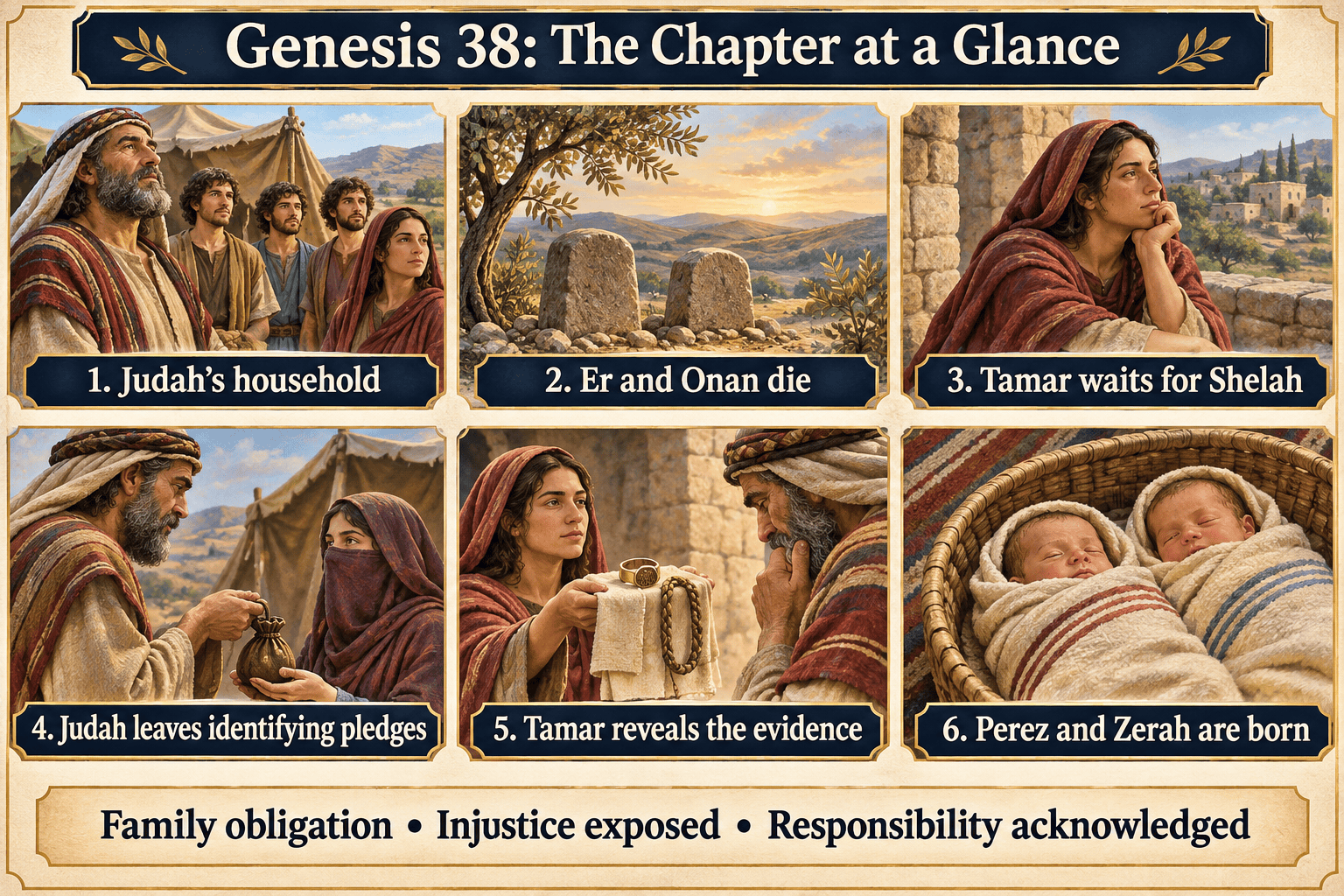
This chapter follows Judah while Joseph is away in Egypt. It prepares readers to recognise Judah’s later development, including his offer to take Benjamin’s place in 44:33. The narrative does not date every event precisely; avoid forcing all these births into a few months after chapter 37.
ജോസഫ് ഈജിപ്തിലായിരിക്കുമ്പോൾ യൂദായുടെ കഥ പിന്തുടരുന്നു. 44:33-ൽ ബഞ്ചമിനു പകരം നിൽക്കാനുള്ള സന്നദ്ധത ഉൾപ്പെടുന്ന പിന്നീടുള്ള വളർച്ച ശ്രദ്ധിക്കാൻ സഹായിക്കുന്നു. എല്ലാ സംഭവത്തിനും കൃത്യകാലം നൽകുന്നില്ല; 37-നുശേഷമുള്ള ഏതാനും മാസങ്ങളിലേക്ക് എല്ലാ ജനനങ്ങളും ചുരുക്കരുത്.
Questions and answers • ചോദ്യോത്തരങ്ങൾ
Was Shua Judah’s wife? • ഷൂവാ യൂദായുടെ ഭാര്യയോ?
Shua is her father; her personal name is not supplied here. • ഷൂവാ പിതാവാണ്; ഭാര്യയുടെ പേര് ഇവിടെ നൽകിയിട്ടില്ല.
Was Tamar certainly Canaanite? • താമാർ തീർച്ചയായും കാനാന്യയോ?
Her ancestry is not specified in this chapter. • ഈ അധ്യായം വംശം വ്യക്തമാക്കുന്നില്ല.
What was Er’s offence? • ഏറിന്റെ കുറ്റം എന്ത്?
The passage does not name it. • പ്രത്യേകകുറ്റം പറയുന്നില്ല.
Was Onan’s act masturbation? • ഓനാന്റെ പ്രവൃത്തി സ്വയംഭോഗമോ?
The act described occurs during intercourse and deliberately prevents offspring. • ലൈംഗികബന്ധത്തിനിടെ മനഃപൂർവം സന്തതിയെ തടയുന്ന പ്രവൃത്തിയാണ്.
Are Christians bound to this marriage custom? • ക്രിസ്ത്യാനികൾ ഈ വിവാഹാചാരം പാലിക്കണമോ?
No. This is an ancient family obligation, not a Christian requirement. • വേണ്ട; പുരാതന കുടുംബകടമയാണ്, ക്രൈസ്തവനിർബന്ധമല്ല.
Does “more righteous” approve every means? • കൂടുതൽ നീതിയുള്ളവൾ എന്നത് എല്ലാ മാർഗത്തെയും അംഗീകരിക്കുന്നോ?
It acknowledges Judah’s failure to provide Shelah; do not turn it into blanket moral approval. • ഷേലായെ നൽകാതിരുന്ന തെറ്റ് സമ്മതിക്കുന്നു; പൊതുഅംഗീകാരമാക്കരുത്.
Was the scarlet thread a curse? • ചുവന്ന ചരട് ശാപമോ?
No; it identifies the hand that appeared first. • അല്ല; ആദ്യം വന്ന കൈയെ തിരിച്ചറിയുന്നു.
For today’s reading • ഇന്നത്തെ വായനയ്ക്കായി
Do I judge others more harshly than myself? Have I postponed a responsibility while someone else bears the cost? Can I acknowledge evidence that exposes my own failure? Choose one verse to share and explain what struck you.
എന്നെക്കാൾ കഠിനമായി മറ്റുള്ളവരെ വിധിക്കുന്നുണ്ടോ? എന്റെ കടമ വൈകിപ്പിക്കുമ്പോൾ വിലകൊടുക്കുന്നത് മറ്റൊരാളാണോ? സ്വന്തം തെറ്റ് വെളിപ്പെടുത്തുന്ന തെളിവ് അംഗീകരിക്കാമോ? ഒരു വാക്യം പങ്കുവച്ച് അത് സ്പർശിച്ചതെന്തുകൊണ്ടെന്ന് പറയുക.
Prayer: Lord, give us honesty to recognise our failures, courage to fulfil our responsibilities and compassion for those treated unjustly. Amen.
പ്രാർഥന: കർത്താവേ, സ്വന്തം തെറ്റുകൾ തിരിച്ചറിയാനുള്ള സത്യസന്ധതയും കടമ നിറവേറ്റാനുള്ള ധൈര്യവും അനീതി അനുഭവിക്കുന്നവരോടുള്ള കരുണയും തരണമേ. ആമേൻ.
Sources and further reading • കൂടുതൽ പഠനത്തിനായി
- Genesis 38 — RSVCE and edition notes
- Genesis 38 — Catholic study notes
- Deuteronomy 25 — brother-in-law marriage
- Humanae Vitae 11–14 — Catholic teaching
- Matthew 1 — Tamar in the genealogy
- Ruth 4 — Perez and David
- 1 Chronicles 2 — Judah’s family
Illustrations are teaching reconstructions, not portraits, medical diagrams or archaeological records. The text distinguishes ancient narrative, Catholic moral teaching and later biblical connections. • ചിത്രങ്ങൾ പഠനസഹായിയായ കലാവിഷ്കാരങ്ങളാണ്.


