


GENESIS • CHAPTER 37 • ENGLISH & MALAYALAM BIBLE STUDY
Joseph: Dreams, Jealousy and the Road to Egypt
ഉത്പത്തി 37 • ജോസഫ്: സ്വപ്നങ്ങളും അസൂയയും ഈജിപ്തിലേക്കുള്ള യാത്രയും
A father’s preference, two dreams and a brother’s betrayal begin Joseph’s journey from home to Egypt.
പിതാവിന്റെ പ്രത്യേക സ്നേഹവും രണ്ടു സ്വപ്നങ്ങളും സഹോദരന്മാരുടെ വഞ്ചനയും ജോസഫിന്റെ ഈജിപ്തിലേക്കുള്ള യാത്രയ്ക്കു തുടക്കമിടുന്നു.

At a glance • ഒറ്റനോട്ടത്തിൽ
| Verses | Movement |
|---|---|
| 1–4 | Joseph, the robe and family resentment • ജോസഫും കുപ്പായവും കുടുംബത്തിലെ വിദ്വേഷവും |
| 5–11 | Two dreams • രണ്ടു സ്വപ്നങ്ങൾ |
| 12–17 | Hebron to Shechem and Dothan • ഹെബ്രോണിൽനിന്ന് ഷെക്കെമിലേക്കും ദോത്താനിലേക്കും |
| 18–30 | The plot, cistern and sale • ഗൂഢാലോചനയും കുഴിയും വിൽപനയും |
| 31–36 | Deception, mourning and Egypt • വഞ്ചനയും വിലാപവും ഈജിപ്തും |
Genesis 37 — Scripture • ഉത്പത്തി 37 — തിരുവചനം
English: Revised Standard Version Catholic Edition. Malayalam: supplied reading text. Each text retains its own verse boundaries, which differ slightly in verses 12–16, 21–22 and 29–30. In verse 28 the Malayalam explicitly names the brothers where the English uses “they”; see the traders note below. • നൽകിയ പാഠങ്ങളുടെ വാക്യവിഭജനവും വാക്കുകളും സൂക്ഷിച്ചിരിക്കുന്നു.
Joseph and his dreams • ജോസഫും സ്വപ്നങ്ങളും
37:1
Jacob dwelt in the land of his father’s sojournings, in the land of Canaan.
യാക്കോബ് തന്റെ പിതാവു പരദേശിയായി പാര്ത്തിരുന്ന കാനാന്ദേശത്തു വാസമുറപ്പിച്ചു.
37:2
This is the history of the family of Jacob. [a]Joseph, being seventeen years old, was shepherding the flock with his brothers; he was a lad with the sons of Bilhah and Zilpah, his father’s wives; and Joseph brought an ill report of them to their father.
ഇതാണു യാക്കോബിന്റെ കുടുംബചരിത്രം. പതിനേഴു വയസ്സുള്ളപ്പോള് ജോസഫ് സഹോദരന്മാരുടെകൂടെ ആടുമേയ്ക്കുകയായിരുന്നു. അവന് തന്റെ പിതാവിന്റെ ഭാര്യമാരായ ബില്ഹായുടെയും സില്ഫായുടെയും മക്കളുടെ കൂടെ ആയിരുന്നു. അവരെപ്പറ്റി അശുഭവാര്ത്തകള് അവന് പിതാവിനെ അറിയിച്ചു.
37:3
Now Israel loved Joseph more than any other of his children, because he was the son of his old age; and he made him a long robe with sleeves.
ഇസ്രായേല് ജോസഫിനെ മറ്റെല്ലാ മക്കളെക്കാളധികം സ്നേഹിച്ചിരുന്നു. കാരണം, അവന് തന്റെ വാര്ധക്യത്തിലെ മകനായിരുന്നു. കൈനീളമുള്ള ഒരു നീണ്ട കുപ്പായം അവന് ജോസഫിനു വേണ്ടി ഉണ്ടാക്കി.
37:4
But when his brothers saw that their father loved him more than all his brothers, they hated him, and could not speak peaceably to him.
പിതാവ് ജോസഫിനെ തങ്ങളെക്കാളധികമായി സ്നേഹിക്കുന്നു എന്നു കണ്ടപ്പോള് സഹോദരന്മാര് അവനെ വെറുത്തു. അവനോടു സൗമ്യമായി സംസാരിക്കാന് അവര്ക്കു കഴിഞ്ഞില്ല.
37:5
Now Joseph had a dream, and when he told it to his brothers they only hated him the more.
ഒരിക്കല് ജോസഫിന് ഒരു സ്വപ്നമുണ്ടായി. അവന് അത് സഹോദരന്മാരോടു പറഞ്ഞപ്പോള് അവര് അവനെ കൂടുതല്വെറുത്തു.
37:6
He said to them, “Hear this dream which I have dreamed:
അവന് അവരോടു പറഞ്ഞു; എനിക്കുണ്ടായ സ്വപ്നം കേള്ക്കുക:
37:7
behold, we were binding sheaves in the field, and lo, my sheaf arose and stood upright; and behold, your sheaves gathered round it, and bowed down to my sheaf.”
നമ്മള് പാടത്തു കറ്റ കെട്ടിക്കൊണ്ടിരിക്കുകയായിരുന്നു. അപ്പോഴിതാ, എന്റെ കറ്റ എഴുന്നേറ്റു നിന്നു. നിങ്ങളുടെ കറ്റകളെല്ലാം ചുറ്റും വന്ന് എന്റെ കറ്റയെ താണുവണങ്ങി.
37:8
His brothers said to him, “Are you indeed to reign over us? Or are you indeed to have dominion over us?” So they hated him yet more for his dreams and for his words.
അവര് ചോദിച്ചു: നീ ഞങ്ങളെ ഭരിക്കുമെന്നാണോ? നീ ഞങ്ങളുടെമേല് ആധിപത്യം സ്ഥാപിക്കുമെന്നാണോ? അവന്റെ സ്വപ്നവും വാക്കുകളും കാരണം അവര് അവനെ അത്യധികം ദ്വേഷിച്ചു.
37:9
Then he dreamed another dream, and told it to his brothers, and said, “Behold, I have dreamed another dream; and behold, the sun, the moon, and eleven stars were bowing down to me.”
അവനു വീണ്ടുമൊരു സ്വപ്നമുണ്ടായി. അവന് തന്റെ സഹോദരന്മാരോടു പറഞ്ഞു: ഞാന് വേറൊരു സ്വപ്നം കണ്ടു. സൂര്യനും ചന്ദ്രനും പതിനൊന്നു നക്ഷത്രങ്ങളും എന്നെതാണുവണങ്ങി.
37:10
But when he told it to his father and to his brothers, his father rebuked him, and said to him, “What is this dream that you have dreamed? Shall I and your mother and your brothers indeed come to bow ourselves to the ground before you?”
അവന് ഇതു പിതാവിനോടും സഹോദരന്മാരോടും പറഞ്ഞപ്പോള് പിതാവ് അവനെ ശകാരിച്ചുകൊണ്ടു പറഞ്ഞു: എന്താണു നിന്റെ സ്വപ്നത്തിന്റെ അര്ഥം? ഞാനും നിന്റെ അമ്മയും സഹോദരന്മാരും നിന്നെ നിലംപറ്റെ താണുവണങ്ങണമെന്നാണോ?
37:11
And his brothers were jealous of him, but his father kept the saying in mind.
സഹോദരന്മാര്ക്ക് അവനോട് അസൂയതോന്നി. പിതാവാകട്ടെ ഈ വാക്കുകള് ഹൃദയത്തില് സംഗ്രഹിച്ചുവച്ചു.
Joseph is sold • ജോസഫിനെ വിൽക്കുന്നു
37:12
Now his brothers went to pasture their father’s flock near Shechem.
അവന്റെ സഹോദരന്മാര് പിതാവിന്റെ ആടുകളെ മേയ്ക്കാന് ഷെക്കെമിലേക്കു പോയി. ഇസ്രായേല് ജോസഫിനോടു പറഞ്ഞു:
37:13
And Israel said to Joseph, “Are not your brothers pasturing the flock at Shechem? Come, I will send you to them.” And he said to him, “Here I am.”
നിന്റെ സഹോദരന്മാര് ഷെക്കെമില് ആടുമേയ്ക്കുകയല്ലേ? ഞാന് നിന്നെ അങ്ങോട്ടു വിടുകയാണ്. ഞാന് പോകാം, അവന് മറുപടി പറഞ്ഞു.
37:14
So he said to him, “Go now, see if it is well with your brothers, and with the flock; and bring me word again.” So he sent him from the valley of Hebron, and he came to Shechem.
നീ പോയി നിന്റെ സഹോദരന്മാര്ക്കും ആടുകള്ക്കും ക്ഷേമം തന്നെയോ എന്ന് അന്വേഷിച്ച് വിവരം എന്നെ അറിയിക്കണം. ജോസഫിനെ അവന് ഹെബ്റോണ് താഴ്വരയില്നിന്നു യാത്രയാക്കി. അവന് ഷെക്കെമിലേക്കു പോയി.
37:15
And a man found him wandering in the fields; and the man asked him, “What are you seeking?”
അവന് വയലില് അലഞ്ഞുതിരിയുന്നതു കണ്ട ഒരാള് അവനോടു ചോദിച്ചു:
37:16
“I am seeking my brothers,” he said, “tell me, I pray you, where they are pasturing the flock.”
നീ അന്വേഷിക്കുന്നതെന്താണ്? അവന് പറഞ്ഞു: ഞാന് എന്റെ സഹോദരന്മാരെ അന്വേഷിക്കുകയാണ്. അവര് എവിടെയാണ് ആടുമേയ്ക്കുന്നത് എന്നു ദയവായി പറഞ്ഞുതരിക.
37:17
And the man said, “They have gone away, for I heard them say, ‘Let us go to Dothan.’” So Joseph went after his brothers, and found them at Dothan.
അവന് പറഞ്ഞു: അവര് ഇവിടെ നിന്നുപോയി. പോകുമ്പോള് നമുക്ക് ദോത്താനിലേക്കു പോകാം എന്ന് അവര് പറയുന്നതു ഞാന് കേട്ടു. സഹോദരന്മാരുടെ പുറകേ ജോസഫും പോയി, ദോത്താനില്വച്ച് അവന് അവരെ കണ്ടുമുട്ടി.
37:18
They saw him afar off, and before he came near to them they conspired against him to kill him.
ദൂരെവച്ചുതന്നെ അവര് അവനെ കണ്ടു. അവന് അടുത്തെത്തും മുന്പേ, അവനെ വധിക്കാന് അവര് ഗൂഢാലോചന നടത്തി.
37:19
They said to one another, “Here comes this dreamer.
അവര് പരസ്പരം പറഞ്ഞു: സ്വപ്നക്കാരന് വരുന്നുണ്ട്.
37:20
Come now, let us kill him and throw him into one of the pits; then we shall say that a wild beast has devoured him, and we shall see what will become of his dreams.”
വരുവിന്, നമുക്ക് അവനെകൊന്നു കുഴിയിലെറിയാം. ഏതോ കാട്ടുമൃഗം അവനെ പിടിച്ചുതിന്നെന്നു പറയുകയും ചെയ്യാം. അവന്റെ സ്വപ്നത്തിന് എന്തു സംഭവിക്കുമെന്നു കാണാമല്ലോ.
37:21
But when Reuben heard it, he delivered him out of their hands, saying, “Let us not take his life.”
റൂബന് ഇതു കേട്ടു. അവന് ജോസഫിനെ അവരുടെ കൈയില്നിന്നു രക്ഷിച്ചു. അവന് പറഞ്ഞു: നമുക്കവനെ കൊല്ലേണ്ടാ. രക്തം ചിന്തരുത്.
37:22
And Reuben said to them, “Shed no blood; cast him into this pit here in the wilderness, but lay no hand upon him”—that he might rescue him out of their hand, to restore him to his father.
അവനെ നിങ്ങള് മരുഭൂമിയിലെ ഈ കുഴിയില് തള്ളിയിടുക. പക്ഷേ, ദേഹോപദ്രവ മേല്പിക്കരുത്. അവനെ അവരുടെ കൈയില്നിന്നു രക്ഷിച്ച് പിതാവിനു തിരിച്ചേല്പിക്കാനാണ് റൂബന് ഇങ്ങനെ പറഞ്ഞത്.
37:23
So when Joseph came to his brothers, they stripped him of his robe, the long robe with sleeves that he wore;
അതിനാല്, ജോസഫ് അടുത്തെത്തിയപ്പോള്, സഹോദരന്മാര് അവന് ധരിച്ചിരുന്ന കൈനീളമുള്ള പുറംകുപ്പായം ഊരിയെടുത്തു.
37:24
and they took him and cast him into a pit. The pit was empty, there was no water in it.
അവനെ ഒരു കുഴിയില് തള്ളിയിട്ടു. അതു വെള്ളമില്ലാത്ത പൊട്ടക്കിണറായിരുന്നു.
37:25
Then they sat down to eat; and looking up they saw a caravan of Ish′maelites coming from Gilead, with their camels bearing gum, balm, and myrrh, on their way to carry it down to Egypt.
അവര് ഭക്ഷണം കഴിക്കാനിരുന്നപ്പോള് ഗിലയാദില്നിന്നു വരുന്ന ഇസ്മായേല്യരുടെ ഒരുയാത്രാസംഘത്തെ കണ്ടു. അവര് സുഗന്ധപ്പശയും പരിമളദ്രവ്യങ്ങളും കുന്തുരുക്കവും ഒട്ടകപ്പുറത്തു കയറ്റി ഈജിപ്തിലേക്കു പോവുകയായിരുന്നു.
37:26
Then Judah said to his brothers, “What profit is it if we slay our brother and conceal his blood?
അപ്പോള് യൂദാ തന്റെ സഹോദരന്മാരോടു പറഞ്ഞു: നമ്മുടെ സഹോദരനെക്കൊന്ന് അവന്റെ രക്തം മറച്ചുവച്ചതുകൊണ്ടു നമുക്കെന്തു പ്രയോജനമാണുണ്ടാവുക?
37:27
Come, let us sell him to the Ish′maelites, and let not our hand be upon him, for he is our brother, our own flesh.” And his brothers heeded him.
വരുവിന്, നമുക്കവനെ ഇസ്മായേല്യര്ക്കു വില്ക്കാം. അവനെ നമ്മള് ഉപദ്രവിക്കേണ്ടാ. അവന് നമ്മുടെ സഹോദരനാണ്. നമ്മുടെ തന്നെ മാംസം. അവന്റെ സഹോദരന്മാര് അതിനു സമ്മതിച്ചു.
37:28
Then Mid′ianite traders passed by; and they drew Joseph up and lifted him out of the pit, and sold him to the Ish′maelites for twenty shekels of silver; and they took Joseph to Egypt.
അപ്പോള് കുറെമിദിയാന് കച്ചവടക്കാര് ആ വഴി കടന്നുപോയി. ജോസഫിന്റെ സഹോദരന്മാര് അവനെ കുഴിയില്നിന്നു പൊക്കിയെടുത്ത് ഇരുപതു വെള്ളിക്കാശിന് ഇസ്മായേല്യര്ക്കു വിറ്റു. അവര് അവനെ ഈജിപ്തിലേക്കു കൊണ്ടുപോയി.
37:29
When Reuben returned to the pit and saw that Joseph was not in the pit, he rent his clothes
റൂബന് കുഴിയുടെ അടുത്തേക്കു തിരിച്ചു ചെന്നു. എന്നാല് ജോസഫ് കുഴിയില് ഇല്ലായിരുന്നു.
37:30
and returned to his brothers, and said, “The lad is gone; and I, where shall I go?”
അവന് തന്റെ ഉടുപ്പു വലിച്ചുകീറി, സഹോദരന്മാരുടെ അടുത്തുചെന്നു വിലപിച്ചു. കുട്ടിയെ കാണാനില്ല. ഞാനിനി എവിടെപ്പോകും.
37:31
Then they took Joseph’s robe, and killed a goat, and dipped the robe in the blood;
അവര് ഒരാടിനെക്കൊന്ന് ജോസഫിന്റെ കുപ്പായമെടുത്ത് അതിന്റെ രക്തത്തില് മുക്കി.
37:32
and they sent the long robe with sleeves and brought it to their father, and said, “This we have found; see now whether it is your son’s robe or not.”
കൈനീളമുള്ള ആ നീണ്ട കുപ്പായം തങ്ങളുടെ പിതാവിന്റെയടുക്കല് കൊണ്ടുചെന്നിട്ട് അവര് പറഞ്ഞു: ഈ കുപ്പായം ഞങ്ങള്ക്കു കണ്ടുകിട്ടി. ഇത് അങ്ങയുടെ മകന്റേതാണോ അല്ലയോ എന്നു നോക്കുക.
37:33
And he recognized it, and said, “It is my son’s robe; a wild beast has devoured him; Joseph is without doubt torn to pieces.”
അവന് അതു തിരിച്ചറിഞ്ഞു. അവന് പറഞ്ഞു: ഇത് എന്റെ മകന്റെ കുപ്പായമാണ്. ഏതോ കാട്ടുമൃഗം അവനെ പിടിച്ചുതിന്നു. ജോസഫിനെ അതു കടിച്ചുകീറിക്കാണും.
37:34
Then Jacob rent his garments, and put sackcloth upon his loins, and mourned for his son many days.
യാക്കോബു തന്റെ വസ്ത്രം വലിച്ചുകീറി; ചാക്കുടുത്തു വളരെനാള് തന്റെ മകനെക്കുറിച്ചു വിലപിച്ചു.
37:35
All his sons and all his daughters rose up to comfort him; but he refused to be comforted, and said, “No, I shall go down to Sheol to my son, mourning.” Thus his father wept for him.
അവന്റെ പുത്രന്മാരും പുത്രിമാരും അവനെ ആശ്വസിപ്പിക്കാന് ശ്രമിച്ചു. എന്നാല്, അവര്ക്കു കഴിഞ്ഞില്ല. കരഞ്ഞുകൊണ്ടുതന്നെ പാതാളത്തില് എന്റെ മകന്റെയടുത്തേക്കു ഞാന് പോകും എന്നു പറഞ്ഞ് അവന് തന്റെ മകനെയോര്ത്തു വിലപിച്ചു;
37:36
Meanwhile the Mid′ianites had sold him in Egypt to Pot′i-phar, an officer of Pharaoh, the captain of the guard.
ഇതിനിടെ മിദിയാന്കാര് ജോസഫിനെ ഈജിപ്തില് ഫറവോയുടെ ഒരു ഉദ്യോഗസ്ഥനും കാവല്പടയുടെ നായകനുമായ പൊത്തിഫറിനു വിറ്റു.
[a] The supplied English marks an edition note at 37:2. Read the RSVCE edition note. Study commentary below is distinct from the biblical text. • താഴെയുള്ള പഠനവിവരണങ്ങൾ തിരുവചനത്തിൽനിന്ന് വേർതിരിച്ചിരിക്കുന്നു.
Meet Joseph • ജോസഫിനെ പരിചയപ്പെടാം

| Detail | Explanation |
|---|---|
| Parents • മാതാപിതാക്കൾ | Jacob and Rachel • യാക്കോബും റാഹേലും |
| Name • പേര് | May he add; Rachel asks the Lord for another son (30:24) • ദൈവം കൂട്ടിച്ചേർക്കട്ടെ; മറ്റൊരു പുത്രനുവേണ്ടിയുള്ള അപേക്ഷ |
| Age • പ്രായം | Seventeen (37:2) • പതിനേഴ് |
| Work • ജോലി | Tending flocks with his brothers • സഹോദരന്മാരോടൊപ്പം ആടുമേയ്ക്കൽ |
| Younger brother • ഇളയ സഹോദരൻ | Benjamin: Joseph is not the youngest • ബഞ്ചമിൻ; ജോസഫ് ഏറ്റവും ഇളയവനല്ല |
The chapter explicitly calls Joseph a son of Jacob’s old age. Rachel’s earlier place in the story provides family background, but the text does not say that Jacob’s love for Rachel is the only reason for his preference. The robe makes that preference visible.
ജോസഫ് യാക്കോബിന്റെ വാർധക്യത്തിലെ മകനാണെന്ന് അധ്യായം വ്യക്തമായി പറയുന്നു. റാഹേലിന്റെ മുൻകഥ കുടുംബപശ്ചാത്തലം നൽകുന്നു; എന്നാൽ അവളോടുള്ള സ്നേഹം മാത്രമാണ് പക്ഷപാതത്തിന്റെ കാരണമെന്ന് പാഠം പറയുന്നില്ല. കുപ്പായം ആ പ്രത്യേക പരിഗണനയെ ദൃശ്യമാക്കുന്നു.
Joseph brings an unfavourable report, tells his dreams, willingly sets out and keeps searching for his brothers. The report’s exact contents and his motives are not supplied. Do not label it certainly false, or describe Joseph as flawless. None of this makes his brothers’ violence his fault.
ജോസഫ് അശുഭവാർത്ത അറിയിക്കുന്നു, സ്വപ്നങ്ങൾ പറയുന്നു, യാത്രയ്ക്കു സമ്മതിച്ച് സഹോദരന്മാരെ അന്വേഷിക്കുന്നു. വാർത്തയുടെ കൃത്യഉള്ളടക്കവും അവന്റെ ഉദ്ദേശ്യവും പറയുന്നില്ല. അത് തീർച്ചയായും വ്യാജമാണെന്നോ ജോസഫ് തെറ്റില്ലാത്തവനാണെന്നോ പറയരുത്. ഇതൊന്നും സഹോദരന്മാരുടെ അക്രമത്തിന് അവനെ ഉത്തരവാദിയാക്കുന്നില്ല.
The family tension grows through preference, hatred, dreams and envy. Compare Isaac and Rebekah’s preferences in 25:28. Understanding these patterns helps explain the conflict without excusing it.
പക്ഷപാതം, വെറുപ്പ്, സ്വപ്നങ്ങൾ, അസൂയ എന്നിവയിലൂടെ സംഘർഷം വളരുന്നു. 25:28-ലെ ഇസഹാക്കിന്റെയും റബേക്കായുടെയും ഇഷ്ടവ്യത്യാസവുമായി താരതമ്യം ചെയ്യാം. പശ്ചാത്തലം മനസ്സിലാക്കുന്നത് തെറ്റിനെ ന്യായീകരിക്കുന്നില്ല.
Two dreams and their significance • രണ്ടു സ്വപ്നങ്ങളും അവയുടെ പ്രാധാന്യവും

Joseph’s sheaf stands upright while his brothers’ sheaves bow. His brothers understand this as suggesting his rule over them. The verse does not specify the number of surrounding sheaves. The grain imagery also invites a connection with the later famine story.
ജോസഫിന്റെ കറ്റ നിവർന്നു നിൽക്കുകയും സഹോദരന്മാരുടെ കറ്റകൾ വണങ്ങുകയും ചെയ്യുന്നു. അവന്റെ ഭരണത്തെ സൂചിപ്പിക്കുന്നതായി അവർ മനസ്സിലാക്കുന്നു. ചുറ്റുമുള്ള കറ്റകളുടെ എണ്ണം വാക്യം പറയുന്നില്ല. ധാന്യത്തിന്റെ ചിത്രം പിന്നീടുള്ള ക്ഷാമകഥയുമായി ബന്ധിപ്പിച്ചും വായിക്കാം.

Jacob interprets the second dream as father, mother and brothers bowing. He rebukes Joseph but keeps the matter in mind. Since Rachel’s death was narrated in chapter 35, do not invent a later literal scene of Rachel bowing. Identifying the moon with Bilhah is a proposed interpretation, not an identification given here.
പിതാവും അമ്മയും സഹോദരന്മാരും വണങ്ങുന്നതായി യാക്കോബ് രണ്ടാമത്തെ സ്വപ്നത്തെ വ്യാഖ്യാനിക്കുന്നു. ശകാരിച്ചെങ്കിലും കാര്യം മനസ്സിൽ സൂക്ഷിക്കുന്നു. റാഹേലിന്റെ മരണം 35-ൽ പറഞ്ഞതിനാൽ അവൾ പിന്നീട് വണങ്ങിയെന്ന ദൃശ്യവിവരണം സൃഷ്ടിക്കരുത്. ചന്ദ്രൻ ബിൽഹായാണെന്നത് ഒരു വ്യാഖ്യാനനിർദേശമാണ്; ഇവിടെ നൽകിയ തിരിച്ചറിയലല്ല.
| Passage | Connection |
|---|---|
| 42:6 | The brothers bow before Joseph in Egypt • സഹോദരന്മാർ ഈജിപ്തിൽ ജോസഫിനെ വണങ്ങുന്നു |
| 42:9 | Joseph remembers his dreams • ജോസഫ് തന്റെ സ്വപ്നങ്ങൾ ഓർക്കുന്നു |
| 50:18–20 | Bowing, forgiveness and the preservation of lives • വണങ്ങലും ക്ഷമയും ജീവൻ സംരക്ഷിക്കലും |
The USCCB Catholic notes recognise the dreams’ divine significance in the light of the later story. Read them as part of this particular biblical narrative; they do not establish that every ordinary dream is a message from God or that each symbol needs a rigid literal fulfilment.
പിന്നീടുള്ള കഥയുടെ വെളിച്ചത്തിലാണ് USCCB കത്തോലിക്കാ കുറിപ്പുകൾ സ്വപ്നങ്ങളുടെ ദൈവികപ്രാധാന്യം തിരിച്ചറിയുന്നത്. ഈ പ്രത്യേക ബൈബിൾകഥയുടെ ഭാഗമായി വായിക്കുക; എല്ലാ സാധാരണ സ്വപ്നങ്ങളും ദൈവസന്ദേശമാണെന്നോ ഓരോ പ്രതീകത്തിനും കർശനമായ അക്ഷരാർഥപൂർത്തീകരണം വേണമെന്നോ ഇതു സ്ഥാപിക്കുന്നില്ല.
Hebron → Shechem → Dothan • ഹെബ്രോൺ → ഷെക്കെം → ദോത്താൻ

| Place | Role |
|---|---|
| Valley of Hebron • ഹെബ്രോൺ താഴ്വര | Jacob sends Joseph • യാക്കോബ് ജോസഫിനെ അയയ്ക്കുന്നു |
| Shechem • ഷെക്കെം | Initial destination; an unnamed man gives directions • ആദ്യലക്ഷ്യം; പേരില്ലാത്ത ഒരാൾ വഴി പറയുന്നു |
| Dothan • ദോത്താൻ | Joseph finds the brothers; plot and cistern • സഹോദരന്മാരെ കണ്ടെത്തുന്നു; ഗൂഢാലോചനയും കുഴിയും |
| Gilead → Egypt • ഗിലയാദ് → ഈജിപ്ത് | Caravan origin and destination in verse 25 • 25-ലെ യാത്രാസംഘത്തിന്റെ പുറപ്പാടും ലക്ഷ്യവും |
The mission is to check his brothers’ and flocks’ welfare and bring back word. The text does not explicitly say he carried food. The man who redirects him is not named or called an angel. His help is important without adding an identity Scripture does not give.
സഹോദരന്മാരുടെയും ആടുകളുടെയും ക്ഷേമം അന്വേഷിച്ച് വിവരം അറിയിക്കുകയാണ് ദൗത്യം. ഭക്ഷണം കൊണ്ടുപോയെന്ന് പാഠം വ്യക്തമായി പറയുന്നില്ല. വഴികാട്ടിയ ആളെ പേരുപറയുകയോ ദൂതനെന്നു വിളിക്കുകയോ ചെയ്യുന്നില്ല. തിരുവചനം നൽകാത്ത തിരിച്ചറിയൽ കൂട്ടിച്ചേർക്കാതെ അവന്റെ സഹായത്തിന്റെ പ്രാധാന്യം കാണാം.
Shechem recalls chapters 12, 33 and 34. Dothan later appears in the account of Elisha in 2 Kings 6:13–17. These connections help readers remember places without treating the schematic map as an excavated itinerary.
ഷെക്കെം 12,33,34 അധ്യായങ്ങളെ ഓർമിപ്പിക്കുന്നു. ദോത്താൻ പിന്നീട് 2 രാജാക്കന്മാർ 6:13–17-ലെ എലീഷായുടെ കഥയിലും വരുന്നു. രൂപരേഖാഭൂപടത്തെ കൃത്യപുരാവസ്തുവഴിയായി കാണാതെ സ്ഥലങ്ങൾ ഓർക്കാൻ ഈ ബന്ധങ്ങൾ സഹായിക്കും.
Who wanted what? • ആരുടെ ഉദ്ദേശ്യം എന്തായിരുന്നു?

| Who | Action | Important distinction |
|---|---|---|
| Plotting brothers • ഗൂഢാലോചനക്കാർ | Propose murder (18–20) • കൊലപാതകം നിർദേശിക്കുന്നു | No named original proposer • ആദ്യനിർദേശകന്റെ പേര് പറയുന്നില്ല |
| Reuben • റൂബൻ | Plans rescue and return to Jacob (21–22) • രക്ഷിച്ച് പിതാവിന് തിരികെ നൽകാൻ ഉദ്ദേശിക്കുന്നു | An explicit rescue intention • വ്യക്തമായ രക്ഷാഉദ്ദേശ്യം |
| Judah • യൂദാ | Proposes sale instead (26–27) • പകരം വിൽപന നിർദേശിക്കുന്നു | Avoids murder but still wrongs Joseph • കൊല ഒഴിവാക്കുന്നു; എങ്കിലും ജോസഫിനോടു തെറ്റുചെയ്യുന്നു |
Do not identify Simeon as the original instigator from this chapter alone. Reuben’s protective intention is stated, but the text does not give a complete account of every brother’s inner feelings. Judah appeals both to kinship and to profit; selling Joseph is not a complete rescue.
ഈ അധ്യായം മാത്രം ആശ്രയിച്ച് ശിമയോനാണ് തുടക്കക്കാരൻ എന്നു പറയരുത്. റൂബന്റെ രക്ഷാഉദ്ദേശ്യം വ്യക്തമാണ്; എന്നാൽ ഓരോ സഹോദരന്റെയും വികാരം മുഴുവനായി പറയുന്നില്ല. യൂദാ ബന്ധുത്വത്തെയും ലാഭത്തെയും പരാമർശിക്കുന്നു; ജോസഫിനെ വിൽക്കുന്നത് പൂർണരക്ഷയല്ല.
The dry cistern contrasts sharply with the brothers sitting down to eat. Joseph’s later account of their refusal to hear his pleas appears in 42:21. The absence of a long speech from Joseph here does not mean he felt no fear or distress.
വെള്ളമില്ലാത്ത കുഴിയും സഹോദരന്മാർ ഭക്ഷണം കഴിക്കുന്നതും ശക്തമായ വിരുദ്ധദൃശ്യങ്ങളാണ്. അവന്റെ അപേക്ഷ കേൾക്കാതിരുന്നതിന്റെ ഓർമ 42:21-ൽ വരുന്നു. ഇവിടെ ജോസഫിന്റെ ദീർഘപ്രസംഗം ഇല്ലാത്തതുകൊണ്ട് ഭയമോ വേദനയോ ഉണ്ടായില്ലെന്നല്ല.
Midianites and Ishmaelites • മിദിയാൻകാരും ഇസ്മായേല്യരും

Midian is Abraham’s son by Keturah (25:2); Midian was mentioned again in 36:35. Ishmael is Abraham’s son by Hagar. The Midianites are associated with trading and northwest Arabia in the Catholic study notes on chapter 25.
കെതൂറായിൽ അബ്രാഹത്തിനു ജനിച്ച മകനാണ് മിദിയാൻ (25:2); 36:35-ലും മിദിയാനെ കണ്ടു. ഹാഗാറിൽ ജനിച്ച മകനാണ് ഇസ്മായേൽ. 25-ലെ കത്തോലിക്കാ കുറിപ്പുകൾ മിദിയാൻകാരെ കച്ചവടത്തോടും വടക്കുപടിഞ്ഞാറൻ അറേബ്യയോടും ബന്ധിപ്പിക്കുന്നു.
Genesis 37 uses both trader names; 39:1 mentions Ishmaelites buying Joseph into Potiphar’s household. The USCCB notes explain the wording through interwoven traditions. Do not invent a certain sequence of extra sales to solve every pronoun. The supplied Malayalam explicitly names Joseph’s brothers as the sellers in verse 28; the English wording is less explicit there.
37-ൽ രണ്ടു വ്യാപാരനാമങ്ങളും വരുന്നു; 39:1-ൽ ഇസ്മായേല്യരിൽനിന്ന് പൊത്തിഫർ വാങ്ങുന്നു. പരസ്പരം ഇഴചേർന്ന പാരമ്പര്യങ്ങളിലൂടെ USCCB കുറിപ്പുകൾ വാക്കുകളെ വിശദീകരിക്കുന്നു. എല്ലാ സർവനാമവും പരിഹരിക്കാൻ ഉറപ്പായ അധികവിൽപനകൾ സൃഷ്ടിക്കരുത്. നൽകിയ മലയാളത്തിലെ 28-ൽ വിൽക്കുന്നവർ സഹോദരന്മാരെന്ന് പറയുന്നു; അവിടത്തെ ഇംഗ്ലീഷ് അത്ര വ്യക്തമല്ല.
The central responsibility remains clear: Acts 7:9–10 recalls the brothers’ jealousy and Joseph’s enslavement in Egypt. The price in the RSVCE is twenty shekels of silver—a weight of silver, not necessarily twenty minted coins. The caravan carries aromatic goods; translations name the resins differently.
പ്രധാന ഉത്തരവാദിത്വം വ്യക്തമാണ്: അപ്പസ്തോലപ്രവർത്തനങ്ങൾ 7:9–10 സഹോദരന്മാരുടെ അസൂയയും ഈജിപ്തിലെ അടിമത്തവും ഓർക്കുന്നു. RSVCE-യിലെ വില ഇരുപതു ഷെക്കൽ വെള്ളിയാണ്; തൂക്കമാണ്, ഇരുപതു അച്ചടിച്ച നാണയങ്ങൾ എന്നില്ല. യാത്രാസംഘത്തിൽ സുഗന്ധവസ്തുക്കളുണ്ട്; വിവർത്തനങ്ങളിൽ അവയുടെ പേരുകൾ വ്യത്യസ്തമാണ്.
The robe: favour and deception • കുപ്പായം: പ്രത്യേക പരിഗണനയും വഞ്ചനയും

The RSVCE describes a long robe with sleeves. The traditional “many colours” rendering reflects another translation tradition; exact colours are not specified by this wording. The robe indicates special preference, but this passage does not formally declare Joseph the legal heir through it.
RSVCE കൈനീളമുള്ള നീണ്ട കുപ്പായം എന്നാണ് പറയുന്നത്. പ്രസിദ്ധമായ “പല നിറങ്ങൾ” മറ്റൊരു വിവർത്തനപാരമ്പര്യമാണ്; ഈ വാക്കുകളിൽ കൃത്യനിറങ്ങൾ പറയുന്നില്ല. പ്രത്യേക പരിഗണനയുടെ അടയാളമാണെങ്കിലും നിയമപരമായ അവകാശിയെ ഇതിലൂടെ ഔപചാരികമായി നിയമിക്കുന്നില്ല.
The brothers present the stained robe and ask Jacob to identify it; he concludes that an animal killed Joseph. Clothing and goats recall Jacob’s deception of Isaac in chapter 27—a literary reversal, not proof that God caused Joseph’s suffering as punishment for Jacob.
രക്തം പുരട്ടിയ കുപ്പായം കാണിച്ച് തിരിച്ചറിയാൻ പറയുന്നു; മൃഗം കൊന്നതെന്ന നിഗമനത്തിൽ യാക്കോബ് എത്തുന്നു. വസ്ത്രവും ആടുകളും 27-ലെ ഇസഹാക്കിനെ വഞ്ചിച്ചതിനെ ഓർമിപ്പിക്കുന്നു. കഥയിലെ തിരിച്ചുവരവാണിത്; യാക്കോബിനെ ശിക്ഷിക്കാൻ ദൈവം ജോസഫിനെ പീഡിപ്പിച്ചു എന്നതിന് തെളിവല്ല.
Torn garments and sackcloth express mourning. Sheol here refers to the realm of the dead; it is not automatically a claim that Joseph is condemned to hell. Jacob’s grief is genuine even though the evidence used to create it is false.
വസ്ത്രം കീറലും ചാക്കുടുക്കലും വിലാപത്തിന്റെ അടയാളങ്ങളാണ്. ഇവിടെ ഷെയോൾ മരിച്ചവരുടെ ലോകത്തെയാണ് സൂചിപ്പിക്കുന്നത്; ജോസഫ് നരകശിക്ഷയിലാണെന്ന പ്രസ്താവനയല്ല. തെളിവ് വ്യാജമെങ്കിലും യാക്കോബിന്റെ ദുഃഖം യഥാർഥമാണ്.
From home to Egypt • വീട്ടിൽനിന്ന് ഈജിപ്തിലേക്ക്
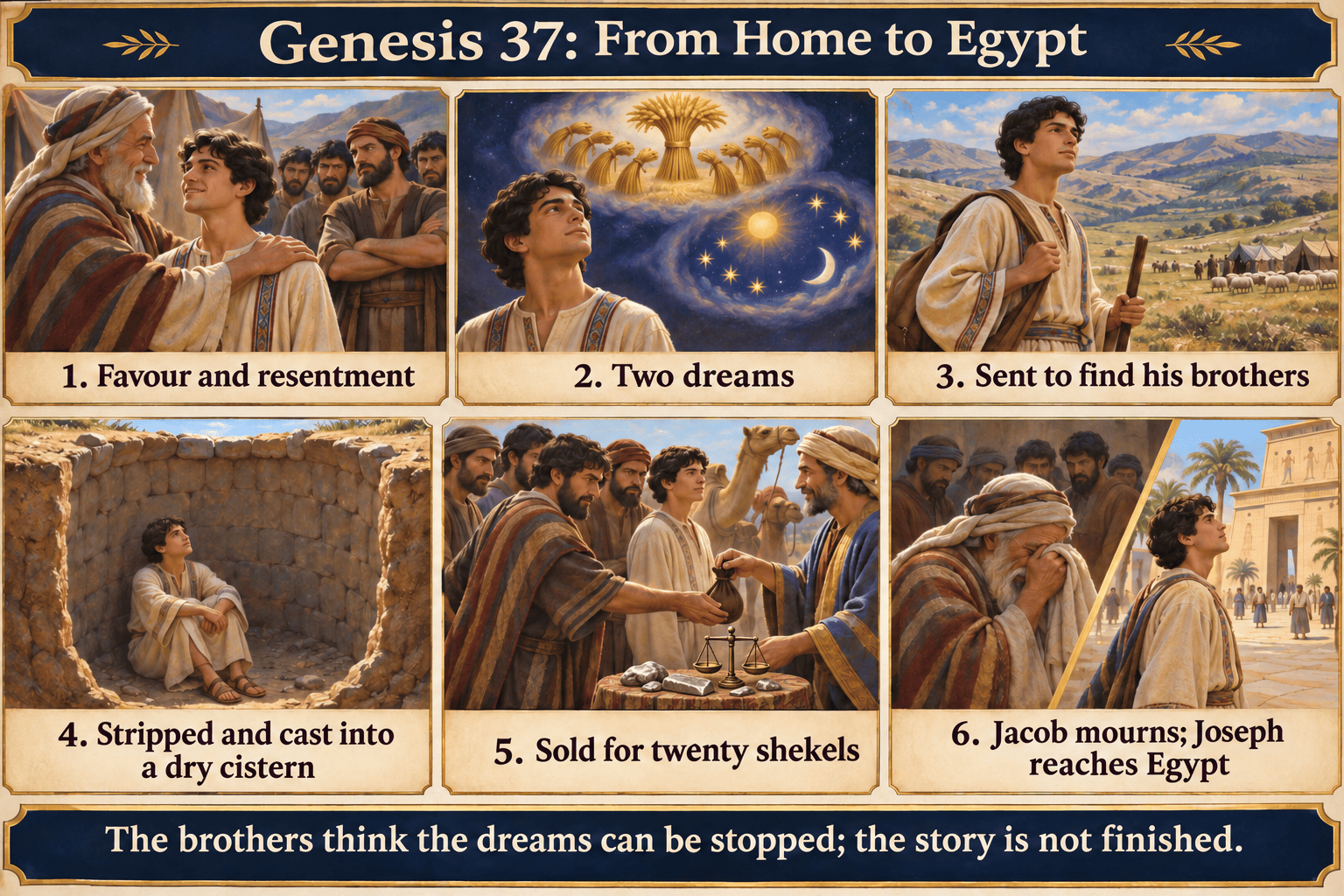
The chapter ends with different knowledge: Jacob believes Joseph is dead, while the reader knows he is alive in Egypt, sold to Potiphar, Pharaoh’s officer and captain of the guard in the RSVCE. The story is unresolved; the dreams have not simply been defeated by the brothers’ plan.
അവസാനത്തിൽ അറിവ് വ്യത്യസ്തമാണ്: ജോസഫ് മരിച്ചെന്ന് യാക്കോബ് വിശ്വസിക്കുന്നു; എന്നാൽ ഈജിപ്തിൽ ഫറവോയുടെ ഉദ്യോഗസ്ഥനും കാവൽപടനായകനുമായ പൊത്തിഫറിനു വിറ്റതായി വായനക്കാരൻ അറിയുന്നു. കഥ പൂർത്തിയായിട്ടില്ല; സഹോദരന്മാരുടെ പദ്ധതിയിലൂടെ സ്വപ്നങ്ങൾ അവസാനിച്ചെന്നല്ല.
Providence without excusing evil • തിന്മയെ ന്യായീകരിക്കാത്ത ദൈവപരിപാലന

The Catechism explicitly uses Joseph’s story in its teaching on providence (311–312): God can bring good from the consequences of moral evil, while evil never becomes good. The brothers’ cruelty, deception and enslavement are not made righteous by the later outcome.
ദൈവപരിപാലനയെക്കുറിച്ചുള്ള പഠനത്തിൽ മതബോധനഗ്രന്ഥം ജോസഫിന്റെ കഥ ഉപയോഗിക്കുന്നു (311–312): ധാർമികതിന്മയുടെ ഫലങ്ങളിൽനിന്ന് ദൈവം നന്മ കൊണ്ടുവരാം; എങ്കിലും തിന്മ നന്മയാകുന്നില്ല. പിന്നീടുള്ള ഫലം സഹോദരന്മാരുടെ ക്രൂരതയെയും വഞ്ചനയെയും അടിമപ്പെടുത്തലിനെയും നീതിയാക്കുന്നില്ല.
Acts 7:9–10 recalls that God was with Joseph; Genesis 50:20 interprets the story in terms of preserving lives. This is hope in God’s faithfulness, not a promise that every betrayed person will become rich or powerful.
അപ്പസ്തോലപ്രവർത്തനങ്ങൾ 7:9–10 ദൈവം ജോസഫിനോടുകൂടെ ഉണ്ടായിരുന്നു എന്ന് ഓർക്കുന്നു; ഉത്പത്തി 50:20 ജീവൻ സംരക്ഷിക്കുന്നതിന്റെ വെളിച്ചത്തിൽ കഥയെ വായിക്കുന്നു. ദൈവവിശ്വസ്തതയിലുള്ള പ്രതീക്ഷയാണ്; വഞ്ചിക്കപ്പെട്ട എല്ലാവരും സമ്പന്നരോ അധികാരികളോ ആകുമെന്ന വാഗ്ദാനമല്ല.
A Christian comparison with Christ can consider rejection and a later role in saving others. Label this typological reflection, rather than a claim that every object predicts Jesus. Joseph’s price is twenty shekels, not Judas’s thirty pieces; Joseph survives, rather than literally rising from death.
ക്രിസ്തുവുമായുള്ള ക്രൈസ്തവതാരതമ്യത്തിൽ നിരസിക്കപ്പെടലും പിന്നീട് മറ്റുള്ളവരെ രക്ഷിക്കുന്ന പങ്കും പരിഗണിക്കാം. ഓരോ വസ്തുവും യേശുവിനെ പ്രവചിക്കുന്നു എന്നല്ല; പ്രതിരൂപവായനയായി വ്യക്തമാക്കണം. ജോസഫിന്റെ വില ഇരുപതു ഷെക്കൽ; യൂദാസിന്റെ മുപ്പതു വെള്ളിക്കാശല്ല. അവൻ ജീവനോടെ തുടരുന്നു; അക്ഷരാർഥത്തിൽ മരിച്ചുയിർക്കുന്നതല്ല.
Questions and answers • ചോദ്യോത്തരങ്ങൾ
Was Joseph the youngest? • ജോസഫ് ഏറ്റവും ഇളയവനോ?
No; Benjamin is younger. • അല്ല; ബഞ്ചമിൻ ഇളയവനാണ്.
Was the report certainly a lie? • വാർത്ത തീർച്ചയായും വ്യാജമോ?
The contents and motives are not supplied. • ഉള്ളടക്കവും ഉദ്ദേശ്യവും വ്യക്തമാക്കിയിട്ടില്ല.
Who first proposed murder? • ആദ്യം കൊല നിർദേശിച്ചത് ആര്?
The chapter names no individual instigator. • വ്യക്തിയുടെ പേര് അധ്യായം പറയുന്നില്ല.
Which brother intended rescue? • രക്ഷിക്കാൻ ഉദ്ദേശിച്ചത് ആര്?
Reuben; his purpose to restore Joseph to Jacob is explicit. • റൂബൻ; പിതാവിന് തിരിച്ചേൽപിക്കാനുള്ള ഉദ്ദേശ്യം വ്യക്തമാണ്.
Did Judah fully rescue him? • യൂദാ പൂർണമായി രക്ഷിച്ചോ?
He proposed sale rather than murder; enslavement remains a grave wrong. • കൊലയ്ക്കു പകരം വിൽപന; അടിമപ്പെടുത്തൽ ഗുരുതരമായ തെറ്റാണ്.
Was the guide an angel? • വഴികാട്ടി ദൂതനായിരുന്നോ?
He is simply called a man here. • ഇവിടെ ഒരാൾ എന്നു മാത്രമാണ്.
Did Joseph carry food? • ഭക്ഷണം കൊണ്ടുപോയോ?
Not explicitly stated; his mission is to check welfare and report back. • വ്യക്തമായി പറയുന്നില്ല; ക്ഷേമം അന്വേഷിച്ച് വിവരം അറിയിക്കുകയാണ് ദൗത്യം.
Did Rachel later bow to him? • റാഹേൽ പിന്നീട് വണങ്ങിയോ?
No such scene is narrated. Read the dream symbolically and acknowledge the difficulty. • അത്തരം രംഗം വിവരിക്കുന്നില്ല; പ്രതീകവും പാഠബുദ്ധിമുട്ടും പരിഗണിക്കുക.
For today’s reading • ഇന്നത്തെ വായനയ്ക്കായി
How do I respond when another person receives attention? Do I oppose wrongdoing early enough? Is choosing a lesser harm the same as doing what is right? Can I trust God without calling cruelty good? Choose one verse to share and explain why it struck you.
മറ്റൊരാൾക്ക് പരിഗണന ലഭിക്കുമ്പോൾ ഞാൻ എങ്ങനെ പ്രതികരിക്കുന്നു? തെറ്റിനെ നേരത്തേ എതിർക്കുന്നുണ്ടോ? ചെറിയ ദോഷം തിരഞ്ഞെടുക്കുന്നത് ശരി ചെയ്യുന്നതിനു തുല്യമോ? ക്രൂരതയെ നന്മയെന്നു വിളിക്കാതെ ദൈവത്തെ വിശ്വസിക്കാമോ? പങ്കുവയ്ക്കാൻ ഒരു വാക്യം തെരഞ്ഞെടുത്ത് അത് സ്പർശിച്ചതെന്തുകൊണ്ടെന്ന് പറയുക.
Prayer: Lord, free us from envy, give us courage to protect others and sustain those who suffer betrayal. Teach us to trust your faithfulness. Amen.
പ്രാർഥന: കർത്താവേ, അസൂയയിൽനിന്നു മോചിപ്പിച്ച് മറ്റുള്ളവരെ സംരക്ഷിക്കാനുള്ള ധൈര്യം തരണമേ. വഞ്ചന അനുഭവിക്കുന്നവരെ താങ്ങി അങ്ങയുടെ വിശ്വസ്തതയിൽ ആശ്രയിക്കാൻ പഠിപ്പിക്കണമേ. ആമേൻ.
Sources and further reading • കൂടുതൽ പഠനത്തിനായി
- Genesis 37 — RSVCE
- Genesis 37 — Catholic study notes
- Genesis 30 — Joseph’s name
- Genesis 25 — Midian and Ishmael
- Genesis 42 — bowing and remembered dreams
- 2 Kings 6 — Dothan
- Acts 7 — Joseph and God’s presence
- Genesis 50 — preservation and forgiveness
- Catechism 311–312 — providence and evil
Illustrations are teaching reconstructions, not portraits or archaeological records. The map shows broad relationships rather than exact ancient roads. Joseph’s infancy appears as a retrospective inset; Rachel is not shown as surviving chapter 35. • ചിത്രങ്ങൾ പഠനസഹായിയായ കലാവിഷ്കാരങ്ങളാണ്; ഭൂപടം രൂപരേഖയാണ്.


